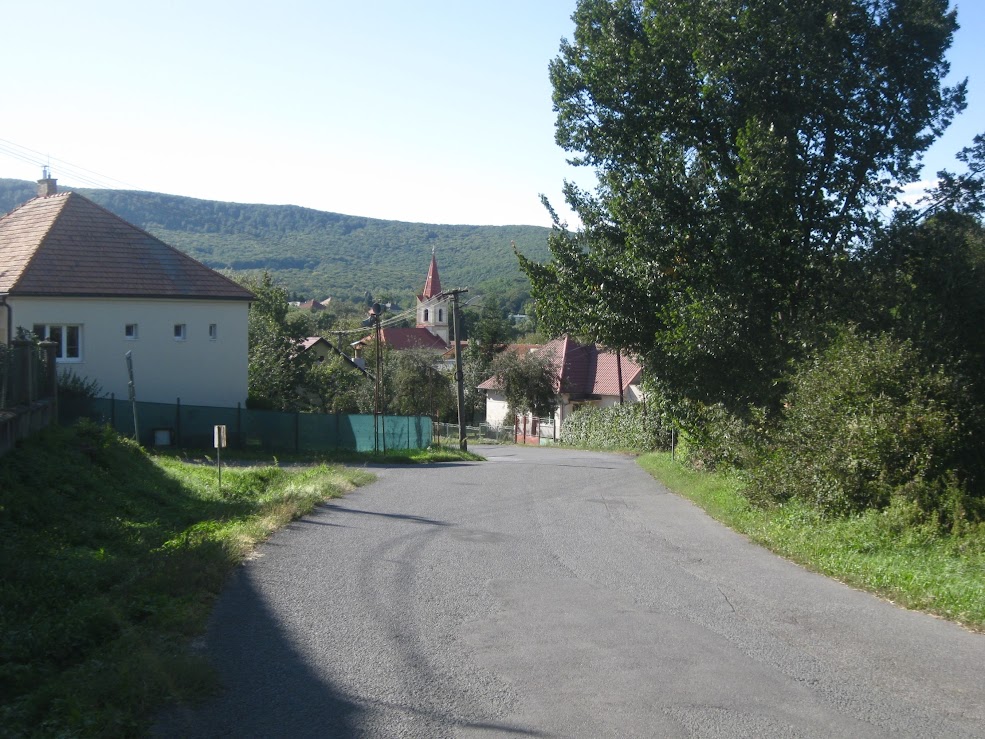
Our second week of the trip started out like a déjà-vu copy of last year's, i.e., we drove to Bratislava to stay at Terezia's brother Tony's house in Bernolákovo. As I've said about Bernolákovo before, it's a rapidly growing suburban town just outside of Bratislava. The houses in the new part of town all kind of look like what you'd get if Ikea made prefab houses.
 |
| The same stupid photo I've been using for years whenever I write about Bernolákovo. If I were to bother to take a photo today, there'd be moms and kids everywhere in the background. |
But our visit to Tony's house on our 2018 trip was cut short largely due to the fact that their daughter, Tea (pronounced like Tay-ah), was only about five months old then and therefore not particularly mobile, and they hadn't needed to childproof their house yet. Simon was 18 months then, and was getting into everything, and we had to constantly follow him around and redirect him to keep him from grabbing delicate or dangerous objects. It was immensely stressful, and Tea was obviously much too young to be able to interact with Simon.
But this time, Tea was around 17 months old and she and Simon hit it off extremely well. Also, Tony and Silvia's house is now pretty well childproofed, and it looked like a tornado had scattered toys all over the living room, so the whole situation was much more suitable for a visit from a family with a two-and-a-half-year-old. What also helped this time was that Tony took a few days off from work so he could actually spend time with us (last year he was in tense phone meetings the entire time we were there).
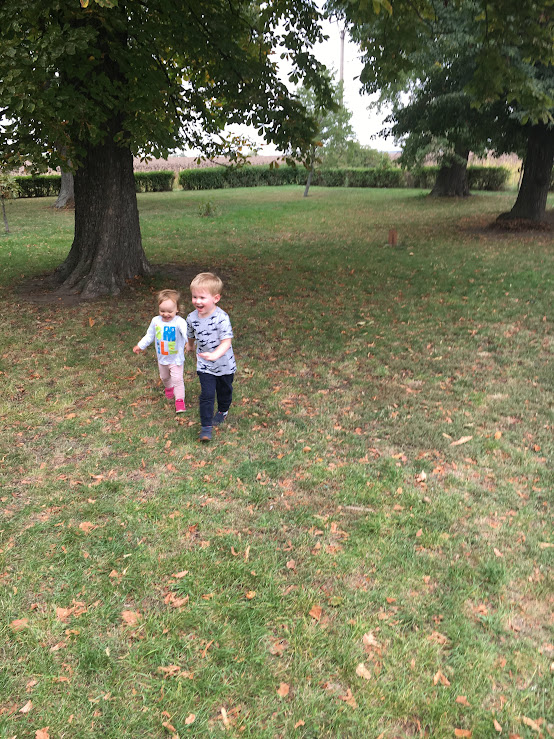
Bernolákovo - at least the newer part of town where Tony lives - is oversaturated with babies and little kids. It seems like every house is inhabited by a young family, and the small playgrounds situated around the rapidly expanding housing development have a steady stream of moms and small kids filtering in and out. Every time you turn a corner onto a new street, you see several moms (and occasionally dads) pushing strollers, and slightly older kids whizzing around on bikes. It's kind of surreal.
In fact, Tony told me that Bernolákovo's population has tripled (!) over the past several years. And the town has been super slow to respond to this explosive population growth. According to Tony and Silvia, the local public elementary school has up to 200 kids on the waiting list, and people are having to take their kids to schools in nearby towns like Senec. Bernolákovo has reportedly started expanding the kindergarten, but that hasn't been enough. There are plans to add some modular container-style boxes to the school to serve as temporary new classrooms to house the overflow, but I'm not sure if that's happened yet or how much it will really help.
 |
| Here's a recent aerial image of Bernolákovo. The areas circled in black are the new neighborhoods that have sprung up over the past decade, and which continue to expand. As you can see, they now make up a pretty significant chunk of the town. The housing in these developments is also much more dense and compact than in the older parts of the town, so you have a lot more residents crammed into each block. |
Another problem is that there are only a couple of main roads out of town and onto the main highway and the D1 freeway into Bratislava, and during the morning rush hour both roads are backed up like a colon clogged with fried cheese. This turns Bernolákovo into one big bottleneck. And once you make it out of the town, which can take up to 45 minutes on a bad morning, the D1 freeway to Bratislava is a bumper-to-bumper mess that can add up to an additional hour to your morning commute. The morning commute out of Bernolákovo has gotten so unbearable that more and more residents are taking the commuter train into town, but the problem with that is hordes of people are now driving to the train station and the parking there is wholly inadequate. The result is that you have people parking all over the center of town in any random spot they can shoehorn their cars into. A new, more direct road and on-ramp connecting Bernolákovo to the D1 freeway is currently in the works, and that may help alleviate some of the congestion once it's completed, but the D1 is still going to be a nightmare.
The thing is, the town's mayor and council really should have seen this coming, and should have responded much faster. That the town was rapidly expanding with new developments, all of which seem to have attracted young families who are breeding like rabbits, was certainly no secret, and the population is continuing to grow.
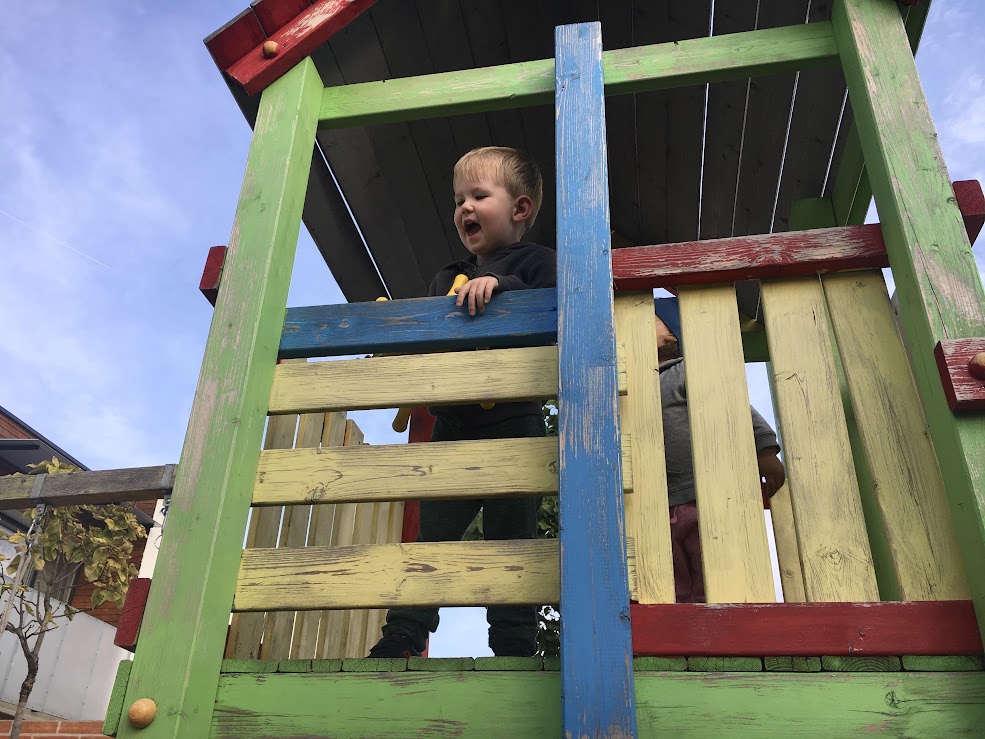
One upshot of this growth, however, is that Tony's part of town, once kind of isolated and completely devoid of grocery stores or shops or restaurants of any kind, now has a much-needed Billa and a restaurant/pub just a few blocks away, i.e., in easy walking distance. The pub/restaurant, called Trafford Cafe, has an outdoor patio with a slightly janky wooden play structure for kids, with swings and a slightly too steep slide. If you open any kind of eating/drinking establishment in a neighborhood like this, it had better be kid friendly. Their food is pretty blah, but it's a decent place to go to have a beer on the patio while your kids climb around the the adjacent play structure. We went there with Simon and Tea a few times.

Bratislava
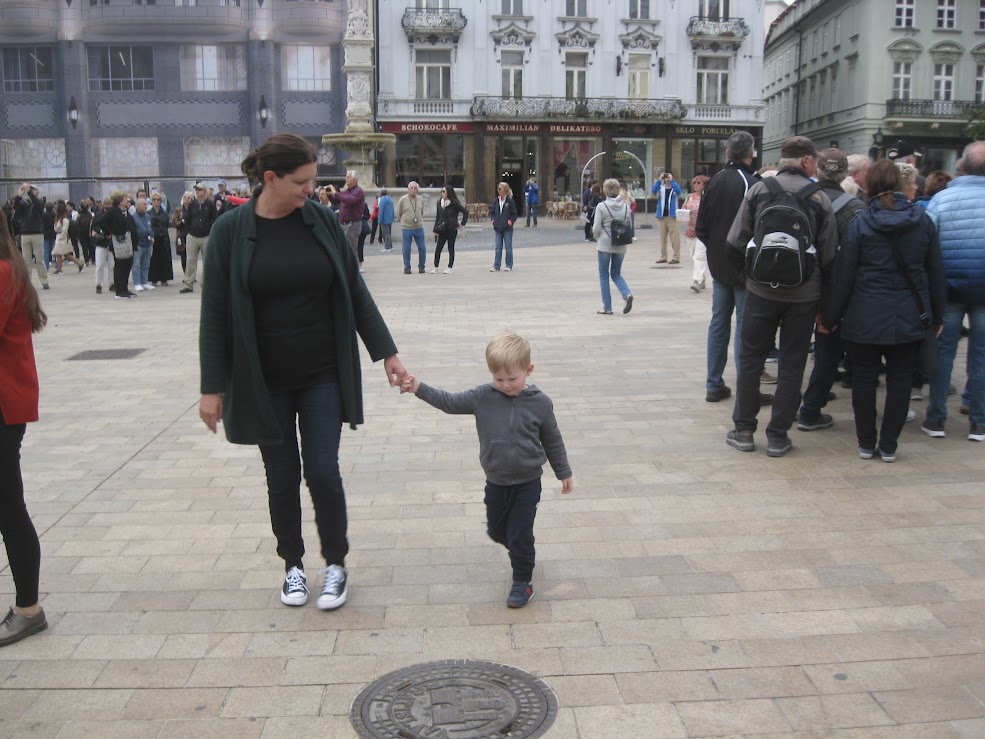
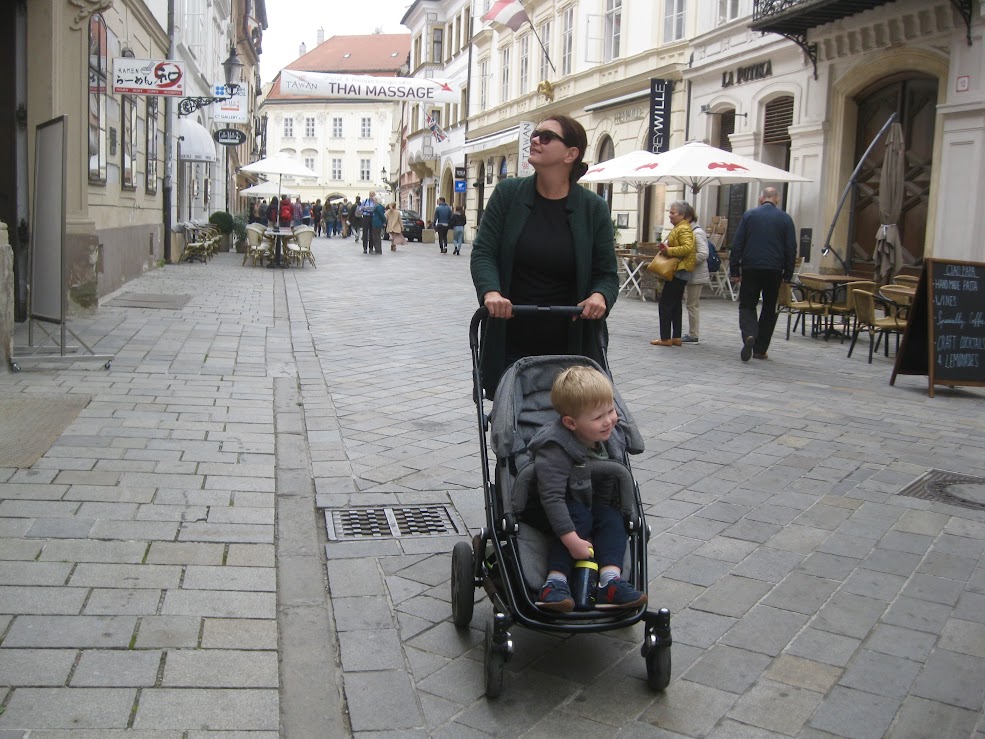
We did our by now obligatory short morning trip into Bratislava's centrum/old town, and this trip was almost like a carbon copy of 2018's excursion, so there's not a hell of a lot to report. We parked in the underground garage at the nearby Eurovea shopping mall (where you can park free for the first three hours!) and strolled through our old neighborhood, passing by our old apartment building, while making our way to the pedestrianized historic center.
Sadly, during 2018's annual Christmas market in Bratislava's main square, a food vendor's stall caught on fire and caused significant damage to one of the more prominent buildings on the square. The building's facade was still covered by a wall of scaffolding when we were there, but at least they put a screen over it with a life-size color image of the building's facade. If you weren't paying too much attention, you almost wouldn't notice it. Adding insult to injury, a city representative issued a statement saying the stall's owner hadn't actually secured permission to operate the stall there, which means the stall was illegal. That, of course, raises the question of how the vendor got away with operating the stall in such a highly visible spot in the first place! Seems like if someone had been doing their job, the vendor would've been kicked out before they finished setting up.
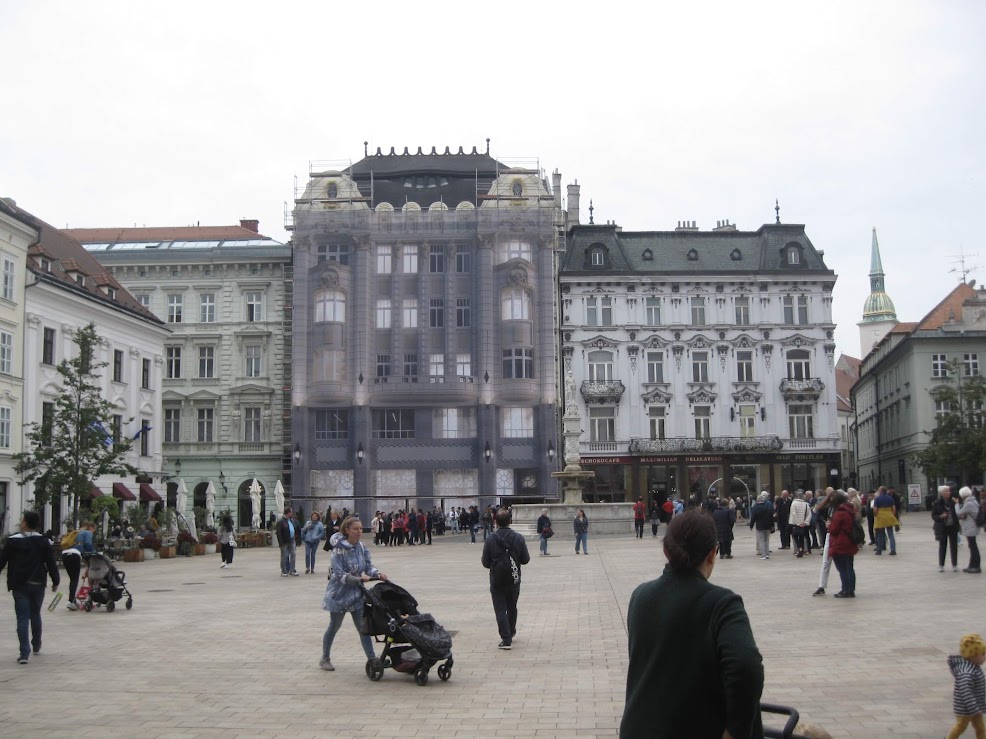 |
| You can see the scaffolding over the facade of the Hapsburg-yellow, Art Nouveau-style building that was scorched in the fire on the main square. |

Just like in 2018, we had lunch at one of our favorite spots - Bratislavský Meštiansky Pivovar. I described it a bit in this post. It's always bustling and their daily lunch specials are almost always a few notches above most other restaurants in the area (but also a euro or two more expensive, but still cheap and totally worth it). The soup, an orange-colored, paprikash-based soup with chunks of frankfurters and parky (Slovak hotdogs), turned out to be delicious. For the main dish, I ordered what was basically halušky (little potato dumplings, a bit like gnocchi but smaller and differently shaped) with a hunk of smoked pork, with bacon bits and sauerkraut woven throughout, which was actually really good, despite looking like a pile of brains or maggots with a slice of meat on top. Terezia went with the beer-battered chicken schnitzel and potatoes, a classic, simple Slovak dish, but done very nicely. Simon really dug the soup but preferred Terezia's fried chicken over my dish.
 |
| What looks like a hunk of meat atop a pile of brains or unusually plump maggots is actually smoked pork on a bed of halušky interspersed with sauerkraut and bacon bits. |
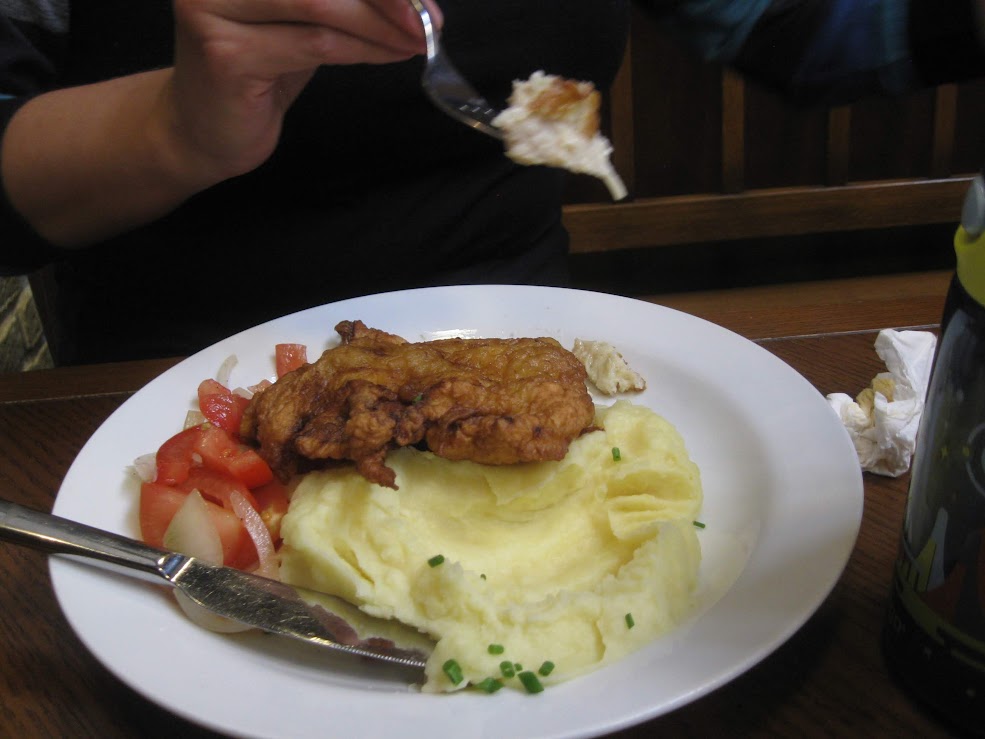 |
| Terezia's beer-battered chicken schnitzel. |
Bratislava has been growing vertically since we moved away, and that's having a noticeable effect on the city's skyline. An area near Eurovea that used to be a sad, vacant wasteland now has three giant, identical towers going up. And just the next block over, the old main bus station has been completely demolished and they're building a massive new replacement that will no doubt come with yet another sleek shopping mall and at least one high-rise tower. Check out this article for some visualizations showing how the sprawling new complex is supposed to look. I don't understand how one would justify building another shopping mall a mere two blocks away from Eurovea, and about a mile away from Au Park just across the Danube, but shopping malls seem to be the only thing developers can think to construct in this city when building on or revitalizing a space. The vast public space on the top with a rooftop garden looks promising, though.
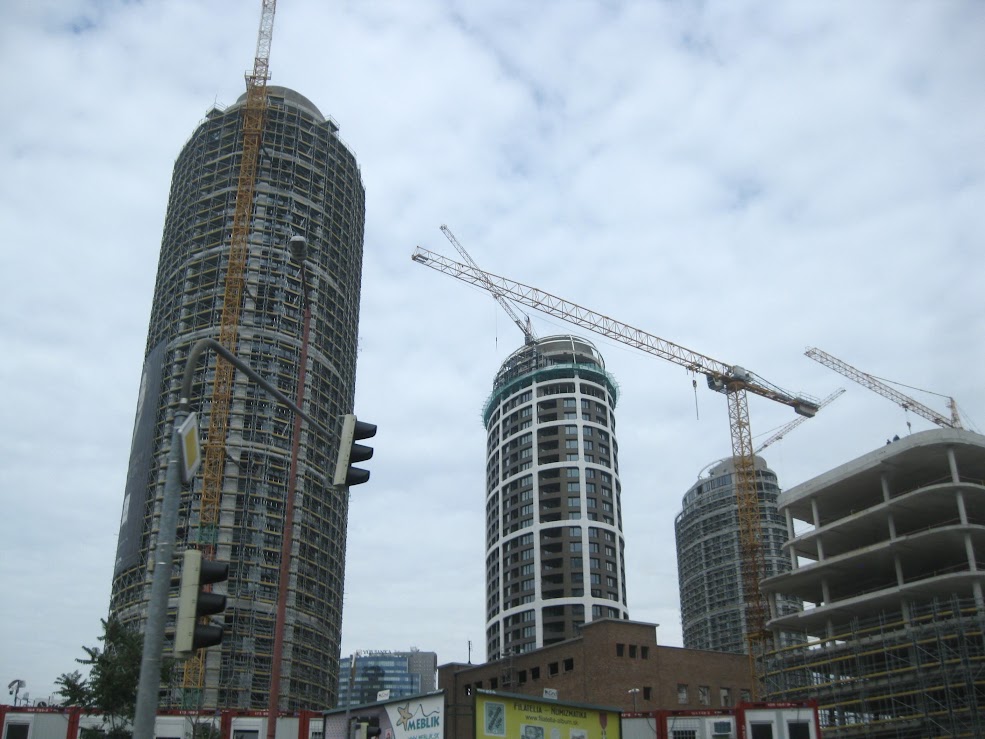
Just like in 2018, this trip to downtown Bratislava was all too brief, but we'll take what we can get. I really look forward to being able to spend a longer and more leisurely bit of time there when Simon is older.
Morning Trip to Trnava
On Wednesday morning we took a quick trip to Trnava, which was about a 30-minute drive from Bernolákovo. We'd never been to Trnava before. I'd always heard mixed reviews of the place, so it was lower down our list of priorities and we just never managed to make it there back when were living in Bratislava.
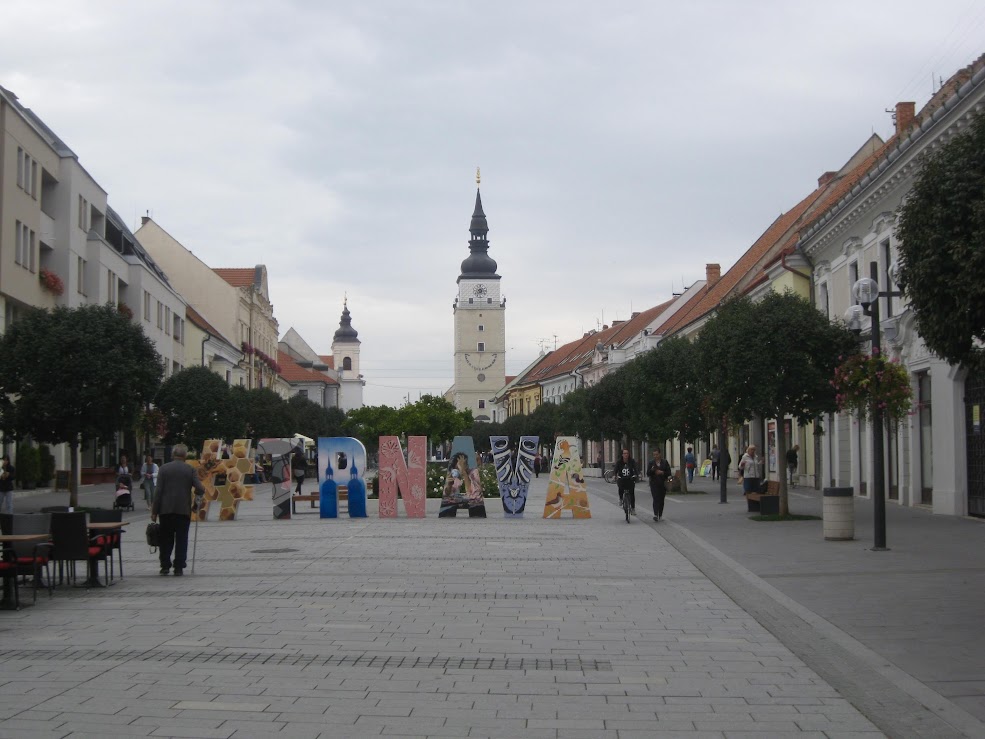
Whenever I've asked people about Trnava, there always seems to be a disconnect between what the locals say and what foreigners seem to think of it. In my experience, locals will tell you it's a must-see destination with a nice historic center, whereas foreigners I've spoken to give it more of a lukewarm review, saying it's okay but a little dull, and that I shouldn't go out of my way to see it. After spending one very rushed morning there and getting a quick taste of the place, I would put it somewhere in between. Going in with low expectations, we were actually somewhat pleasantly surprised by what we saw there. But at the same time, I'd say the historic centers of Košice, Banská Štiavnica, and Levoča are a bit more consistently attractive.

Trnava is Slovakia's seventh largest city (with a population of around 65,000), and it's extremely church-y, to the point that it's often referred to locally as "little Rome." It's been an important religious center in the region for centuries, especially when, in 1541, the Hungarian Archbishopric of Esztergom (kind of like the catholic headquarters for the Kingdom of Hungary) was relocated to Trnava for nearly 300 years while the Ottomans were conquering much of what is present-day Hungary. The town boasts a lot of big, snazzy, historic churches within its compact historic center, not to mention numerous church-related offices, convents, monasteries, universities, etc., housed in adjacent, ornate old buildings. The one or two longtime followers of this blog probably know that I'm vehemently anti-religious, but that I love the architecture of these centuries-old religious structures, and in Trnava there's kind of a lot to see in that regard.
Trnava also benefited from sitting along two important trade routes, and for centuries it has also been a big university town and a major center for the development of Slovak education, literature, and culture. The town was fairly multi-cultural in centuries past, with a big number of Slovaks, Hungarians, and Germans all living there, as well as a large Jewish community (the town has two nicely restored, repurposed synagogues from the 1800s: one is now an art gallery, and the other is a cafe).
But let's back up a bit. Much of Trnava's old town is still encircled by its medieval defensive wall, which you might pass through depending on where you enter. I'm not sure how much of the red-brick wall is original vs. reconstructed, but it's a cool thing to see.
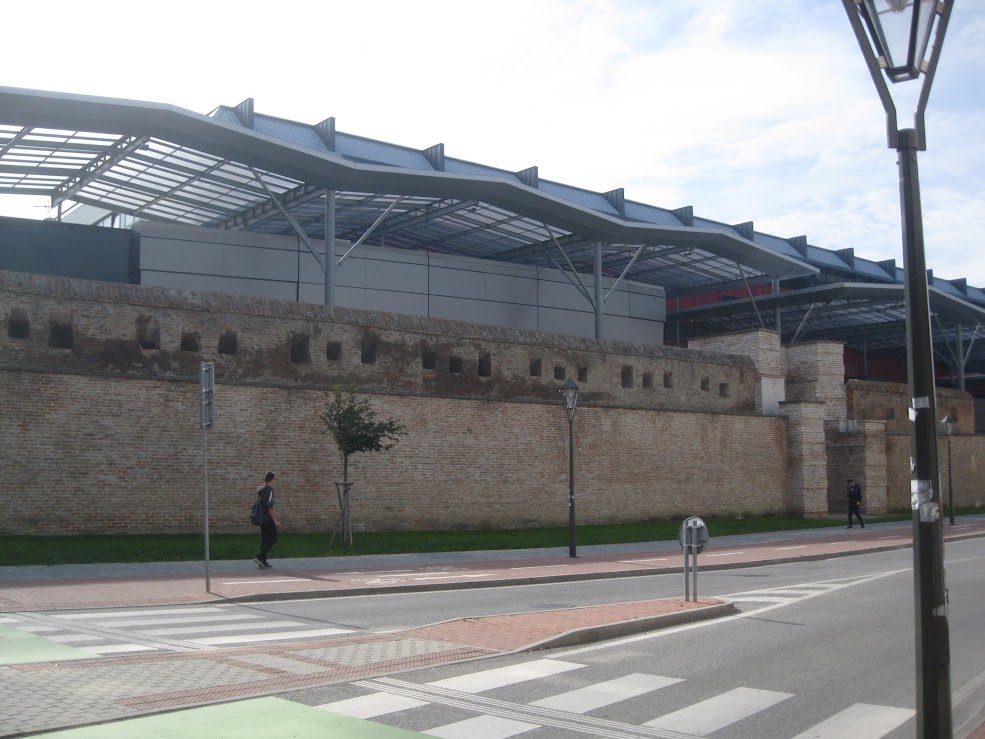 |
| The old defensive wall as seen from inside the historic center, with the massive soccer arena/shopping mall complex directly on the other side. |
When you enter the old town on the lengthy main drag, the center unfolds gradually. At first you see a mix of architectural styles from different eras: The usual goopy, colorful Hapsburg-style facades are interspersed with drab, 20th-century communist-era apartment buildings, as well as what are probably older buildings that were given modern, boring, streamlined facelifts. While sometimes the contrast is almost comical, I suspect this is partly why some non-natives tend to think a bit less of the place. Though the historic center is comparatively big (for a Slovak town), it does have a fair amount of dreary 20th-century intrusion, and it doesn't quite have the striking, uniform beauty of historic centers in, say, Košice or Prešov.
But the main drag is very well maintained and inviting, with nice, new paving stones; sleek, modern benches and fountains; new, well-manicured trees; and lots of cafes and restaurants with outdoor seating. When we were there, you could see on the main drag/square some fast-walking university students, young moms with strollers, and some old pensioners milling about.


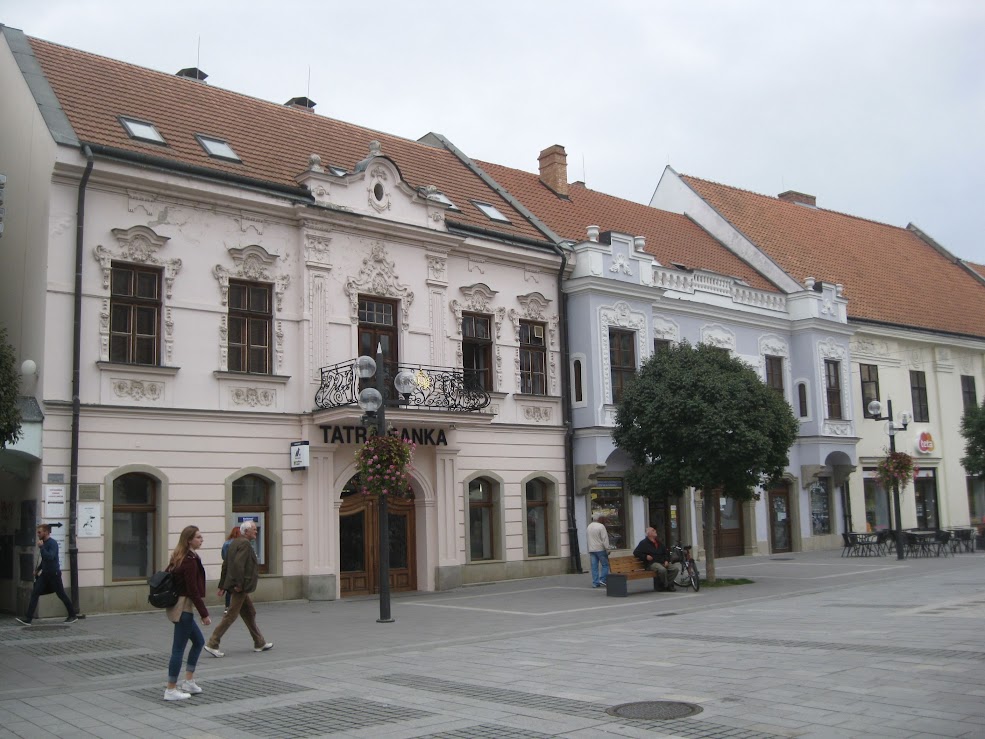
As you walk up the main drag, the old town's historic clock tower (built in the 1500s) comes gradually into full view.
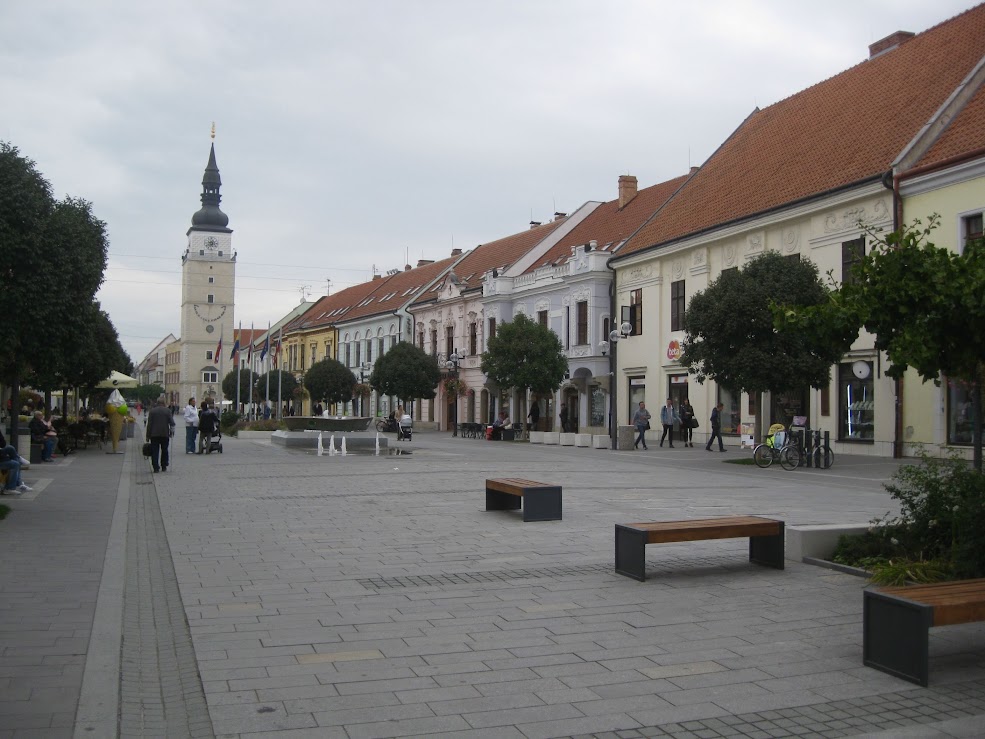

If you turn right to face the main square at the base of the tower, Trojičné námestie (Trinity square), you'll see a snazzy plague column and a fairly sprawling square behind it. However, you'll notice immediately to your right a comically ugly commie-era structure that clashes pretty severely with its surroundings.
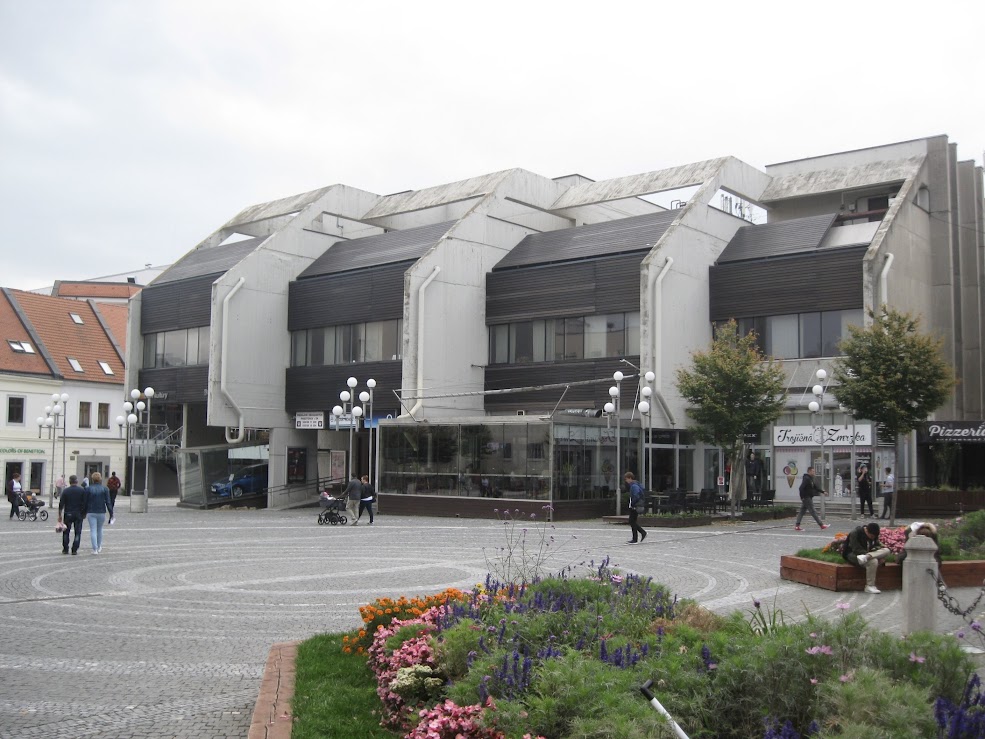
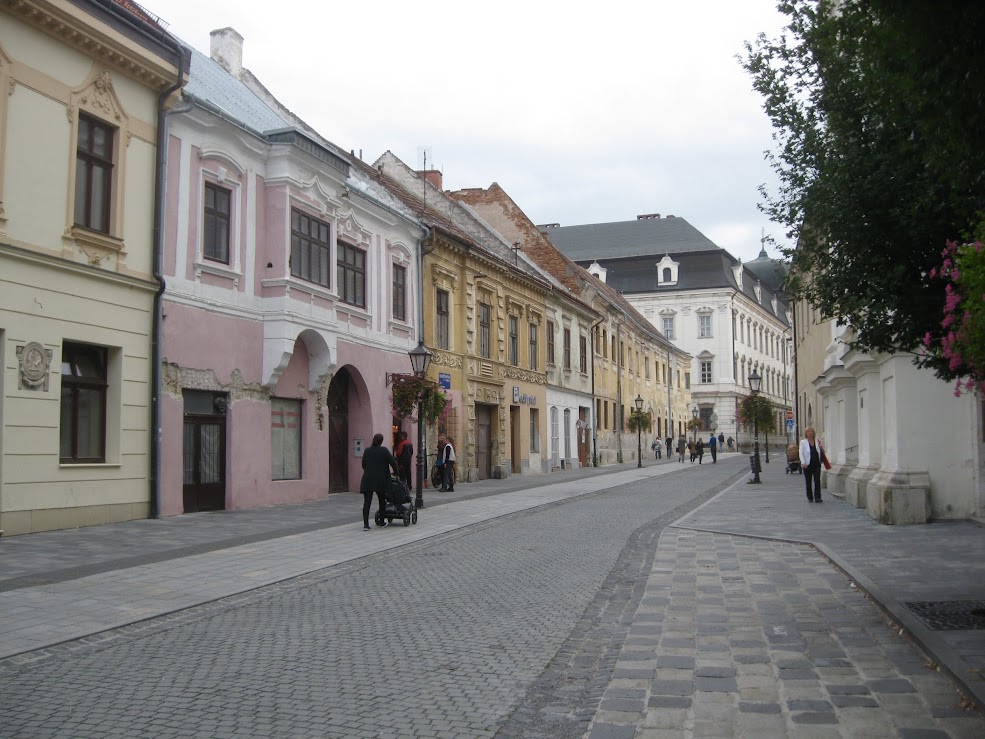
Just past that building, if you turn right on that street, you'll see more 20th-century brutalism as well as a massive, more contemporary grocery store/shopping complex. But if you look straight ahead and start walking east, the square ends and you come to a gently sloping, increasingly atmospheric medieval lane that leads to the town's main (and biggest) cathedral, the basilica of St. Nicholas.



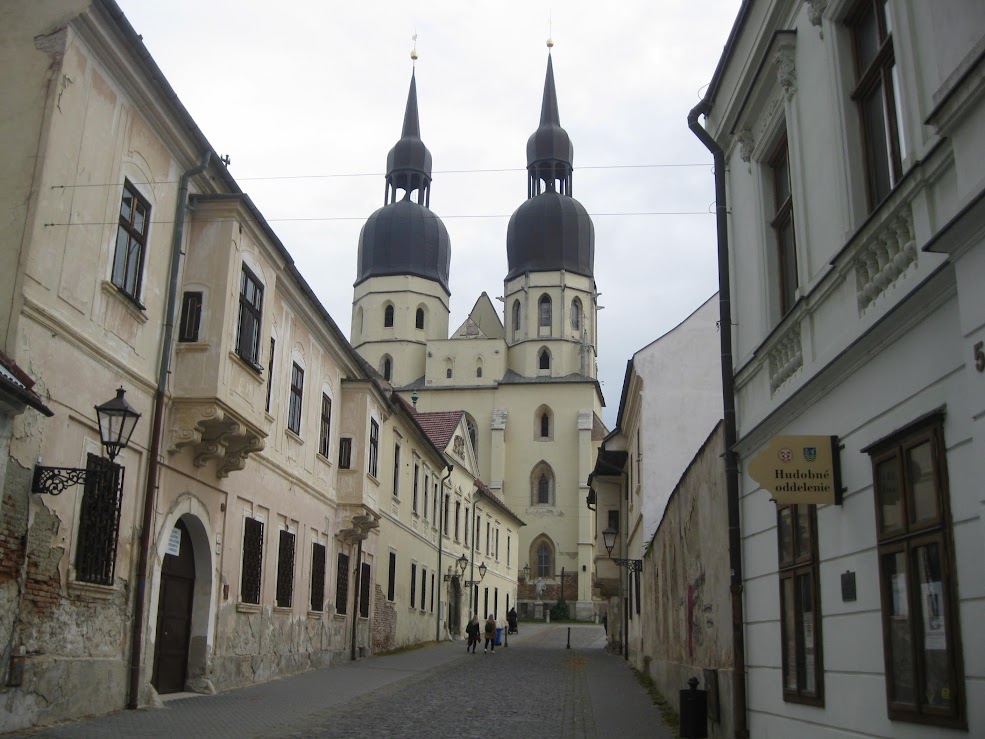
Now, I have to admit, the cathedral looks a bit drab in photos, since much of its stonework is coated in a boring, simple, beige plaster, not to mention there's a noticeable lack of ornamentation, and the towering twin spires above the facade are also fairly spartan. But in person, the sheer size of this thing actually does make an impression, and the overall effect is more striking than you'd expect. There are also several spots along the exterior where the plaster has been stripped away, exposing a layer of old brickwork underneath. The interior is appropriately dark and somber, and while most of the walls appear to have been covered in boring, white plaster, there are numerous frescoes, some of which look old and faded, and others which look restored. You've got ornate, baroque chapels flanking the nave, a gorgeous and massive pipe organ, a detailed wooden choir, and a spacious, vaulted ceiling, etc.
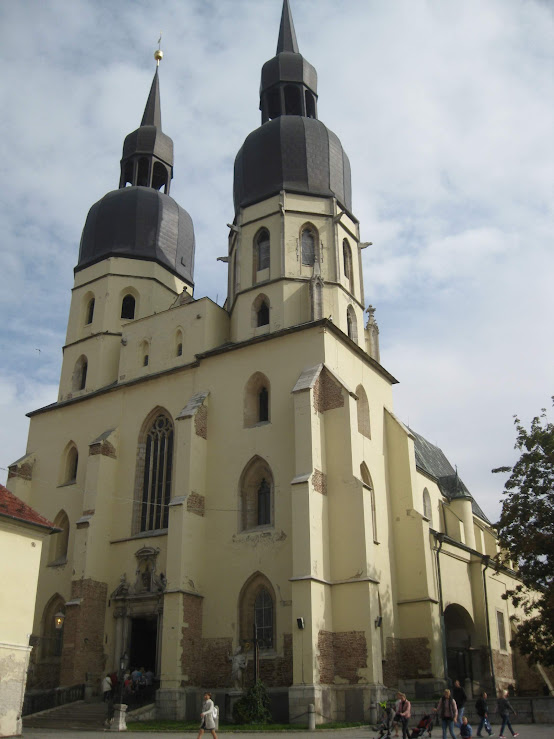
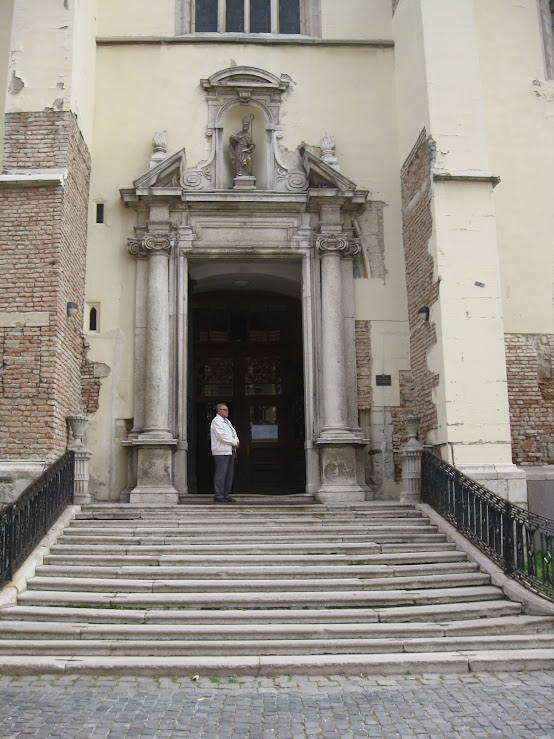
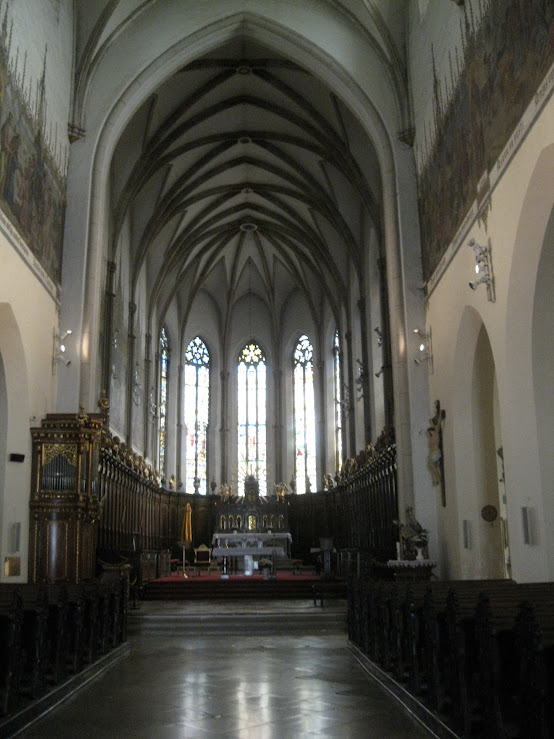
Obviously, this thing lacks the rich, detailed beauty of Košice's Gothic cathedral, but it's still worth a look.
What's also striking is the pedestrian walkway that runs along the right side of the church. Adjacent to the cathedral's facade is this walkway's entrance, flanked dramatically by old, graceful statues on pedestals.
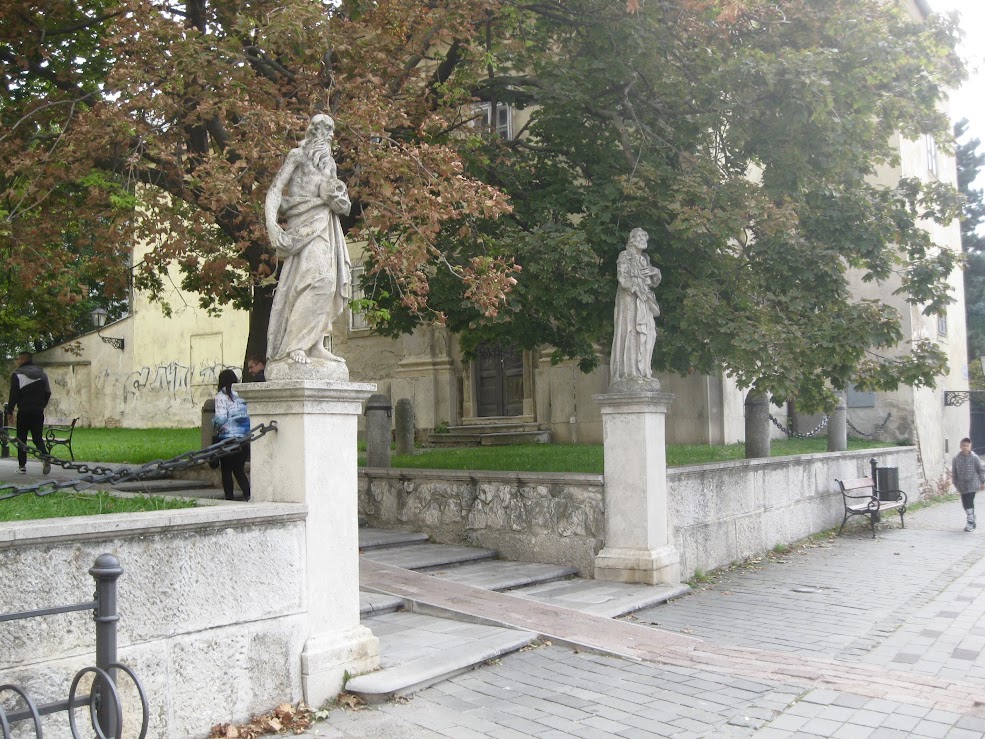
But when you walk along this path, you come to a portal in the old defensive wall just behind the cathedral, and when you pass through it, you find yourself on an elevated platform suddenly overlooking this wide vista over the communist/20th-century part of the city, with panelaks, shopping complexes, and a long, elevated pedestrian walkway, which all makes for an amusingly jarring contrast with the quaint old town behind you.

After checking out the cathedral, we had to start making our way back to our meeting point with Tony, Silvia, and Tea.
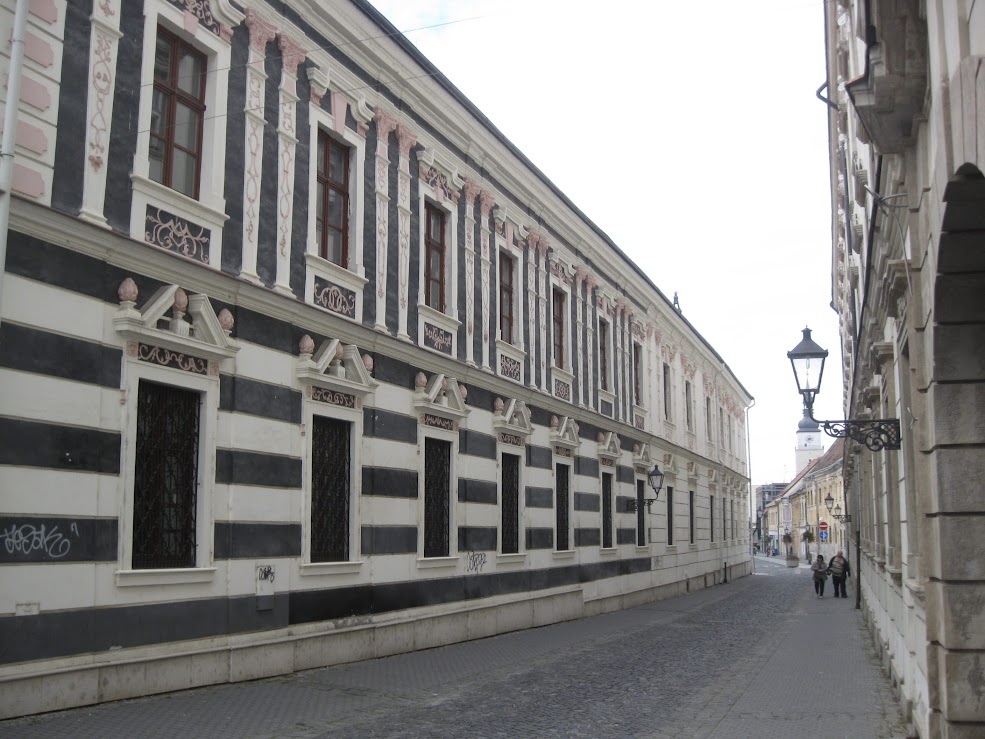

We really didn't have much time in Trnava, and we didn't get the chance to check out a few of the other historic churches in the town, notably the St. John the Baptist cathedral, which is said to have a crazy Baroque interior. We had to get back to the town's shopping mall just outside the old town to meet Tony, Silvia, and Tea, who had gone there to buy some stuff while we were sightseeing, and we all had to rush back home in time to feed our kids lunch and get them down for their naps. Alas, this is what's like when trying to travel with toddlers.

We really only got a quick taste of Trnava, and I'd like to go back and spend a little more time there. When that will be is anyone's guess, as I don't think we'll be making another trip to Slovakia until Simon is at least four or five. But if we are at Tony's place in Bernolákovo again, we'll definitely try to make it back to Trnava, as it's barely just a half hour away by car.
While I wouldn't call Trnava skippable, I'd say it's the kind of place where if you temper your expectations a bit, you might find it a worthwhile day-trip destination. There's just enough to see, and just enough of that old-world charm, to make it compelling enough - certainly more so than gritty Zvolen and maybe even Nitra. But to reiterate what I've already said, for us at least, it doesn't quite reach the level of ambiance and over-the-top beauty that you can find in Košice or Banská Štiavnica, and I wouldn't spend more than a day or an afternoon there.
Slovensky Grob
Terezia and Tony thought it'd be fun to order the traditional Slovensky Grob goose feast that happens in autumn in Slovakia each year. This feast consists of one whole goose slow-cooked in its fat, a generous portion of red cabbage, a big jar of velvety foie gras-style goose liver, a pile of lokše (which are these round, flat tortilla-type things that come slathered in grease), and a bunch of pickled vegetables. The goose is slow-cooked in the oven in these traditional ceramic pots that were originally made for baking bread, and when done right it's moist and tender inside with a perfectly crispy skin.
Slovensky Grob is actually the name of the village, just east of Bratislava and not far from Bernolákovo, where this traditional feast originated. Raising geese was a big thing in this region, and in times of financial hardship, the villagers realized they could make a lot of money by roasting the geese themselves and selling them prepared at local markets. Enterprising housewives then took it a step further and started transforming their living rooms into makeshift restaurants each autumn and preparing the full goose feast for paying customers. There are currently several such homes-turned-restaurants around the village which offer the goose feast. These are supposedly the real deal, preparing family recipes that go back generations, and many of them still look more or less kind of like houses (albeit very fancy ones, no doubt due to all the money they've been raking in from this endeavor) and some are tucked away on quiet residential streets, a bit off the slightly more commercial village center's main road.
Locals will book reservations at one of these places months in advance, but you can also do what Tony did and order the meal at least 24 hours ahead to take home. Tony and I went to pick it up, and it was all carefully placed in a big cardboard box. The goose feast is not cheap, especially by Slovak standards, but it's something people in the region are willing to spring for every autumn. Our takeout order cost a little over 130 euros, which for five people comes out to around 30 euros per person, which is really not bad given what you're getting - and we had leftovers.
Terezia says that you're actually getting a good deal because just the liver alone, given its high quality and quantity, would cost a ton of money in some high-end foodie shop in the US.
 |
| The goose. |
When eating the meal, you take your goose part of choice, a pile of red cabbage, and take a chunk of liver and smear it on the lokše, and enjoy.
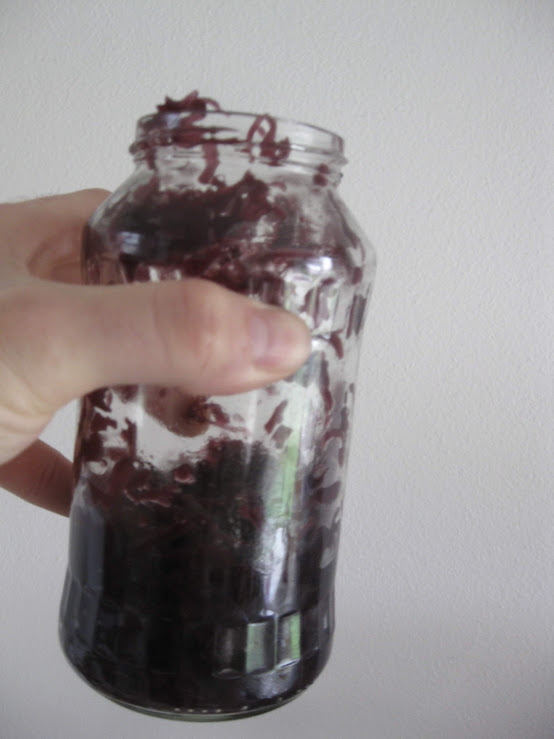 |
| The red cabbage. |
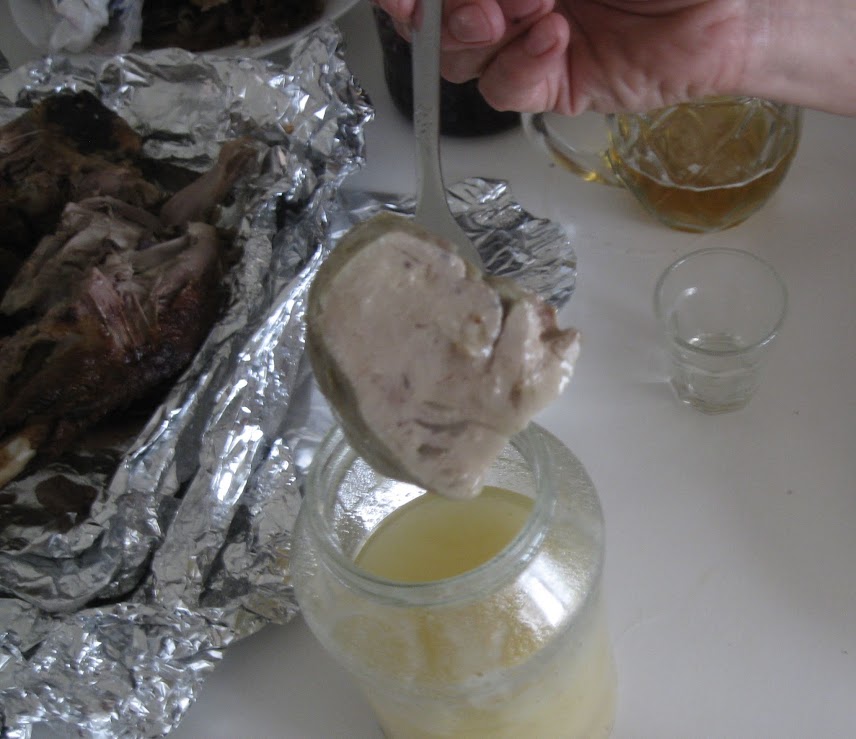 |
| A chunk of the velvety liver. |
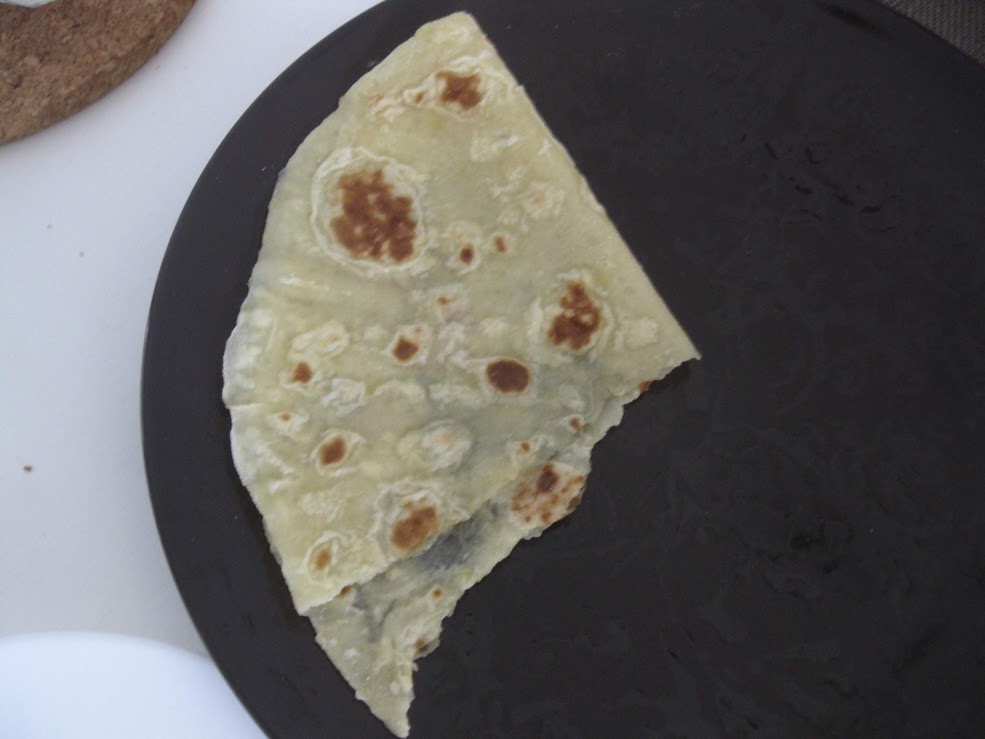 |
| Half a piece of lokše. |
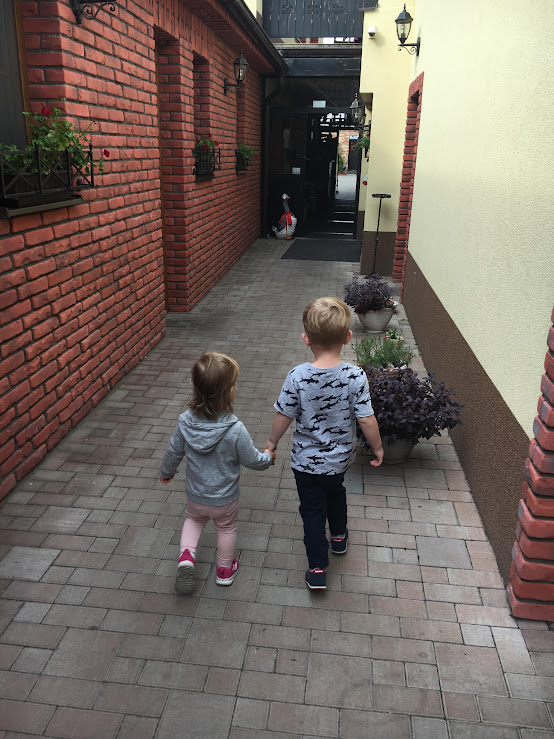 |
| The entrance to the Slovensky Grob place that we ordered from. |
The one we ordered was quite good, particularly the leg that I chose. And the liver and slightly smokey flavor of the lokše is kind of an evil treat. And I could eat heaps of the slightly sweet red cabbage. Geneally, duck and goose are something Slovaks (and Czechs) tend to do very well, and Slovensky Grob is the kind of thing that should be attracting hordes of foodie tourists looking for a delicious, authentic, unique, and cultural culinary experience.
But while this is the kind of thing that foodie tourists would go nuts for, it might be a lot of work trying to arrange it if you're a foreigner, i.e., you'd need to book quite ahead in advance and come in the fall, you'd need a car (or to call a taxi) to get there, and I'm not sure what kind of a language barrier you'd encounter at these places.
There are a few restaurants in Bratlislava that offer the goose feast too. Back when we were living there, we ordered it at a restaurant in the town center called Pulitzer. It was good, but I think the Slovensky Grob one was better. It's definitely something that's worth looking into if you're in Bratislava in autumn.
Click here to see the full set of photos from this trip!
Stay tuned for Part 3 of this trip.