Sunday, April 29, 2012

Budapest


We finally took a little extended weekend getaway to Budapest, something we'd been wanting to do for a dog's age. It only takes 2 hours and 40 minutes to get to Budapest from Bratislava by train, and with only a handful of stops, the ride is a breeze.

Neither of us had ever been to Budapest, so it was a totally new experience for both of us. Unfortunately, neither of us speak a word of Hungarian. What was interesting about that is that in the past we've traveled to countries where at least one of us knows the language. When I've been to Italy and France, I could get by okay, since I've studied those languages. Of course when we go to Prague, Terezia does most of the talking, as she was exposed to Czech growing up, and she knows enough German to get by in Vienna. Terezia can also skirt by in Poland, as Polish and Slovaks can kind of understand each other. But in Budapest, the language was truly foreign to both of us. I'll admit it's a slightly odd sounding language if you've never really heard it before. It bears no relation to slavic, germanic, or latin-based languages, and its closest linguistic relatives are Finnish and Estonian. It's somewhat monotone sounding, but also has this soft staccato quality.


Luckily, a lot of people in Budapest (particularly younger generations and restaurant waitstaff) speak English pretty well, and as soon as they could tell we didn't understand Hungarian, they would quickly switch to English. English really is becoming the lingua franca, since we heard Italian, French, and Scandinavian tourists speaking it with the locals. Furthermore, pretty much everyone we dealt with was friendly, so Budapest has got Bratislava beat in the customer service department.

The only language-related snafu occurred when we first got there. The guy we rented the apartment from asked us to text him when we got into town. After getting off the train, hunting for an ATM, then hunting for the nearby metro entrance (which had NO signage what so ever!), and purchasing our metro tickets, we tried texting the owner, only to find that the texts weren't going through. We had a bit of a "duh" moment when we realized that the texts might not have been going through because we were deep in the bowels of the metro system. So, we took the escalator back up, but an army of metro ticket checkers at the top asked for our tickets! The guy who approached us could say "ticket please!" but that was about the extent of his English. Long story short, there was no way in hell I could convey to him our reason for coming back up, so we had to buy new tickets to get back down. Oh well!

The apartment we rented may have been the nicest vacation apartment rental either of us have ever stayed in (and cheap to boot). It was also perfectly and fairly centrally located: a block behind the very cool Great Market (this massive food market housed in a sprawling, beautiful old building), a block from the Danube, and a couple blocks from the lively restaurant strip of Raday Utca. We were in the historical center on the Pest side of the Danube, but not in an overly touristy section of it.

The apartment building
The apartment

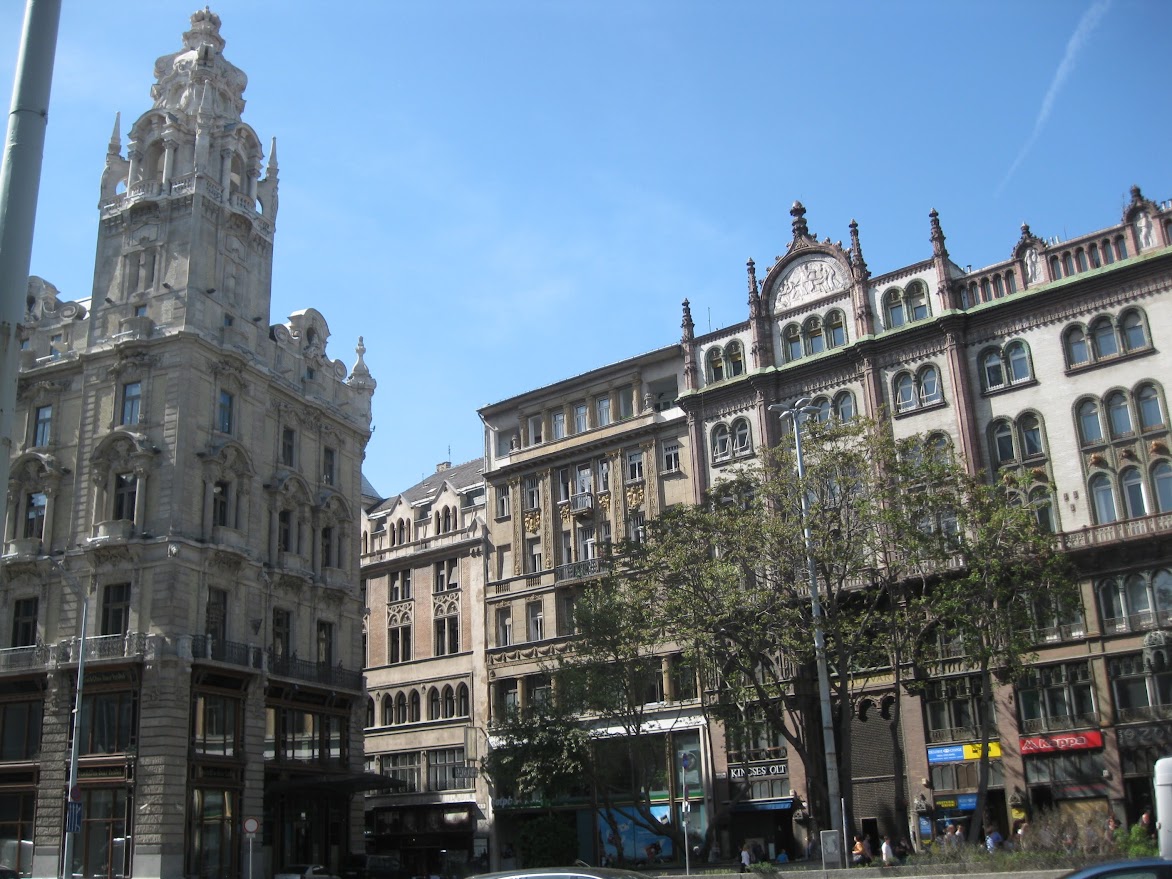
At any rate, how was Budapest? Apart from it being unseasonably hot (around 80 degrees fahrenheit during the day), I've been mulling this over, trying to come up with an apt way to describe the city. To me it feels a bit like a worn and gritty version of Vienna. It has all the grandeur, the massive and goopy art nouveau and liberty style buildings, the pomp, and elegance you'd have expected from a major city in the Austro-Hungarian empire, yet after 40 years of Communist rule (plus 22 years of navigating capitalism with considerable difficulty), there is a worn down patina, a faded splendor, with facades lined and pockmarked with cracks and missing chunks of plaster, and a general roughness around the edges. That dingy Communist-era buildings are interspersed into the urban fabric only adds to that roughness. I've whined about this before, but even though Vienna has loads to offer culturally, aesthetically, it's a little too clean, tidy, and genteel for my tastes, so naturally Budapest appeals more to me.
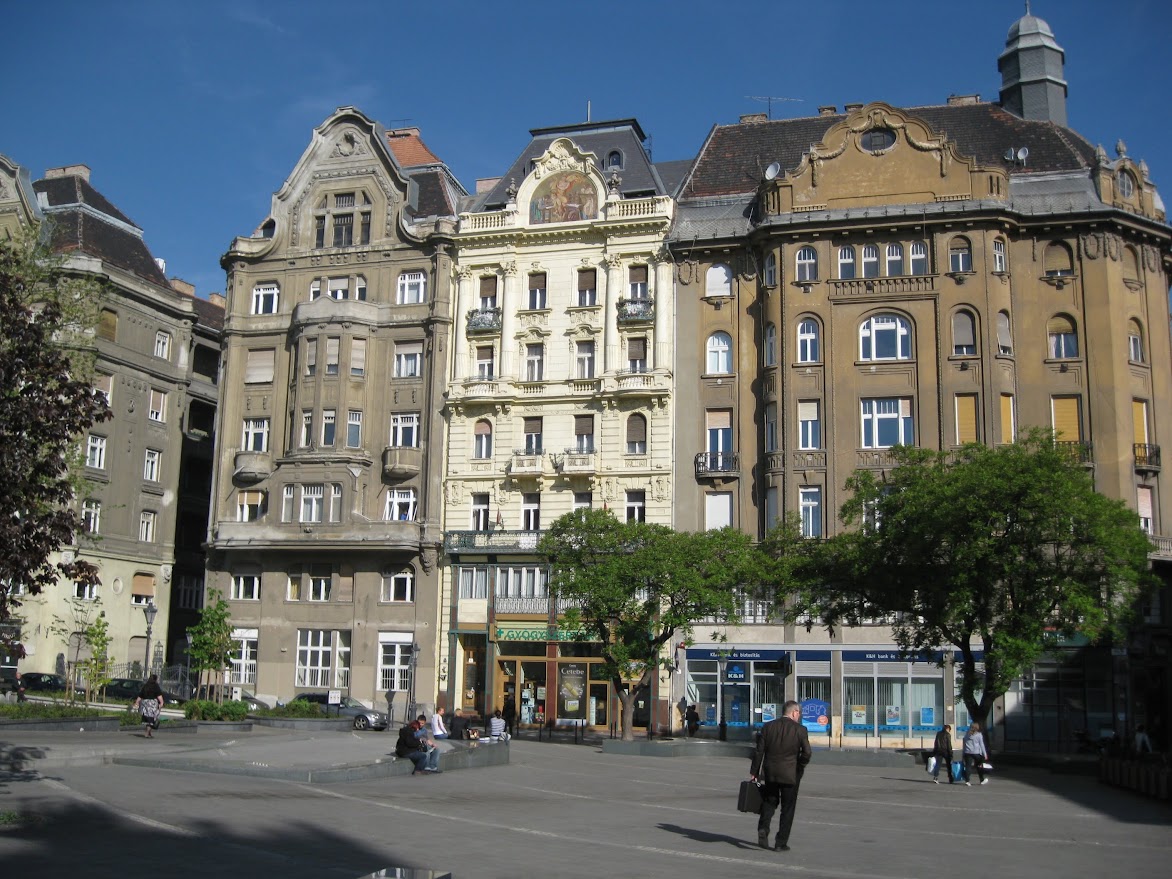


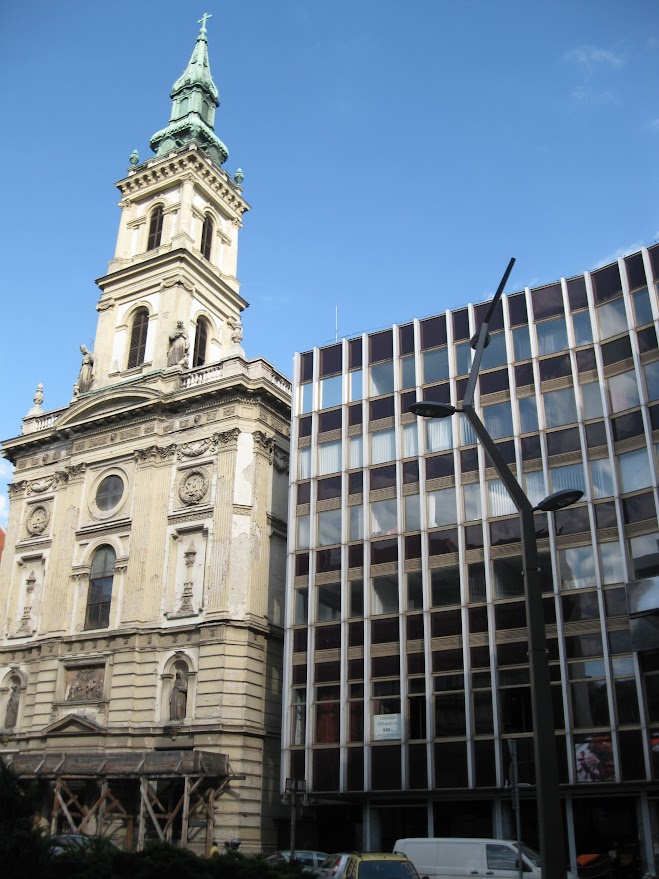
Not all of it is like that, though. Certain areas, particularly some of the touristy monuments and squares, have been spruced up a lot. But with Hungary being a relatively poor country, they've still got a long way to go before ever reaching the excessive neatness of Vienna.

But overall, the city has a nice feel. More energy than Bratislava or Vienna, yet still more laid-back than other cities. Not as beautiful (architecturally) as Prague, but its grittiness keeps things intriguing. (Also, Budapest appears to be devoid of the uber-tacky tourist shops that plague a couple of Prague's streets). A lot of the locals we encountered seemed to be very "with-it" people, quite in contrast to the extreme right-wing lurch the country's government has taken.

Budapest is a massive and sprawling city (pop. over 2 million), and quite decentralized, which meant that we had to get acquainted with its awesome public transit. There are three metro lines which run in meandering arcs across the city, and while the metro won't get you to every little corner like Paris' metro, it'll get you to most major sights, while the tram handily fills in the links. And like any great city transit system, we rarely had to wait more than four minutes for the next tram or metro to come along. Also, the metro cars are these cool old Soviet-designed clunkers, some of which have groovy, vintage interiors.


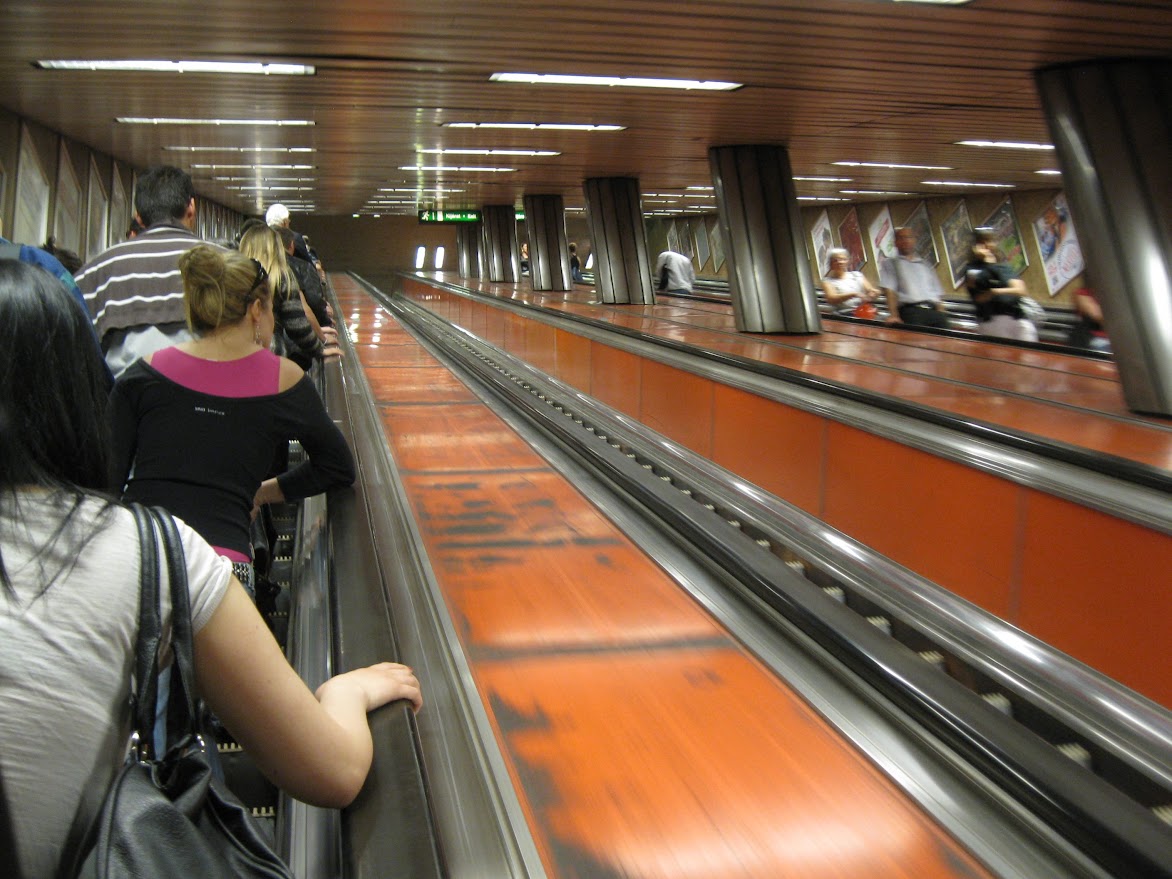
Heading down into the depths of the metro system
Terka on the Liberty Bridge

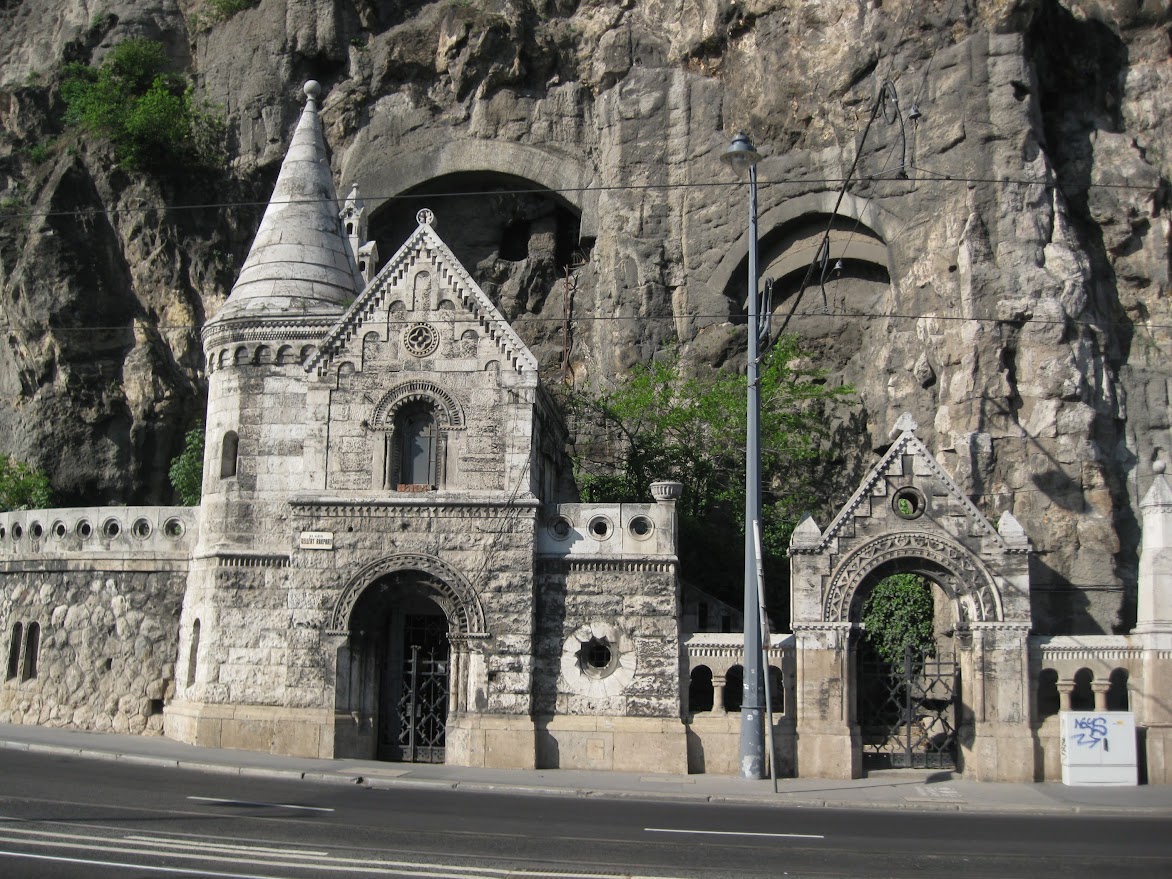
Budapest's three central bridges that cross the Danube, and the area around them, make for an incredibly scenic river setting. Gellert hill, on the Buda side (by the Liberty Bridge), rises dramatically on its craggy outcropping, covered in lush greenery, capped off with a Soviet monument, with weird, romanesque looking chapel-like structures at its base. The hill just to the south of it is made equally dramatic with the castle, Matyas cathedral, and Fisherman's bastion all clustered on top of it. Although it looks completely different, the overall effect is not unlike gazing at Prague's beautiful riverside setting from Charles Bridge. It's easy to see how the Magyars could've been so taken with the geography of the location that they decided to stop being nomadic and settle there.

Gellert Hill


Of course the views out over the city from the Fisherman's Bastion on the castle hill on the Buda side are incredible too.

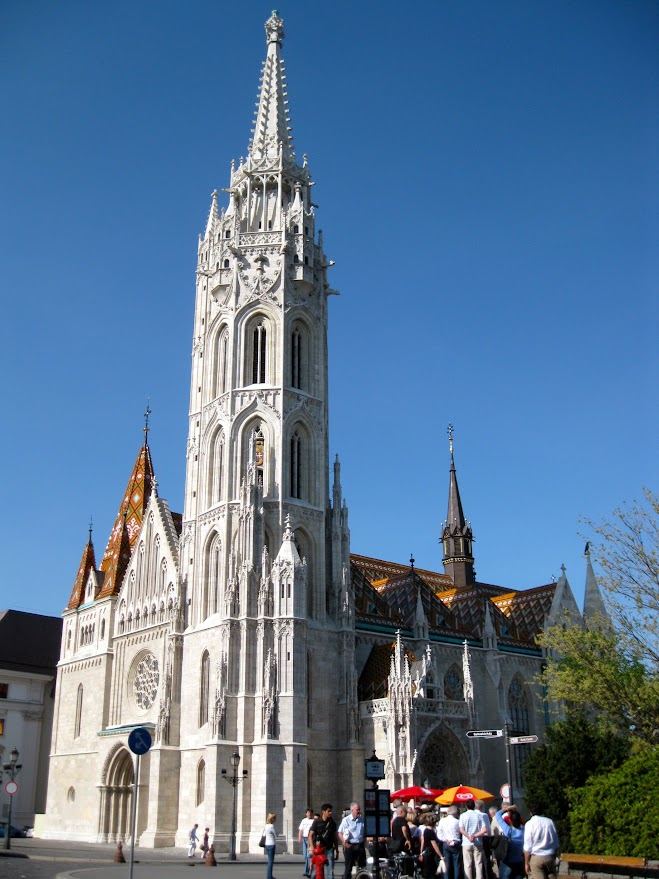
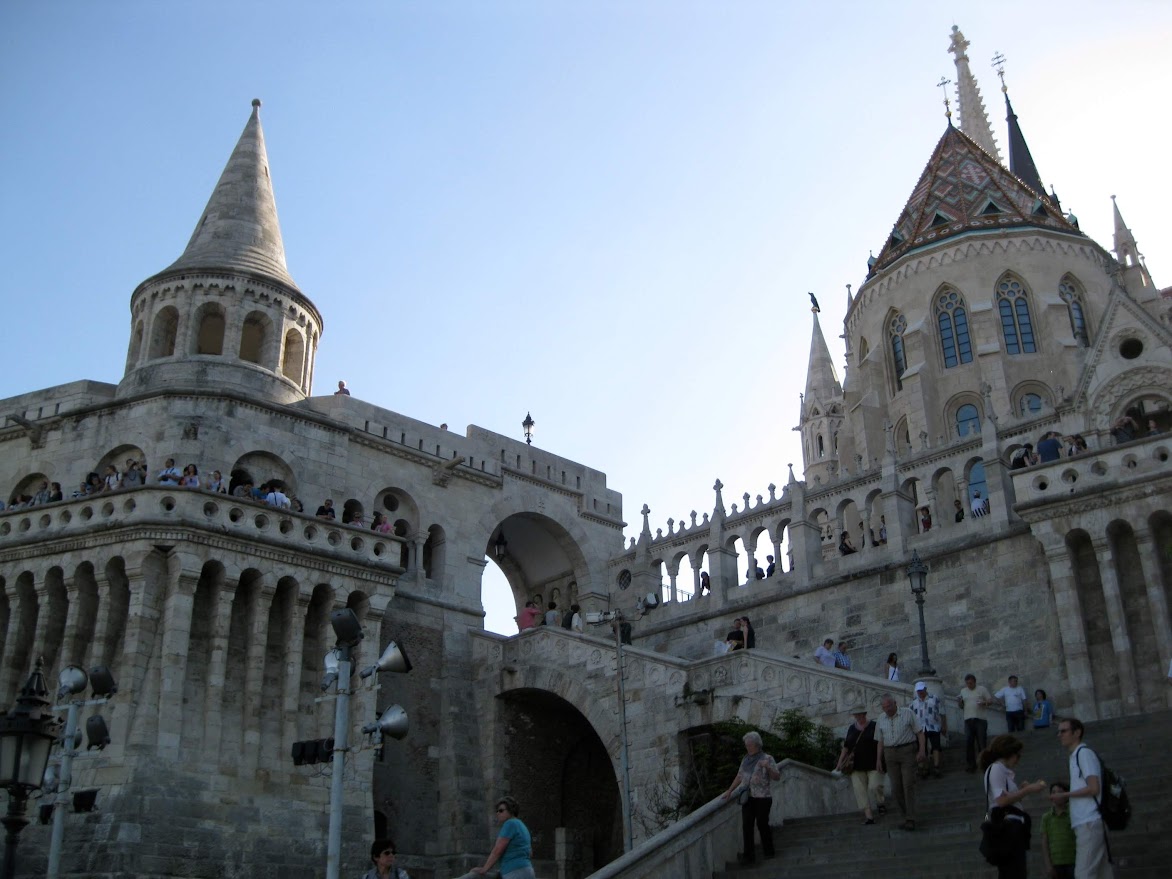
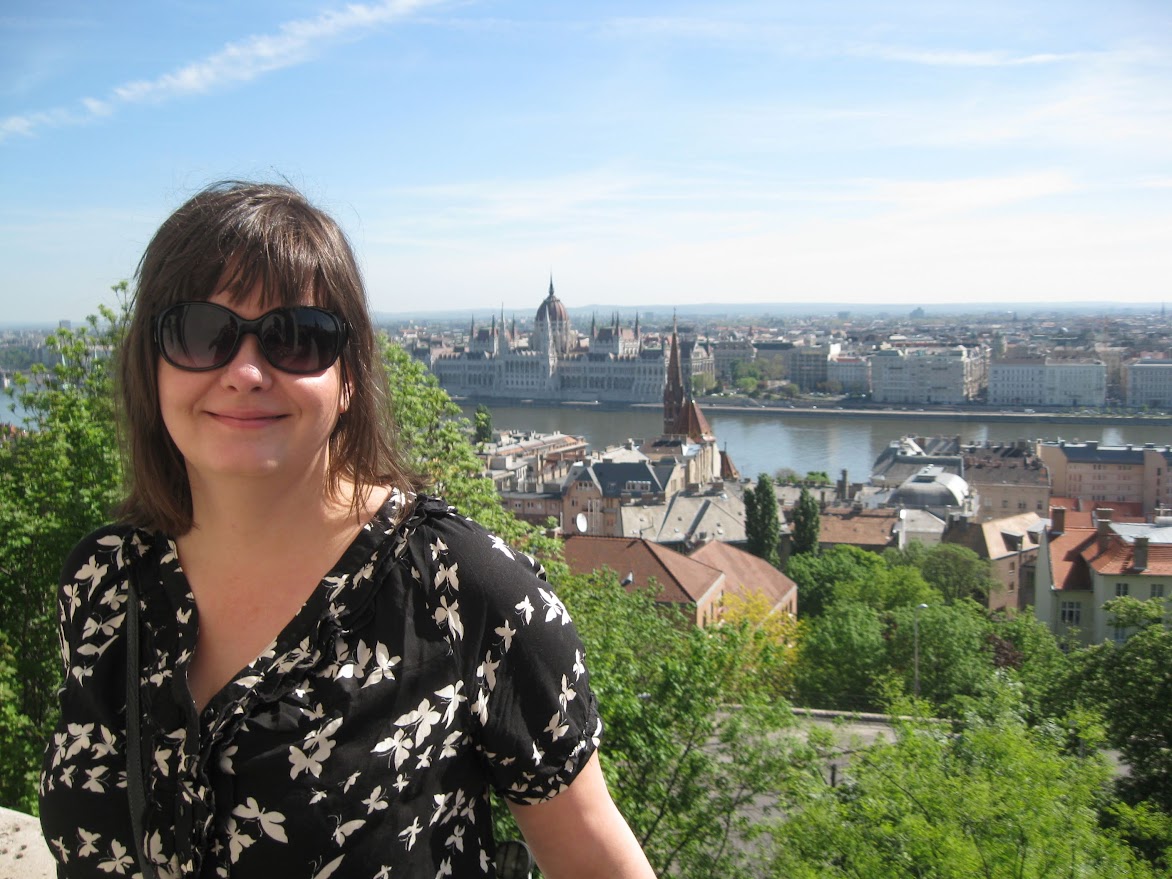
The Pest side features lots of gently curving streets lined with the aforementioned goopy art nouveau, liberty, and/or historicist styles that were in vogue in the late 1800s/early 1900s. We wandered through these streets quite a bit, especially the atmospheric side streets around Vaci Utca. Vaci is kind of tacky and touristy and avoidable, and as soon as you turn off of it, the vibe does a total 180, and you're back in Budapest again. (We did find a yummy gelateria on Vaci, though.)


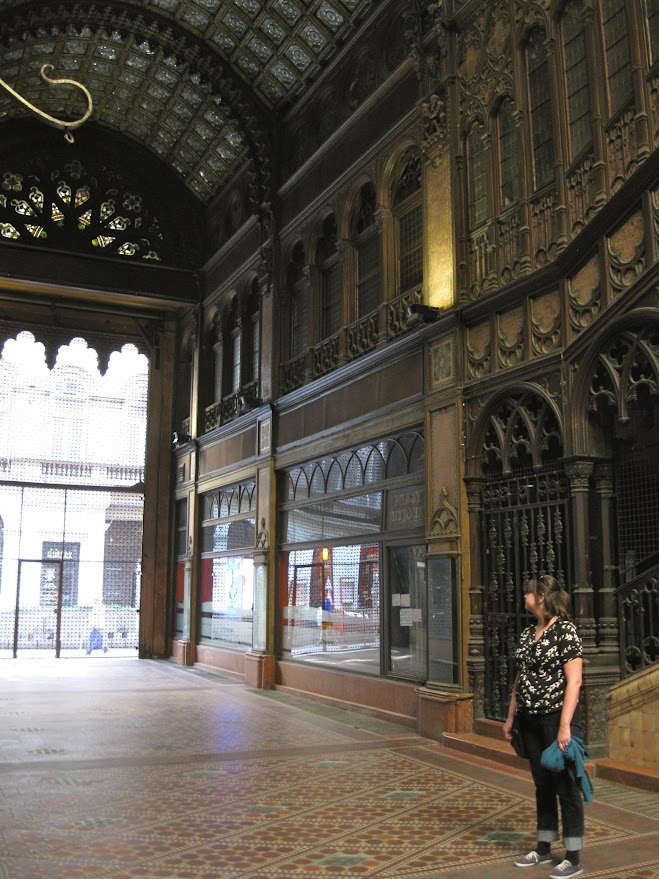
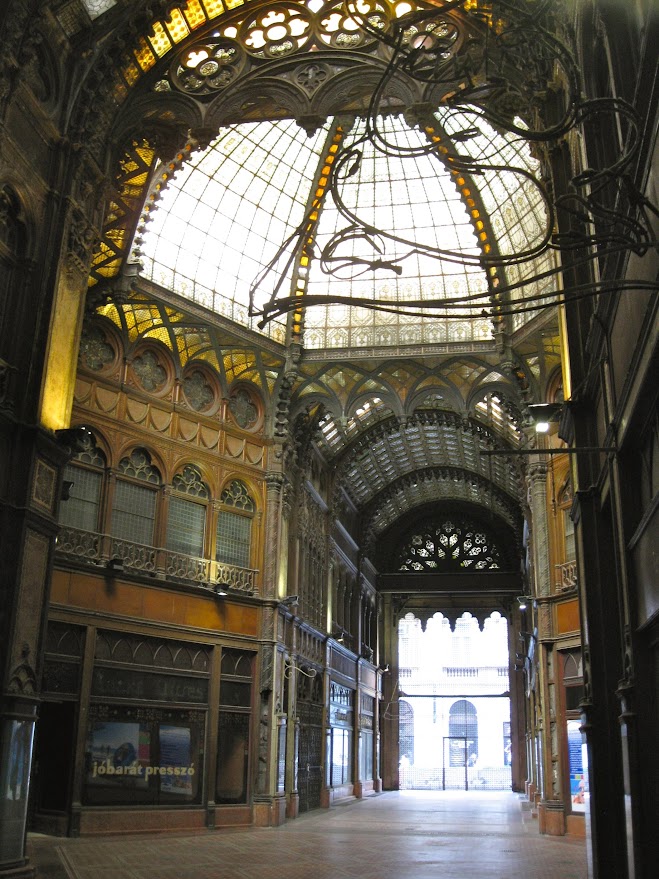
One of the coolest things for me was the Parisi Udvar, an old Parisian styled shopping gallery, which is basically a mishmash of liberty style/neo-gothic porn. This is where the Budapest cafe scene from Tinker Tailer Soldier Spy was filmed. Sadly, all of the shop spaces are currently empty, and it's difficult to understand why. This would seem to be prime real-estate (why is it not filled with posh restaurants or swanky clothing boutiques?), but surely there's gotta be some hassle-filled bureaucratic explanation, or very possibly a financial one. Still, I'm glad it's open so that geeks like us can go in and wander around.

The Great Market Hall was incredibly vast, although I have to admit that much of the produce I saw on display was kind of pedestrian. Those mountains of red bell peppers looked nice, but I just didn't see the slightly more exotic things that you can find at Vienna's Naschmarkt (and back home in Oakland) like fresh medjool dates or wild mushrooms like morels or chanterelles (which are in season now). Still, the butcher stands were loaded with tasty-looking treats, and the cheap food-stands upstairs were hopping. We had langos for lunch one day (fried dough with sour cream, garlic, cheese, and whatever else you want), and while they weren't bad, nothing beats the fresh-off-the-skillet variety that we get in Terezia's mom's kitchen.
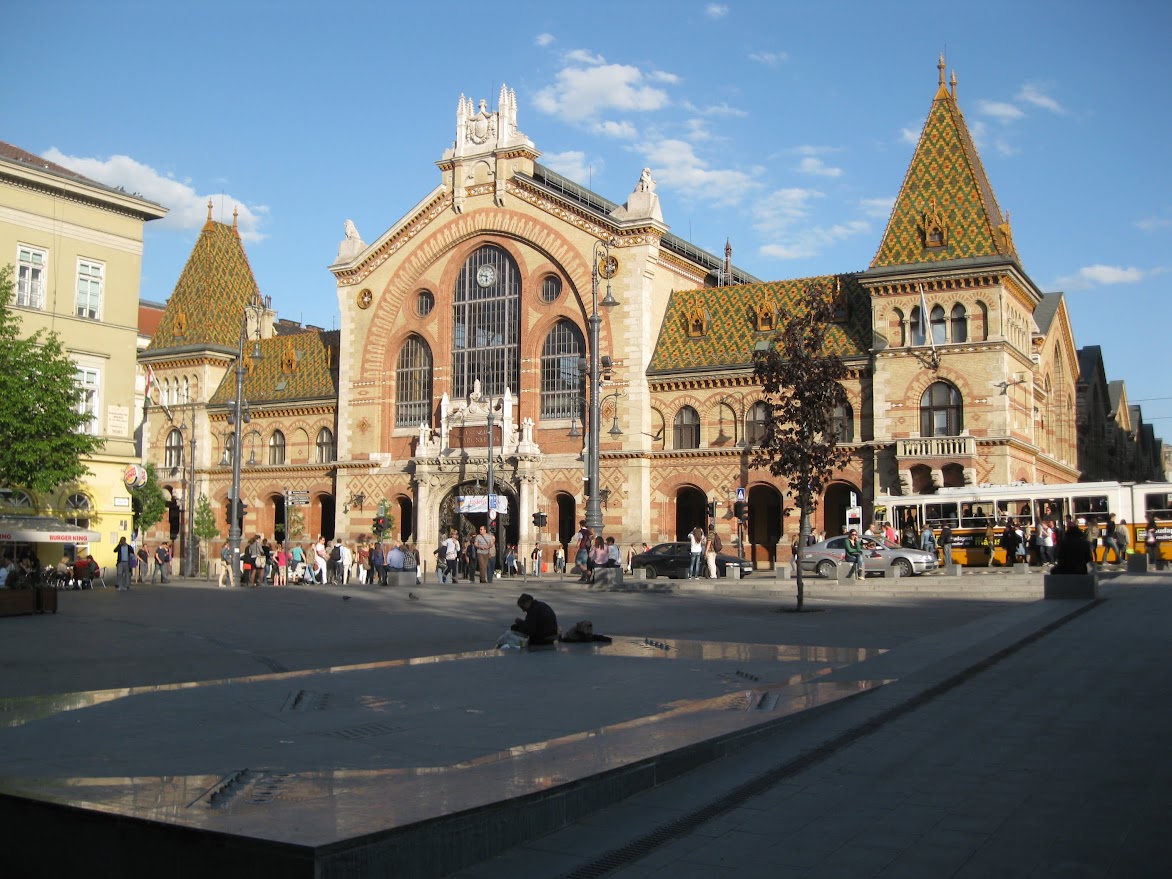
The Great Market Hall
Inside the Great Market Hall
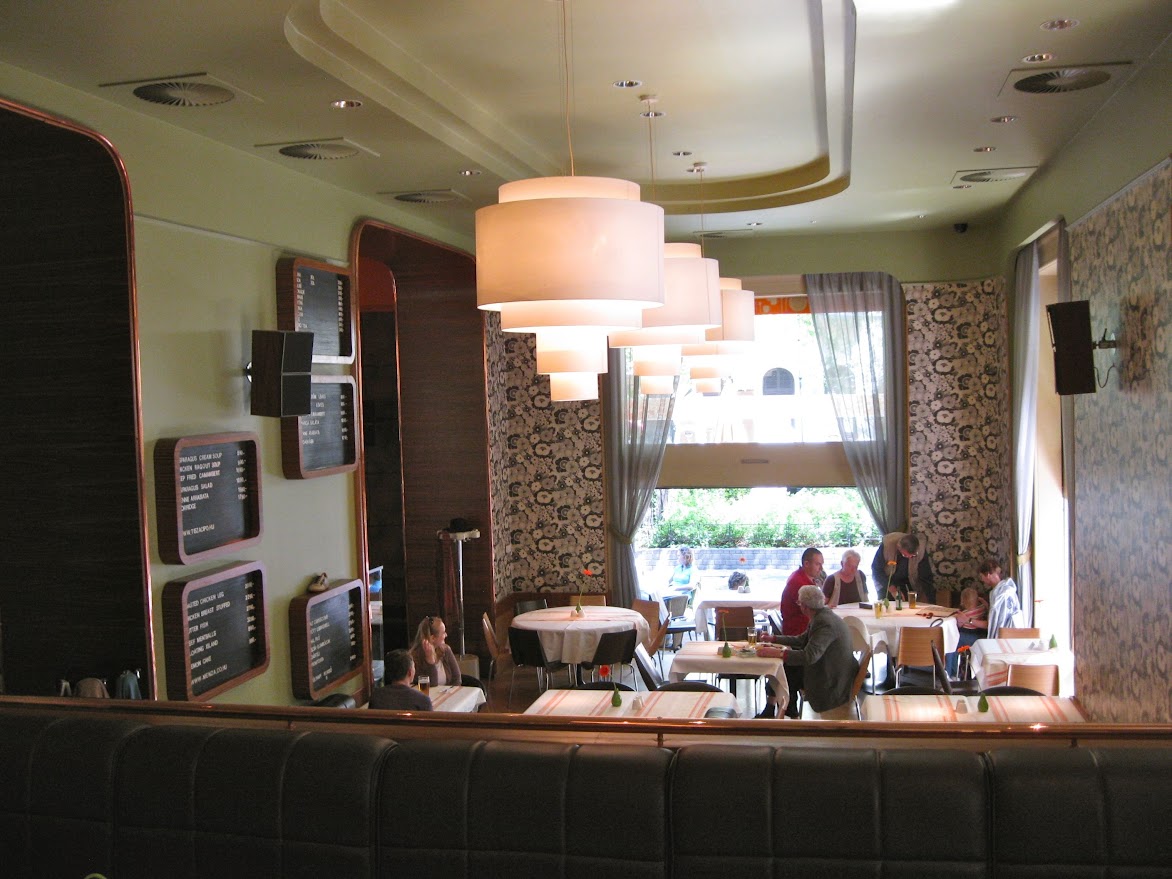
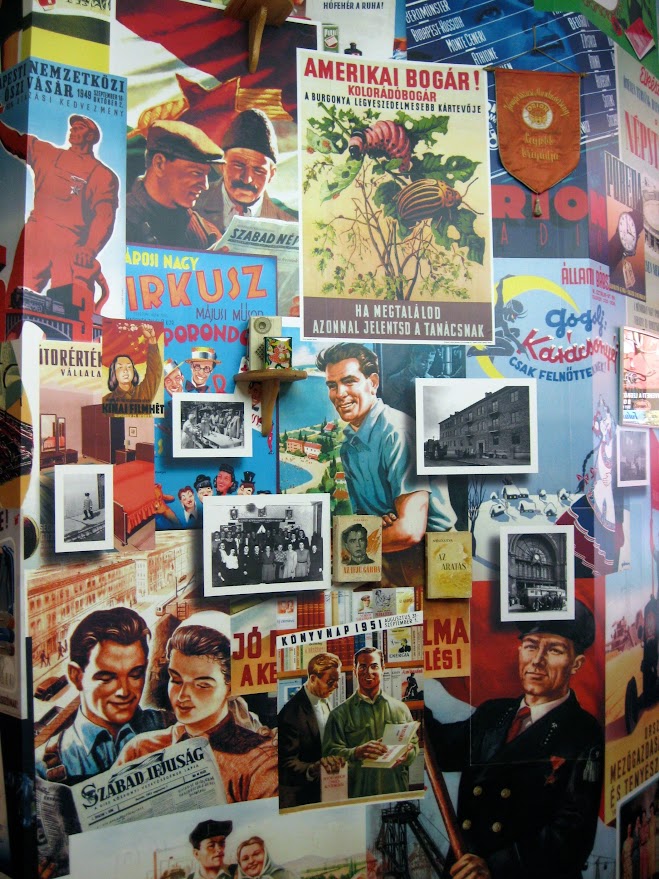
Menza, an uber stylish, vintage-modern restaurant that aims to create a communist-era vibe.


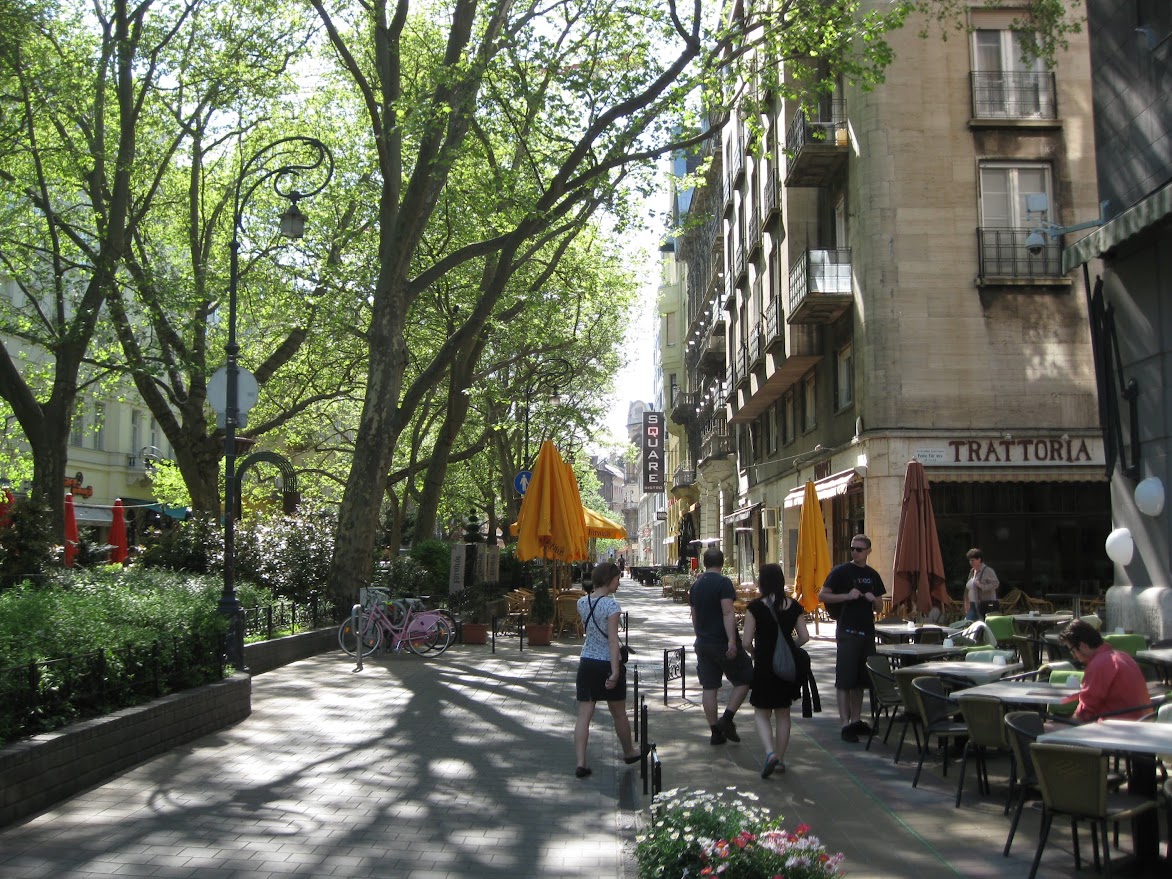
Speaking of food, Raday utca has about a 4-5 block stretch along which every inch seems to be occupied by restaurants. Raday is reportedly the "hip" restaurant area, where locals still outnumber the tourists (or so I'm told). All of the restaurants have outside patio seating lining both sides of the street, making this pedestrianized strip quite lively. On warm evenings, this feels like the place to be. That it was a mere two blocks away from our apartment was a major bonus. Two of the three dinners we ate here were quite good, featuring things like a rich goose leg confit or duck breast with a spicy Hungarian paprikash.


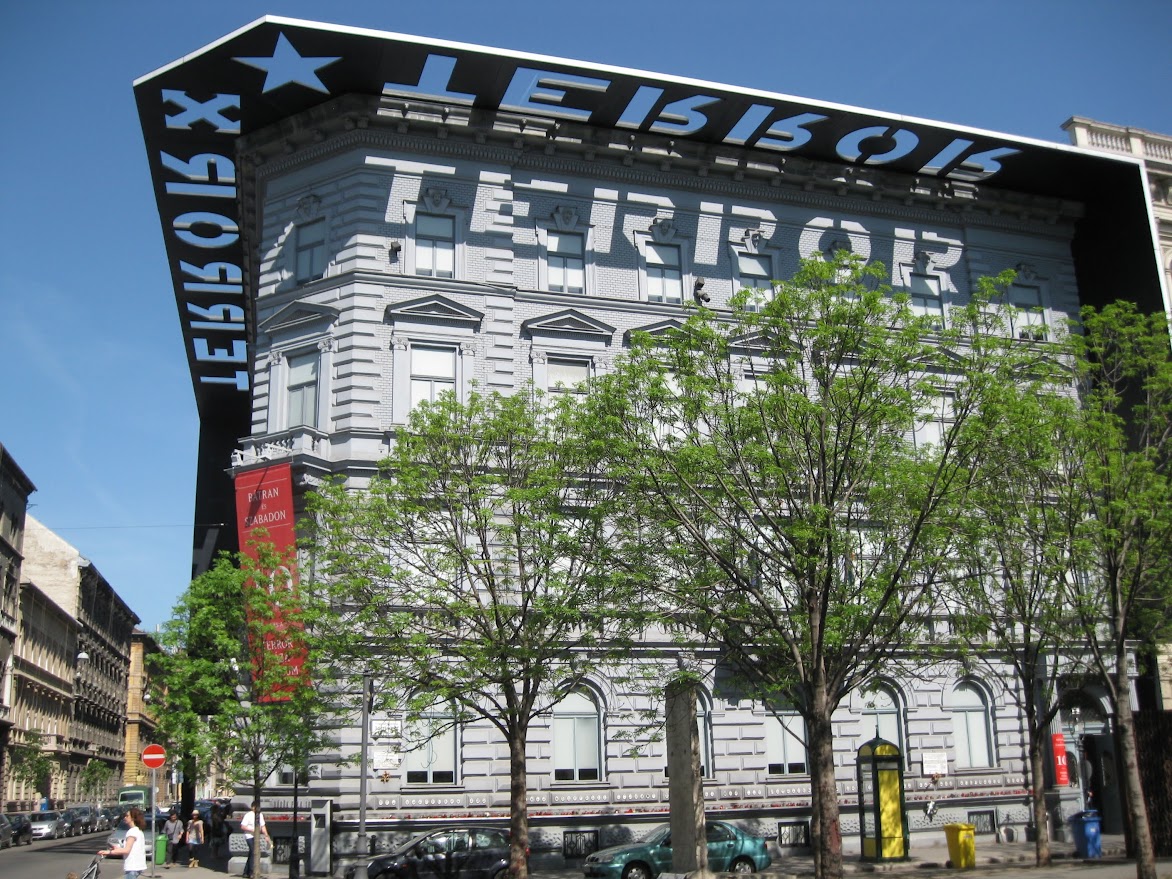
The Museum of Terror was something I'd been wanting to see for a while. Housed in the actual building used by Hungary's fascist Arrow Cross party's gestapo during WWII, and used by Hungary's secret police during Communism, this museum couldn't be more appropriately located. The most horrifying section of the museum was the basement, which contained actual prison cells. These were, of course, tiny, drab, and totally demoralizing. One cell was just large enough for one slender human to stand up in; I noticed the floor of this one was quite worn! There was also a torture room complete with a stool and a table full of sharp implements and electrodes. In the middle of the floor was a large drain (I read that the building's pipes once actually got clogged up with human blood). A room with a gallows was particularly disturbing.

Overall, it was nice to get out of Bratislava for a bit and experience a totally new (to us) city. Plus, Bratislava is so small that it's refreshing to explore a much larger city. We would definitely go back (next time I want to hike up to the top of Gellert Hill, explore the old Jewish neighborhood, and hell, maybe even check out one of the spas that the city is so famous for), as we both think Budapest is worth getting to know better.


The Chain Bridge


Sunday, April 15, 2012

Get with the program, Danubiana!

While there are many things about Slovakia that I love, there are sometimes things I stumble across that make me slap my forehead and cringe with disbelief.

So, I was checking out the website for the Danubiana Meulensteen Art Museum, a modern art gallery located southeast of Bratislava, on a tiny peninsula in the Danube, by the village of Cunovo. While perusing the website, I noticed a page called "Visits," and clicked on it to find blurbs about four internationally known people who'd visited the place over the last few years. My jaw dropped when I noticed that one of the four visitors proudly displayed was none other than Asma al-Assad, the loving and supportive wife of Bashar al-Assad, the Syrian president whose regime is responsible for killing thousands of protesters, and imprisoning (and likely torturing) many others over the past year.

The al-Assad blurb, from 2009, simply states that she digs the museum's collection and would like for it to be displayed at an exhibition in Damascus someday. To be fair, back in 2009, two years before the mass protests and the bloody oppression, nobody really knew what the al-Assad regime was capable of, so her visit back then seemed relatively benign.

But now, the EU has deemed her bad (and complicit) enough to have frozen her assets and placed a travel ban on her (and her relatives as well). (This occurred after it was revealed that Ms. al-Assad was continuing to lead her lavish and decadent lifestyle as if nothing was happening, and voicing continued support for her husband). Need I remind the Danubiana that Slovakia is a member of the EU?

I don't know if this is a case of ignorance or apathy, but either way, it looks bad, and reflects kind of poorly on Slovakia. I can't help but think that most museums in other EU capitals wouldn't hesitate to remove her page from their websites, at least for the sake of the thousands of people who have been killed and imprisoned. I mean, this goes far beyond some local or national political issue. If a politically polarizing local figure visited the museum and had his/her little blurb on the website, that could open its own can of worms, but is ultimately a different story. However, Asma al-Assad is one of the faces of a regime that has been internationally condemned for doing some unspeakably terrible things to many innocent people. And like I mentioned, the EU already recognizes this, so in my view, keeping her page up is in poor taste.

Maybe I'm doing what Slovaks call making an elephant out of a flea? Well, Syria has been at the forefront of international news for over a year now, so I really don't think so. Therefore, I have a simple request: Danubiana - please get a clue!

Friday, April 6, 2012

Veľká noc - Easter in Slovakia

Slovakia has some rather peculiar traditions for Easter, which are definitely worthy of a blog post. For starters, Easter (Vel'ká noc - which means "great/big night") is a really important holiday here, perhaps the most important catholic holiday of the year. That they've managed to turn it into a 4-5 day weekend is proof of this. In the US, nobody really gives a shit about Easter. Once you're too old to go Easter egg hunting (i.e. 8 or 9), it's all over, and the only thing that matters is Spring Break. And of course, once you've grown up, graduated from university, and joined the workforce, Spring Break becomes a fading, distant memory. Or, if you are like me and worked for the University of California for 10 years, that meant that you got to have Caesar Chavez day off, which sometimes falls near Easter, thus making it infinitely more exciting than Easter because it was a day off! (Plus, Caesar Chavez was truly a cool guy, and quite worthy of a holiday, in my book). But I digress! Rooted in medieval folk ritual, Slovakia's quaint Easter traditions make Easter in America seem positively milquetoast.

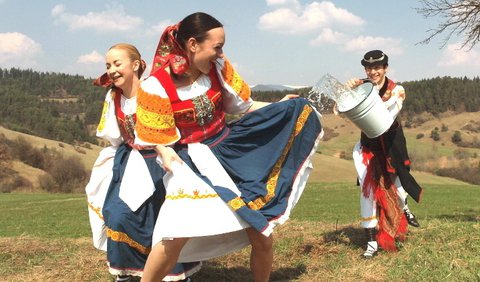
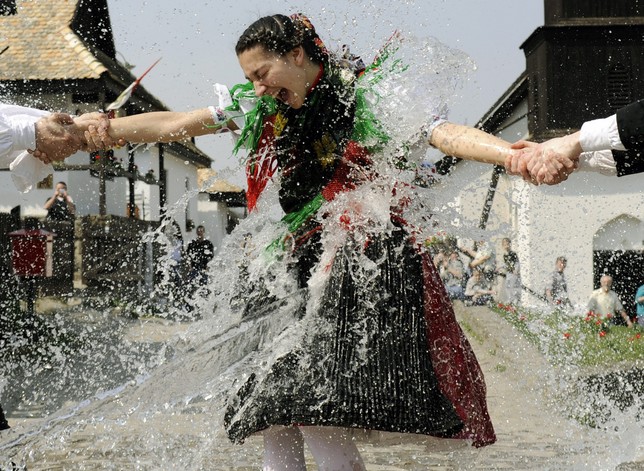
According to tradition, packs of testosterone-fueled boys set out Monday morning and roam the town, going to the homes of all the girls they like or know. They barge into the house, locate the girl, and drag her out front where they dump a bucket of water over her, or drench her with a garden hose, clothes on and everything. Sometimes, they'll simply go inside and carry her into the shower or bathtub. Brothers and fathers will get involved too, and are likely to be the ones who let the other guys inside.


Then, while the girl is soaking wet, the boys will spray her with copious amounts of noxiously cheap perfume. The guys may also carry around a specially made willow stick, called a korbáč, which is used to whip the girl on the rear or the legsOnce the boys are done, they are invited by the girl's family to stay, where their efforts are rewarded with piles of food and alcohol. The family may also give them chocolate and/or money. The boys then move on to their next victim and repeat, until they're too drunk to stand up.

Of course, this tradition has waned quite considerably over the years, especially in more urban areas. In the old days, guys would have to chase the girls through the village and, once they caught them, submerge or toss them in the nearest creek. Today, a woman is much more likely to be awakened in the morning by a snickering brother or father pouring a glass of water in her ear, or perhaps spraying her with scented water from a flask. You're obviously not going to see women being chased through the streets of Bratislava. However, the drinking and eating remains integral to the holiday.

Naturally, women have become increasingly weary of this tradition. Being drenched and whipped all morning while men get to sit around eating and drinking gets old after a while. Terezia says that traditionally, women could exact revenge on the men the following day, but the chance to do so didn't always present itself, since by then everyone was back at work or school. But while many women claim to dread this tradition, Terezia says that for teenage girls it becomes something of a popularity contest. The more guys who come to a girl's house to drench her, the more popular she is, and she can come to school the next morning and brag about how many visitors she had.


But what the hell is the point of all this? This was believed to cleanse and purify the woman, preserve her beauty and vitality, while the whipping is somehow supposed to make her more fertile. According to custom, "Mid-April was celebrated as a time of rebirth: processions were used to drive away evil spirits, houses were decorated with vegetation (the egg survives today as a symbol of life), and whipping and water were employed to ensure a young woman's fertility and beauty. It was believed that the vitality from the young twigs entwined in the whip would flow into the woman's body." Never mind that this tradition sounds a bit like what you'd get if a bunch of monosyllabic, backwards baseball cap-wearing fratboys sat around thinking of ways to make Easter more exciting.

The miracles of medieval science: hitting a woman with a Korbáč to make her more fertile. 
The part where the family feeds the young men who just drenched their daughter(s) actually isn't so strange in the broader context of Slovak culture. Slovaks are pre-programmed to feed any guests who walk through their door. Whenever you're invited into the homes of family or close friends, they will instantly run off to the kitchen, fill up a platter with cold cuts, slices of sausage, or little sandwiches, and bring that out with some shot glasses and borovicka, or whatever booze they have lying around. It's futile to tell them not to, it's pointless to refuse; they will bring out some food, and you will eat and drink. This kind of hospitality is deeply embedded in Slovak culture. (Now, if only it could become a cultural norm here for restaurant waitstaff to act friendly and personable towards patrons!). So, even though the origins of this tradition may have dictated that the families of the women feed the unruly packs of young men, they would likely feel obligated to feed them anyway, regardless of what's going on.

At any rate, while kids in the US innocently hunt for pastel-dyed or candy-filled eggs that they've been told have been hidden by a creepy man-sized rabbit, in Slovakia, roving gangs of young men hunt for girls to whip and douce with water. And I have to emphasize, Easter really is an important holiday here. So important, in fact, that as I write on this Friday morning, Bratislava's streets are already deserted to the point where I think I just saw a tumbleweed blowing down the sidewalk. With everyone presumably having gone back home for the long weekend, it's like a ghost town here!

Sunday, April 1, 2012

The Palffy Palace and Picasso

There's a temporary exhibition going on right now at Bratislava's Palffy Palace (a grand, historical palace in the heart of the Old Town, on Panska ulica, that is now an art museum), entitled Homage to Picasso. I dig Picasso, particularly his earlier Cubist work, so for me this was a must-see. The exhibit featured 7-8 rooms filled with the work of various artists who were inspired by different phases in Picasso's career. There were several fabulous paintings by some of the Czech Cubist big-shots, like Emil Filla, Anton Prochazka, and Bohumil Kubista, along with many others, including, oddly enough, one minor work each by Joan Miro and Salvador Dali. We got to familiarize ourselves with Czech Cubism at the Cubist museum in Prague back in January, so it was nice to see more works by some of these guys, who were clearly quite talented. Of the paintings that appeared to take inspiration from Picasso's later, more simplistic and whimsical work, some of them actually looked a little more inspired than the source of their inspiration. Overall, it was a cool, varied, and well-curated exhibition.

Bohumil Kubista - The Hypnotist (aka "Argh! What are you doing to my head?")
Antonin Prochazka - Woman With a Cigarette
Emil Filla - Sculptor and Model
Another temporary exhibition featured the work of Milos Simurda. Several of his paintings portrayed totally naked people sitting in various positions of driving, yet without the car, but sometimes with an actual piece of car grill stuck on to the outer edge. One painting, called "Accident," simply had two naked people flying through the air with a broken piece of car window frame hovering near them.

The permanent collection, focusing on 20th century painting and a smattering of sculpture, was intermittently interesting. Particularly amusing is the Passage, which is literally a narrow walkway through what appears to be a wall of books. On both sides of the walkway are mirrors, which reflect the walls of books on either side into infinity. The effect is actually quite dizzying. It gives the illusion that you could step off the platform and fall forever, until you peer out over the edge enough to see your reflection in the mirror and see that it's not, in fact, an endless book-lined pit. Not recommended for people with vertigo!


The palace itself oozes history, which further enhances the experience. Apart from the stately, Classicist rooms, excavations have revealed that embedded within the walls of the palace are walls of what once was a gothic chapel. As you make your way up the stairway, the outlines of the gothic windows are now exposed in the wall.


In the dungeon-like basement is a pit with a half-buried skeleton curled up in fetal position. Apparently several graves with similarly positioned skeletal remains were found beneath the foundations. So, loads of history here. The price per ticket - 4 euros - is surprisingly generous. But given that museums in Bratislava are likely not attracting people by the butt-load like the big ones in Vienna, it's not surprising. Still, it's worth keeping an eye on this place for future exhibitions.

Tuesday, March 27, 2012

Birthday in Vienna

This post was nearly going to be titled "Birthday in Brno," as I've been wanting to take a day trip there for some time. However, with Terezia's Pilates class in the morning, and the 1.5 hour train ride, we wouldn't have gotten there until about noon, and I'd prefer to go on a day when we can get an earlier start. So, at the last minute, we decided Brno's bizarre landscape of dramatic neo-gothic spires coupled with a nuclear cooling tower will have to wait, and we instead went to Vienna to celebrate my 37 years of being alive.

As always, Vienna proved to be a nice excursion. This time we walked through the old town using only the narrow, picturesque side streets (avoiding the crowded, mall-like Karntner Strasse), and caught a tram over to the Landstrasse district, primarily to see the Hundertwasser House and museum, but also to just check out the general area, which we hadn't set foot in before. We didn't go inside the museum, but seeing the exterior of that, and the even more impressive apartment building a few blocks away, was worth the trek.


Hundertwasser had a bit of a hippie-ish and unorthodox approach to architecture, and these buildings display an endearingly erratic and whimsical quality, featuring asymmetrical shapes, random patchworks of bold colors, lines that are anything but straight, and windows of all different shapes and sizes. There's something slightly Gaudi-esque about its unpredictable curves and brilliant colors. Hundertwasser also loved to integrate nature into his designs, hence the trees sprouting from rooftop gardens, and small alcoves in the facades from which vines of ivy dangle elegantly. Even the cobbled square in front of the building is an ankle-spraining obstacle course of deliberately random humps and divots; a natural take on an urban concept.

After that, we sauntered back through the old town,


and made our way to the quaint Spitelberg area, where we found a cheap, tasty lunch menu at one of the myriad restaurants there. Next we took a detour through two record stores in the area, Moses and Sing Sing, both of which have quite a lot of vinyl, and overall decent selections (I sure miss Amoeba, though), but nothing I had to buy right then and there.

In keeping with our goal to visit a different museum with every trip to Vienna, we thought we'd check out the Albertina gallery. Part of the incomprehensibly sprawling Habsburg palace complex, the Albertina focuses on art from Impression through to about mid-20th century modern. They've currently got a sizable Impressionist exhibition, featuring some wonderful Monets (including one from his waterlily series, as well as some deeply atmospheric renderings of the Thames river in London), as well as some gorgeous paintings by Degas from his "women stepping out of the bath and drying themselves" series (did this guy have a fetish for this, or what?). We also got to see some nice Toulouse-Lautrecs and Manets, among dozens of others from the Impressionist crowd.


There was another exhibit called Monet to Picasso, which literally takes you from Impressionism through Cubism and beyond. It's laid out to show the links betweens the movements, and how one gradually evolved into the other. It was particularly telling to see how closely the flowers in some of Chagall's works on display mirrored those in much earlier works by Monet. But the exhibition featured a pretty vast assortment of modern works from artists I love, such as Bracques, El Lissitsky, Kandinsky, Modigliani, and dozens of others. Definitely worth the 11 euro entry fee.

We took what has become an obligatory stroll through the Naschmarkt, since Bratislava really doesn't have anything that can compare to it. It's always nice to peruse the colorful stands of fresh produce, and take in the exotic smells of Indian and Thai spices that permeate the air. I bought some medjool dates (really crazy and bizarre that I have to travel one hour into a different country to find these - but when you're addicted to them like I am...).

So, a nice and exhausting day! Hopefully we'll make it to Brno soon enough.

(Click here to see photos of recent trips to Vienna).

Na zdravie! Drinking As the Slovaks Do


Using my limp arms to anchor myself to the toilet bowl while the bathroom spun violently around me, a thick stream of vomit gushed from my mouth in a forceful yet strangely satisfying way, as I wondered how I got to this point so quickly.

It seems that many Slovaks I've met have an innate tolerance for consuming large quantities of alcohol. It's not uncommon to find oneself in situations where people are downing potent shots of various types of booze accompanied by pints of tasty Slovak (or Czech) beer. (The beer, of course, is the chaser). The shots are typically anything from slivovice (plum brandy), hruskovica (pear), jablkovica (apple), borovicka (juniper berries), Becherovka (Czech, containing 13 different herbs), or plain old vodka. I've always been a bit of a lightweight when it comes to alcohol, so this is a particularly lethal combination for me.

I've been told by one of Terezia's Slovak friends that this combination of beer and shots "is not normal," but based on my own experience so far, it's extremely common. Apart from having been subjected to it myself on numerous occasions with people who acted like it was as normal as breathing air, I've observed others here partaking in this lethal combo as well, in pubs and elsewhere. For example, during the holidays, on an over-booked train to Podrecany (which was headed all the way to Kosice), a group of 30-somethings standing, seatless, out in the corridor, were festively chasing copious shots of Becherovka with beer guzzled from plastic liter bottles. Okay, I realize this was the holidays, but if people are indulging in this lethal combo out in public on a train, it can't be all that unusual, no?

Shots are a crucial element with any social occasion, large or intimate. If shot glasses aren't being refilled and shoved into everyone's hands every 10 minutes, with people merrily toasting (na zdravie!), something is very wrong. I have yet to be invited into someone's house and not been offered a shot of something.

I got into trouble last year when we visited several of Terezia's dad's sisters over the course of the afternoon, and at each sister's home, we were offered several rounds of various types of the booze mentioned above. After visiting the last sister, Terezia's dad insisted that we stop by the house he grew up in, which at some point had been turned into a pub. I'd become pretty loopy by then, and the pint of beer I had with him as he gave us a "tour" of his old house, put me right over the edge. On the car ride home, I could barely move my limbs and had to pee like a baroque fountain.

Slovak (and Czech) beer (pivo) has a tendency to be light, smooth, yet very full flavored. Whenever we've gone out to eat, whether it's lunch or dinner, the majority of people around us usually seem to be drinking beer. In fact, it's sometimes perceived as weird if you don't order a beer with your meal! On one occasion in Prague, I didn't feel like having beer with my lunch and really just wanted a glass of water. The waiter actually thought something was wrong with me and asked if I was sick or hungover, and offered to bring me some sauerkraut juice (which is apparently a miracle hangover cure around these parts).


It's quite common in Slovakia and Czech Republic for people to make their own booze, typically slivovice or hruskovica, or some combination of the two. Terezia's dad's favorite time of year is the Fall, when he collects all of the fruit that falls from their plum and pear trees, which is used to make the moonshine. His stuff is quite potent. Last year's batch was pretty strong, but this year's didn't come out quite right, and is so harsh and twitch-enducing that it's all I can do to keep my eyes from tearing up whenever I imbibe it. Sadly, the smell is oddly reminiscent of windshield washer fluid with antifreeze. You can also light it on fire with relative ease. Hopefully next year's batch will turn out better (I think he needs to find a better distiller). But Terezia's dad is so cute with his slivovice - he loves to sneak us into the basement where he's got his stuff in these beautiful, old bottles, and he discreetly gives us shots when Terezia's mom is outside or running an errand.

It's also not uncommon for people here to make their own wine. Unfortunately, the homemade red wine that I've tried, made by Terezia's, brother, father, and uncle, is cloyingly sweet. It tastes exactly like that super sweet grape juice that five-year-olds in America drink out of those little juice boxes, except with alcohol. Of course I don't want to offend Terezia's family, so I'll drink it if it's offered, but to be honest, it's really not my cup of tea.

I helped pick the grapes for this year's batch, which were these massive, perfectly round, dark purple, finger-staining sugar bombs. Basically, I think they were of the concord variety, and I'd never tasted grapes as sweet as these. "Aren't grapes used for wine production not supposed to taste like grape-flavored candy when eaten?" I wondered aloud. But I don't make wine, I only drink it - so what do I know?

Surely they have to know this tastes quite different and infinitely sweeter than commercially manufactured wine, right? And Slovakia makes some truly worthy and wonderful (and award-winning) wines. But, some Slovaks really like their wine sweet. In fact, it's not uncommon for people to actually mix their wine with Coke. They'll pour it into any decent wine to make it sweeter. Is this why many Slovaks make (and seem to enjoy drinking) such sugary sweet wine? I have no idea, and I can't seem to get a straight answer out of anyone! Most people just shrug their shoulders and act like there's nothing odd or peculiar about it. (Also, see my post about my first encounter with burciak).

So, is Slovakia turning me into a raging alcoholic? Hardly. There are few alcoholic beverages that I actually truly ever crave, and they are not things that are easily found here. (Now, if we were living in Belgium, the land of St. Bernardus Abt 12, I might be in trouble). You could view the occasional drinking I do here to be more of a kind of fieldwork.

Wednesday, March 21, 2012

More Cemeteries in Bratislava (*with update)

Like I've mentioned before, I love old cemeteries. I don't know if this has to do with my obsession with Harold and Maude, or my teenage goth years, or if it's simply because I just like old crap, but I really dig (ha!) old cemeteries. After checking out this cemetery last month, I wanted to see Bratislava's old Jewish cemetery, which is located on the other side of the castle, clinging to a slope of the hillside facing the River Park complex along the Danube. Although I could see it clearly on google maps, actually getting into it proved a bit tricky at first. When we ventured out there, we discovered there are actually two cemeteries right next two each other: the Jewish one, and another, smaller one, for gentiles.

We went into the latter first, as it had an entrance that was, well, obviously an entrance. While not as large and ornate as the other cemetery on Palisady, this was still an interesting and attractive place, especially with its location on the lush, green, sloping hillside. The majority of the names on the headstones appeared to be German/Austrian, and most of its inhabitants seem to have met their fates from around the late 1800s up through the first half of the 1900s. A nice, tranquil place.


We could see the Jewish cemetery next door when peering over a broken down, weed-strewn fence...


...but we hadn't noticed any kind of obvious entrance when walking up the road. We left the first cemetery and walked back down the road to what had to be the entrance to the Jewish one. There were no signs, markers, or anything; just a large, imposing iron gate, on the other side of which were some stairs leading up to a small, nondescript building. From the street, all you could see on either side of the gate was a stone wall that had to be about 20 feet tall. One could easily walk by without ever realizing there's a cemetery on the other side.

Assuming the gate was locked, I was thinking we wouldn't be able to get in, until I gently pushed at it and it opened with a sharp screech. So, we went inside, walked up the stone steps, and went through what looked and felt like the patio of someone's backyard. Laundry was drying on a line, and window sills of the concrete bunker-like dwelling were cluttered with the kind of junk that indicates signs of life. A large dog lying in an area totally enclosed by a cyclone fence, looked at us, shrugged his shoulders, and went back to sleep. It felt weird, like we were trespassing, but we passed on through to the cemetery regardless. No one came out from the building to tell us to go away, and we didn't actually see anyone else on the premises.

At any rate, the Jewish cemetery was much more attractive, visually intriguing, and - I'm assuming - older. All of the headstones were inscribed with Hebrew, so we had no idea what any of them said (hence my uncertainly about the age of the place). But things looked considerably older than the first cemetery, what with lots of headstones jutting out of the ground at random, severe angles like gnarly sets of teeth. Some areas looked as if they were no longer being maintained, as they were covered in layers of thick vines of ivy, roots, and weeds. Again, the setting on the side of the hill (the bodies could very well be sliding down the slope in the subsoil!) really lent the place a unique atmosphere.


I'm still trying to find some info on the history of this cemetery. I can't seem to locate any information on its age or origins, at least not on-line. I believe it is the only Jewish cemetery in Bratislava, and people are apparently still being buried there today, given how new some of the headstones by the entrance look. Apparently there was a smaller, separate cemetery down the hill from the main one, set along what is now the busy Nabrezie armadneho generala Ludvika Svobodu, next to where the southwestern entrance to the tram tunnel currently sits. Some important and influential local rabbis (notably, one named Moses Sofer) were buried here, and their plots are now housed in an underground mausoleum, which many orthodox Jews consider to be sacred. (I don't know why it is separated from the main cemetery, although perhaps that has something to do with the importance of the people buried here). At any rate, I need to come back here sometime later in the afternoon when the light is nicer, and take some more photographs.


*Update: the weather was lovely Saturday, and after checking out a very cool and insanely crowded public market on Panenska (for which all the hip looking Bratislavans [the likes of which I haven't really seen in all these months here] apparently came out of the woodwork: it felt like we were back at the Lakeshore Farmers' Market in Oakland!), we strolled through the Ondrejsky cemetery, the only one in the Stare Mesto which we had yet to explore. We've walked and ridden past this cemetery gazillions of times, but it just hadn't called out to us like the others had. It's easily the largest, and yet it's the least crowded; there's loads of open real-estate here. A decent amount of its inhabitants died in the 1800s, while most seem to have passed in the first half of the 20th century. One particularly interesting thing we noticed was that this cemetery seems to have the most equal distribution of Austrians, Slovaks, and Hungarians, judging by the names on the headstones, illustrating how multi-ethnic this city used to be. Visually, this place is less striking than the others, but it was interesting to explore, nonetheless. (See photos at the end of this set).   

Monday, March 12, 2012

Prague Re-revisited & Update to Last Week's Political Post.

Just got back from another short trip to Prague. The soggy weather subsided for the two full days that we were there, so lots of tromping around the city. We got to meet with some of Terezia's friends (Zdenka and Martina), which made us realize we need to spend a lot more time in Prague, and we explored more of the Vinohrady and Nove Mesto areas. Sadly, I learned that Prague's record stores aren't very good (at least the four that we checked out). We tried one of Prague's vegetarian restaurants, Lehka Hlava, at which we feasted on a wonderful salad of mixed-greens with warm goat cheese, walnuts, and cranberry sauce, tasty and crispy spinach quesadillas, and bland-as-hell vegetable red curry (does anyone know how to make a decent curry in Central Europe? Besides Terezia?). On our last night, we ate some amazing duck at U Parliamentu. We also visited the Museum of Communism, parts of which were like a flashback for Terezia. Click here to see photos from this weekend. (I tried to include as many shots as possible of things not photographed during the January trip).


And to update last week's Slovak elections post for this blog's 1.33 American readers, Fico's Smer won by a landslide, winning 83 seats in the 150-seat parliament, and more people voted in this election than had been expected. Needless to say, many people will be unhappy now that Fico's back in power. However, the good news is that corrosive nationalist parties, Jan Slota's Slovak National Party and Vladimír Mečiar's Movement for a Democratic Slovakia, did not win enough votes (5% minimum) to make it into Parliament. Hopefully this means that Fico will tone down the divisive nationalist/xenophobic rhetoric and focus on other things.

Wednesday, March 7, 2012

No One Seems to Know Who the Hell to Vote For (Trying to Make Sense of Slovakia's Political Landscape).

Slovakia is having special elections this week, prompted by Prime Minister Iveta Radičová's governing coalition falling out of power after losing a vote of confidence in parliament back in mid-October. Radičová's coalition went down in flames after fierce debate over whether Slovakia should help bail out Greece. Parliament initially voted against it, but then held a second vote wherein the aid was narrowly approved. But that came at the expense of Radičová's coalition. 


I may be oversimplifying, but basically, most of Slovakia's general population resents having to help countries like Greece, because the amount Slovakia would have to pony up would put the country much deeper into debt, and more importantly, because average wages and retirement pensions are so pitifully and insultingly low in this country, especially compared with the rest of the EU. Overall, Slovakia is a poor country with staggering unemployment (as of February it was shown to be hovering just below 14%), with more than enough problems of its own, so people view having to help bail out Greece as a massive burden, from both a practical and symbolic standpoint. 

At any rate, with Radičová's coalition parties in total disarray after the vote of no confidence, the opposition, headed by the Smer party's Robert Fico, has been seen as a shoe-in. Fico's coalition led parliament from 2006-2010, and he's actually been around since before the Velvet Revolution. However, he is a controversial and polarizing figure. I get the sense that Fico gets a lot of support from people out in the country (mainly older and more rural voters), while I've met people here in Bratislava who absolutely detest him. 

Adding significantly to the chaos of the current political climate is the "Gorilla" scandal. Numerous elites on both sides of the political spectrum have been implicated in what has turned out to be a case of widespread corruption. Basically, during the government of Mikuláš Dzurinda, which held office from 2002-2006, senior officials were meeting in a secret apartment in Bratislava, making illegal deals with multinational corporations (most notably, the Penta Financial Group) regarding privatization and large-scale public procurement. Somehow catching wind of this, the police wire-tapped the apartment and recorded hours of damaging conversations among countless government officials from multiple political parties (including Fico's Smer). The transcripts from the wire-tapping, known as the "Gorilla" file, hung in a complicated political limbo for a few years until it was leaked to the media in December, which prompted the government to reopen the case, and resulted in widespread protests from a public that wants to see these politicians held accountable. (This article gives a good overview of the scandal). 

There have been numerous demonstrations, ongoing news stories, court hearings with politicians sitting on the stand listening to themselves on tape, etc., and it's pretty much put Fico's once formidable political opponents in complete disarray. Even though Fico's Smer party has been implicated in this as well, it hasn't seemed to damage his "brand" as much. Plus, he's such a well-known and familiar face, that he's probably going to get the vote based on name-recognition alone. 

In light of all this, Slovak evening news has been reporting that many people are at a total loss as to who to vote for. People are apparently sick of Fico, but they're kind of resigned to his winning back control of Parliament, because his opponents have not been able to get their proverbial shit together in the midst of the "Gorilla" scandal. Some people may simply sit this election out. At this point, nobody likes anyone! This reminds me of how former Italian Prime-Minister Silvio Berlusconi stayed in power through much of the 00s. Very few people actually liked him, everyone knew he was corrupt, but his opponents simply couldn't get it together and unseat him (at least not for any significant length of time), and many people voted for him simply because his was the only name on the ballot they were familiar with. At any rate, it'll be interesting to see what happens here.  


Ultimately, I'm still trying to wrap my head around the general political dynamic in this country. In doing so, I'm finding that it's impossible to fit the American "left vs. right" template over Slovakia's political divide. For example, Fico is technically considered center-left, but from everything I've read and heard, he is "left" only from an economic standpoint, and even then, partly because of his ties to the Communist regime from before the Velvet Revolution. Radičová and her coalition are broadly considered center-right (Radičová's own SDKU-DS party is technically "liberal-conservative"), but similarly, they appear to be conservative primarily from an economic "pro-business/laissez-faire" standpoint. This is where the "left vs. right" paradigm differs from the US, for obvious reasons. 

On social issues, Fico fits right in with hard-line American conservative values: he's extremely nationalistic, anti-immigration, and has supported hugely xenophobic and discriminatory policies. He has also allied his Smer party with extremist Jan Slota's dangerously nationalist Slovak National Party, by including him in his governing coalition. Fico (in cahoots with Slota) was instrumental in passing laws that made it illegal for people to speak Hungarian in "official" settings, as well as outlawing dual-citizenship with the sole aim of thwarting Hungarian citizens' requests for Slovak citizenship. Any of this sound vaguely familiar? Cough.. Arizona. (Hungarians make up 10% of Slovakia's population, and many families were severed when the border between the two countries was drawn, while others fled south under apparent pressure, resulting in lots of dual-citizenship requests). Several years ago, before the language law was passed, a Hungarian woman in Nitra, named Hedvig Malina, was savagely beaten by some nationalist thugs who overheard her speaking Hungarian on her cell phone. Fico had the gall to accuse her of making the whole thing up. Not a likable guy if you value things like ethnic and cultural diversity.  

By contrast, when her coalition came to power, Radičová worked "to rebuild links with Hungary that were badly damaged by the adoption of contentious language and citizenship laws." Based on what I've read, she condemned these laws as distractions from more important issues at hand. She worked with the Slovak-Hungarian Most-Hid party to at least amend some of the laws. 

What was troubling for me is that when I spoke with some Slovak people about Fico's nationalistic, anti-Hungarian tendencies, they just shrugged their shoulders and said, "Well, he had to do that to secure enough votes from his base - from all the people out in the country." I tried to explain that that's no excuse - it's still blatantly discriminatory, and that alone would be enough for me to not support the guy. But they didn't seem particularly bothered by this. 


Obviously attitudes like these are quite problematic for me since I spent 30 years of my life in the ethnically diverse cultural stew that is the San Francisco Bay Area. I value that kind of diversity, and find it sad and unsettling when others don't. Now, on one level, I think Slovakians are wary of Hungarians based on events that happened in the past. Slovakia was part of (and Slovaks were ruled by) Hungary for many centuries. As a result, I suspect Slovakians feel a need to assert their own cultural/national identity. But even so, I still think it's hugely important that these two societies learn how to coexist without animosity or hostility. As such, I think Fico and his nationalist cronies have done quite a lot of damage, and I really hope they don't pick up where they left off, should they win this election. 

At any rate, I could be severely oversimplifying things here, but I'm getting the sense that Fico's "center-left" coalition is basically made up of old-school Communist types. Fico has his roots in the pre-Velvet Revolution years, when he held some rookie position in the government. These Communist-era relics, despite whatever economic policies they espouse, seem to appeal to an older, more rural, and more socially conservative voter base, and would appear far-right on many issues by American standards. 

But this isn't a clear case of role-reversal. The center-right parties, while less interested in making life difficult for Hungarians, are far from being flaming liberals. They seem to appeal to the younger, money-making yuppies that populate Bratislava, and seem to be pro-business in ways that might make your typical Berkeley liberal roll his or her eyes. Their policies are said by some to have benefitted big-business while doing harm to lower classes and the unemployed.  

Terezia (who, having lived in the US for 15 years, is trying to get a handle on all this as well) suspects that it's simply a matter of Slovakia being such a staunchly conservative country, that there really is no "progressive left" as we know and define it in countries like the US. For starters, Slovakia is nearly as catholic as Poland, and due to its time spent isolated behind the iron curtain, and by dint of it not having any larger, more ethnically/culturally diverse cities or greater metropolitan areas, it has remained more traditional and conservative overall. I think there could be something to this. 

But, I digress. Getting back to my original point, I'm curious to see how these special elections pan out. Plus, like I keep saying, I'm still just trying to make sense of all this, and this post should only be seen as the rambling observations of a foreigner who is trying to sort it all out.