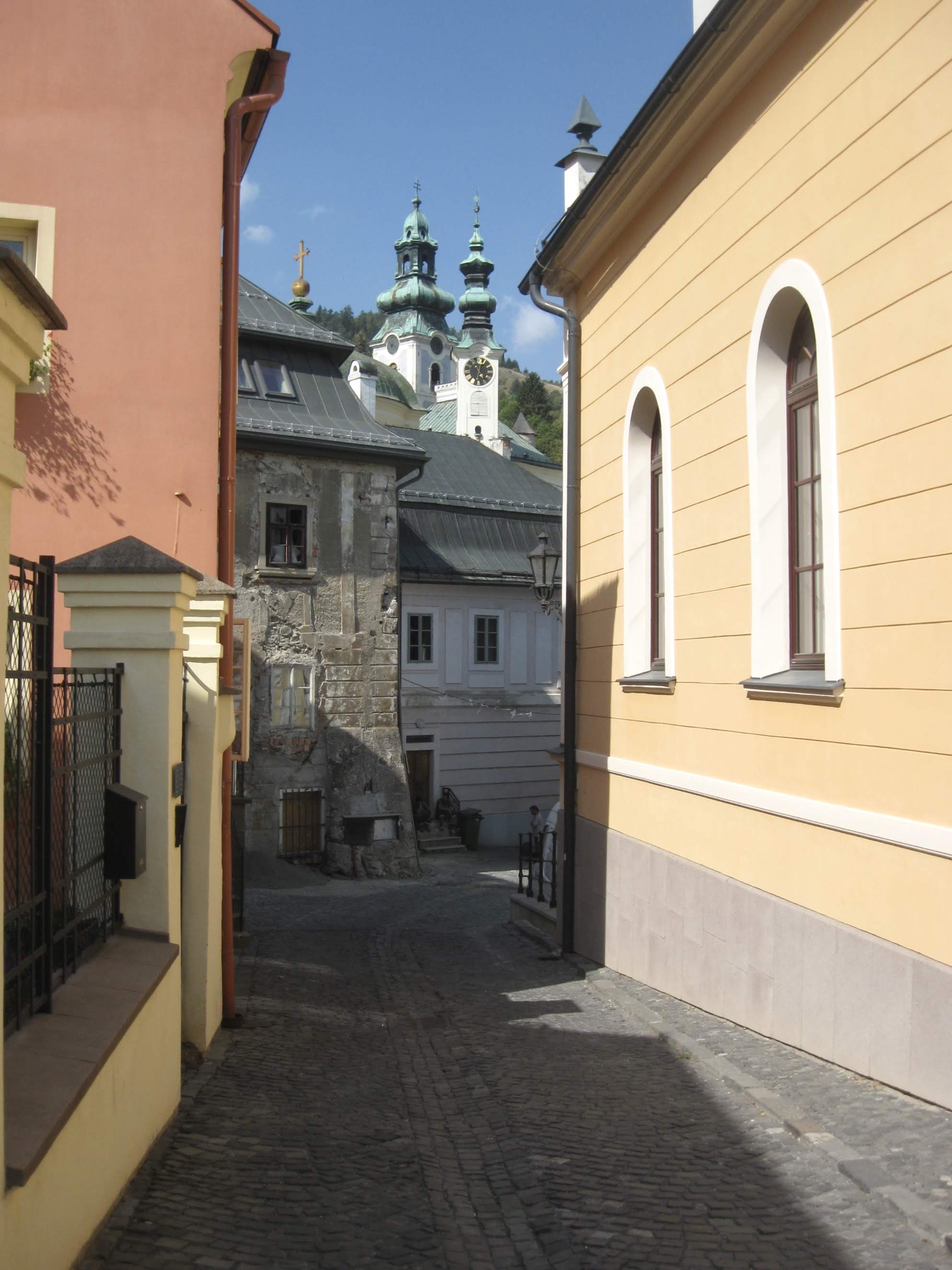
Wandering Around Divín Castle
As I've written in the past, in Slovakia, if you blindly chuck a rock in any direction, you're likely to hit a castle or castle ruin. In the Novohrad (Newcastle) region where Terezia's parents live, in the south-central part of Slovakia, there's not a helluva lot to do, from a tourist's perspective, besides taking a gander at medieval castle ruins. Many of these castles were conquered by the Ottomans during their ongoing invasions in the 1500-1600s, though not all of them were destroyed that way.
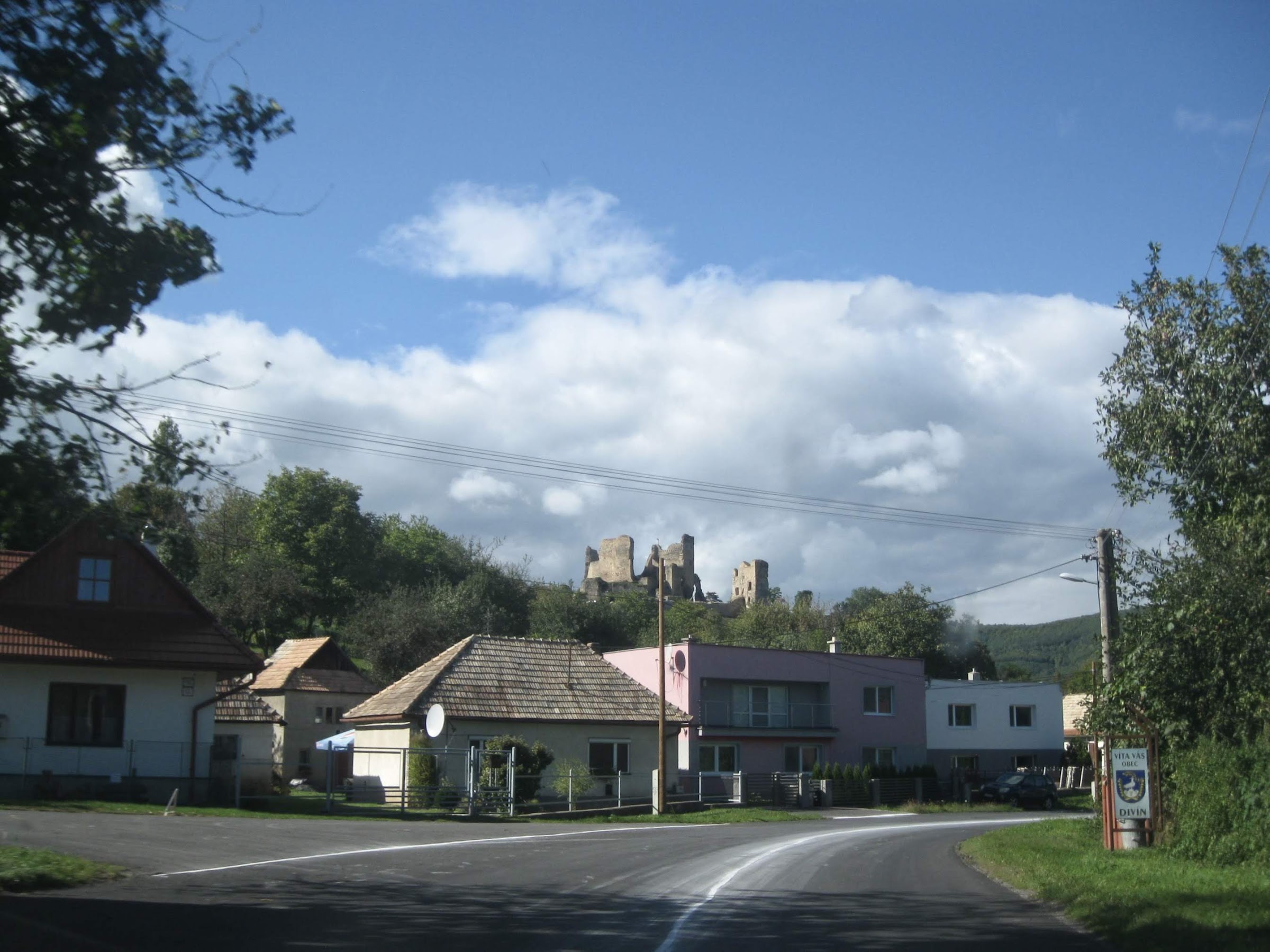 |
| Approaching Divín castle and village by car. |
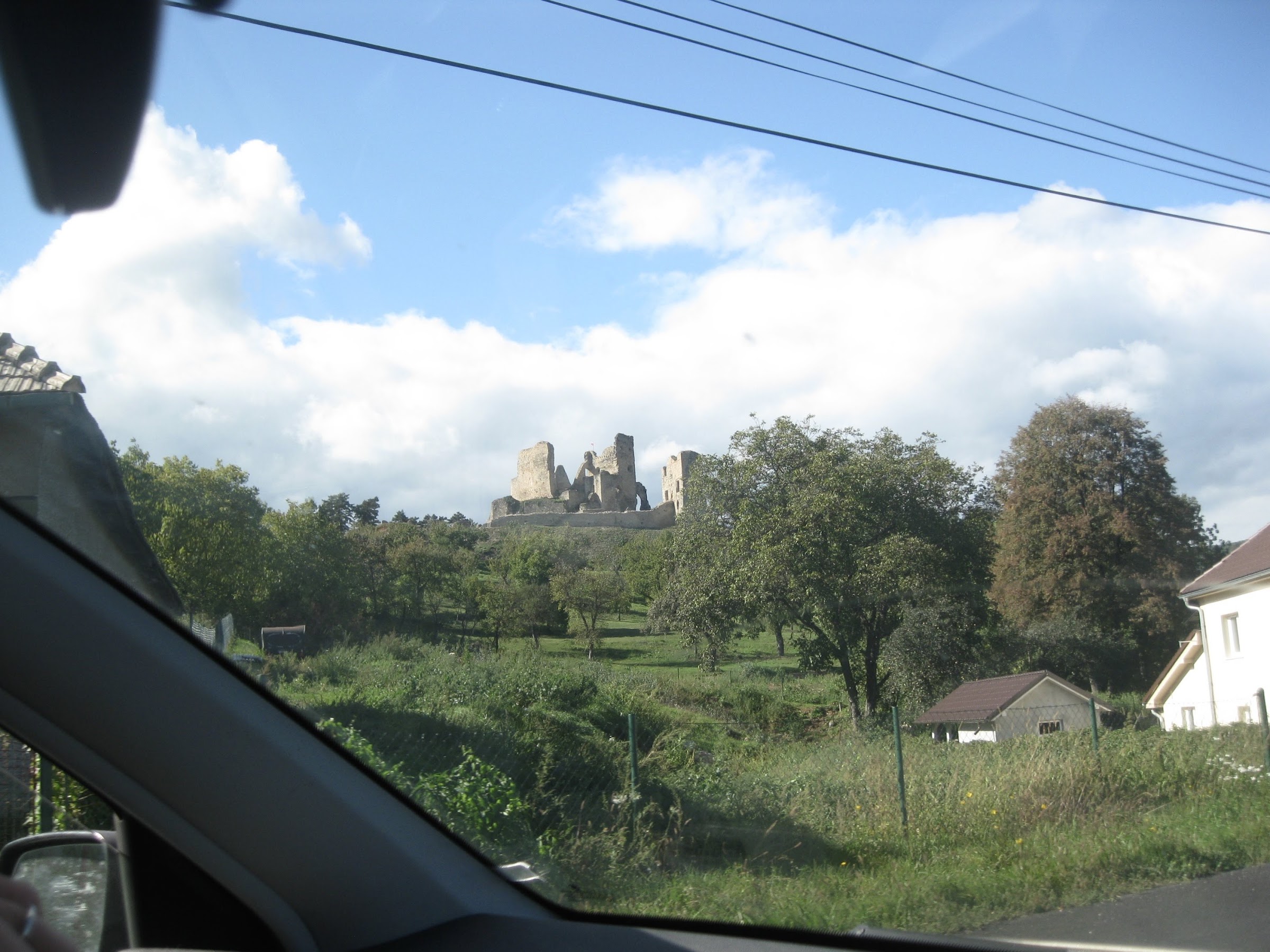
One such castle ruin, Divín, is pretty close to where Terezia's parent live. It looms over the village of the same name from its steep hill. Divín village lies along the northwestern end of a fairly big reservoir (and popular summer recreation destination) called Ružiná. Built in the 13th century, Divín castle was captured by the Ottomans in the 16th century, and they occupied it for nearly 20 years. Yet, the castle was reduced to its current ruinous state in the 17th century when one of its most infamous occupants, an asshole named Imrich Balassa, was forcibly removed by the Hungarian Imperial army due to his irksome penchant for raiding and looting the nearby villages. Unfortunately, Balassa's Hungarian captors destroyed his castle for good measure, and its subsequent owners never bothered to rebuild it.
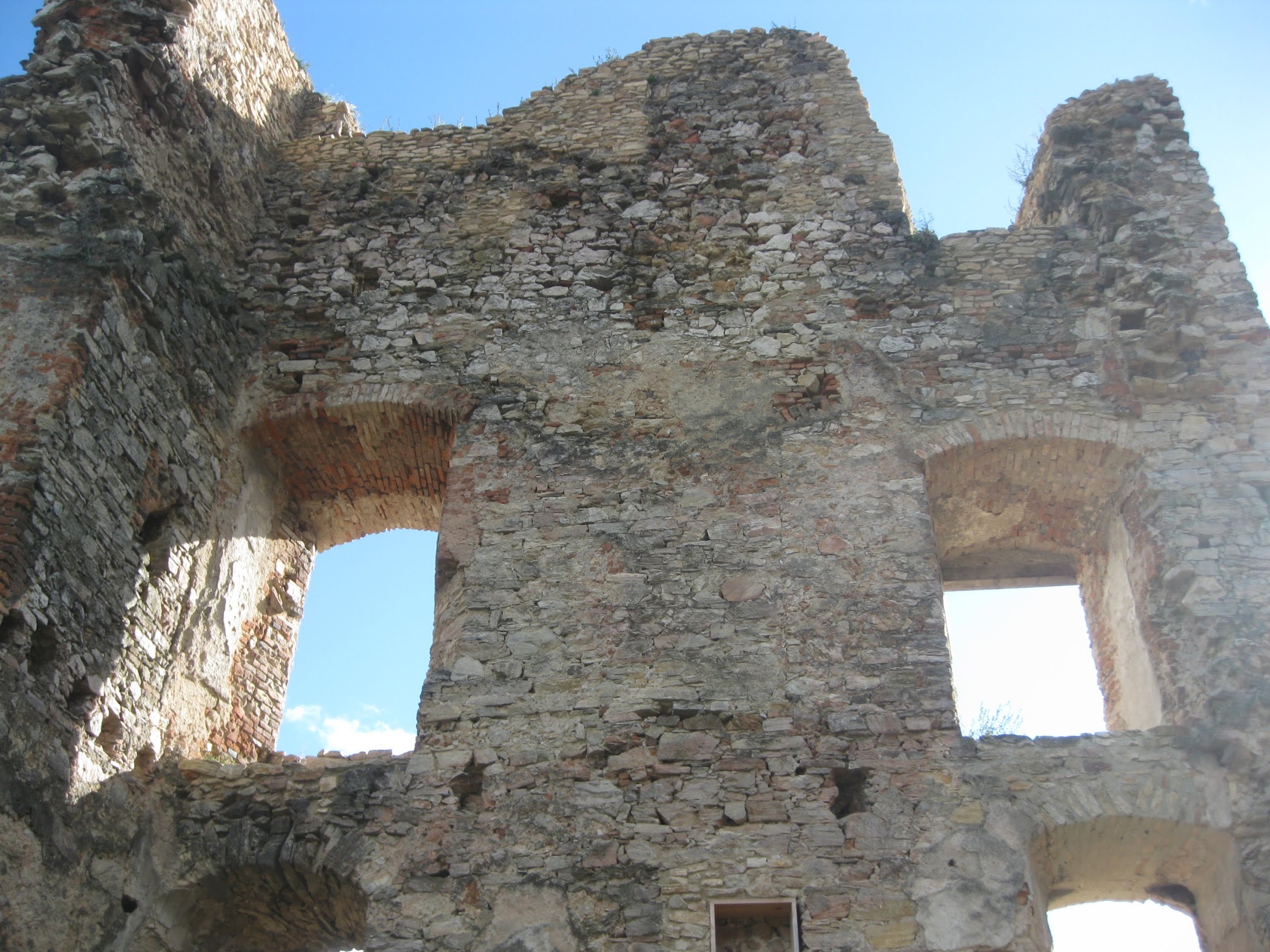
Now, you might think the village of Divín would be milking the ruin as a tourist asset, but you'd be wrong. At the time of writing, the village has no signs or markers anywhere mentioning the castle or telling you how to visit it. It's up to you to figure out how and where to climb the steep hill to get to it.
From the village's main road you'll see a recently (and boringly) restored white manor house at the foot of the hill just below the castle, but that's just a small museum that contains no entrance to the castle itself, even though it looks like it should. To get to the castle, you have to go around the right side of the hill (as you're facing it), where you'll eventually find a narrow dirt path leading first to a very rustic and ramshackle pub called Vináreň pod hradom Divín that looks like something a hobbit would live in. You can continue up the hill on a dirt path to the right of the pub, which will bring you to a fork in the trail. Going right is the shortest way to the castle's entrance, but again, there are no signs to indicate that.
However, you can skip the pub/dirt path entrance and head a little further up the main road to a street on your left called Hradná (which is the giveaway that this is the best way to the castle, as the name means "to the castle"), a partially dirt road that ends at the village cemetery. If you're driving, you can probably park outside the cemetery and just walk up the hill to the left of it, where you'll see the path leading to the castle's entrance.
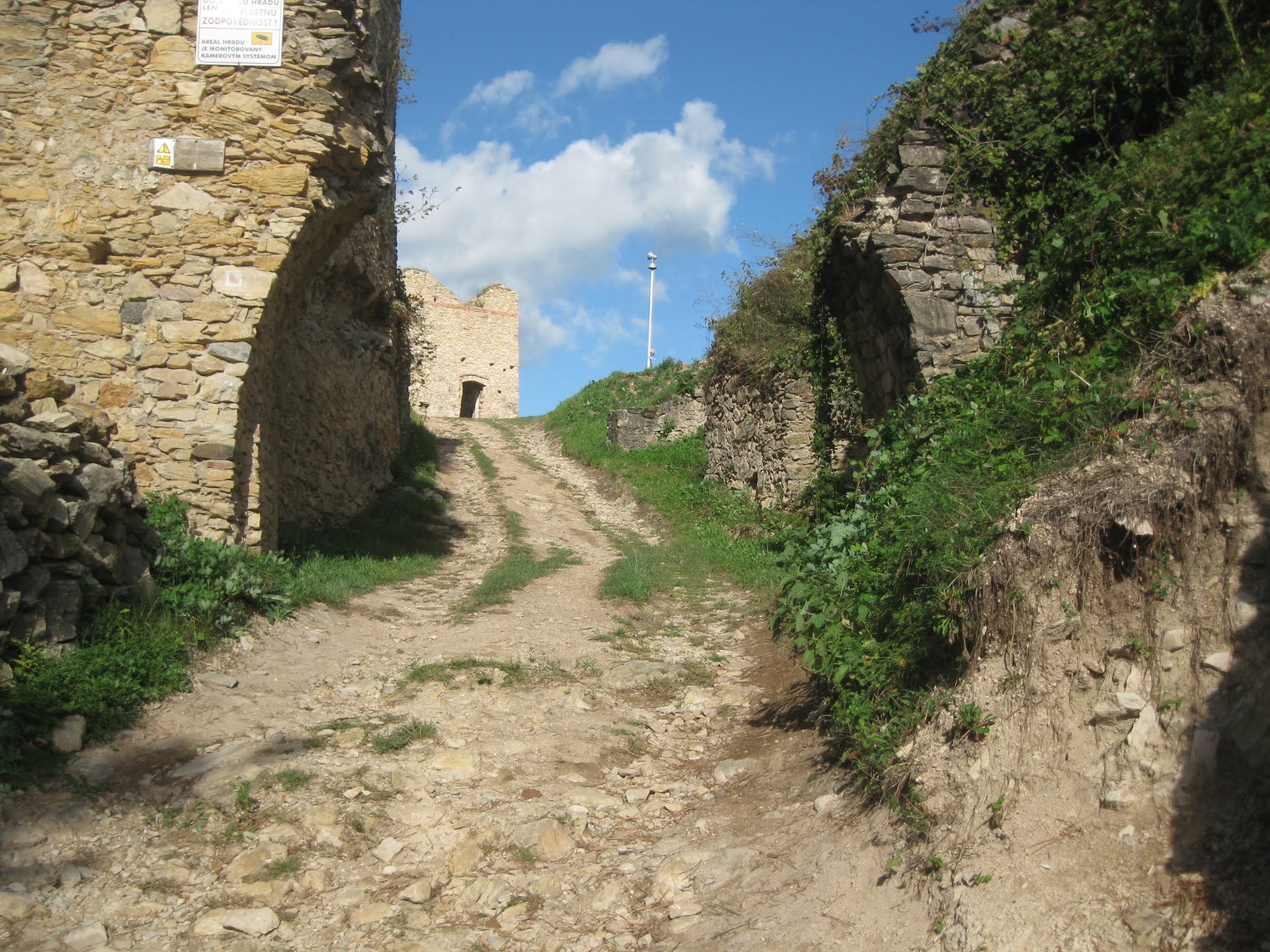
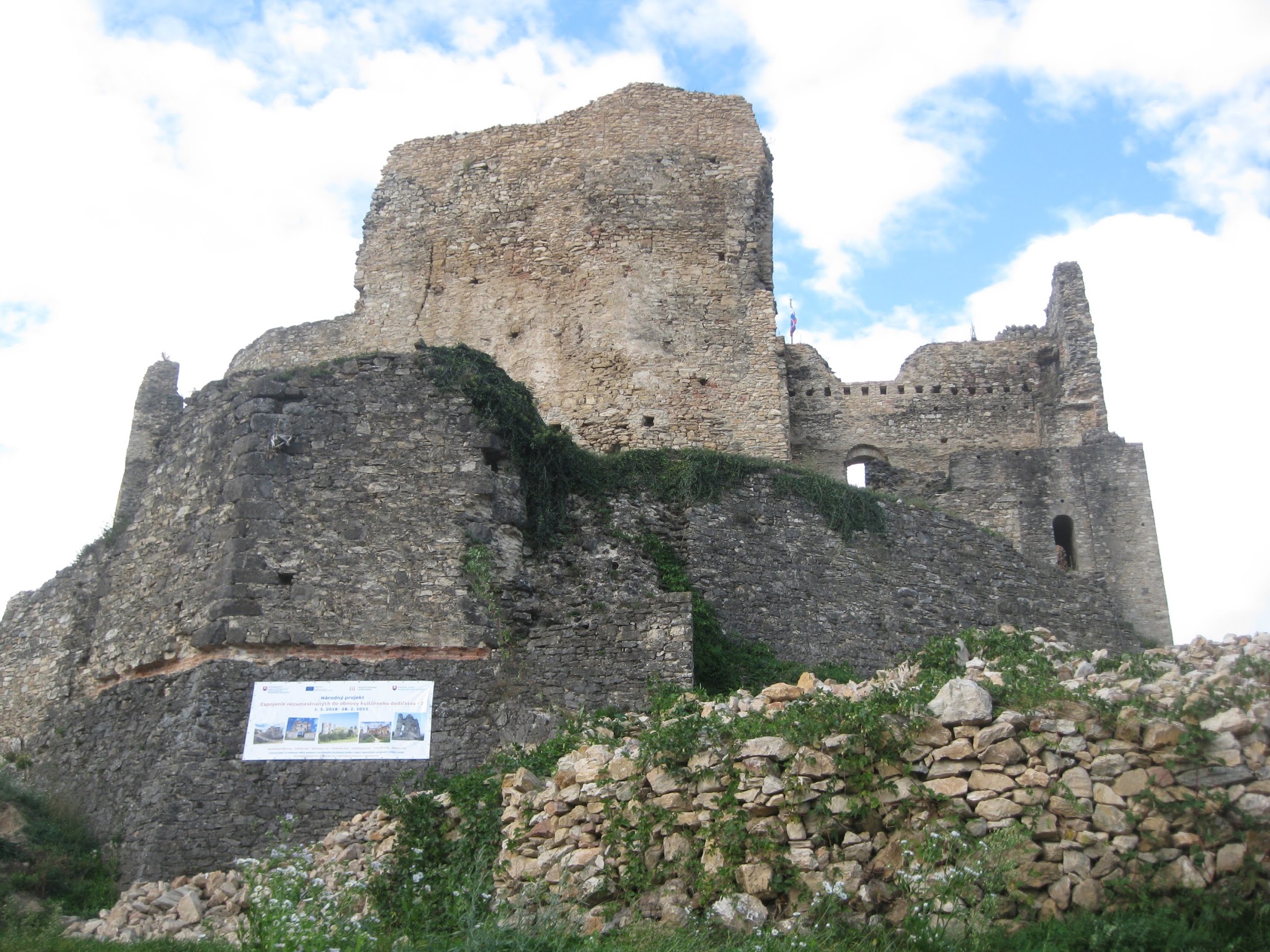
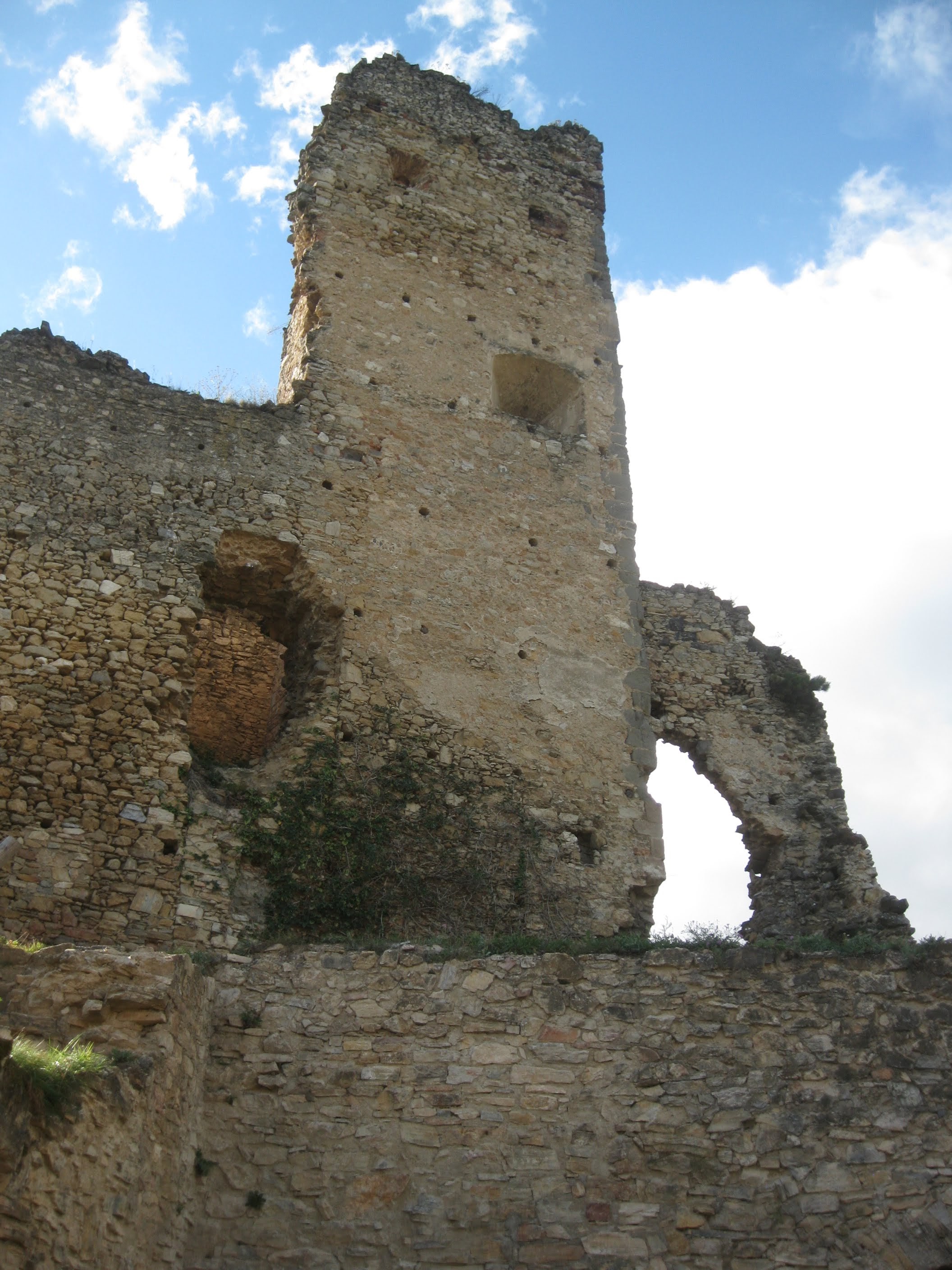
The ruins are fairly evocative, and the castle feels like it must've been pretty big. Once you've entered the ruins, there's only one informational sign on the entire premises about the castle (at the time of writing), which says that work to restore and clean up the ruins is underway from 2018 to 2021. But going by the janky looking scaffolding and rusty construction equipment scattered about the place, it looks more like the work ground to a halt 30 years ago and has been at a standstill ever since. Wooden steps and ramps wind around the place, taking you up or down to different levels, but the weathered planks of wood sometimes feel floppy and unsafe under your feet, and some of the ramps look like they were cobbled together by Pat and Mat.
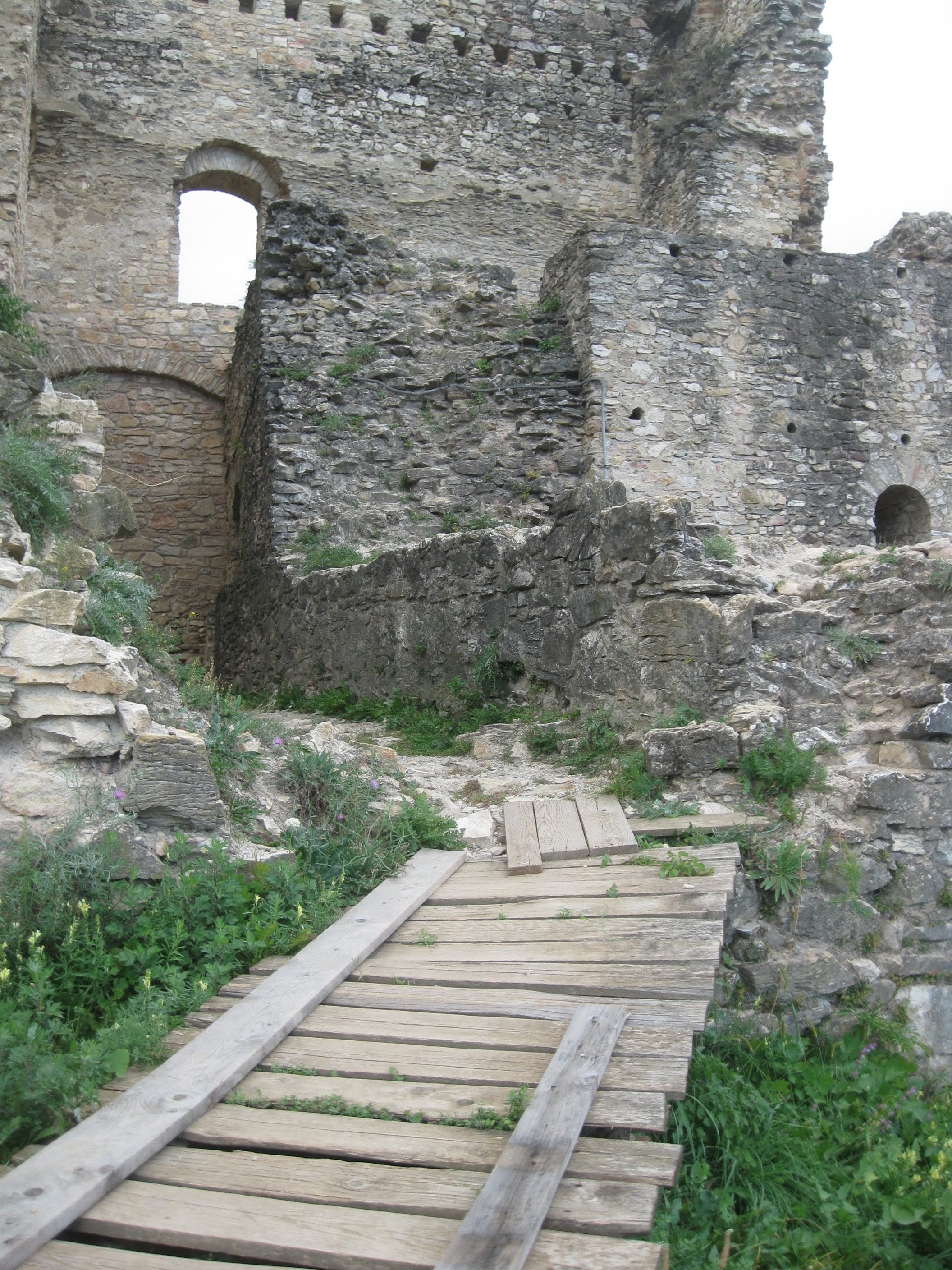
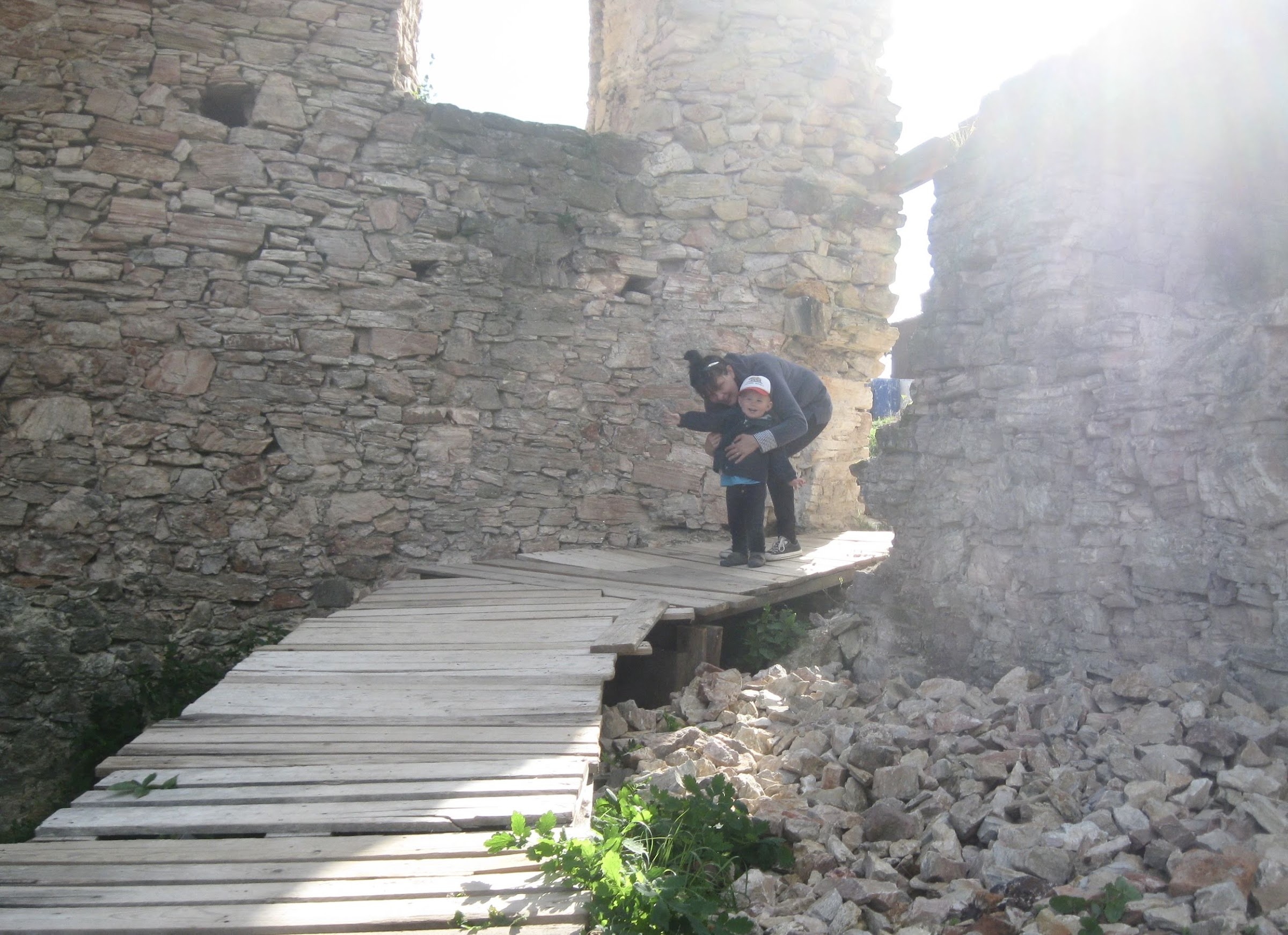
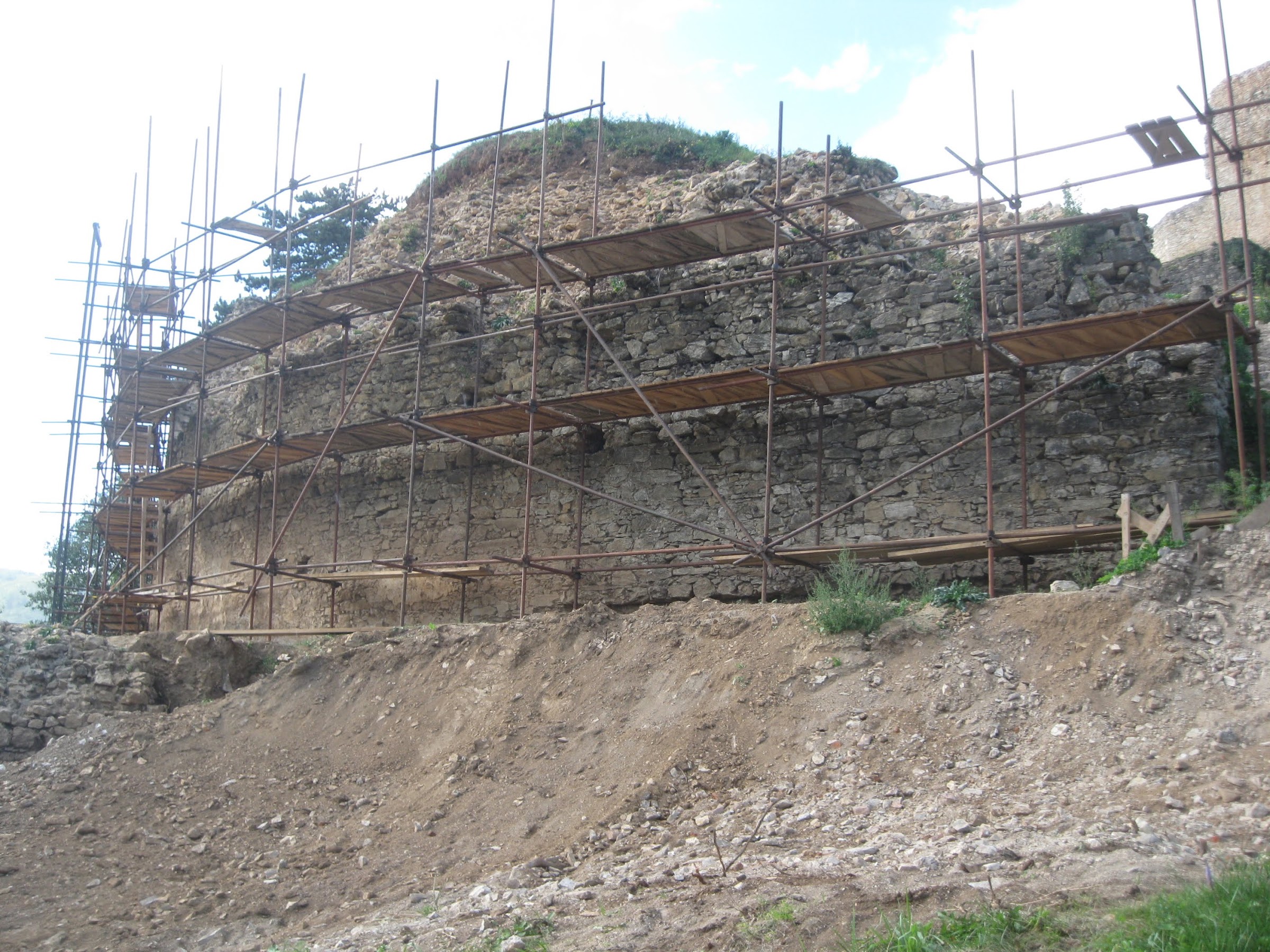
Maybe in 2021 the place will look more like an accessible tourist site? I think the village probably just isn't ready to actively lure tourists, but they don't mind if you check it out; however, they aren't going to go out of their way to help you. The castle isn't fenced off or anything, so it's not like they're trying to keep people out.
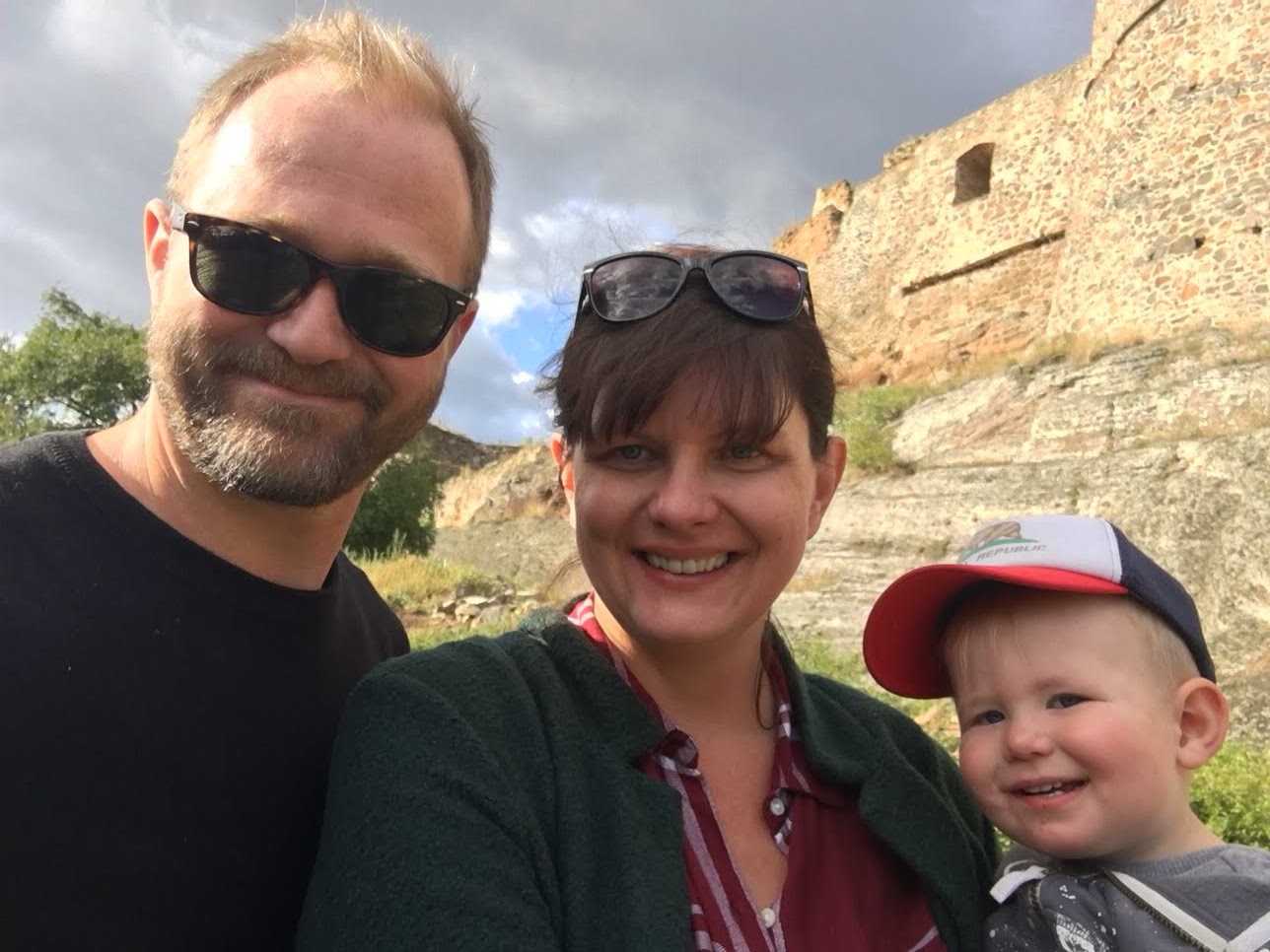
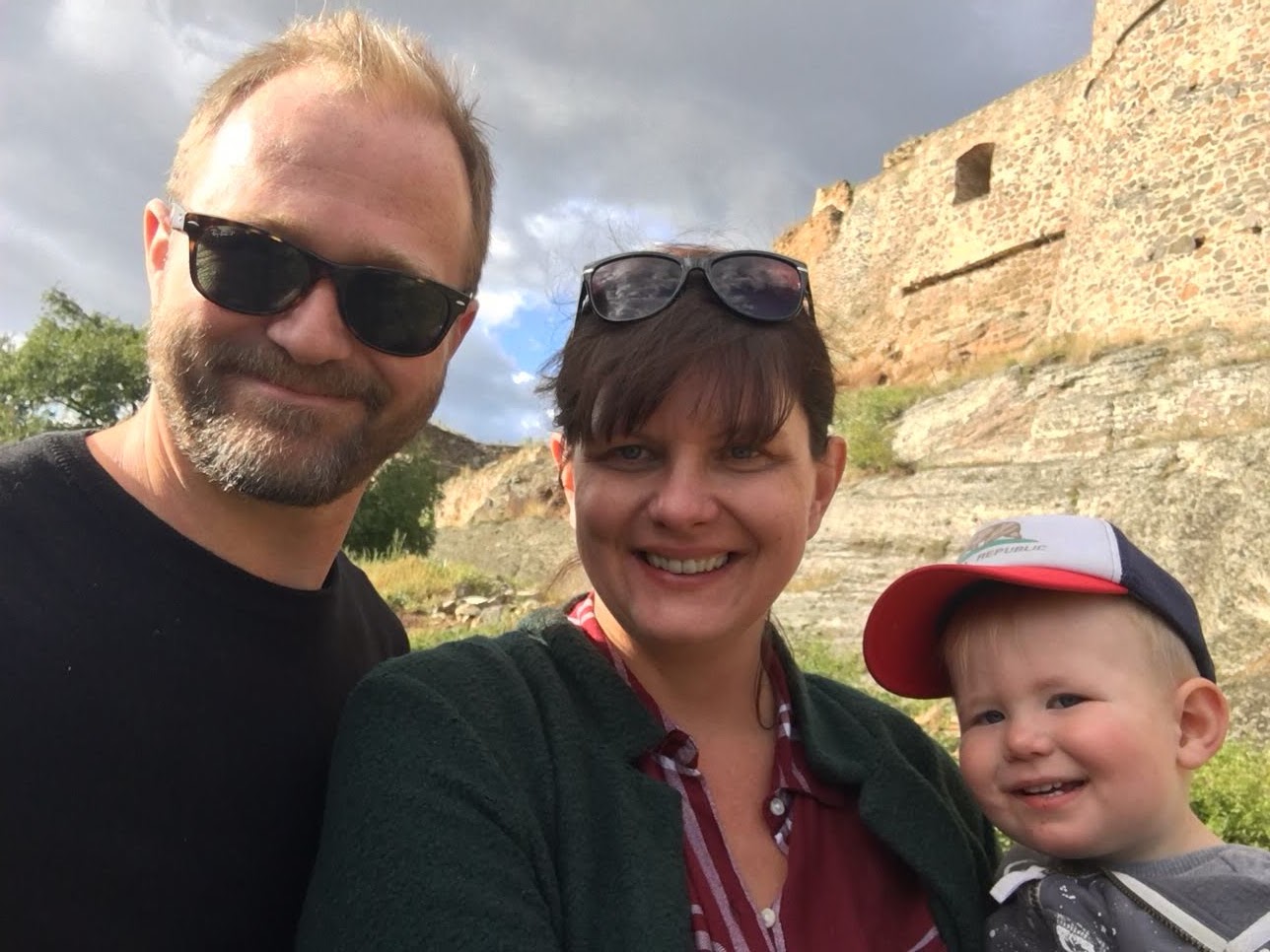
Nevertheless, it's fun to tromp around the place, and the views over Divín village, the Ružiná reservoir, the village of Ružiná further out, and the forested hills beyond, are quite nice. Simon had fun rolling around on some grass, hearing himself shout in an echoey room, and playing with caution tape. Of course, we didn't take him on the sketchier looking wooden steps or steep paths laden with loose stones, but he was happy to run around on the level grassy areas.
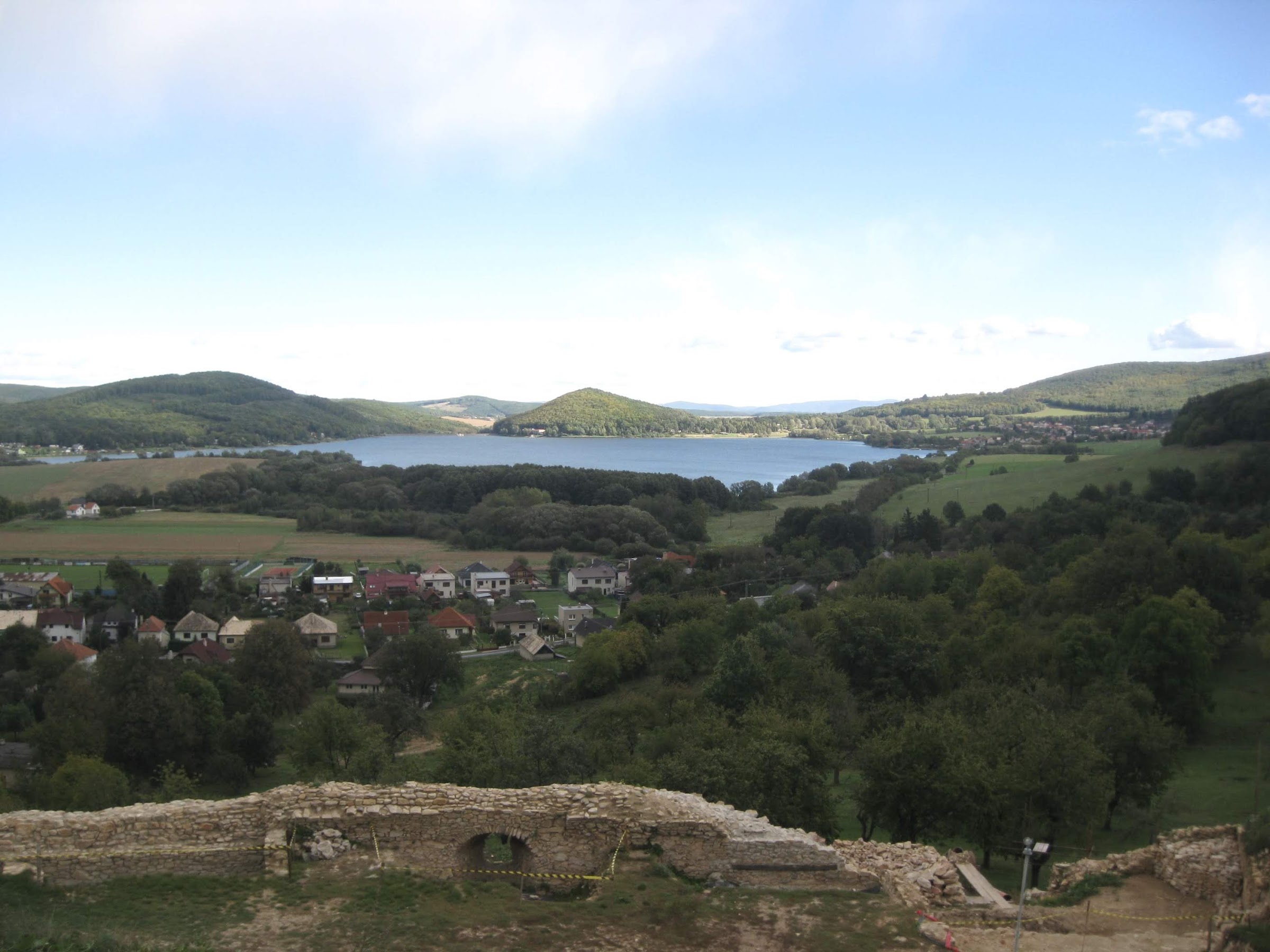
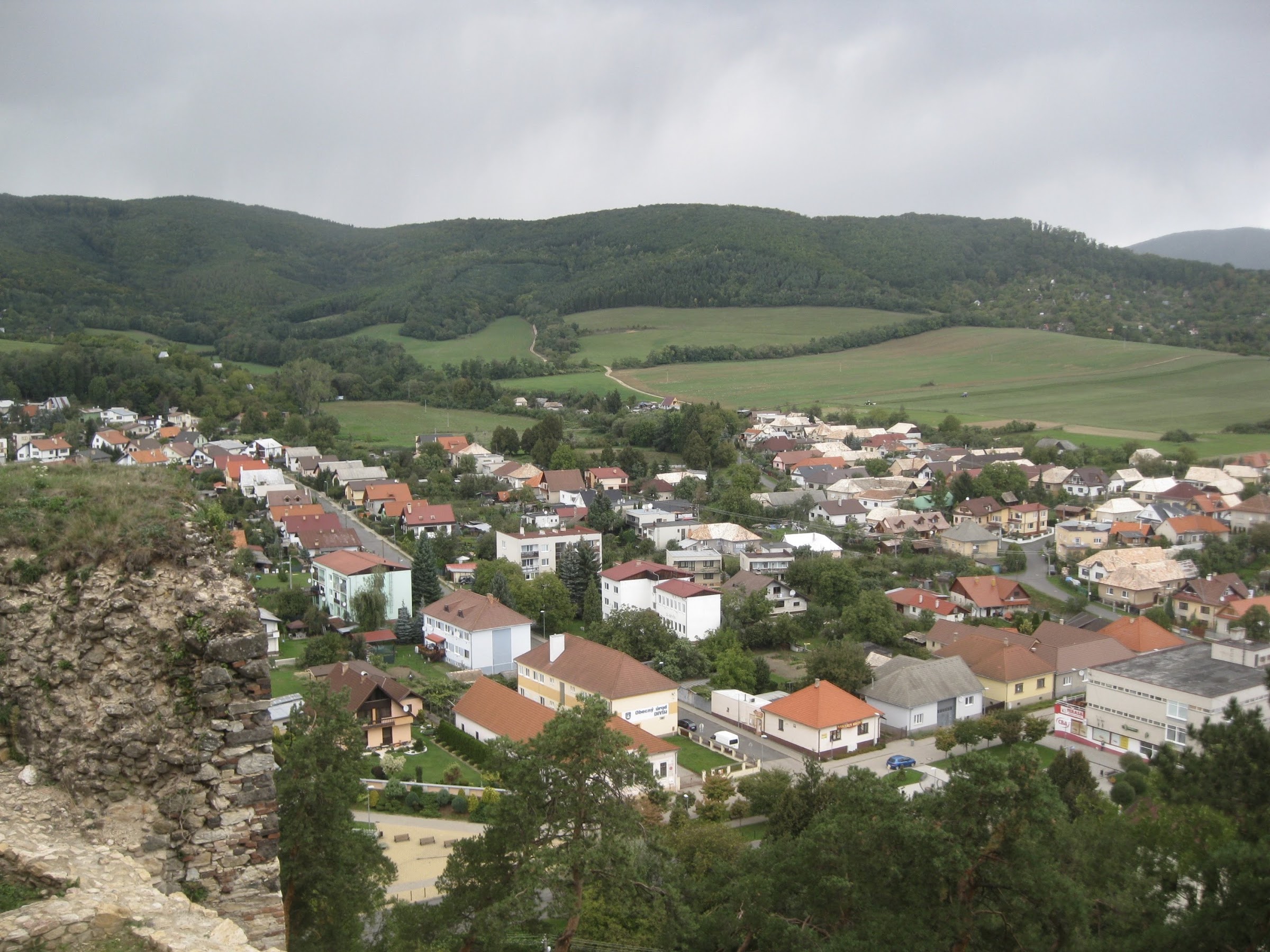
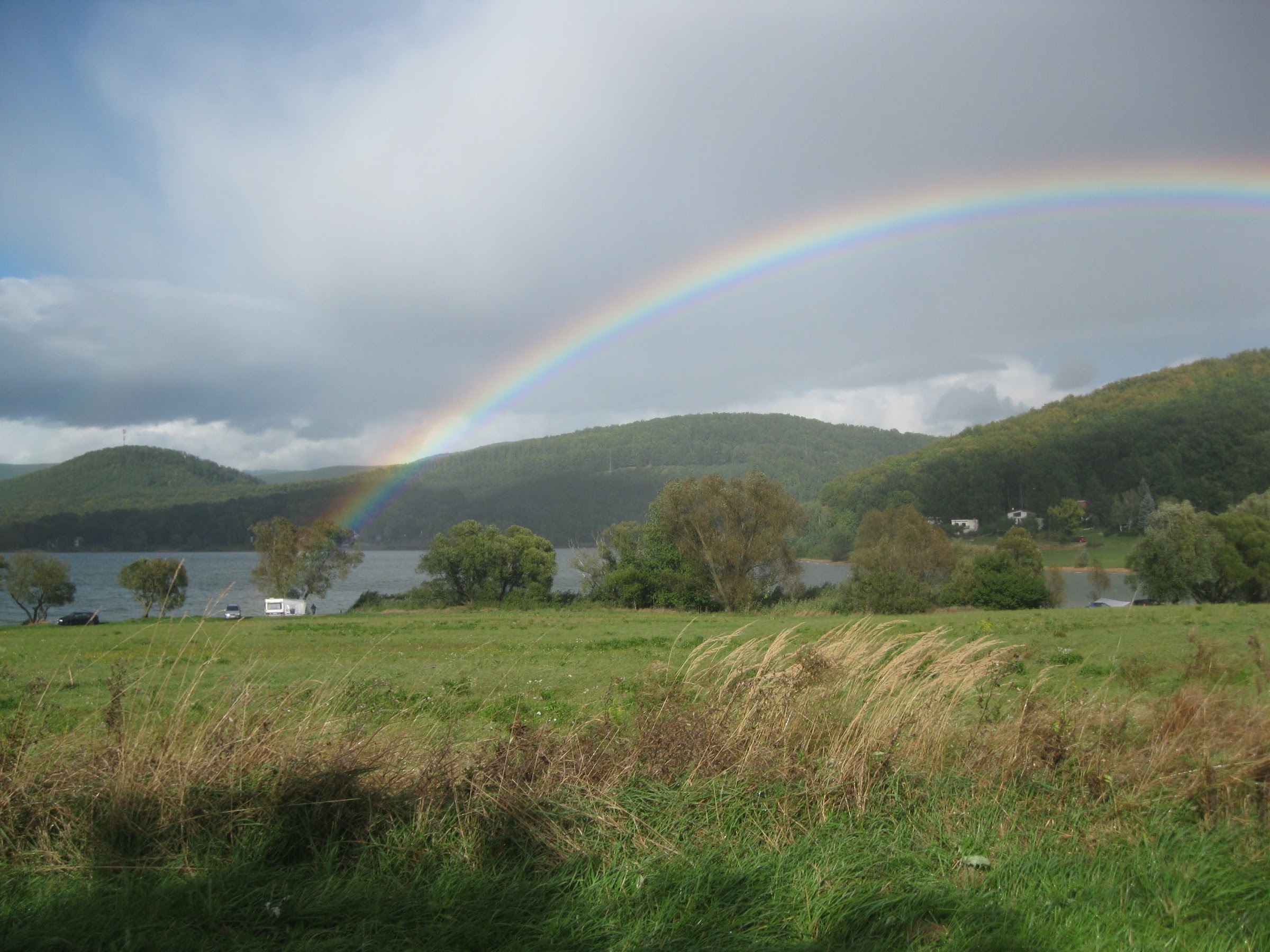
As we were making our way back down the hill to the car, these eerily dark clouds blew in suddenly from out of nowhere, and within seconds a torrent of rain came pounding down on us. This wasn't a light sprinkle - this was like standing under a shower. Because it had rained earlier in the day, Simon had on a rain jacket with a hood which kept him mostly dry, but Terezia and I were in regular clothes and we were completely drenched by the time we got to the car. We seldom get heavy rain or surprise storms like this in California, and Simon seemed a bit confused and slightly worried by the intensity of the rain. On the way back home, as we were driving around the Ružiná reservoir, the storm passed, the clouds began to part, and a big rainbow appeared over the lake. For the rest of the afternoon and evening, everyone was talking about the crazy storm that blew through the region.
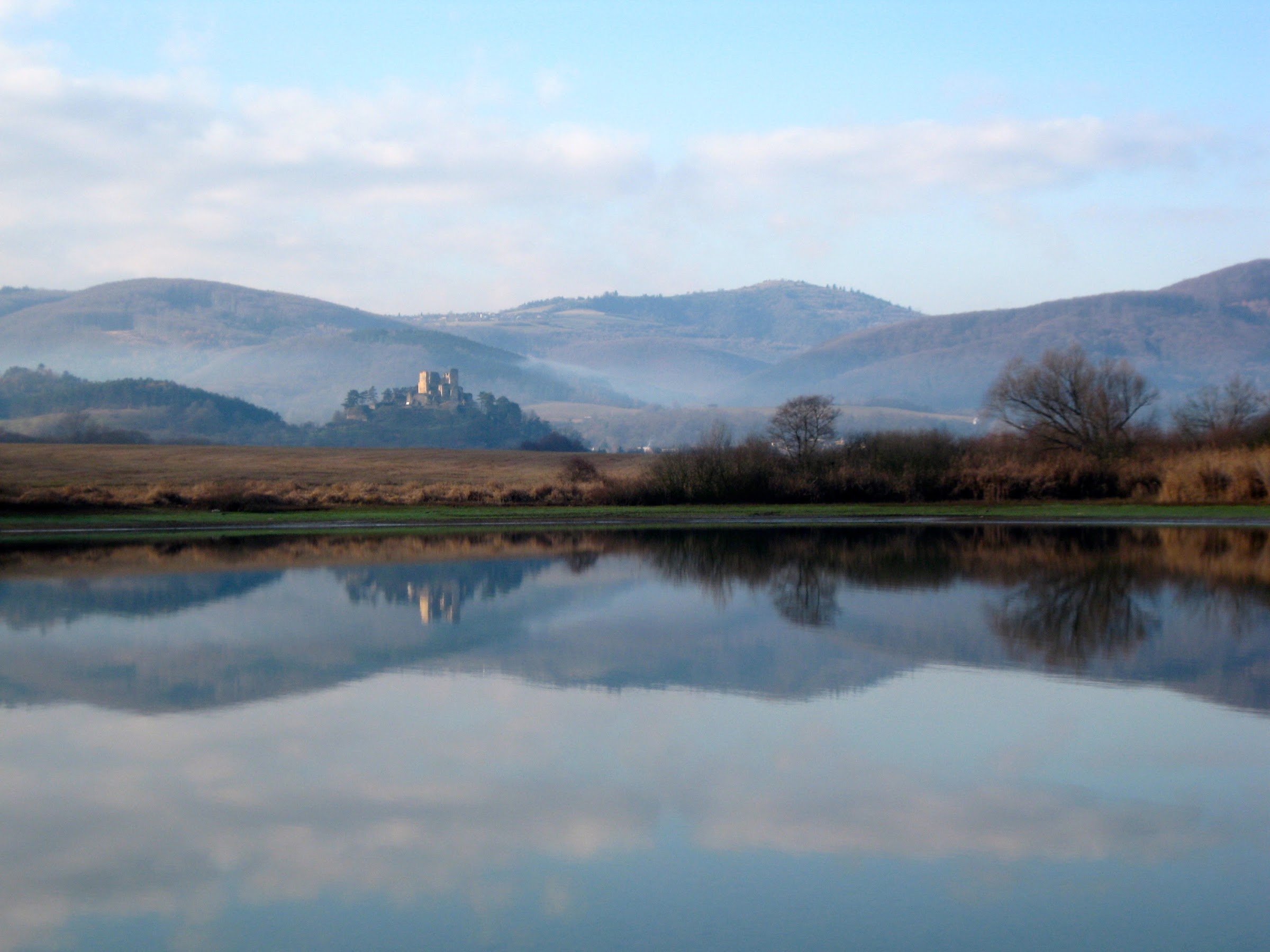 |
| Cool shot of Divín from across the reservoir, taken in December 2014. |
Fiľakovo Castle
We finally got the chance to explore Fiľakovo castle, which sits in the town of the same name. It's about a 15 minute drive southeast from Lučenec. We went there back in winter 2014 when we were living in Slovakia, but the castle was inexplicably closed and we weren't able to go inside. This time, the three of us went with Terezia's dad, who was itching to get out of the house for a bit.
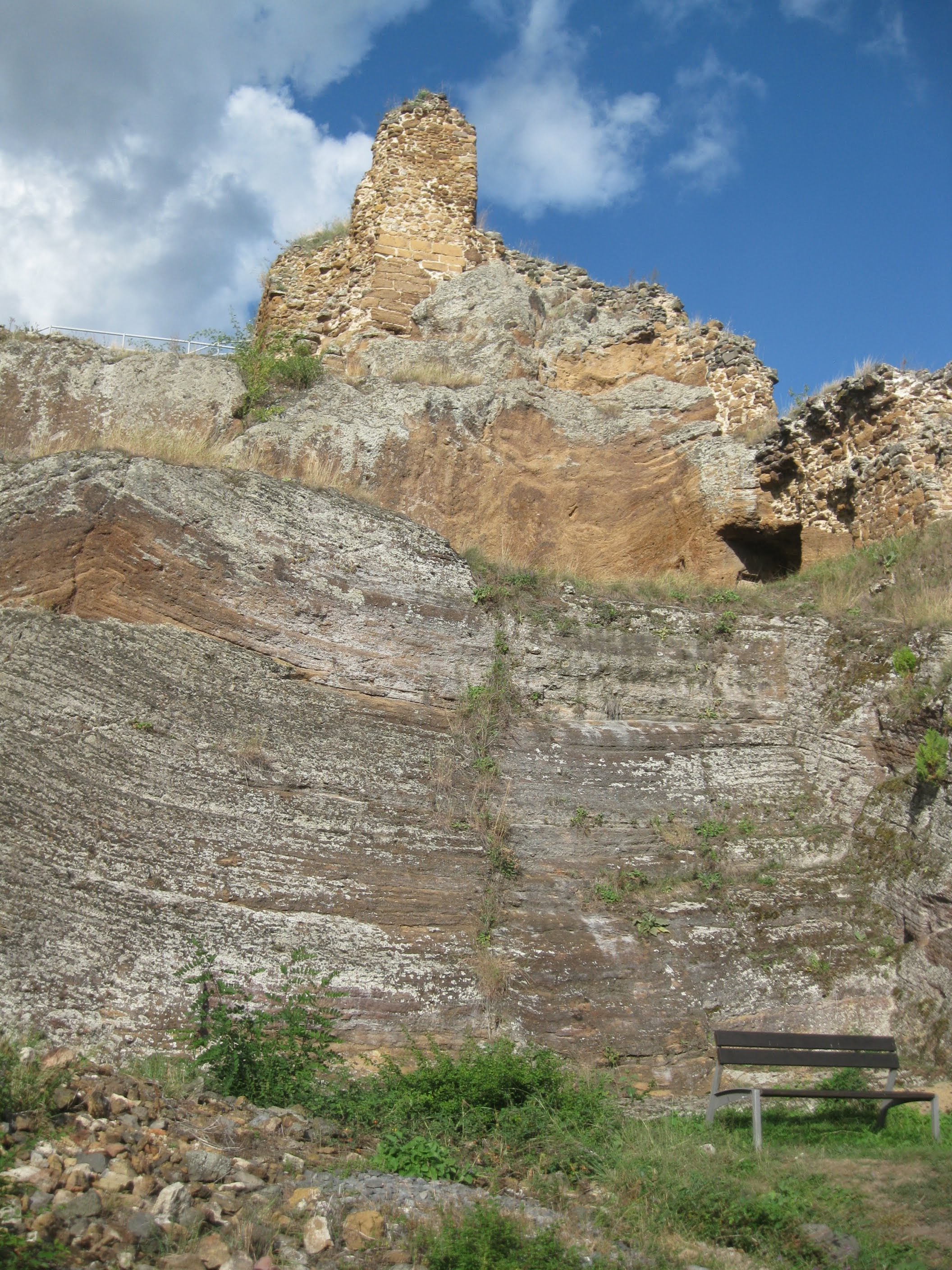
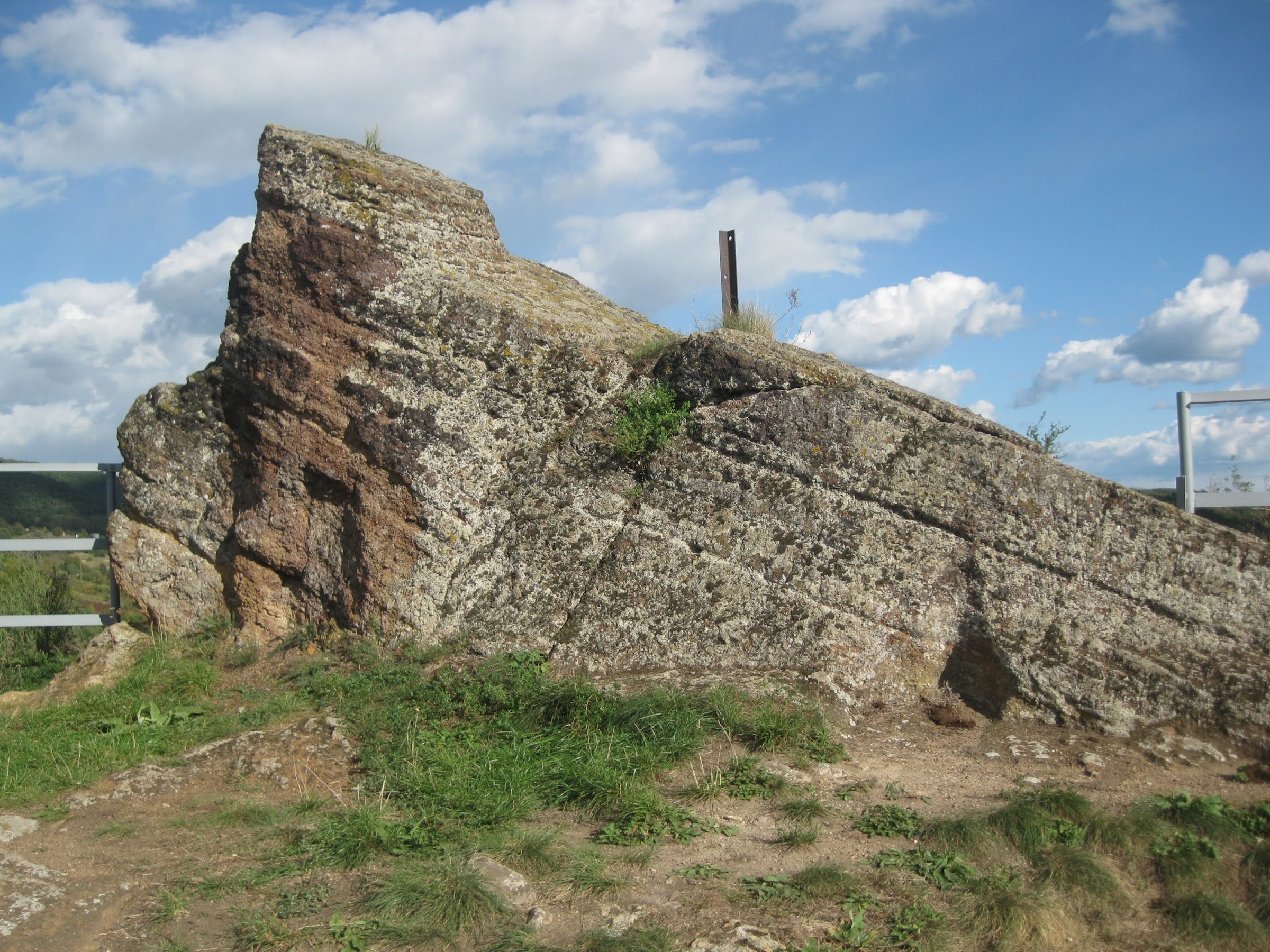
Fiľakovo castle sits on this cool, massive outcropping of volcanic basalt rock that thrusts upward from the town center. You can see some gorgeous, wavy rock layers in the outcropping, which makes the place interesting in terms of both the geology and the history.
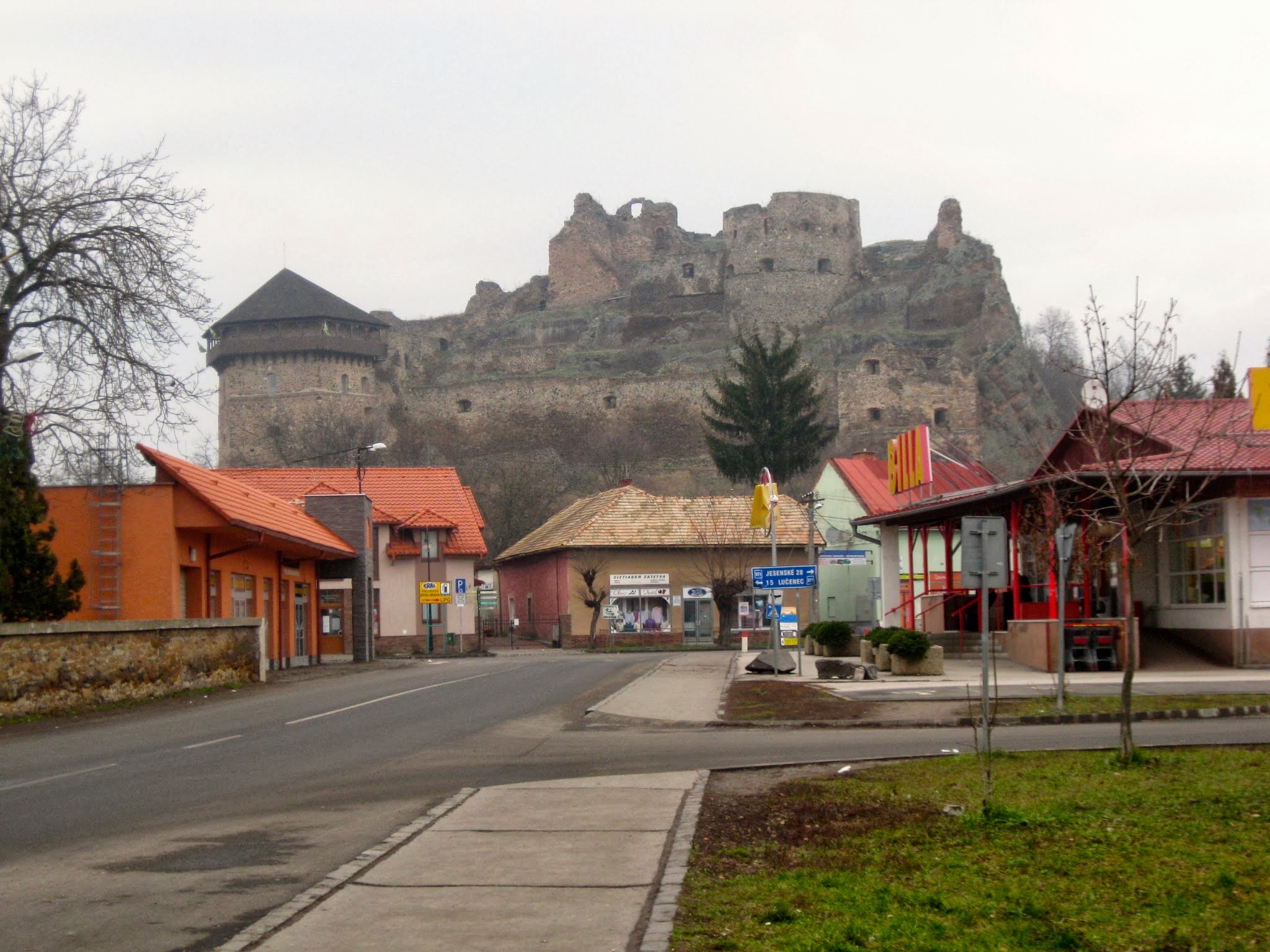 |
| Picture of the castle that I took in January 2014. I got better long shots of the whole castle that time than on this recent trip. |
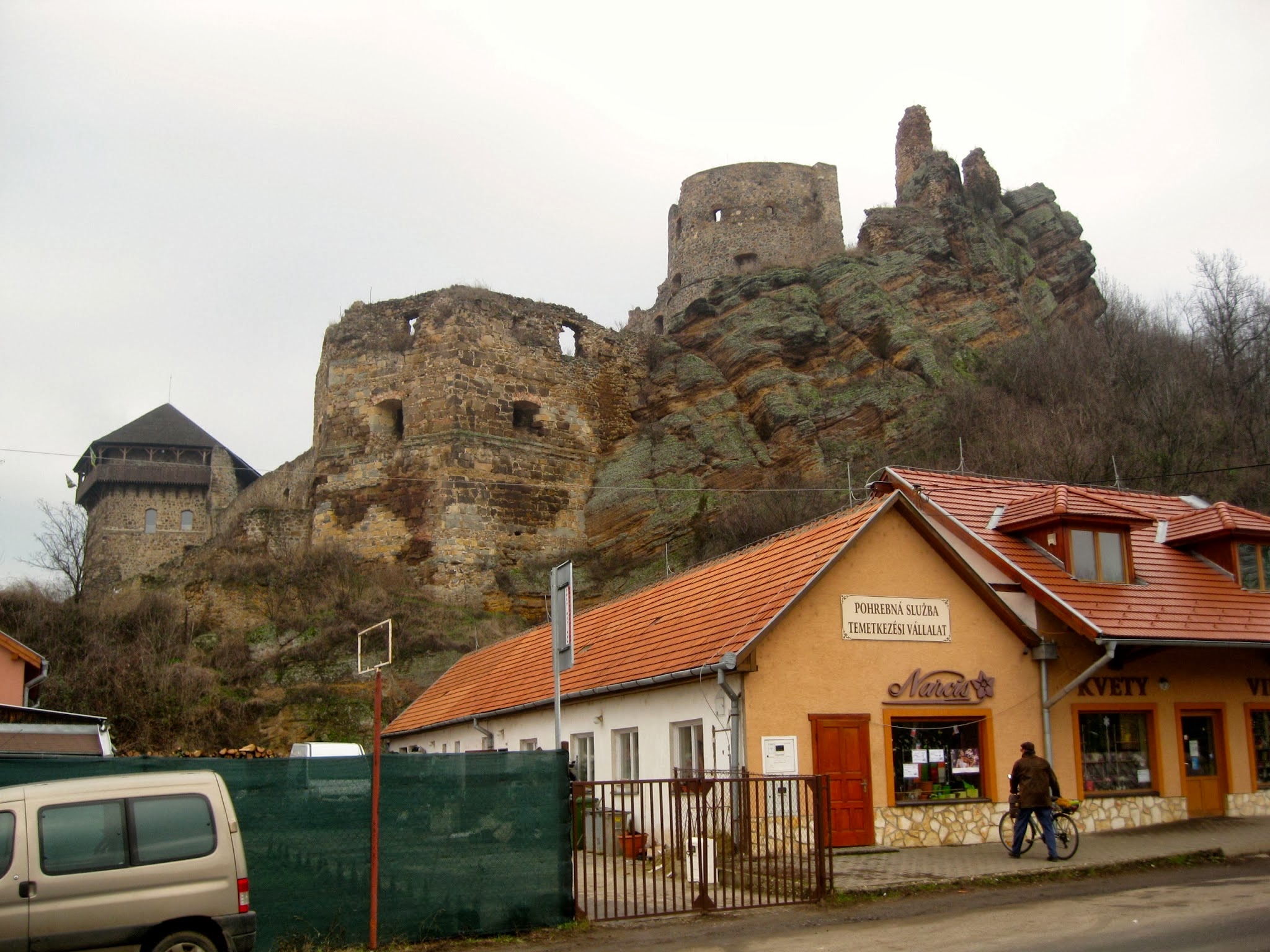 |
| Shot of the castle from January 2014. Check out those awesome layered rock formations! |
Unfortunately, there's pretty much nothing else to see or do in Fiľakovo other than the castle. The town has precious few historic buildings, and the few it has aren't particularly exciting or unique. The town center and the lane leading to the castle entrance have clearly been tidied up for tourists, but there's nothing super interesting to see unless you're wildly obsessed with checking out the communist-era panelaks in every town you visit.
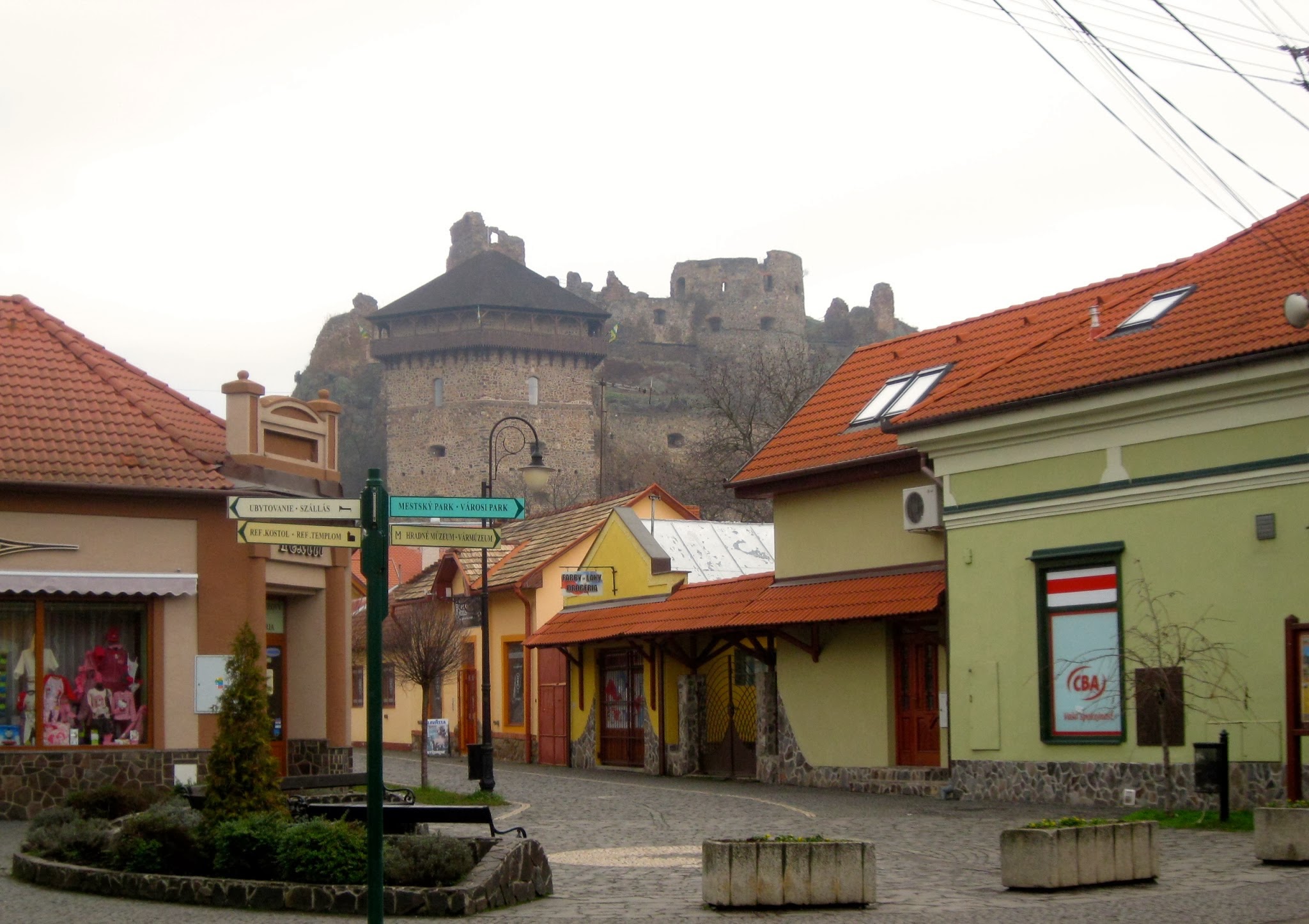 |
| Shot of the castle and the sort-of-pedestrianized lane that leads to it, taken in January 2014. |
The first written mention of the town and castle was in 1242. It became part of the region's defense system against the Ottomans a few centuries later, along with the nearest castle, Šomoška (a cool ruin that I wrote about here), which sits right on the current border with Hungary. But this defense system didn't seem to work so well, as Fiľakovo was conquered by the Ottomans in the mid 1500s, and again in 1682. The second time, the Ottomans were actually helped by some Hungarian/Transylvanian prince/apparent jerk named Imrich Thököly, and this time they burned the castle down. It has remained in ruins ever since.
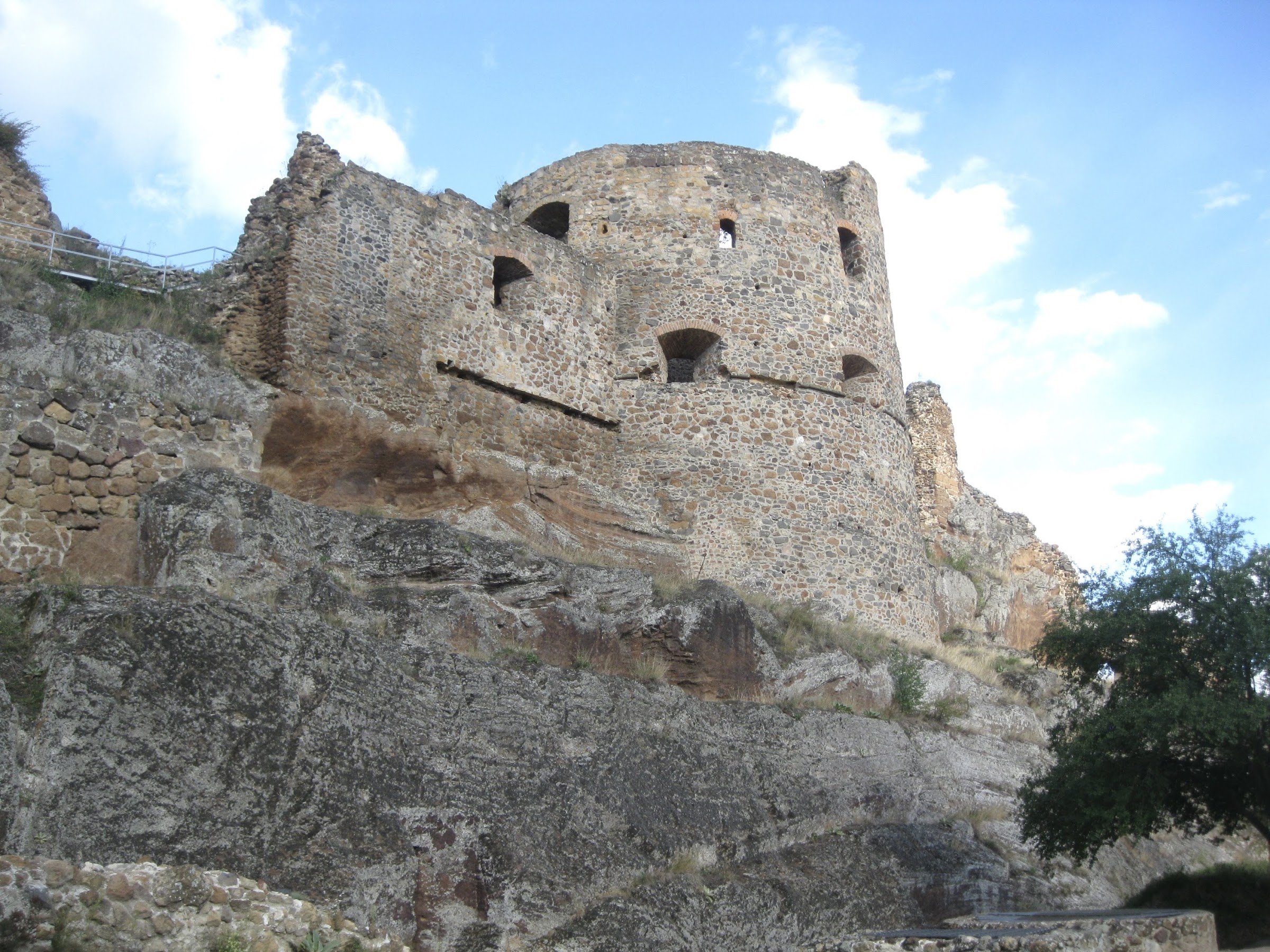
The castle's biggest bastion, which faces the town center, was reconstructed at some point in the 20th century, including the wood roof and balcony at the top, and it now contains a multi-story museum featuring artifacts from the area, including shark teeth (!) that are millions of years old, and loads of medieval objects.
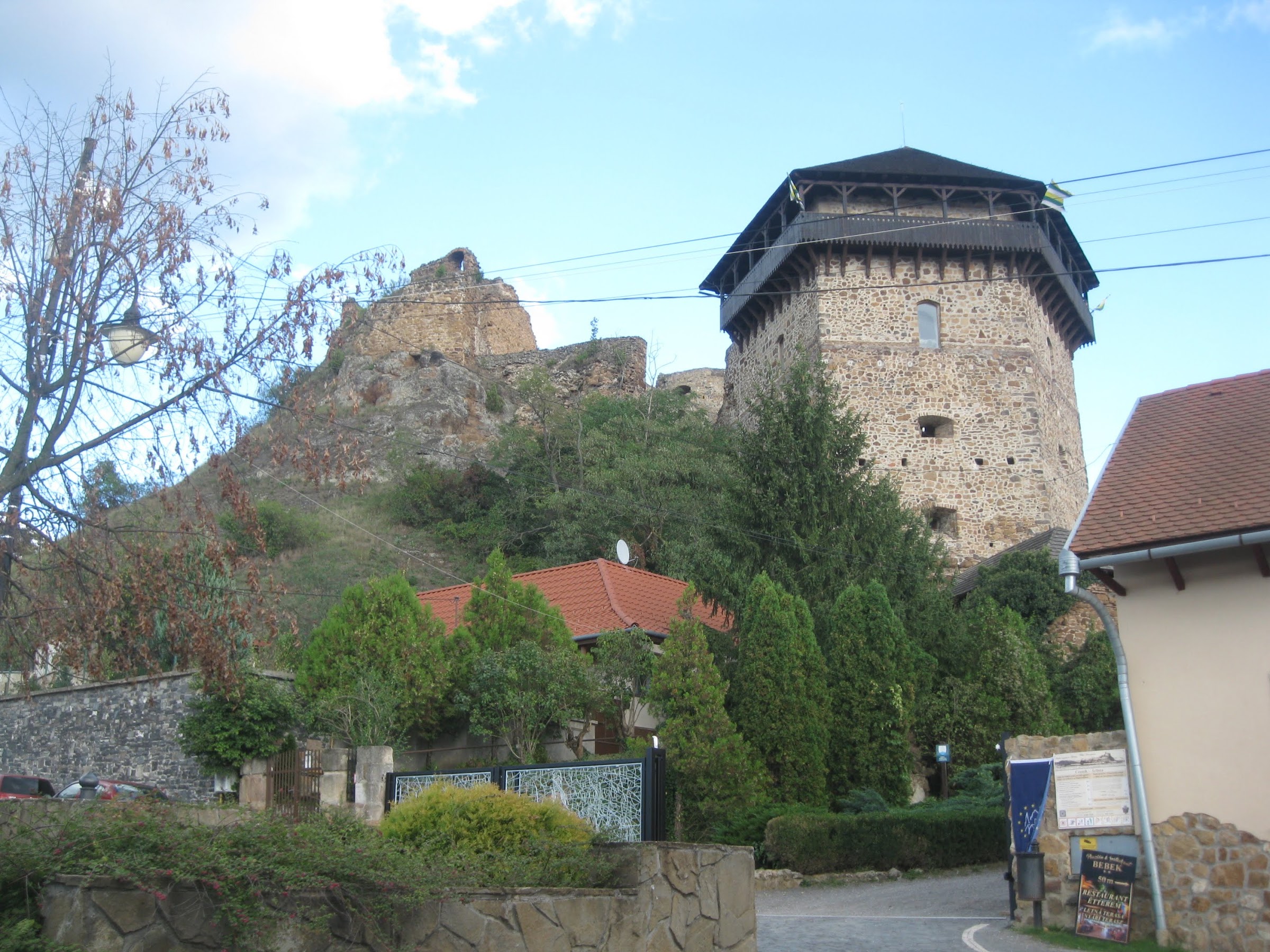
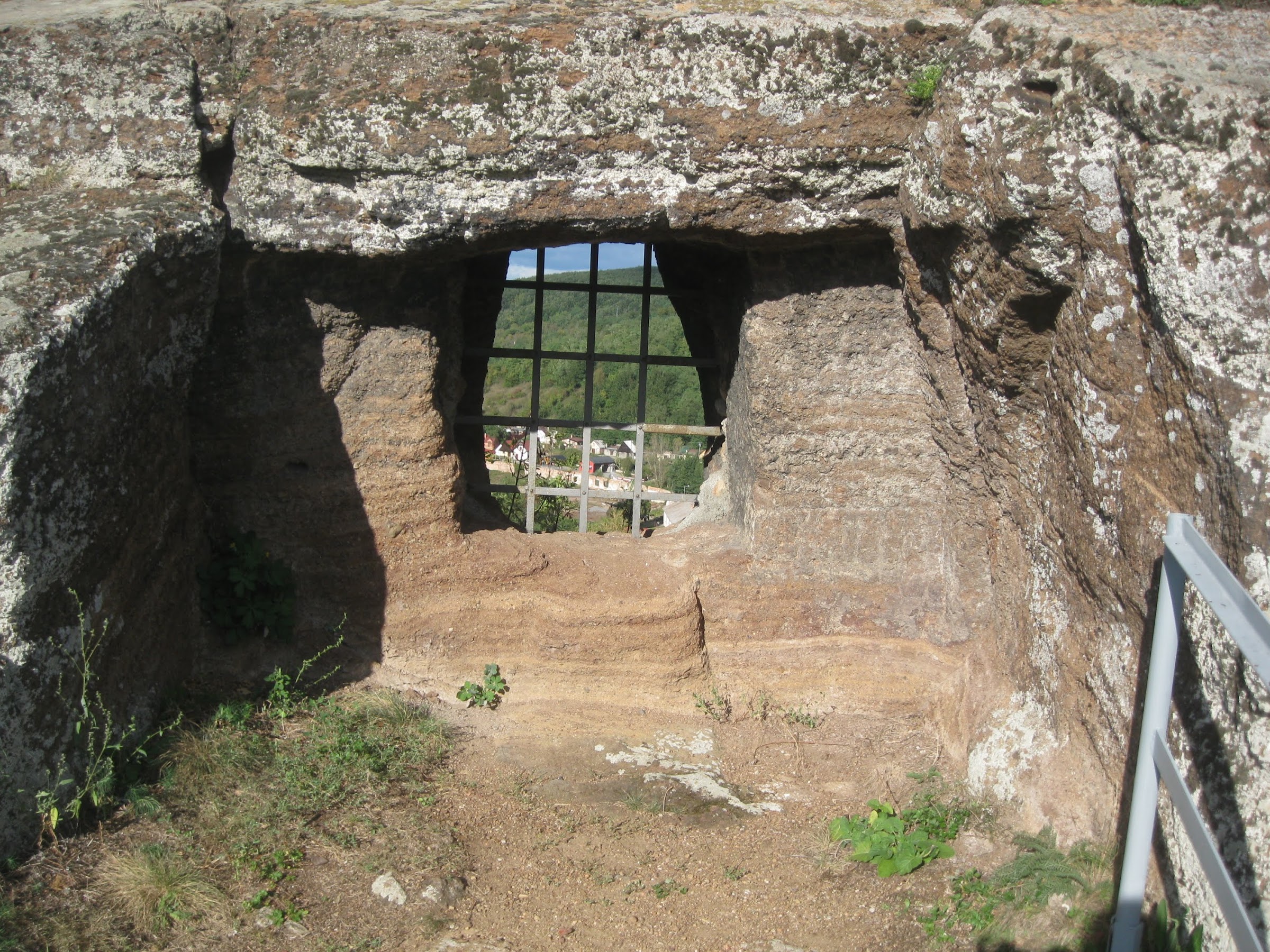
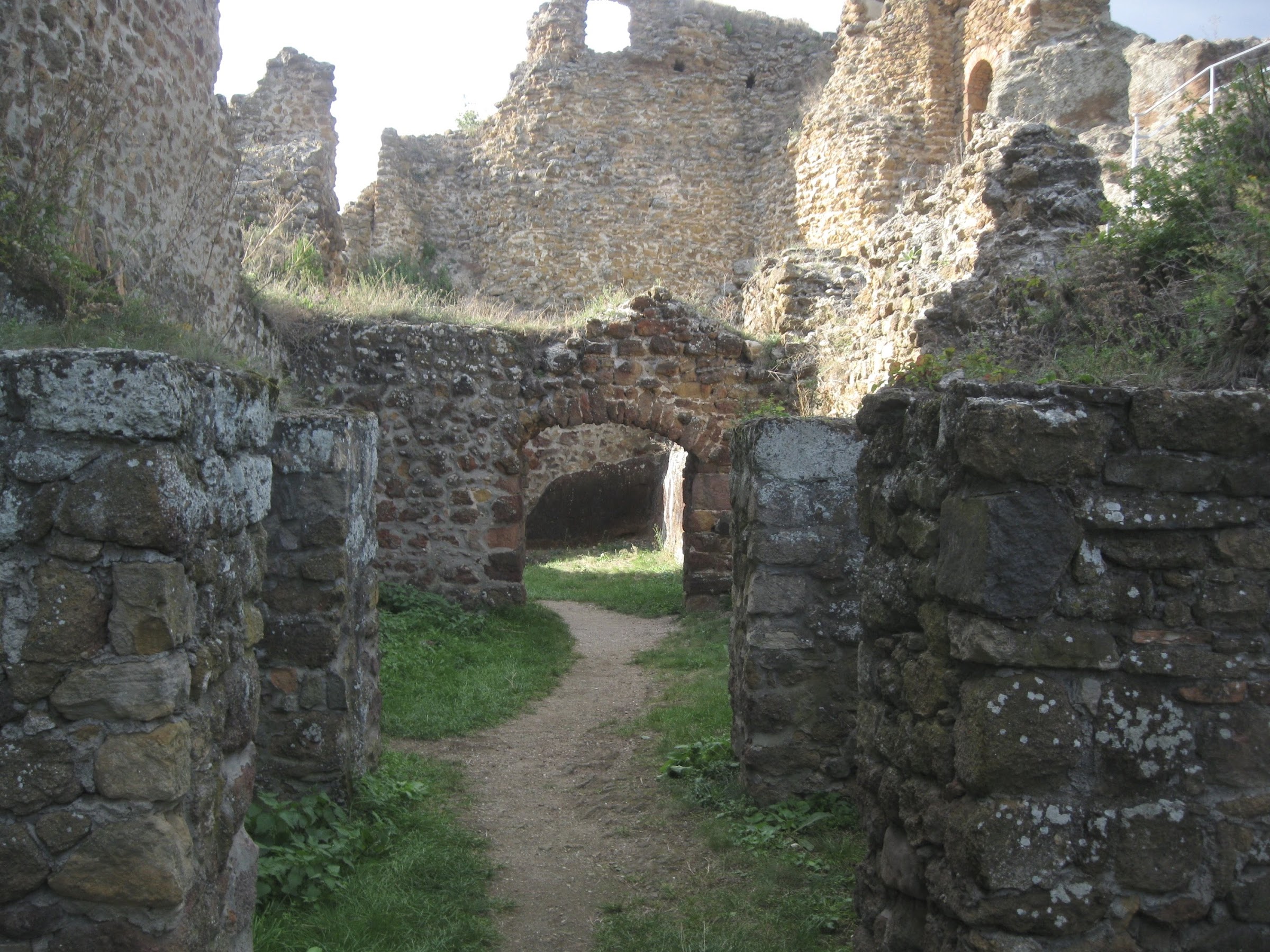
Behind/above the massive reconstructed bastion is the rest of the castle, and you can ascend a lengthy series of steps to the upper levels until you get to the top. It's really fascinating to see how the castle's builders integrated the structure into the massive rock. It's not just built atop the rock - you can see tunnels, alcoves, and windows that were burrowed into and through the rock itself.
The town was apparently somewhat important during communism. There were a few factories there, and quite a few panelaks sprang up in that time to house the workers. The majority of buildings and homes in the town appear to be from the communist era, or shortly before it. With a population of around 10,000, Fiľakovo was never as big as Lučenec (the region's biggest, most important town), but it's certainly one of the larger towns in the Novohrad region. Nowadays the Novohrad region is known for poverty and relatively high unemployment, and I doubt Fiľakovo is an exception to that trend.
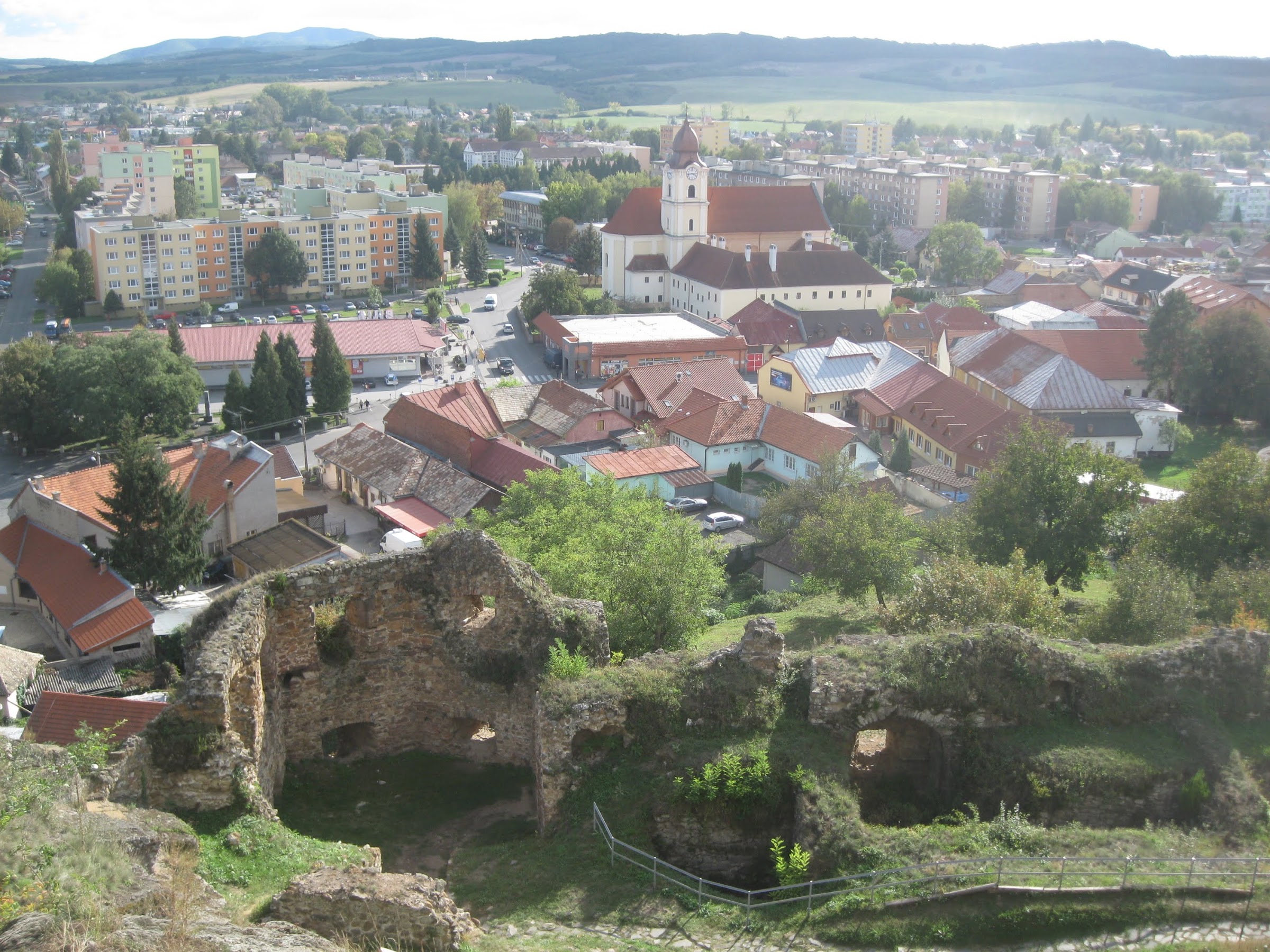

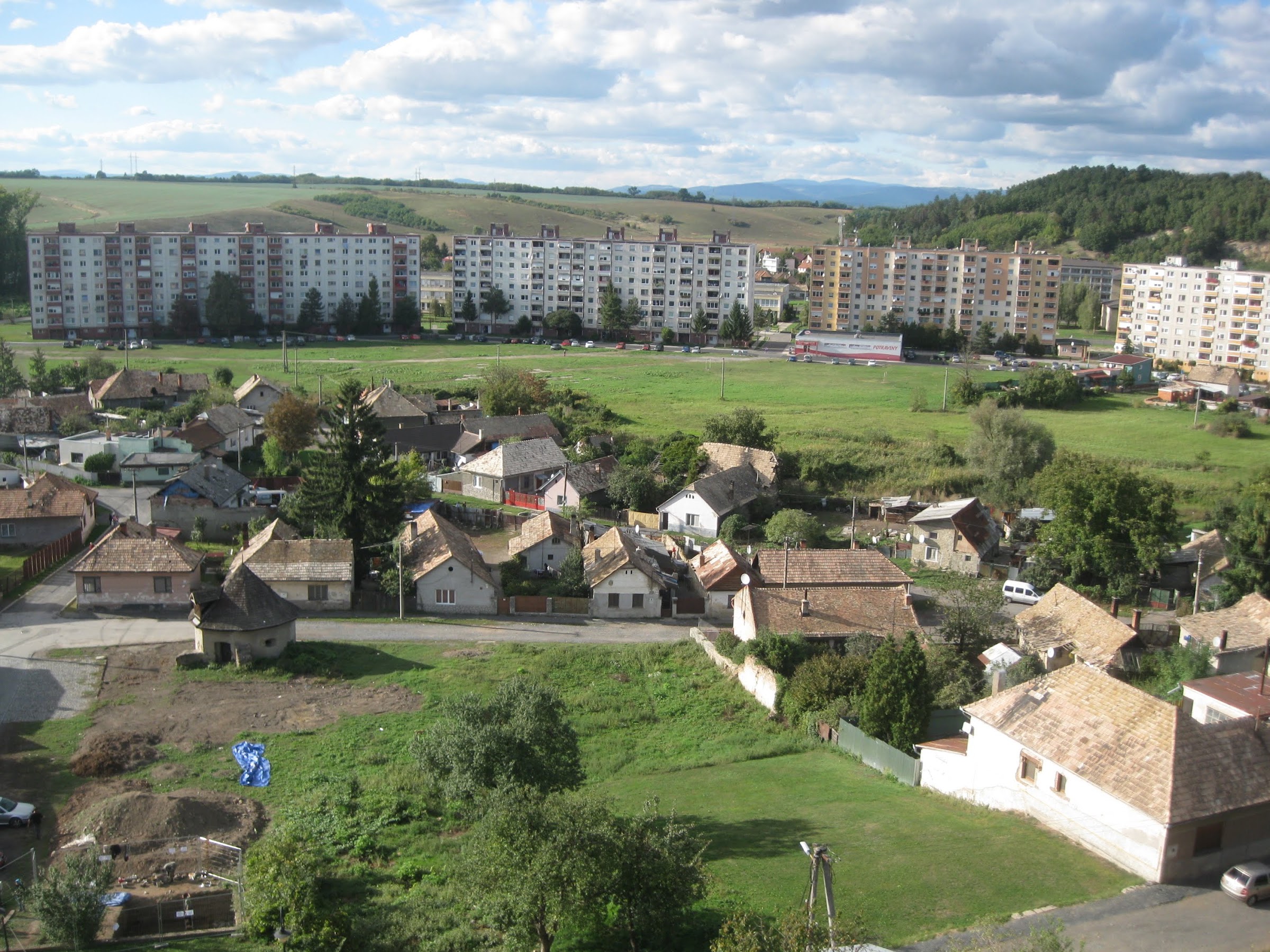
After seeing the castle, Terezia's dad wanted to stop somewhere for a beer, so we ended up at this pub called Route 66. Bizarrely, the pub didn't offer shots of hard liquor, only pints of beer and glasses of wine. This could explain why the pub was completely empty aside from us, since shots of slivovice, hruškovice, borovička, etc., are pretty much the raison d'être for most Slovaks. I can't underscore enough just how utterly strange it is for a Slovak pub not to serve shots.
On this visit, we saw quite a lot of Roma walking around the town center, making Fiľakovo appear more ethnically diverse than the typical Slovak town. Many of Slovakia's larger Roma communities are tucked away in these remote, backwater corners of the country, and some people believe this was probably done by design as a way to keep them "hidden." I've written before that centuries of tension and animosity exist between Roma and Slovaks (and caucasian Europeans generally), and unfortunately one encounters quite a bit of racism in this country.
Interestingly, since Fiľakovo is so close to the Hungarian border, the majority of its inhabitants are ethnic Hungarian, according to a possibly outdated 2001 census cited by Wikipedia, which says 64 percent of Fiľakovians are Hungarian, 30 percent are Slovak, and 4 percent are Roma. As a result, you see a lot of signs around town written in both Slovak and Hungarian, much like in Dunajská Streda, and we also heard Hungarian spoken in the streets. There was a small archeological dig by the base of the castle hill, and when Terezia asked a young woman leaving the site with buckets full of stuff what they were digging up, she first greeted Terezia in effortless Hungarian, but then had a very difficult time speaking Slovak. This woman was probably from Hungary, but it's not at all uncommon to hear a lot of Hungarian spoken in Slovakia's Hungarian communities.
An Extremely Brief Trip to Bratislava (and Bernolákovo)
You might remember how on our last trip we stupidly attempted to rely on Terezia's dad's crappy car for getting around. It's a small Škoda whose engine sounds like an old gas-powered lawn mower. The car corners terribly, you can smell gas fumes and exhaust while driving, and last time the rubber strip of the driver's side windshield wiper came off while we were driving in the rain, and no one seemed to know where we could buy a replacement. After that experience, I vowed that next time we come here, we'd rent a car. I absolutely do not want to have to rely on anyone else, or anyone else's car. I wanted us to have total independence and to feel like we could go wherever we wanted.
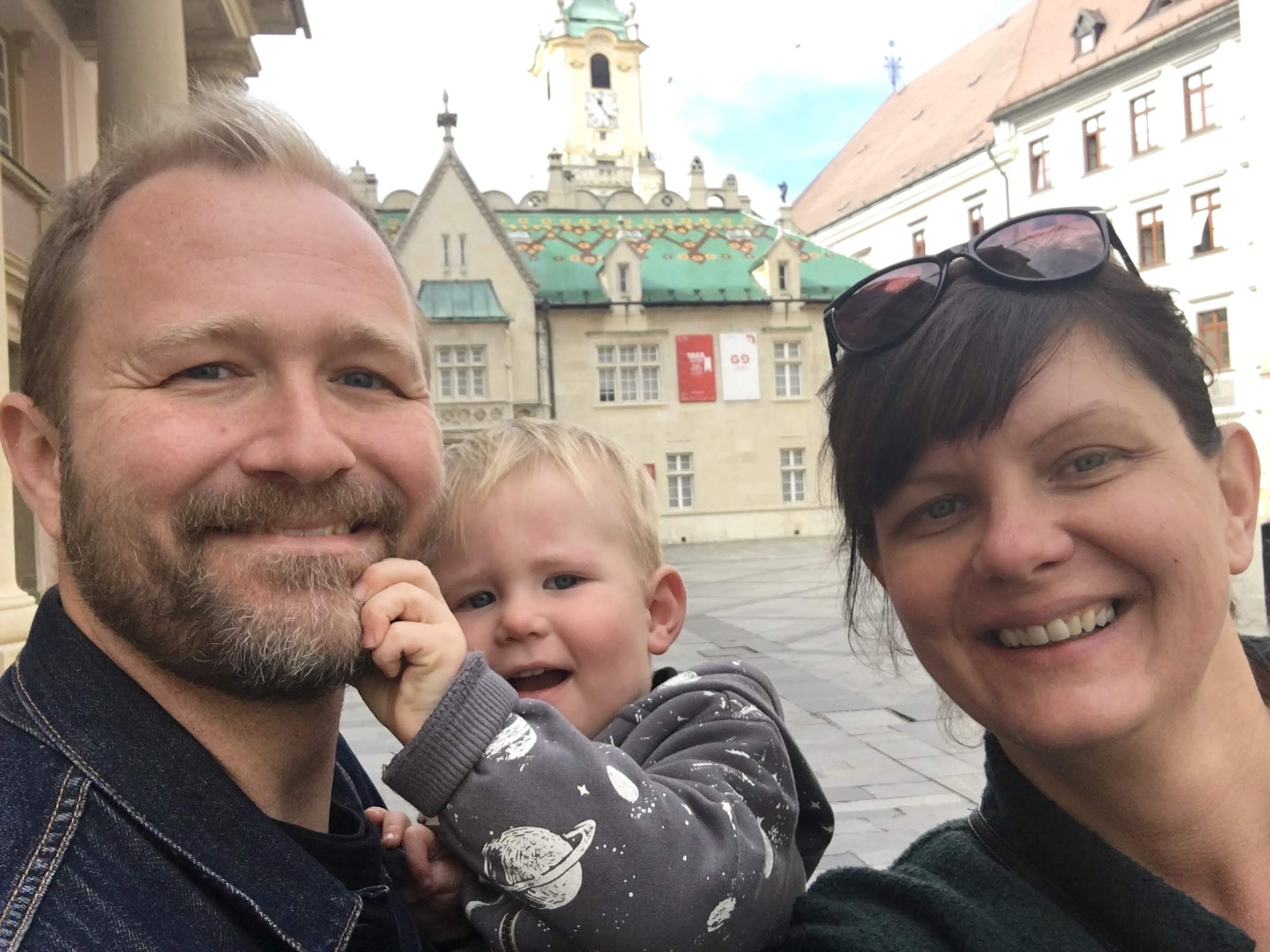
Terezia was told about a car rental place in Lučenec owned by a guy with the same name as a former elementary school classmate of her's. Terezia called first to make sure they'd have something, and she asked the guy on the phone for his name to see if he was, in fact, her old classmate. But the guy started acting rude and paranoid, and refused to give his name, asking, "Why would you want my name?" and saying that one of his employees would be helping her anyhow, so why did it matter who he was. Terezia shrugged and thought, "Okay, weirdo - whatever." When we got to the rental place, Terezia had the employee call the owner, and he asked him if he remembered a Terezia Gašparíková from school. The guy said he did remember her, and he even gave Terezia a bit of a discount, but at no point did Terezia actually get to talk to the guy or say "Hello."
The car we rented was nice - a spacious, comfortable, newish Škoda station wagon that got awesome gas mileage.
At any rate, our trip to Bratislava was cut short for several reasons that I won't really get into here, and we wound up staying for scarcely more than 24 hours, though we initially thought we'd be there for at least a few days. We were staying at Terezia's brother's house in Bernolákovo (an ever-expanding suburb just outside Bratislava), as we've done in the past when visiting Bratislava.
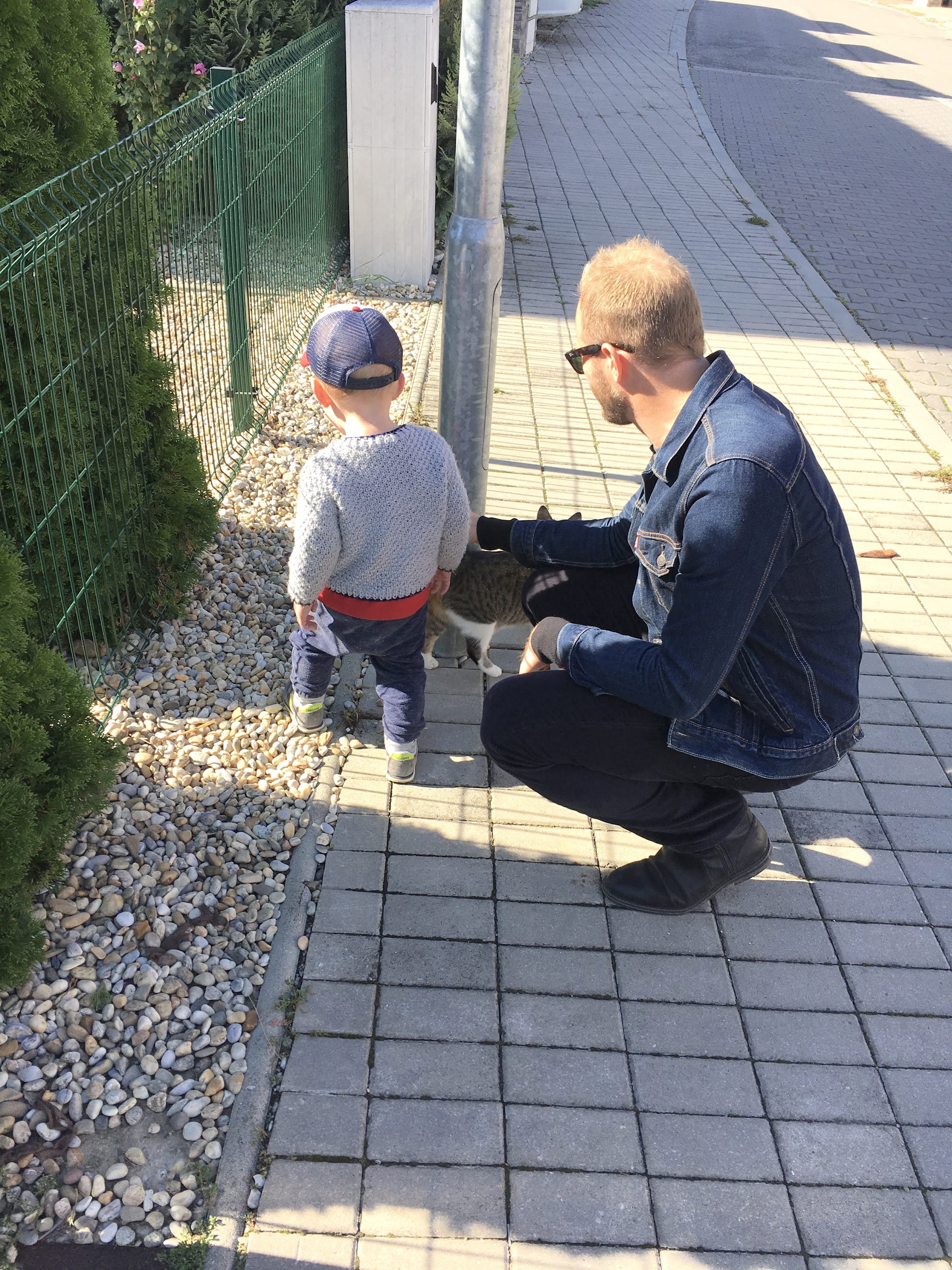
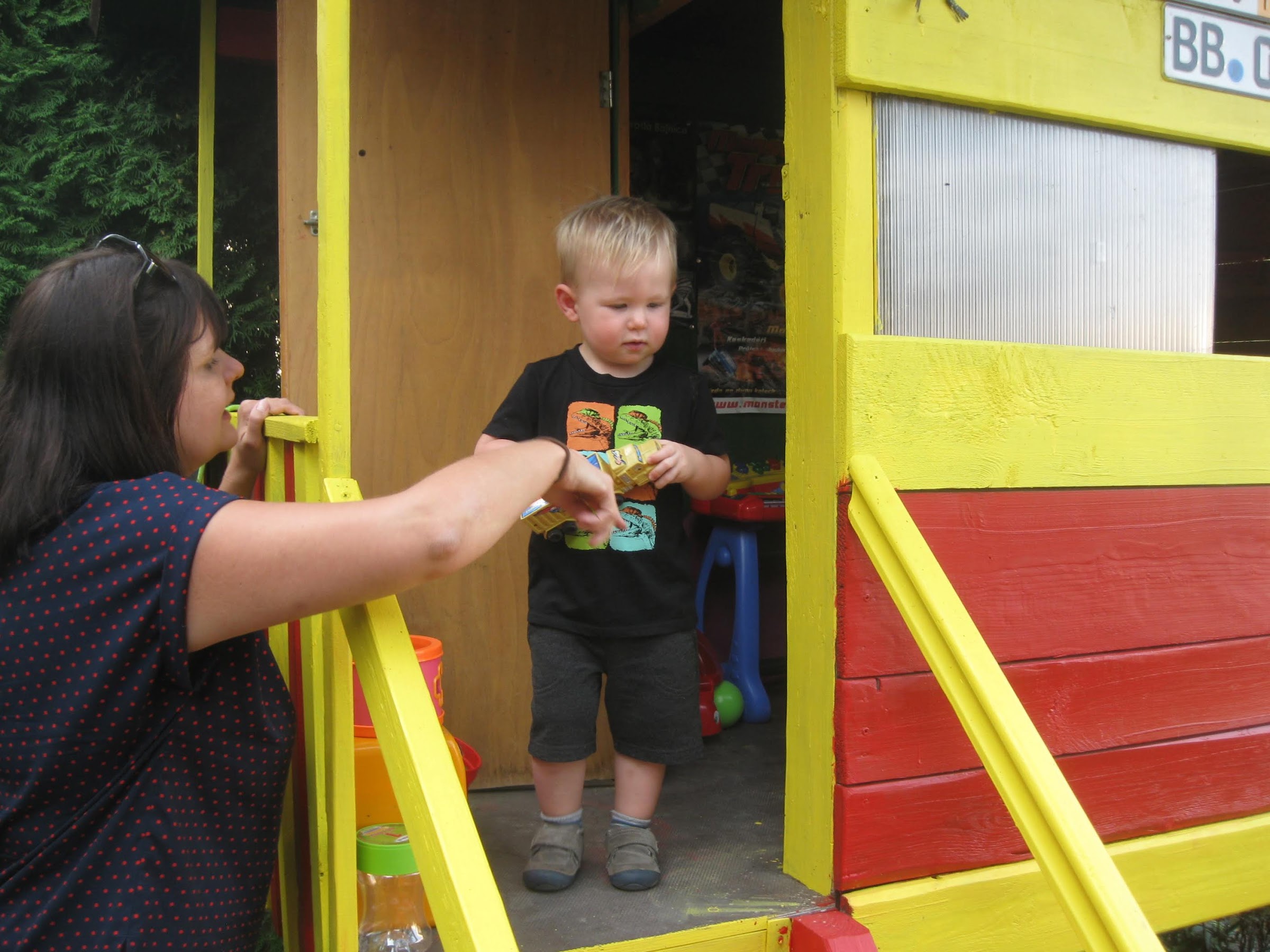
On Tony's street, a few doors down from his house, is a small children's playground, about the size of an empty lot. We spent A LOT of time there during our short stay, since Tony and Silvia's house is not toddler proof. (Of course, we wouldn't expect Tony and Silvia to make their house toddler proof on account of us, but there were loads of things that Simon was constantly grabbing or getting into that they didn't want him to touch or break, and it can be quite stressful having to constantly watch him like a hawk, so we had to get him outdoors as much as possible.) It's a small playground, but lots of moms with little kids of various ages were coming and going throughout the afternoon, so it's pretty popular (this is a very kid-heavy neighborhood). People have also left there an assortment of big, wheeled toys and tricycles for kids to ride, which is nice. There are actually several playgrounds like this in Tony's neighborhood.
Tony and Silvia have a five-month-old girl who is only just starting to roll over onto her stomach (so they haven't had to baby proof their house yet), and with Simon they got a pretty good preview of what to expect when she is his age.
On our first (and only) evening there, I met up with my friend James, a British expat who's been living and working in Bratislava for many years who I've mentioned before. He was kind enough to trek out to Bernolákovo on public transit and meet up at the dingy, smoke-filled Jadron pub for a beer, and later, a less dingy pub closer to the train station. It's always a pleasure to get his insight on the current state of politics in the EU and Slovakia, and to hear about his most recent absurd experiences with local bureaucracy.
Unfortunately, that night Simon slept poorly, which meant that we did too. Tony and Silvia let us use their Pack-n-Play, but Simon couldn't seem to get comfortable in it, as he was flopping around restlessly until he awoke around midnight and then stayed up for a couple of hours. We wound up putting him between us in our bed, which meant none of us slept very well at all. This was partly why we went back to Terezia's parents' home the very next day - we just couldn't endure another rough night like that.
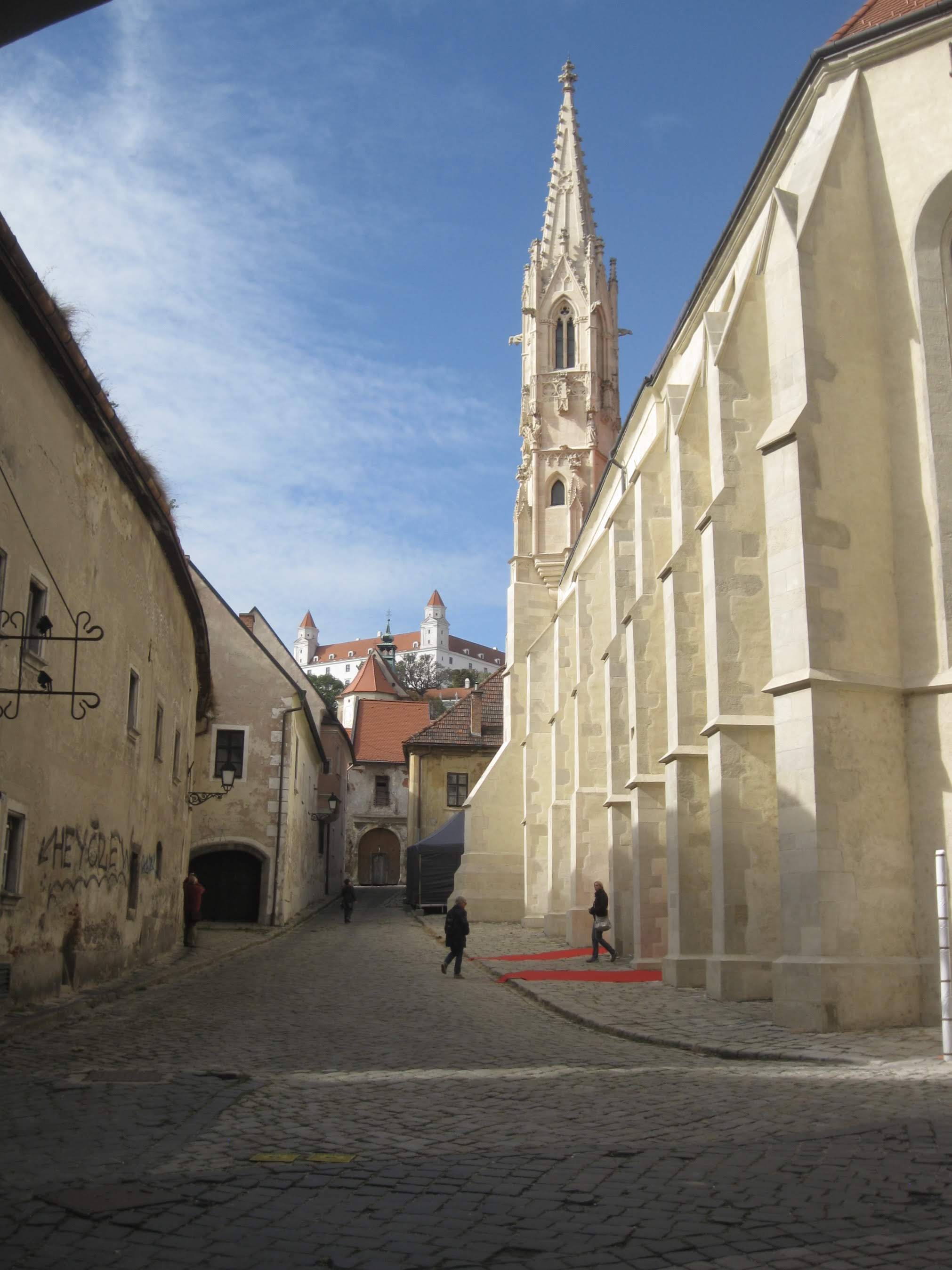
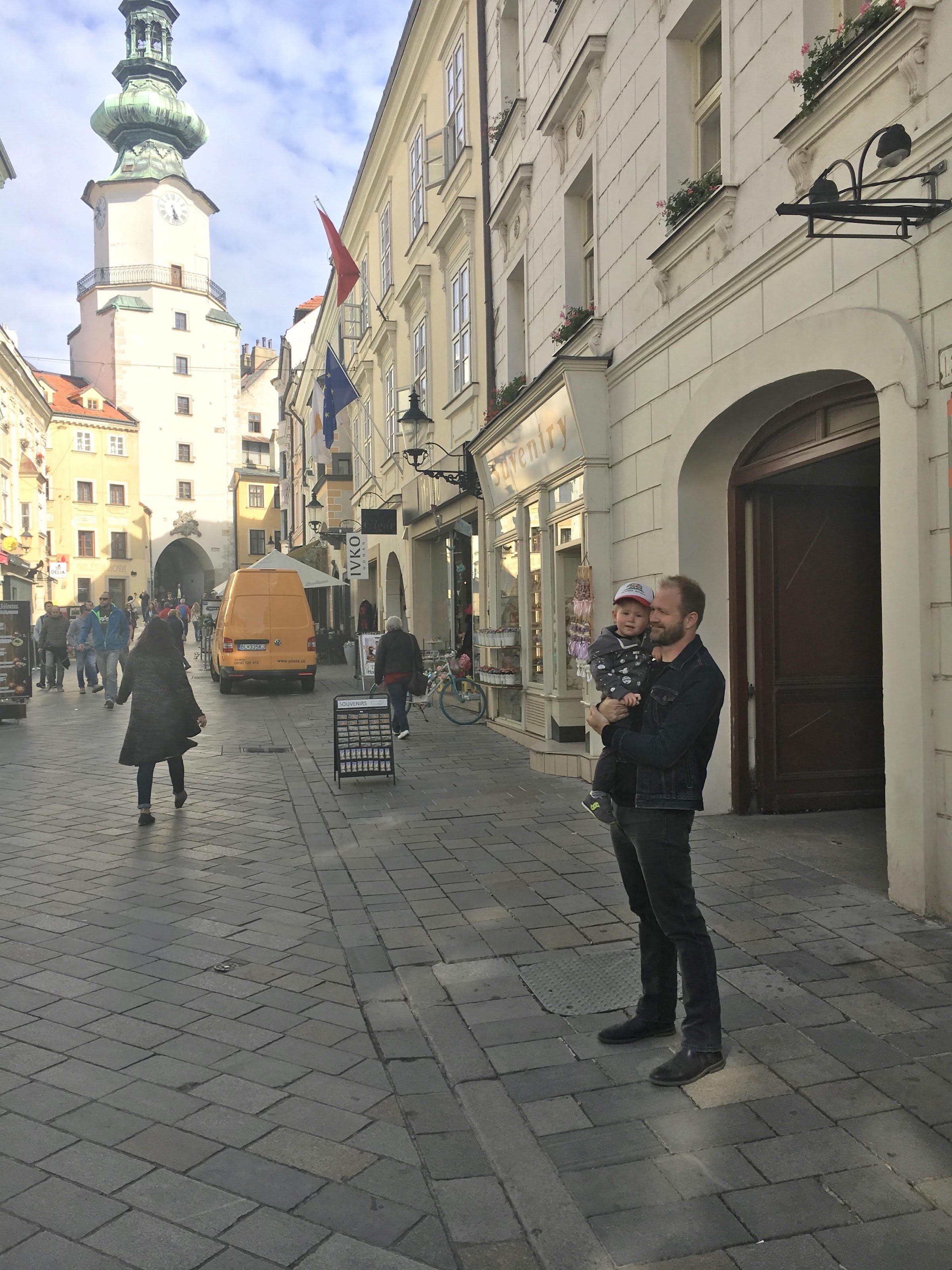
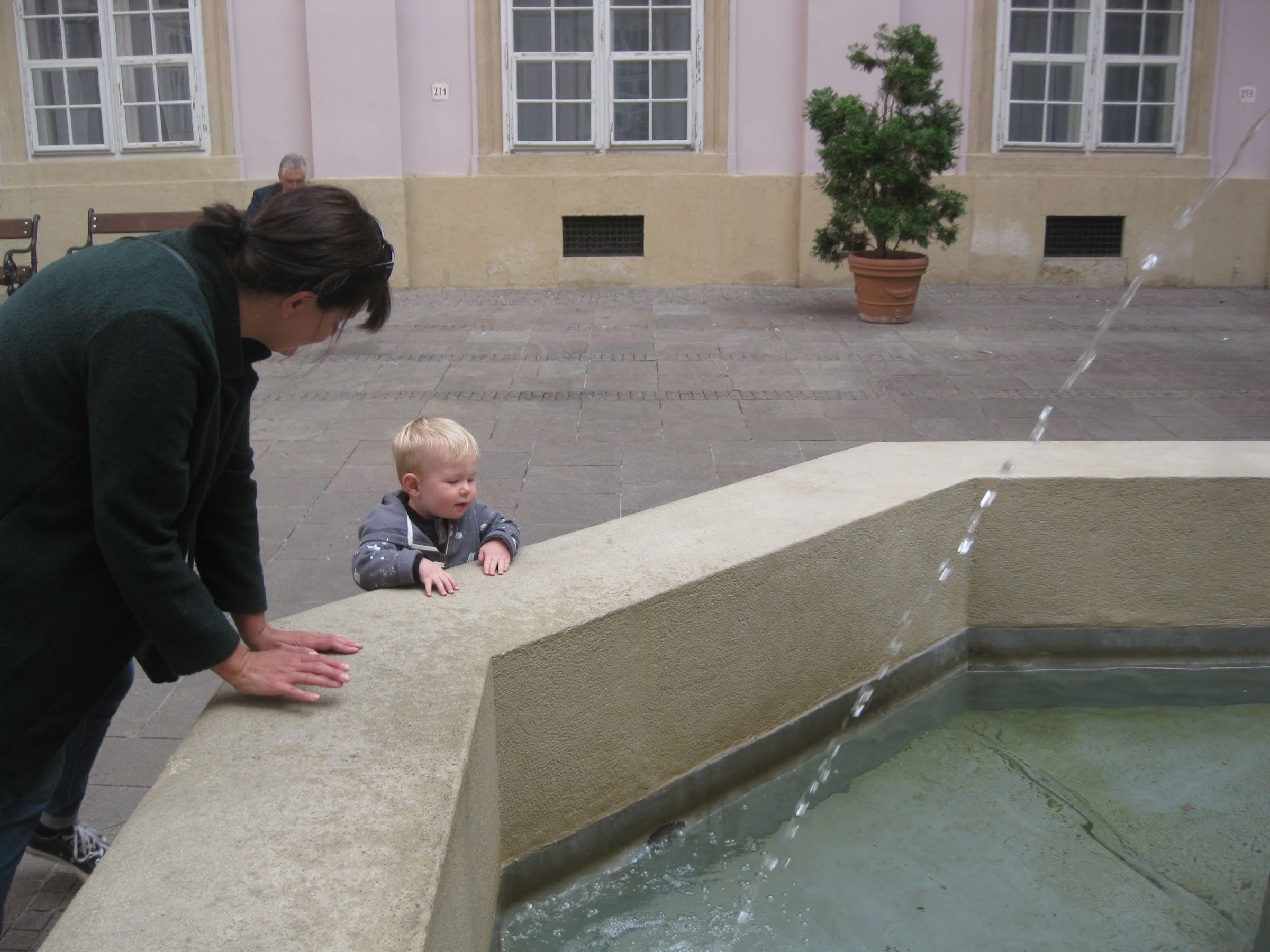
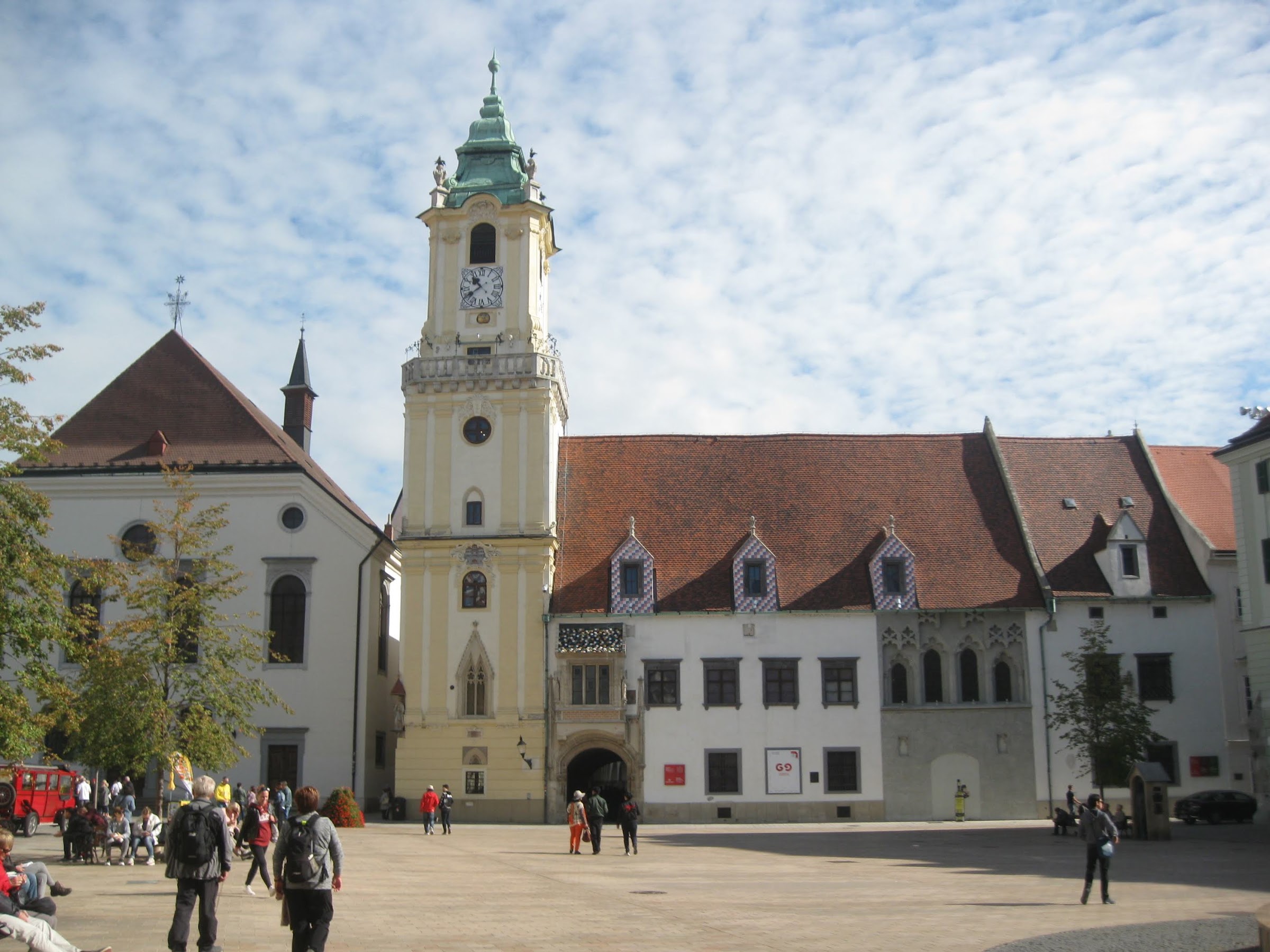
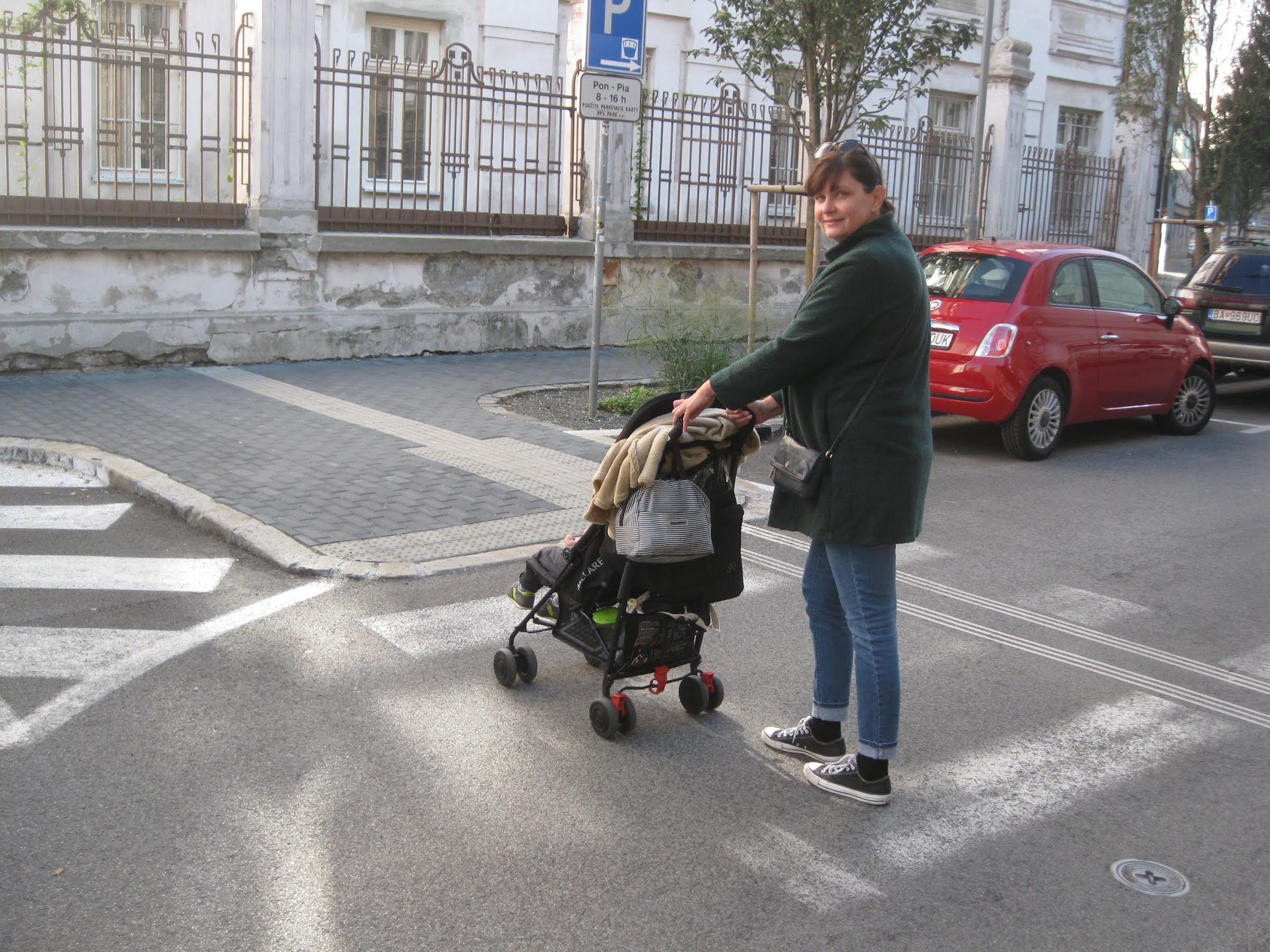
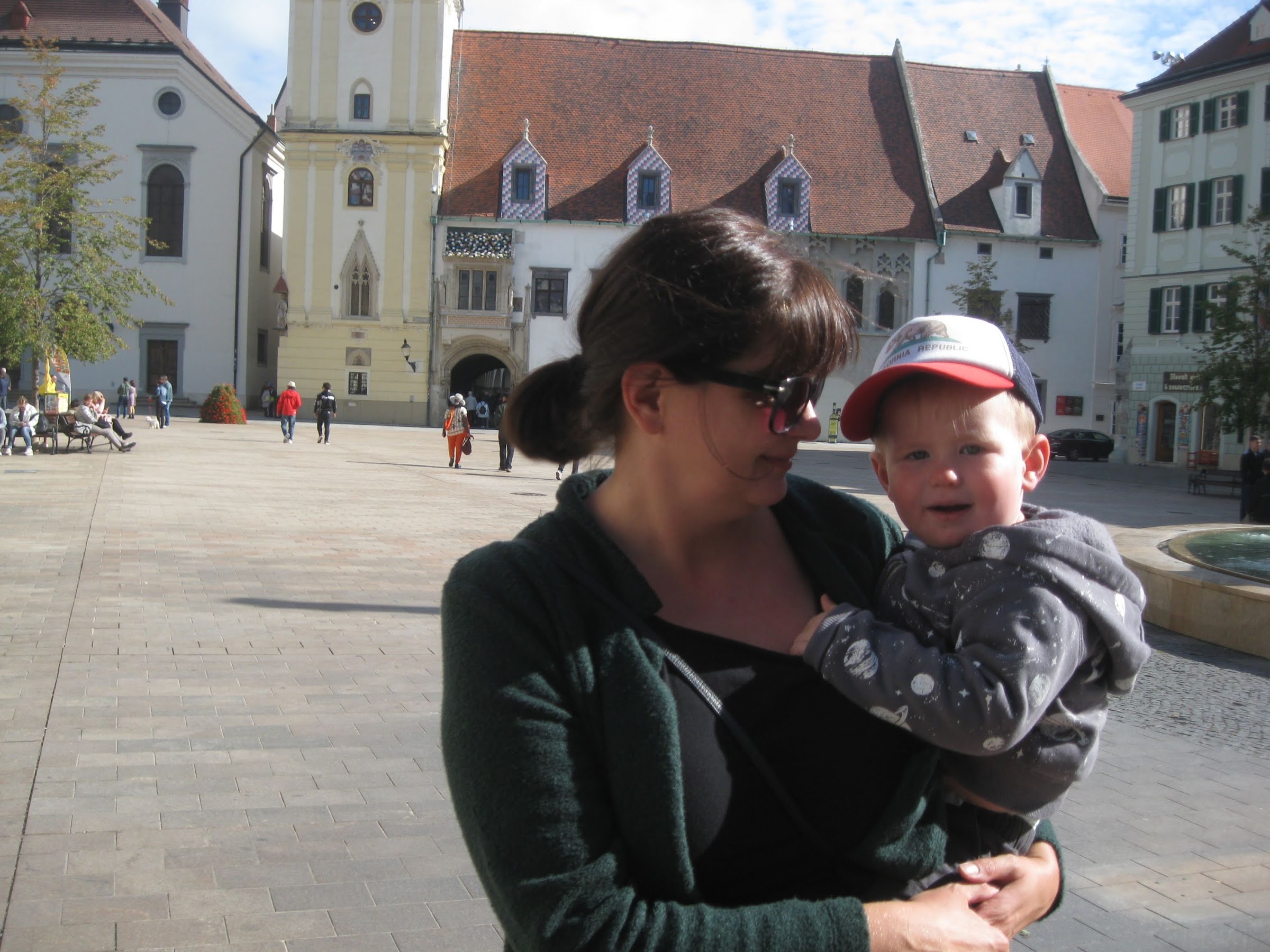
The next morning, we drove into Bratislava and ambled around the old town, as we've done on past visits. However, last time, Simon was relegated to a stroller, but this time he was walking around the pedestrianized streets like he owned the place. He was particularly drawn to any big fountains, as well as some of those covered passageways that cut through buildings and lead to hidden, little courtyards. He also managed to wander in front of a few tourists having their photo taken in the main square.
We made a point of going to one of our favorite old haunts for lunch, Bratislavský meštiansky pivovar. The place always seems to be bustling at lunchtime, and the airy space has a certain visual appeal with its vaulted ceiling and subway tile floors. Their daily lunch menu specials are about a euro or two more than most other places, but their food is usually a bit better. On this day they were offering massive portions of chicken paprika with halušky (little potato dumplings). It was quite good (especially since they used tender chicken thighs), and we had more than enough food to feed Simon and ourselves and still not finish everything on our plates. Simon really seems to like the classic Slovak bite-sized halušky.
Oh, and since our last visit, someone has done this to Hotel Kyjev:
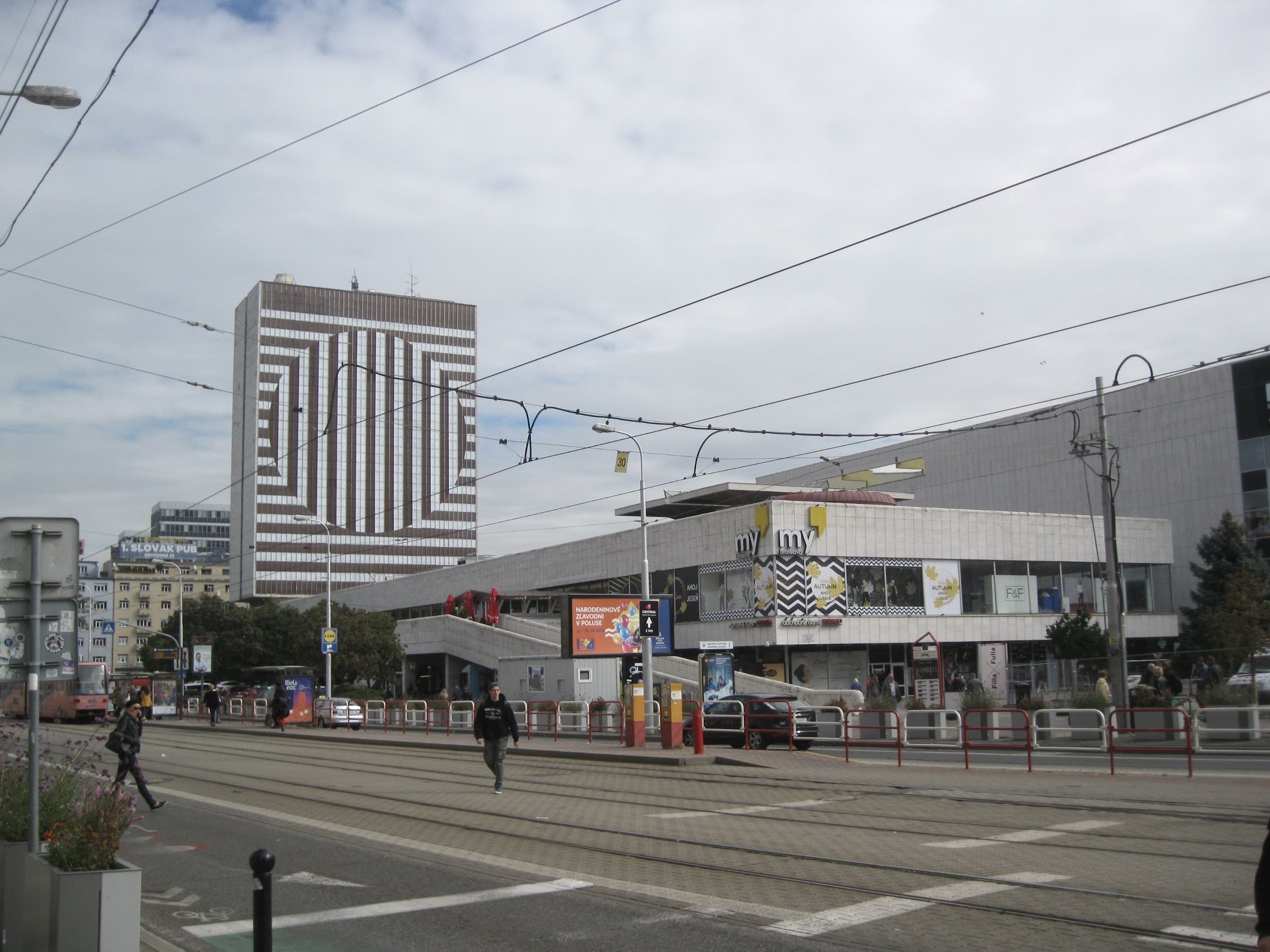
It was done by a photographer called Lousy Auber as part of a street art festival in the city back in the summer this year. It apparently took 17 mountain climbers to transform the hotel's facade. The hotel is still closed and the whole area is still awaiting whatever the developer who purchased it back in 2007 is planning to do with it. Hotel Kyjev was denied historical monument status by the city several years ago, so the developer can do pretty much whatever they want with it. However, even though the hotel is closed, the stylish Luna Bar has been opened for the time being, which is situated in the hotel's basement level.
It was a painfully short visit to Bratislava's center (not more than a few hours), but that's all Simon could take before he started exhibiting the telltale signs that he was ready for lunch (i.e., he was getting grouchy). And since lunch is immediately followed by his afternoon nap, that meant we had to hightail it out of there as soon as we'd eaten.
Simon was out minutes after we started the car to head back to Bernolákovo. We quickly stopped by Tony and Silvia's to grab our luggage while Simon was asleep in the car, and we headed straight back to Terezia's parents' place. Simon slept the whole two-and-a-half-hour drive back to Podrečany - a good, solid nap!
Click here to see more photos from the trip!