Thursday, January 19, 2012

Erasing History

It's clear to anyone who has spent more than an afternoon in Bratislava that the small city straddling the Danube possesses many charms. However, there are reasons why Bratislava usually gets brief and ambivalent write-ups in travel guides. Some tourists even deride Bratislava as dreary, drab, dumpy, and grey, and few visit for more than a day. One chief explanation for this neglect is that the Communists really worked Bratislava over, seemingly using it as a testing-ground for redeveloping a city as cheaply, functionally, and efficiently as possible, with an arrogant disregard for its rich history. This resulted in large swaths of the city's historical sections being razed to the ground and redeveloped as the Communists saw fit. Rather than preserve and restore older structures from centuries past, Communist urban planners simply knocked them down if they stood in the way of perceived progress, or if they proved too ruined and costly to repair. It's been said that Bratislava suffered more damage under Communism than during World War II. Apparently, Bratislava lost as much as a third of its historical center during Communism. The sad fact remains, many travelers come to Europe to revel in its stunning Old World charm, but the Communists built over a sizable chunk of Bratislava's.

Roughly one fourth of Bratislava's Stare Mesto (old town) was bulldozed in the late 60s for one single project: the Novy Most (New Bridge, aka UFO Bridge), and the short stretch of freeway connected to it, called Staromestska. The Novy Most is a major artery bringing traffic in and out of the Stare Mesto, while Staromestska links the bridge with the busy intersection just north of the historical center at Grassalkovich Palace, where several large, busy streets converge. To make space for this development, much of the centuries old historical Jewish quarter was razed, including the old and ornate, Moorish-styled Rybne Namestie Neolog Synagogue. Making room for the connecting strip of 4-lane freeway involved ploughing a deep, brutal scar through the western edge of the historical center. The freeway itself was laid down directly in front of St. Martin's cathedral (Bratislava's largest, most historically significant church), running little more than 10 feet from the facade. As Rick Steves notes, "if [the freeway] were any closer, it would go through the nave." Adding insult to injury, according to this article in the Slovak Spectator, St. Martin's "foundations [underwent] restoration to compensate for the vibrations generated by the traffic passing over the nearby bridge." 
Novy Most
Rybne Namestie Synagogue
Notice how close the freeway comes to the cathedral. 19 Hungarian kings and queens were crowned here in the 15-1600s when the kingdom of Hungary was ruled from Bratislava. 
While one could argue that this was a practical bit of urban planning (at least with regard to making the city more drivable, for what that's worth), it is difficult to deny the devastating effect this had on the Stare Mesto's urban fabric, history, and identity. The number of buildings that were demolished is considerable (estimates put it over 230), while the total area that was razed represented a sizable chunk of Bratislava's otherwise beautiful, centuries old historical center.

The freeway slices right through the historical center, isolating the Bratislavsky Hrad (castle) from the medieval centrum. Back in the middle ages, this strip of land between the castle complex and the walled medieval centrum laid more or less vacant. But around 1599, Jews were instructed to settle "in [the] narrow zone between the castle hill and the city fortifications. The so-called Judengasse, a part of the area controlled by the Castle, remained the only place Jews were allowed to live until 1840" (Slovak-Jewish-Heritge.org). The neighborhood expanded southward towards the Danube, fanning out in a southwesterly direction, into the space between the riverbank and the foot of the castle hill. Even though the castle and centrum were originally separated from each other by fortifications, the development of the Jewish quarter essentially linked them together, forming a somewhat seamless flow of buildings from the medieval centrum, over the western wall of the center, and about halfway up the eastern side of the castle hill. The entire southwestern portion of the razed neighborhood, a triangle-shaped area between the castle hill and Danube, remains undeveloped to this day, consisting mainly of bare, grassy knolls and circular freeway off ramps. At the far western tip of this area, you can still see a small cluster of the original neighborhood's foundations.

The area total area demolished for the Staromestska freeway and on/off ramps is highlighted by the black and white "lasso." (Click photo to enlarge). You can see how the freeway cuts through the historical center. 
Zidovska (Slovak for Jewish) street, the main artery of the Jewish quarter, ran between the castle and the old town, stretching down toward the Danube, past St. Martin's and the Synagogue, before spilling into a spacious, bustling, asymmetrical public square that connected with the western end of Hviezdoslavovo Namestie. Zidovska street remains more or less intact, currently running parallel to Staromestska (just above it to its west). However, based on old maps of the city, it appears that all of the buildings along the entire length of Zidovska's eastern side were demolished to make Staromestska. Those lots would have backed up against the outside of the centrum's western wall, which today is exposed along the length of the freeway. Very few of the original buildings along Zidovska's western side survive today, as most were knocked down and rebuilt.
Here are some before and after shots. Notice the synagogue with its two Moorish towers at the upper  right corner of the square. 
In this photo, you can see what's left of the square today,  as well as how all the buildings along the left side of the square have been replace by the Staromestska. The synagogue was sandwiched between the cathedral and the second building you see here from the right.
The road veering to the right in this photo is Zidovska. 
Here is the same view today, with the Staromestska freeway having replaced all that was built along the eastern side of Zidovska. Tragic!
The Staromestska freeway's construction not only destroyed the heart of the Jewish quarter, but it choked off the pedestrianized flow between the centrum and the castle by creating a wall between them, only passable today at a few key points. And not just any wall, but being a freeway, one that contrasts violently with the centrum's historical look and feel. The freeway obliterated what appears in pre-war photos to have been a lively, bustling public square, which also served to connect the larger, less intimate Hviezdoslavovo square with the streets leading up the castle hill. In this photo below, the square is shown to have been used as a public food market.


So, how could anyone muster the nerve to demolish a historically significant Jewish quarter? Basically, like much of Eastern and Central Europe, Slovakia was an immensely nightmarish place for Jews during WWII. Huge numbers of Jews were deported and sent to concentration camps like Auschwitz, while those who could flee did just that. According to Slovak-Jewish-Heritge.org,

"Approximately 105,000 Slovak Jews, or 77% of their pre-war population, died during the war... Of the approximately 30,000 Jews who resided in Slovakia following the end of the war and the restoration of Czechoslovakia, thousands emigrated to the newly created state of Israel, to the United States, Canada, Australia and other countries after the establishment of the Communist regime in 1948. Despite efforts to revive Jewish community life and organizational activity, the obstacles provided by the authorities, gradually eroded the ability to do so. Jews concealed their Jewishness, built new lives, and maintained the official silence surrounding Jewish history and the Holocaust."

So after the war, you had Jewish communities of varying sizes all over the country that had been largely abandoned. In fact, in some towns today you can still see old, abandoned Synagogues just sitting there, boarded up, gutted, weed-strewn and languishing. There's one in Lucenec that I've driven by numerous times, and another in Senec, to name just a few. Some of these synagogues haven't been in use since the 1930s. The mass desertion of these old communities resulted in many of their structures falling into disrepair and crumbling away.

Putting the pieces together, I'm guessing that this is partly why Bratislava's Jewish quarter fell victim to the bulldozer. I've come across numerous old photos of the neighborhood that showed some of its buildings to be in pretty rough, dilapidated condition. It's quite possible that some structures sustained damage during the war and were never repaired. By the 1960s, the area was probably seen by some as derelict and blighted. I'm not sure of the condition of the synagogue at the time of its demolition, or whether it was still in use, but it apparently just happened to be in the way. If many of these structures were abandoned, that could partly explain the Communist's apparent eagerness to demolish them. However, surely there must have still been people living in some of these dwellings, but at this point I can't find any information on who or how many people were relocated. Regardless of who was still living there, most traces of the Jews' historical presence in the city were effectively wiped out by the redevelopment.

Here is how the area looked, pre-Novy Most, from the edge of the castle hill. 
Here's how the area looks from that same spot today. The synagogue was located just to the left of the building at the center left of the photo, and would be partially obscured by the counter ballast on the crane were it still there. 
Of course with Communism having been a state-run system, neighborhoods like this couldn't rely on commercial real state development to run in and save them. Given that the money would have to have come out of the government's pocket, and that cash was in short supply, it was in the state's best interest to redevelop urban areas at minimum cost and maximum efficiency. From their perspective, why blow millions on restoring a bunch of dilapidated, old buildings? Turning the properties around and selling them for a profit wasn't an option, since private ownership of property was forbidden. It was far more economical to knock them down and build something new, which as sad as that sounds, is exactly what they did. Little did the Communists realize how this drastic approach to redevelopment would severely limit a major cash cow in the future: tourism.

It seems there was also an attitude of general indifference (if not outright hostility) among Communists toward architecture of the past. The Communists had something to prove, not just in terms of economic strength, but in creating and asserting their own aesthetic or identity. The Novy Most represented that aesthetic, both in its futuristic design and its structure (being a modern suspension bridge with only one support pylon). As far as the Communists were concerned, it was much more important to mark their territory with their own structures and monuments than to preserve old ones that had nothing to do with their vision or ideology.
The Jewish quarter from the other end, looking towards the direction of the  Danube. 
And here is that view today, albeit a block or so to the left; the Communists' middle finger to the past.  
Thankfully, historical sections of Eastern Bloc cities like Prague and Krakow somehow managed to make it through Communism (and WWII, for that matter) relatively unscathed. But Bratislava did not fare nearly as well. While Bratislava can boast of a beautifully restored historical center representing architectural eras from the medieval through Art Nouveau, it is fairly small and compact, and would have been quite a bit larger had the Communists been more interested in preserving the town's historical heritage and urban identity. Today there is a thick band of the Stare Mesto surrounding the historical center that has become a mishmash of architectural styles and eras - from ornate Hapsburg-era palaces to brutalist Communist panelaks - rendering the area architecturally incongruous in a sometimes jarring way. But this isn't entirely the Communists' fault. In fact, as early as the 1930s, well before Slovakia came under Communist rule, rational functionalists were knocking down old buildings on the outskirts of the historical centrum and replacing them with modern, boxy, streamlined apartment dwellings and shops. Some of these structures, like the Manderla building, possess their own distinct, historical charm. But again, that incongruity, while interesting to geeks, does not typically jive with the romantic, postcard image of Europe many tourists envision themselves strolling in.

What's all the more frustrating about the Novy Most is that at the time, the festering scar it created really wasn't necessary. In the late 60s, Petrzalka (the borough of the city south of the Danube) didn't even exist yet as we know it today (a massive sprawl of grey, concrete council estate housing). Back then it consisted of a public park, a small village or two, and acres of green space. There really wasn't a need at that time to bring large numbers of people back and forth across the river. Of course it's possible plans for Petrzalka's ambitious and large-scale redevelopment were already in the works, but they easily could have rebuilt or expanded the pedestrian-only Stary Most (old bridge) which lies not even a half mile down the river from the Novy Most (and remains pedestrian-only today). And if it truly was necessary to run a major artery right through the old town, they could have tunneled under the river and centrum. I mean, they had no problem tunneling through the castle hill to run a tram line to the city's western end.

At any rate, visitors standing around the western edge of Hviezdoslavovo Namestie today may have no idea just how much was destroyed to make room for the bridge and freeway. While the bridge's sci-fi design is quirkily photogenic (if a bit silly), I'm sure many people find it vexing that a noisy freeway was ever allowed to sit just spitting distance from the cathedral's facade. And there's almost nothing to indicate that a Jewish community once thrived here. However, in the empty square where the synagogue stood, in what is now called Rybne Namestie, is a monument dedicated to Jewish holocaust victims. Additionally, on the side of the freeway wall facing Rybne square, there is a silhouette of the synagogue's facade engraved on black marble. It's not much, but I suppose it's better than nothing. It is deeply upsetting to contemplate how this area might look today if the Communists hadn't brutally decimated it. And it's equally distressing that such a huge piece of Jewish history was wiped out. I mean, the sheer gall it took for the Communists to carve out such an ugly scar in what today would qualify for protected national heritage status. Alas, the best we can do is remember what was destroyed, make sure it never happens again, and accept that the Novy Most has become an offbeat and ironic symbol of Bratislava that we all have to live with; a symbol representing a maddeningly arrogant regime, but also another layer in the rich urban history of an old, European city.


An aerial view of the Stare Mesto and castle hill, facing west, pre-Novy Most. You can see St. Martin's cathedral in the center of the photo, below the castle. Few would deny how much nicer this area of the city would look today had the Communists not gone through with their plan. 

Monday, January 16, 2012

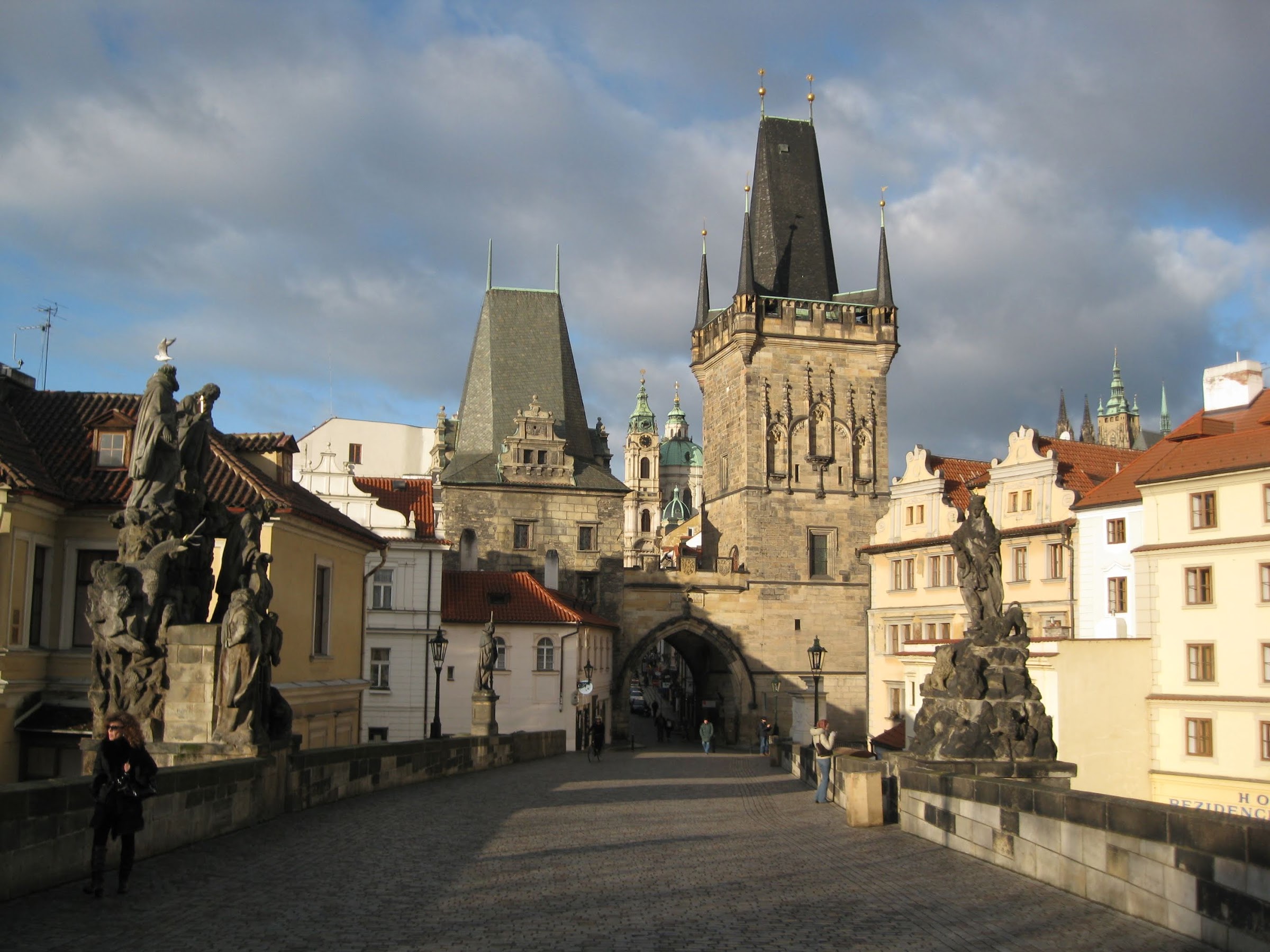
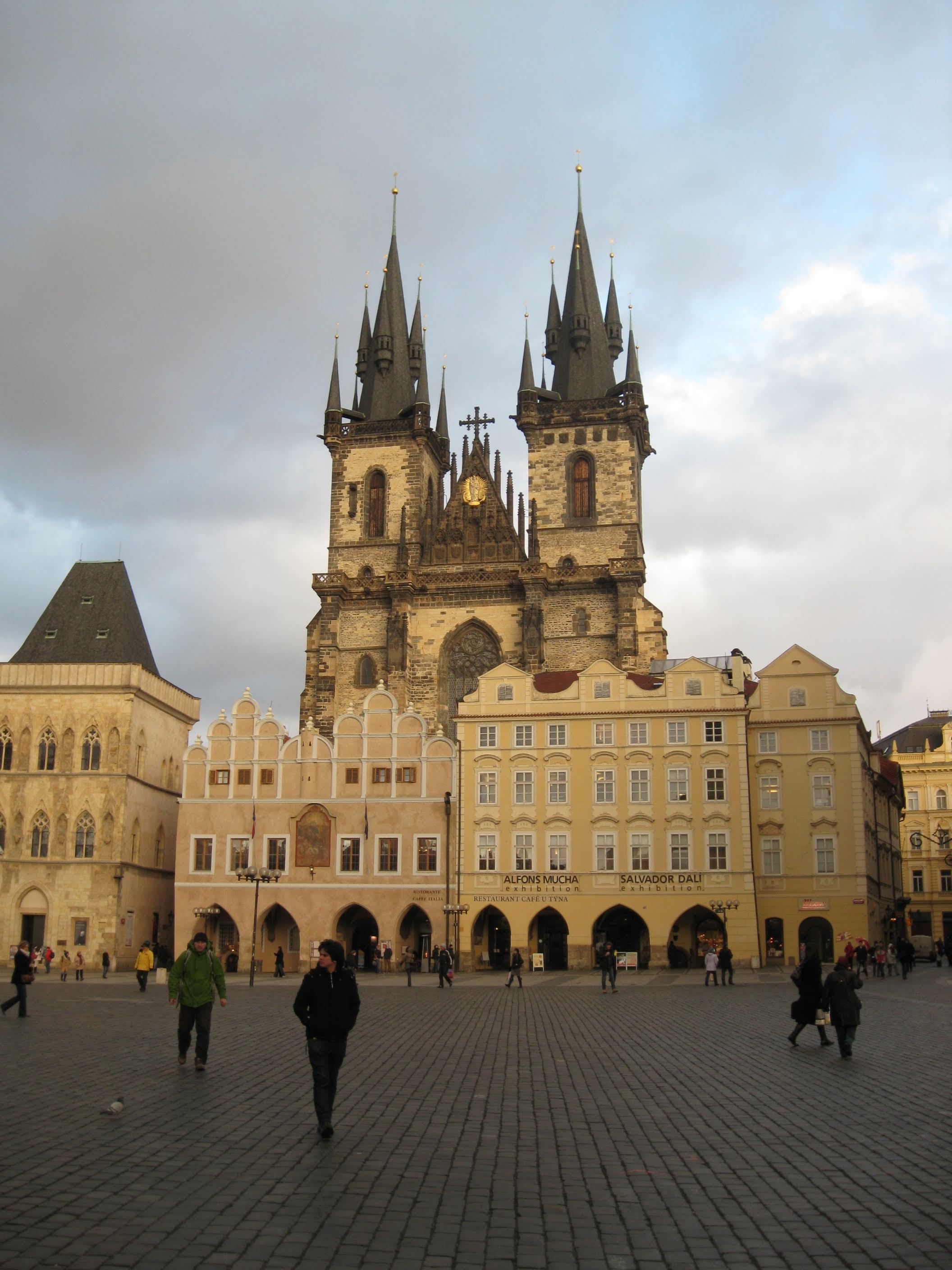
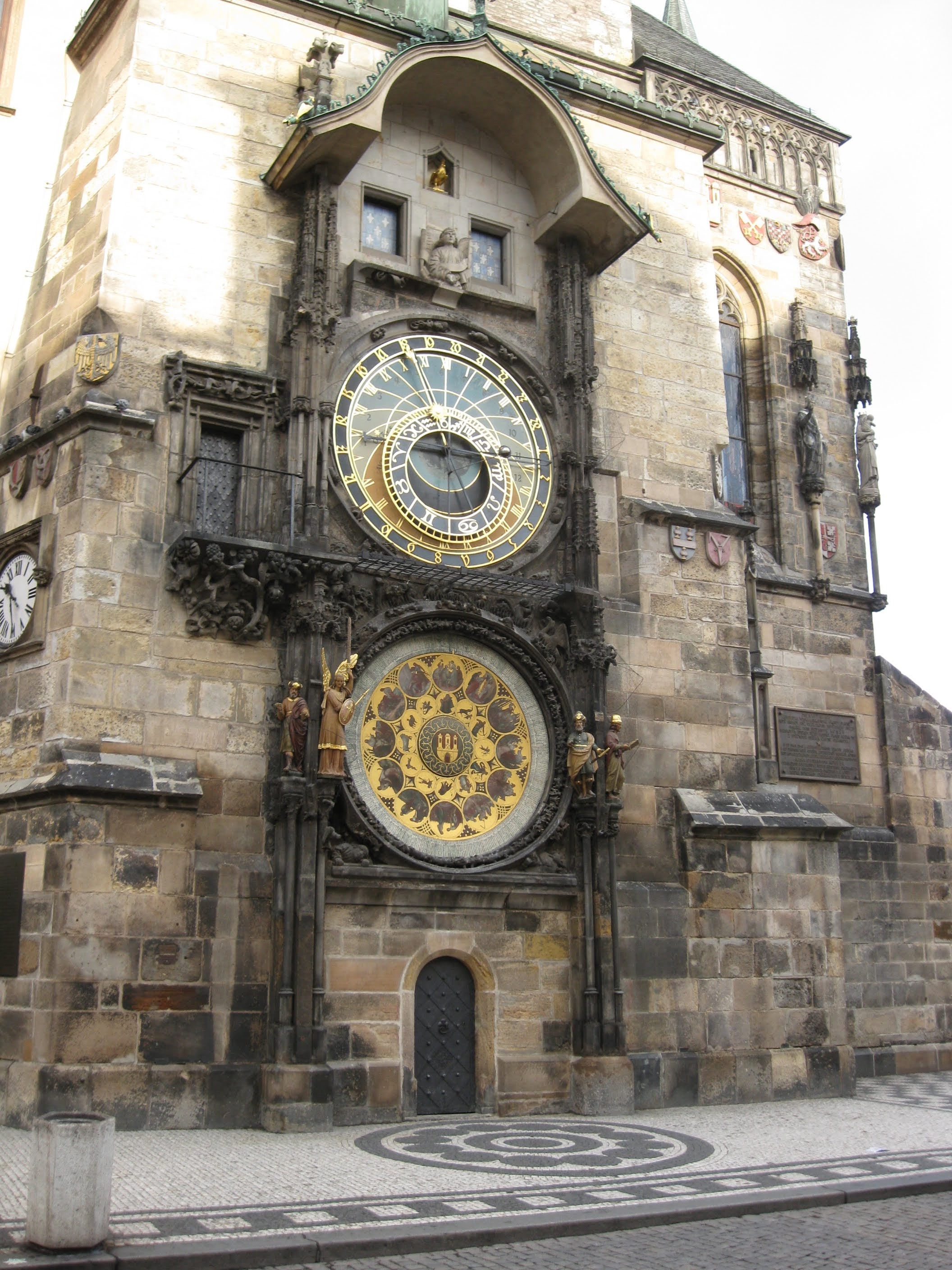
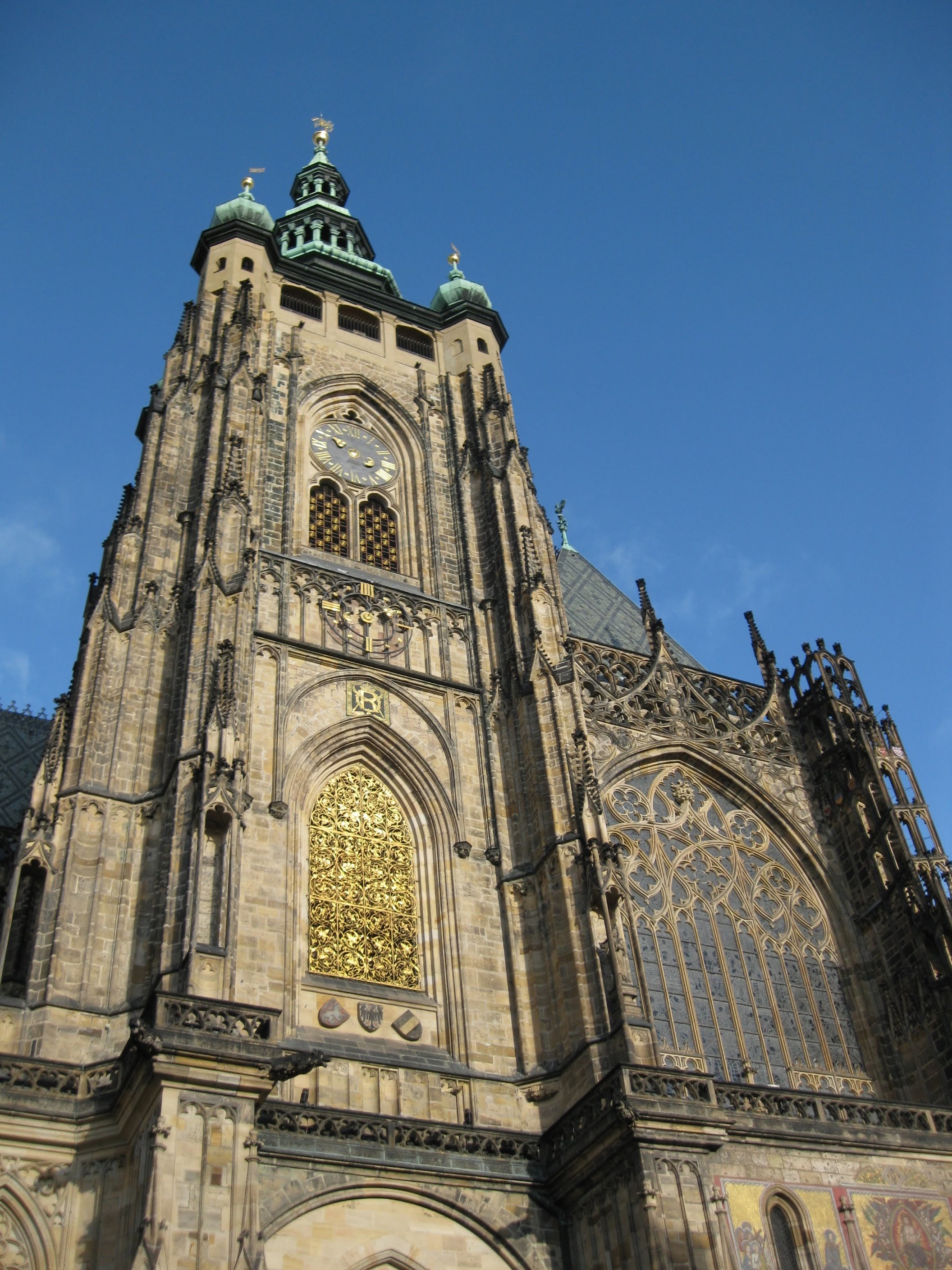
Weekend in Prague!

On Thursday we headed up to Prague for a little weekend getaway. I really love the fact that we can hop on a train and, in a mere four hours, wind up in Prague. We hadn't been there since December in 2010, so we thought it would be good to get out of Bratislava for a few days. And I will always happily go to Prague, so it's not like I needed any convincing.

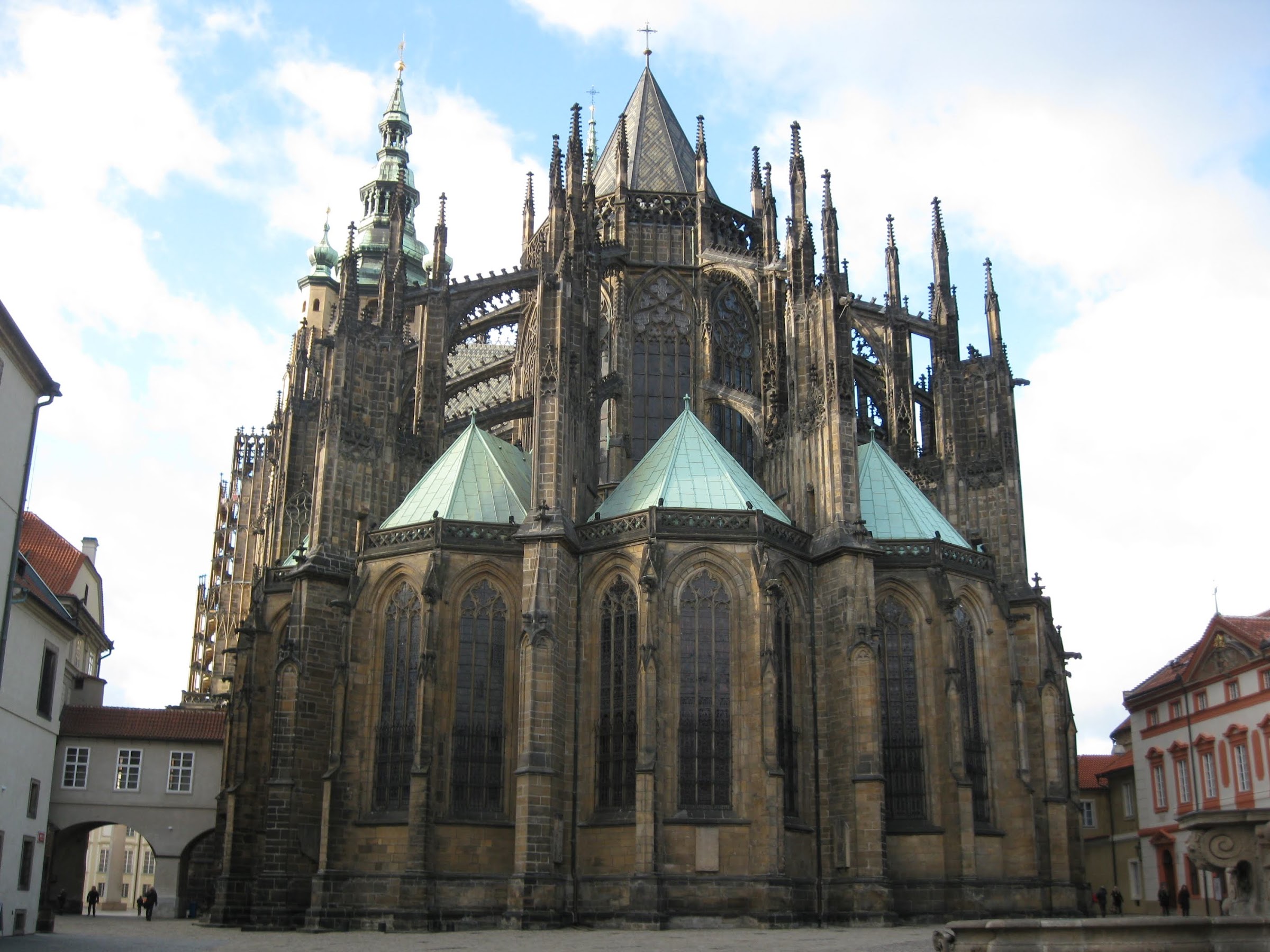
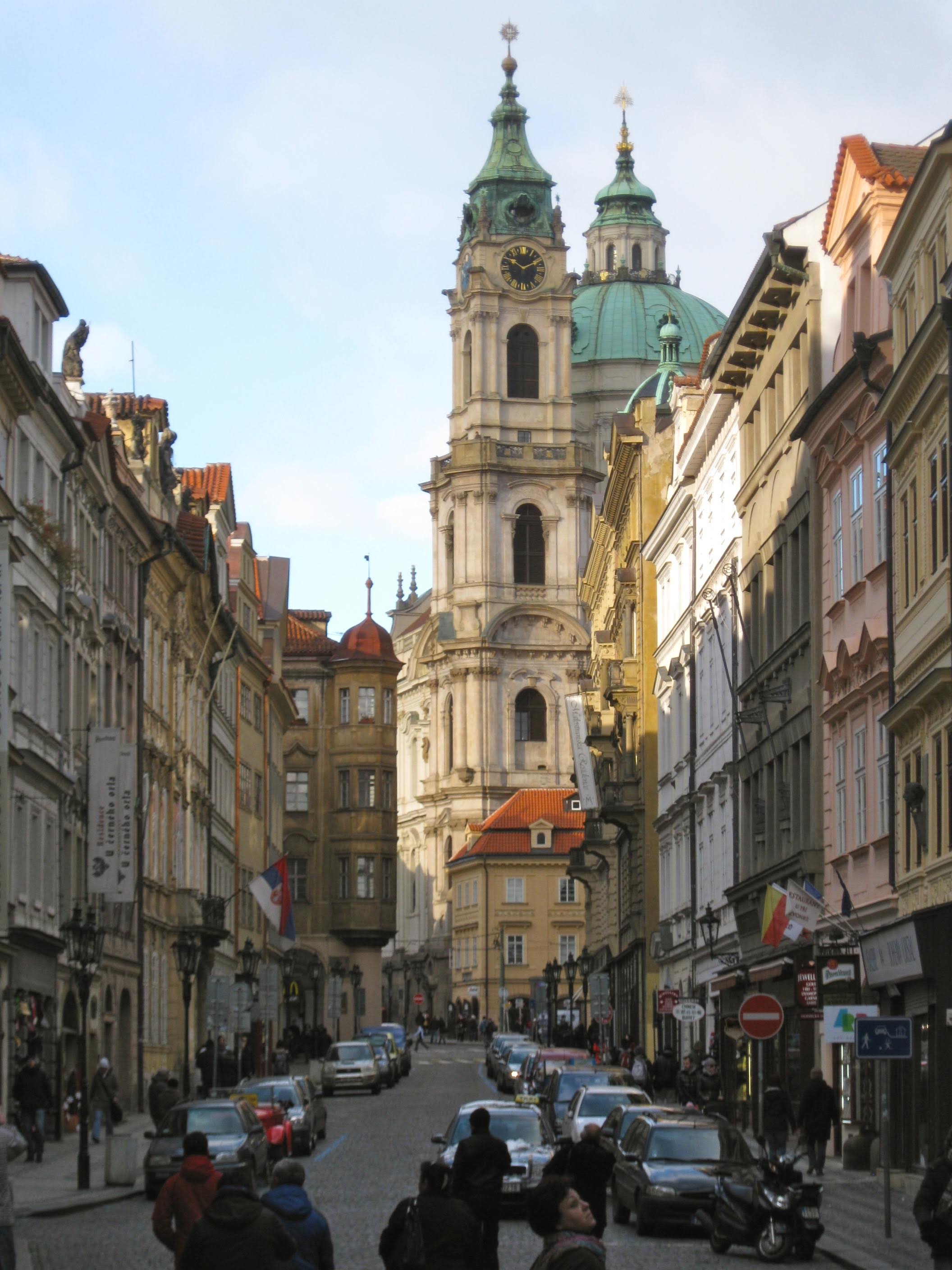
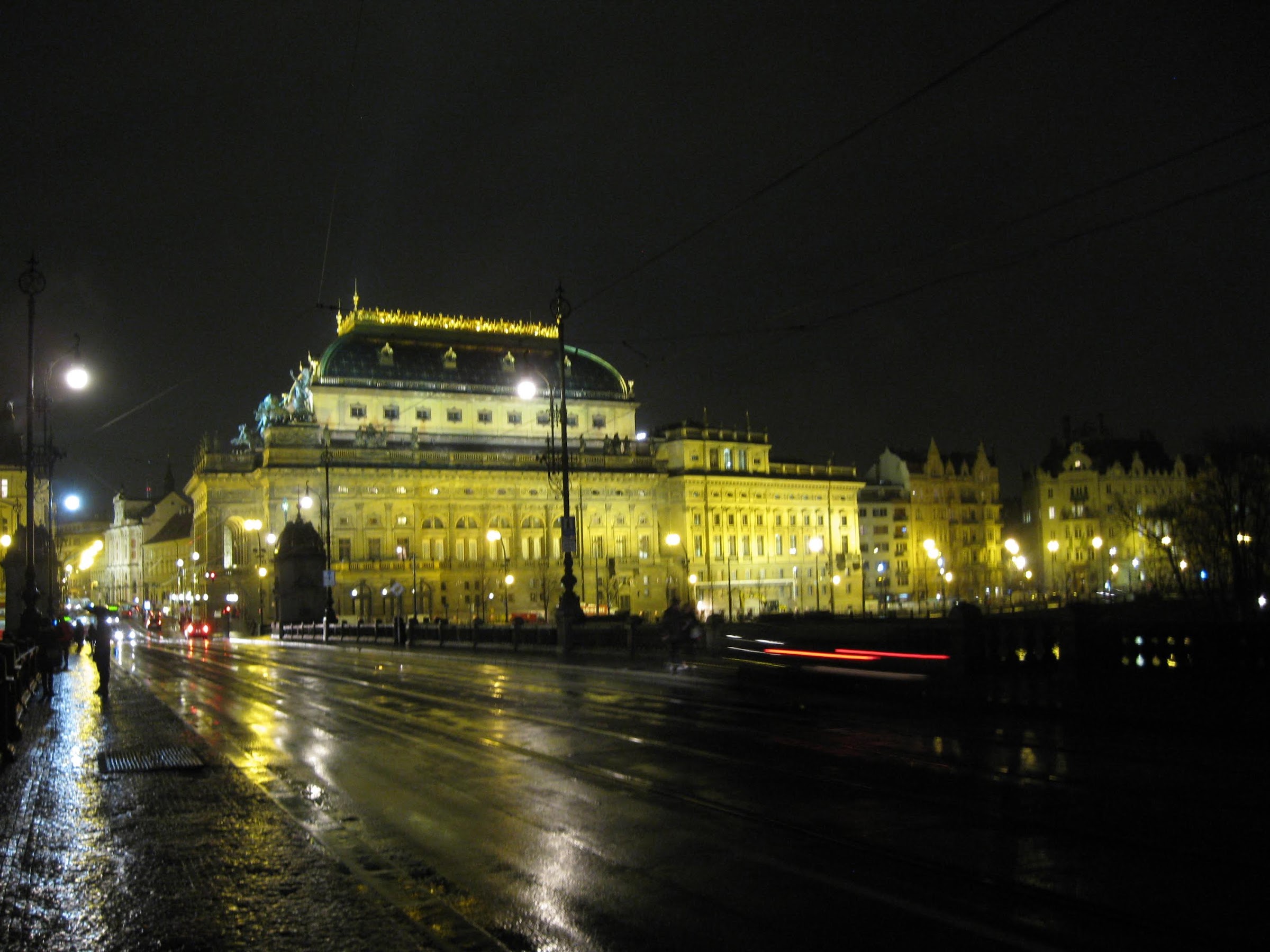
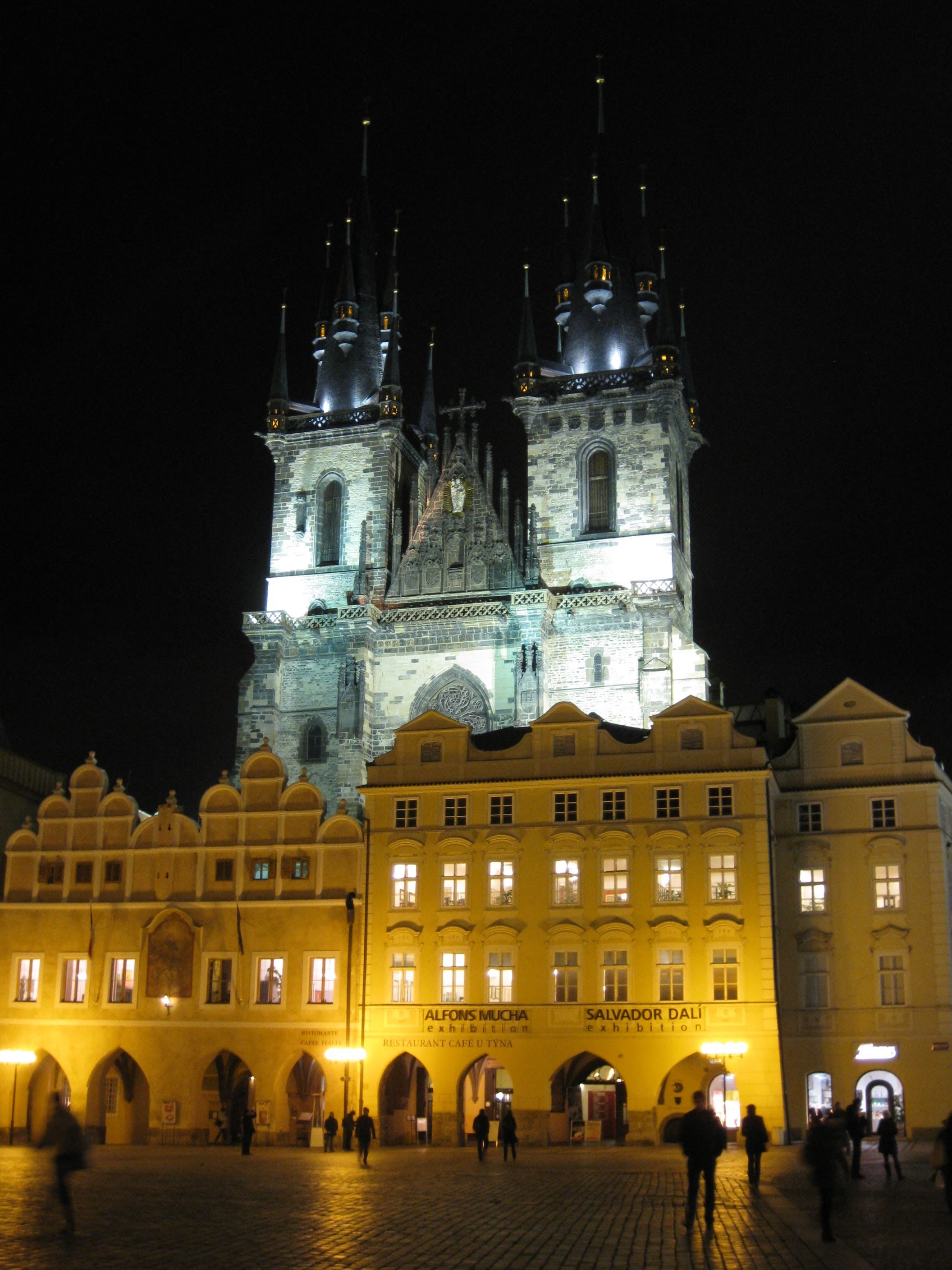
See photos here!

Prague is such a stunningly beautiful city. I'm in a constant state of awe when tromping through its winding streets. Its spire-spiked skyline is so... inspiring. Yes, I've met a few well-traveled snobs who think Prague has been tainted by tourism and its resultant garish tchotchke industry. But people who say that must never venture much beyond Karlova street and Havelska market. The city is an architecture geek's paradise. It's also got a bustling and energetic pulse, and for us it offers more of a cosmopolitan experience than Bratislava. And lucky for us, the city was relatively empty this weekend. It was also nice to see the old town square free of all the Christmas market crap that cluttered things up last time when we were there in December.


Obviously, a couple of days is not enough for Prague, but I'll take what I can get. A full week would be ideal, though. At any rate, we managed to see some things that we didn't see last time, like the Museum of Czech Cubism. I really dug this because not only did I get to see examples of Cubist furniture, but I was introduced to some really nice works by a slew of artists I'd never heard of before, like Josef Capek and Emil Filla.


Aside from family and friends, the thing I miss the most from the US is Thai food. We've both been craving it like crack. Prague has several Thai restaurants, and we tried two of the more centrally located ones, both of which received lots of positive reviews. Unfortunately, one of them was almost offensively bad despite an uber-stylish interior, while the other was adequate, but nothing we'd come clamoring back for. And I'm sure you're thinking, "Why would you try Thai food in Prague?" The answer, of course, is that living in Slovakia, we can get Czech and Slovak food (the two are extremely similar) any time. Plus, most younger generations in Prague are more likely to eat food at the myriad ethnic restaurants there than traditional Czech eateries. I'm convinced we'll find good Thai food *somewhere* in Europe - I just hope we don't have to go to London to find it.

At any rate, I hope to have more of these occasional weekend getaways to impossibly cool European cities that are easily reachable by train.


Sunday, January 8, 2012

An afternoon at the Slovak National Gallery, Bratislava

Now that we have the holidays and the residency permit ordeal behind us, we've finally had time to do some things that we've been wanting to do for a while, like check out Bratislava's Slovak National Gallery. The SNG is Bratislava's chief art museum, which in addition to a permanent collection consisting of Italian and Dutch paintings from the 1500-1800s, as well as a bunch of local gothic and baroque paintings and sculptures, seems to have a lot of temporary exhibits focusing more on modern art.

I'd been dying to see an exhibit there that's ending soon called, "Nove Slovensko - Difficult Birth of the Modern Lifestyle." The exhibit basically chronicles Slovakia from the immediate post-WWI years (when it became a new nation - no longer under Austro-Hungary's control), through the late 40s (when the Communists had taken the reins) via two floors of photographs, paintings, awesome Bauhaus/Constructivist poster art and graphic design, and even some sleek modernist furniture. This was an extremely fascinating, cool, and well-put-together exhibit, and I'm really glad we managed to catch it before it ends. And as a welcome bonus, the gallery was free today, as they offer free admission every first Sunday of the month.

There were some stunning paintings, like this one by Gejza Schiller:


And some incredible Constructivist/Bauhaus-ish posters, like this one:


There was also a beautiful, cubist/futurist style painting by an artist with a Hungarian last name that, for the life of me, I can't remember. The painting was called Paris Cafe, and was done in 1930. I've scoured Google and can't find any info on it. At any rate, it was great to see so many abstract paintings (many cubism-inspired) by artists I'd never heard of before.

The exhibit featured countless photographs of Bratislava during the decades covered in the exhibit, and it was fascinating to see how it looked back then. Some photos were very reminiscent of Rodchenko's angular, modernist approach, while others simply documented life during the decades represented. Through some of these photos, I learned that a few of the buildings in our neighborhood are older than I'd assumed. For example, I discovered that this building which I've photographed several times, called the Manderla building,


which is a block away from our apartment, was the first residential high-rise constructed in Bratislava, and it was built in 1935. I honestly thought it was from the late 40s, but I was off by over a decade. If the building still had the Manderla signage along the top, I'd probably have guessed its age more accurately.

There was also a wall that covered Slovakia's dark, hellish fascist phase, which lasted from the late 30s through early 1945. These photos showed scary rallies with the fascist paramilitary Hlinka Guard, basically Slovakia's blackshirts, who were responsible for forcibly deporting Jews, Roma, and dissidents. One photo showed Jews being "escorted" out of Slovak town Nitra by Hlinka thugs. Like much of Eastern Europe, Slovakia was an unrelentingly bad place to be during WWII if you were Jewish or Roma. (Interestingly, the Hlinka insignia, ubiquitous at that time on flags and armbands, has an eerie similarity to the one used by the fictitious fascist Norsefire regime in the film "V for Vendetta").

I also learned through several photos that, apparently, up until the 1930s, women from some rural areas of Slovakia were still wearing what can only be described as traditional, medieval peasant/folk garb. One such photo (circa mid-30s) showed a group of barefoot, young women dressed in full-on peasant attire, shoveling dirt to make way for train tracks. Other photos showed similarly dressed women selling produce or doing routine daily chores. The women in these photos really did not look like they were simply dressing up for some photo shoot intended to celebrate Slovakia's national heritage.

At any rate, it was such an impressive exhibit that if it weren't ending in less than a week, I'd probably go back.


Saturday, January 7, 2012

Petrzalka

So, you're wandering around the tranquil and scenic hilltop premises of Bratislavsky Hrad (Castle),


when you approach the elbow-high ledge along the front overlooking the Danube to take in the vast, southward view before you. You notice the Danube, flowing mightily along, possibly carrying a cargo barge or two. You look off to the southwest and see Austria; at about 1-2 o'clock, you see an expansive stretch of farmlands littered with modern wind turbines, while at about 2-3 o'clock, a bit more to the west, you see swaths of forest and large, tree-covered hills in the distance. Of course, at 11 o'clock, or thereabouts, you can't help but notice the Starship Enterprise-esque Novy Most, or New Bridge, that spans from the southwest corner of Bratislava's historical center, to the area of Bratislava south of the Danube known as Petrzalka.

Novy Most (New Bridge) with Petrzalka in the background
Once you get over the cognitive dissonance created by the juxtaposition of the quirky, 70s-era sci-fi monstrosity of a bridge, with the ornate, old world charm of Bratislava's historical center, you'll notice that when you look beyond the Novy Most, into Petrzalka, you see row after row after row after row of (predominantly) grey, concrete, brutalist council estate housing, otherwise known affectionately in these parts as panelaky. These monolithic prefab giants are called panelaks, obviously, because they resemble factory-made panels. They were Communism's hyper-effecient response to housing an ever growing population as cheaply as possible. In the 1970s, boxy concrete communities like Petrzalka sprouted like weeds.


Today you can see panelaks all over Central and Eastern Europe. They're difficult to miss. Every city or town with a big enough population has an area devoted solely to panelaks. The larger the town, the larger the area (or areas) set aside for panelaks. Only older, more rural villages with fewer than 1,000 people don't seem to have them. The Communists' love of panelaks has lent Eastern and Central European cities and towns a unique character in that you'll often have the old medieval or Hapsburg-era historical section at the center of town, contrasted by a forest of panelaks us outside. It definitely adds a distinct layer that you don't always see in Western Europe.

Don't get me wrong, Western Europe obviously has plenty of anonymous, Orwellian looking council estate communities, but there's something distinctly stark and, well, Communist about those in the former eastern bloc. Plus, in Western Europe, these 20th century housing complexes tend to be more hidden, built in the outskirts were few tourists tread, and are usually only seen from the train when first entering the city. But Petrzalka is special because it is said to be the largest single government housing development built anywhere behind the iron curtain under Communism. It is home to 1/4 of all Bratislavans. And while few tourists ever have reason to venture into Petrzalka, it's easily seen from the castle hill as well as the UFO restaurant on top of the Novy Most.

Now, let's get back to that sweeping hilltop view from the Bratislava castle. From this vantage point, the seemingly endless maze of panelaks almost looks like one massive, impenetrable wall, stretching across Petrzalka from left to right. The size and scale of the thing is kind of mind blowing. It looks a bit intimidating. Oppressive, even.

(Not my photos, but I wanted to link to these because they illustrate Petrzalka's scale so well: please click here and here).

But I have to be careful when talking about Petrzalka because Slovaks generally have a very different take on it than foreigners like myself, and I don't want to come off as offensive. Many Americans tend to cling to a highly romanticized, old-world view of Europe, seeing it as a place where centuries of history manifests itself in the form of beautiful, ornate architecture from various pre-20th-century eras; narrow, winding cobble-stoned lanes; medieval castles and old stone walls; and a bounty of priceless art and grand monuments. So, when confronted with large areas covered in panelaks, particularly one the size and scale of Petrzalka, it can be difficult to reconcile that with the old-world image that many non-Europeans have etched in their minds. That's what makes this scene in the silly Euro-trip film so harrowing (about 1:50 into the clip); never mind the fact that they're not actually in Bratislava (but reportedly a Roma community in Czech Republic); the images in this scene, absurd as they are (and Petrzalka is actually fairly clean), couldn't be further from that old-world view. This just isn't the Europe that travelers come from around the globe to see, nor is it going to appear in many tour guide itineraries.


In contrast, Slovaks have a quite different view of panelaks because many of them (including my wife!) grew up in them, or at least near or around them. They don't necessarily see panelak communities as bleak or sad or strange, because to them, they're simply a way of life. More than that, they see panelaks as convenient and affordable. In Petrzalka, the rent is typically cheaper, buying an apartment is definitely more affordable, and it's much easier to live there if you own a car and need a place to park it. Contrast that with the Stare Mesto (old town) across the river, where having a car can be a royal pain in the ass (not that you really need one, though, but that's beside the point), and where buying an apartment probably requires a "power couple's" income. The point being, you can't just come in and make snarky remarks about Petrzalka, because you're likely to offend people. The fact is that the romantic, old world image of Europe is simply not the reality of most Bratislavans.

Romantic, old world image of Europe (Bratislava).
Picturesque cobbled lanes like this one in Bratislava's historical center
 do not factor in to the daily reality of most Bratislavans.
Once you're in Petrzalka, it's not as suffocating as it appears from across the river. Although many of the structures are lined up side to side in lengthy, gently zig-zagging rows, there's actually a fair amount of open, and even "green" space in between. That "green" space usually consists of open fields, youngish trees, patches of juniper, and even some parks/playgrounds. You see a lot of parking lots and empty concrete planter boxes, too, though.


Also, since the fall of Communism, many panelak inhabitants have pooled their money to have their panelak exteriors painted. Some of them now come in vibrant shades of lime green, yellow, blue, pink, and orange. A few even have cool modern art designs painted on them.


The image on this panelak actually appears to be much older, possibly from Communism.
Some panelak inhabitants have redone their interiors in stunning, beautiful, modern ways. And even Bratislava's Ikea has large images of Petrzalka as backdrops for many of its display rooms. It seems a lot of people have transformed their panelak apartments into stylish, cozy, and livable quarters.

The creators of Petrzalka appear to have tried to give the place some semblance of urbanism by filling up the ground floors of many panelaks with shops. Petrzalka was not intended to be like an American low-income suburban model that forces you to drive three miles to the store, because they clearly wanted people to be able to hop down the elevator to get to the nearest potraviny (food store), cafe, or dry cleaners. Everything the panelak inhabitants could need would, at least theoretically, be right downstairs, or at most a panelak or two over. Now it seems many of the shops that inhabited these panelaks are closed, a lot of them having gone out of business after Communism ended, when big international chain stores like Tesco and Lidl came storming through the gate.


Check this out: not my photo, but I like this so much I had to link to it here.

It's also common to see these little Communist "strip malls" in panelak communities, so not all shops are located on the ground floors of panelaks, but are still embedded among them, and are conveniently walkable.

Bleak Communist-era "strip mall" in Ruzinov
Despite the open space I mentioned above, Petrzalka is still quite labyrinthine. I confess that it's sometimes difficult to find obvious landmarks when navigating the place, and it could be easy for neophytes to get lost there. To be frank, panelaks are definitely not my thing from an aesthetic standpoint, but I do find myself strangely fascinated by Petrzalka. My trips into Petrzalka have left me a little awe-struck. There's the sheer size of it, for one thing, but it's interesting to contemplate how uber-effecient the Communists were in their approach to creating the place. It's so practical, so functional, so streamlined, so charmless. It was simply a matter of, we need to house lots of people fast, so here you go!


Petrzalka is not the only panelak forest in Bratislava. Karlova Ves, an area of town to the west of the Stare Mesto, appears also to be made up entirely of panelaks. It sits dramatically on a large hill, and if you catch it out of the corner of your eye, it almost kind of resembles some medieval hill town. Then when you look at it straight on, you see the jumble of panelaks. To the east of the Stare Mesto, you have the districts of the Nove Mesto (new town) and Ruzinov, both of which are also home to vast, imposing panelak developments.

Panelak in Ruzinov.

More panelaks outside of Petrzalka.
Panelaks kind of by where Ruzinov meets Nove Mesto.
So, as much as non-European romantic types like me might find panelaks and places like Petrzalka a bit baffling or strange, these communities are a simple fact of life for many people in Central and Eastern Europe. Districts like Petrzalka are really just another layer in the urban fabric, representing one of many historical eras in cities like Bratislava. Most of my Slovak family and friends will probably scratch their heads and think it kind of weird that I even bothered to write all this about Petrzalka and panelaks in the first place!

Monday, January 2, 2012

Wandering around Devin

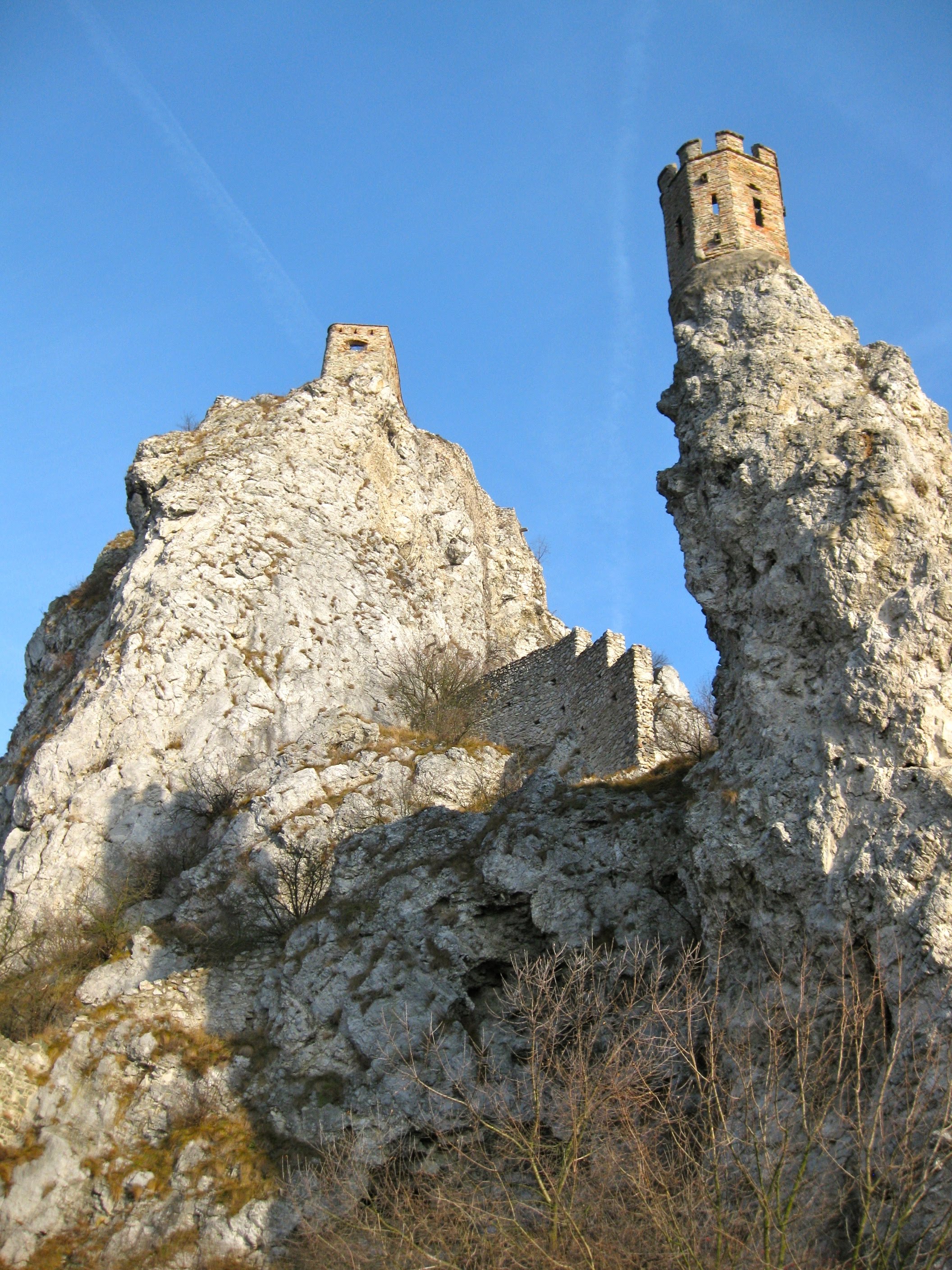
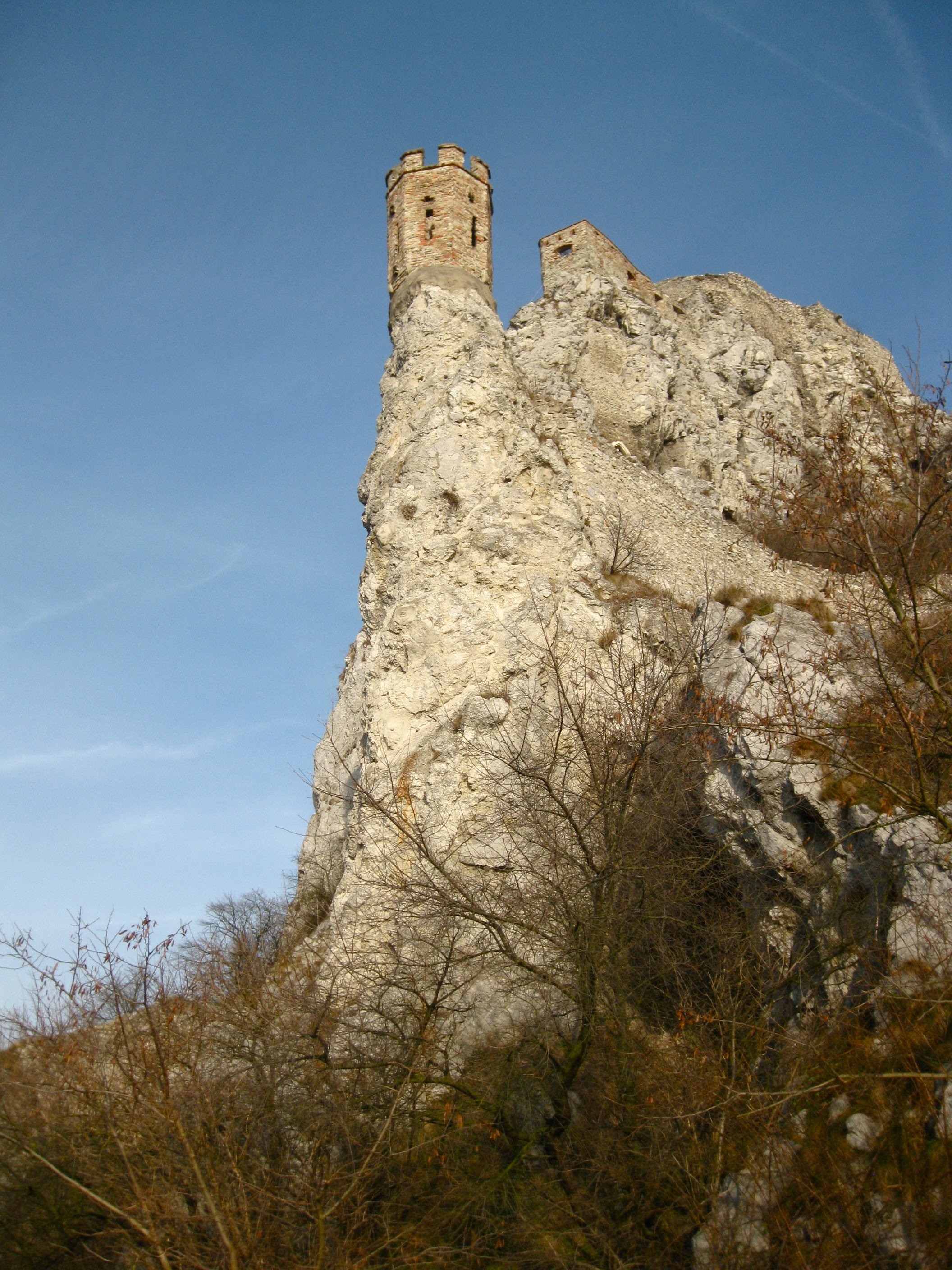
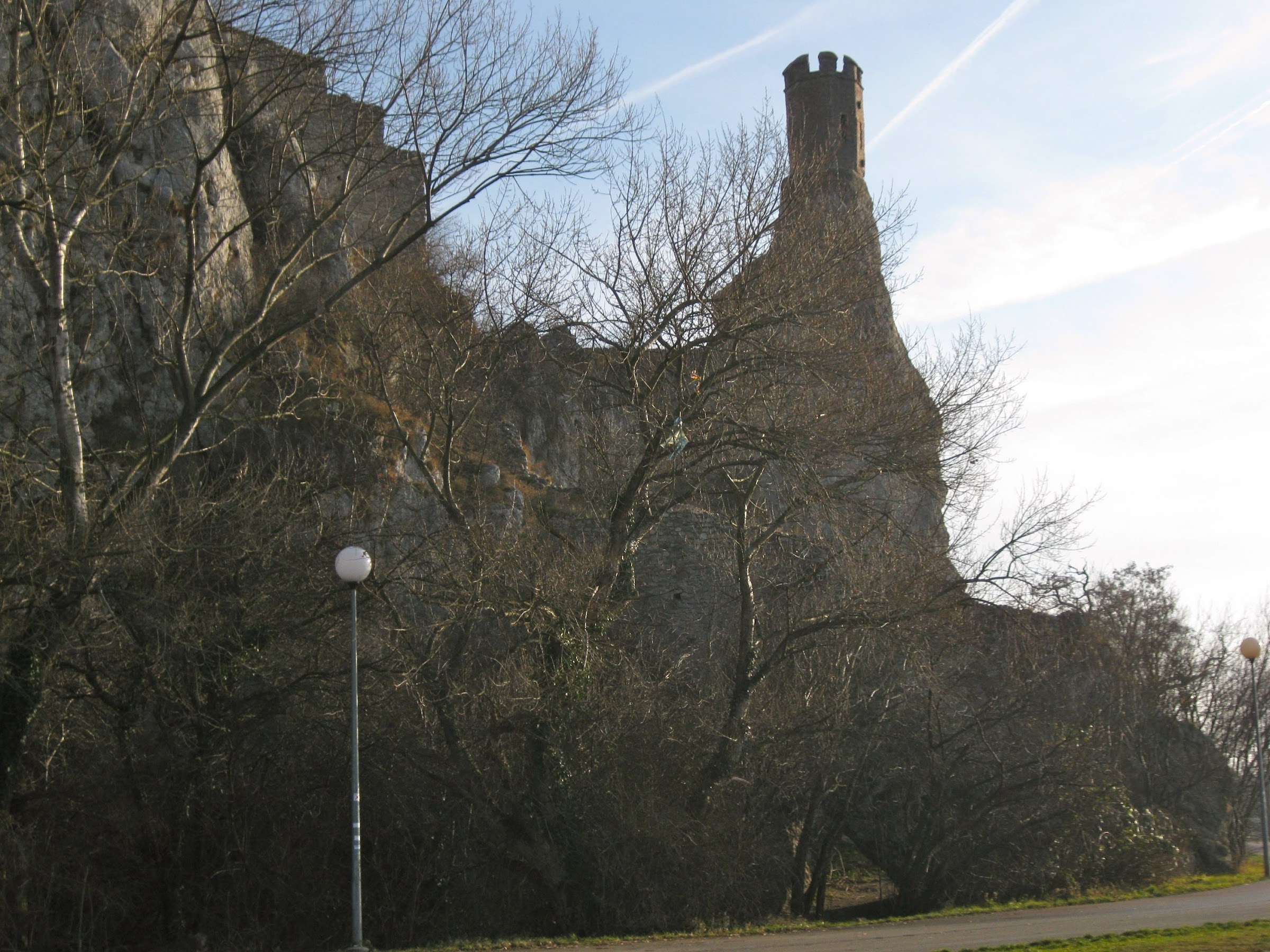
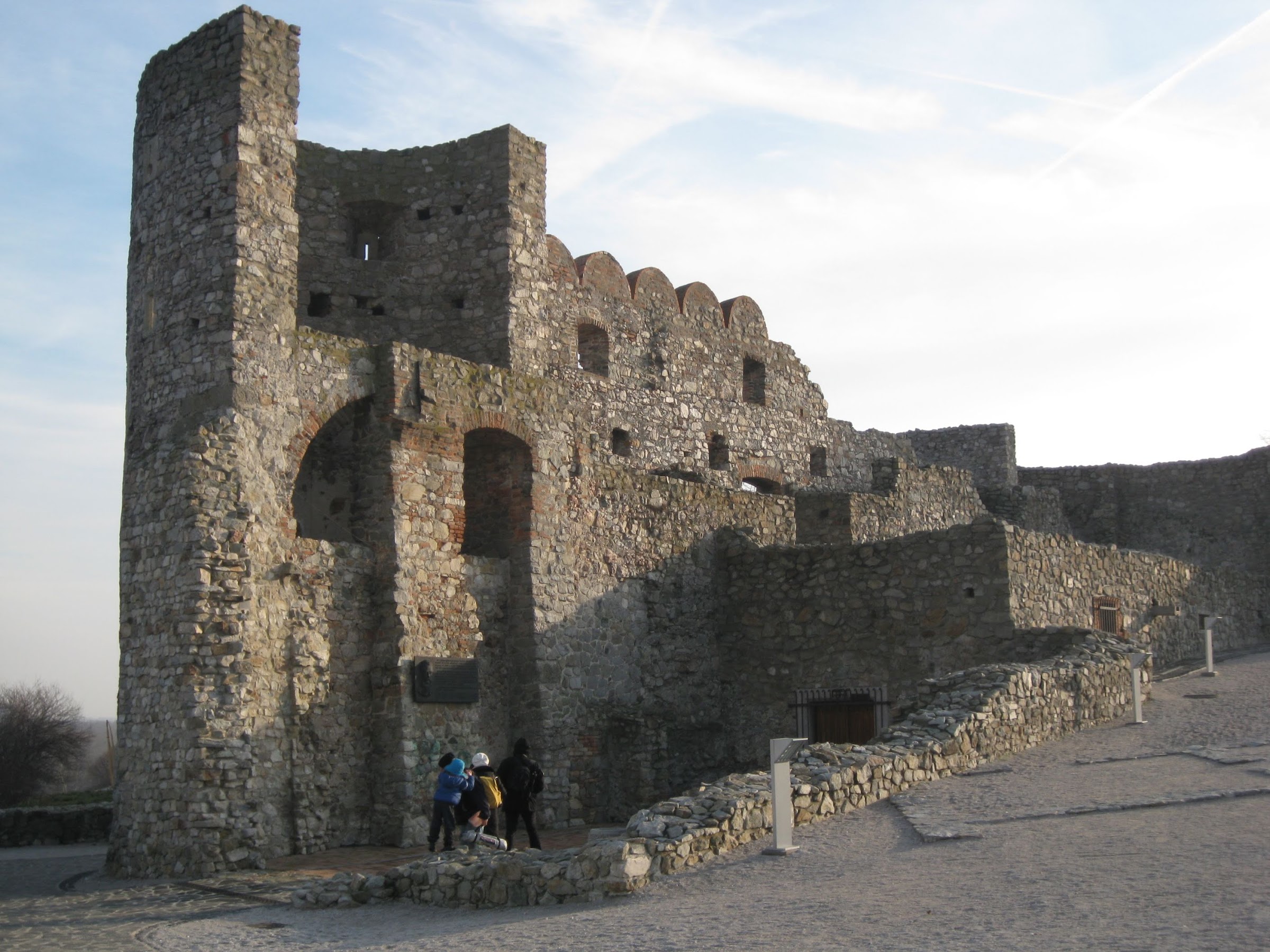
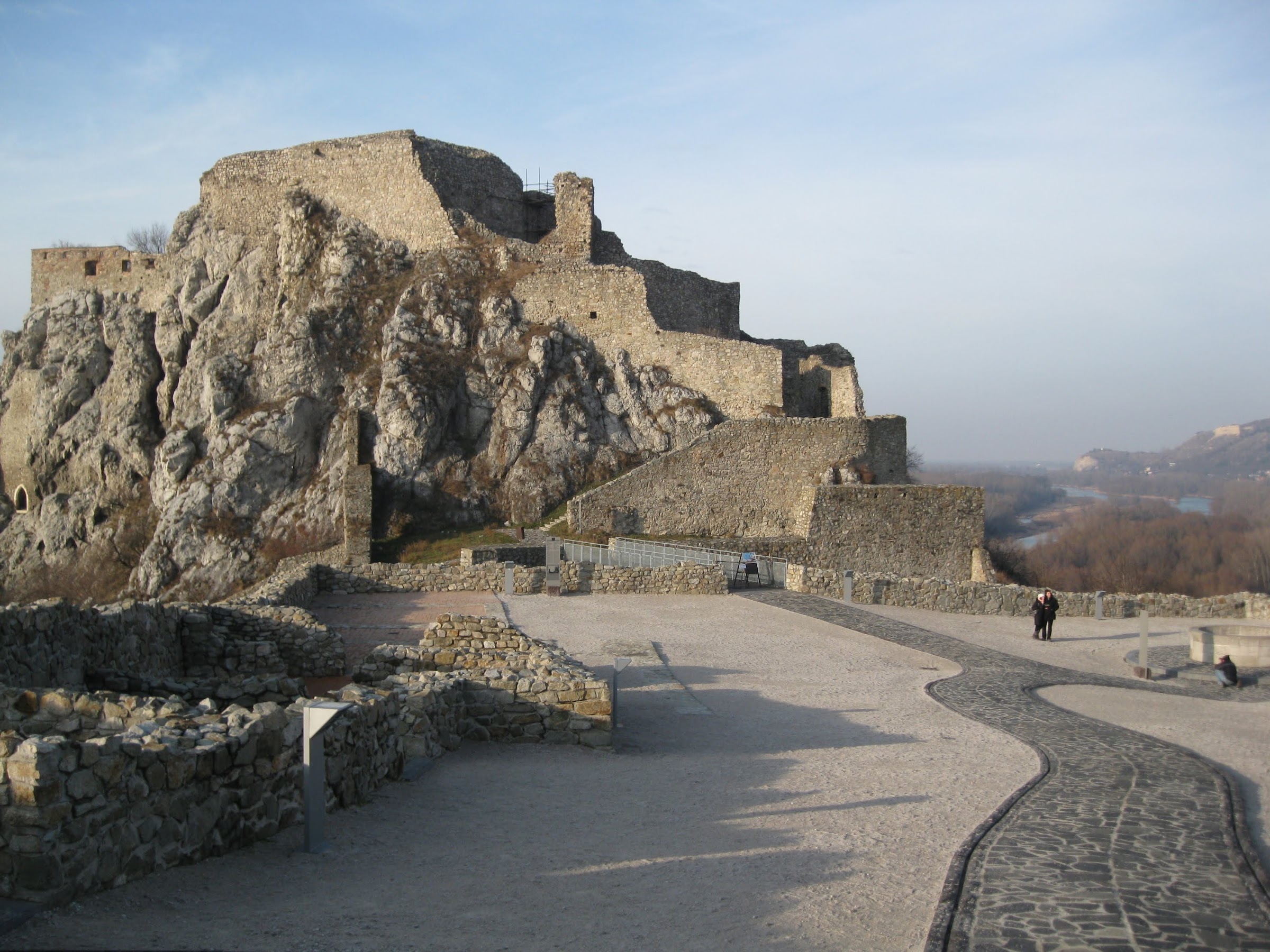
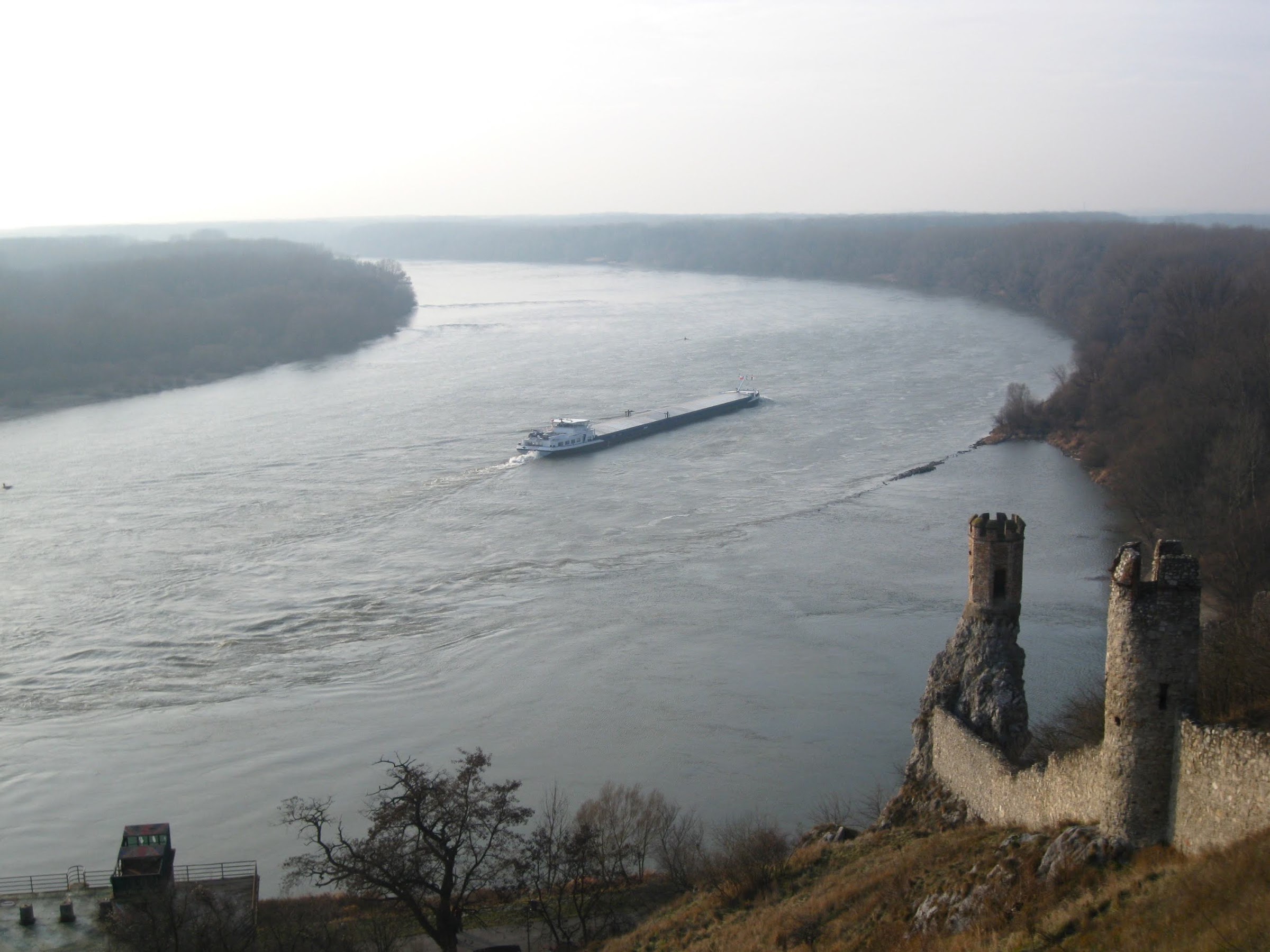
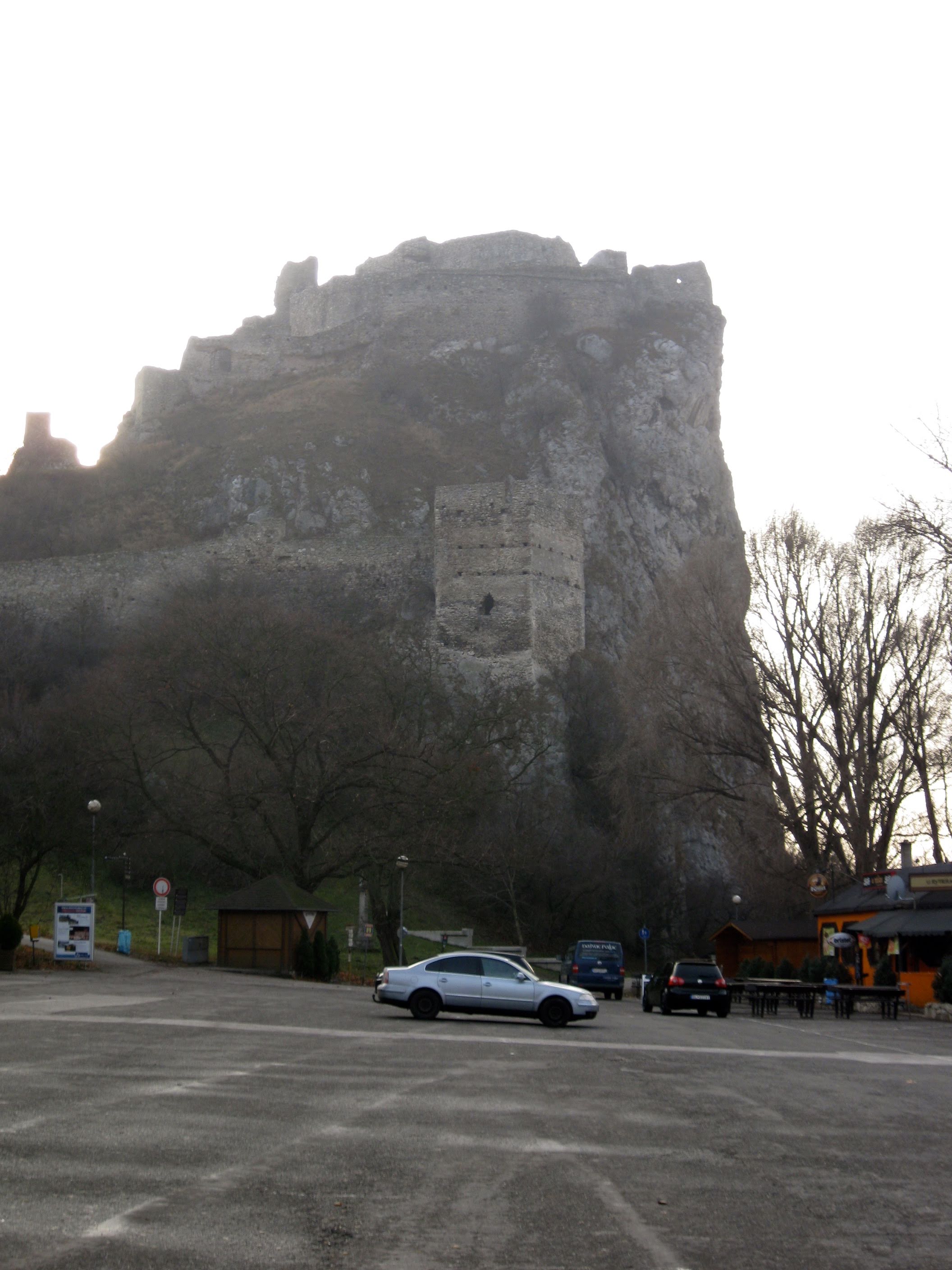
Slovakia is littered with castles, some in ruins, others in remarkably nice, well-preserved condition. We took the bus to Devin castle today, which is about 25 minutes west up the Danube from Bratislava's historical center. It's perched dramatically atop a jagged, rocky outcropping right at the confluence of the Morava and the Danube rivers, along the border with Austria. 


There were settlements on this spot as far back as the Stone Age, some of the ruins you see today date back to the Moravian empire (700s - 1000s, roughly), and there's even the foundation of something built much earlier by the Romans. Sadly, Napoleon blew the thing up in 1809, which is the reason for its current ruinous state.

The little crenellated tower that caps the arm-like outcropping that juts skyward is known as the Maiden Tower, and there are some colorful myths attached to it.


The views from the castle itself (of Austria, the Danube, the Morava, the village of Devin, etc.) are worth the climb, and there is a path that snakes its way up the hill to the castle ruins. Visually, the castle and its atmospheric setting are quite nice.


At the base of the castle is a monument to those who died trying to escape across the border to Austria during communism. An estimated 300 people were shot dead while attempting to flee. The monument is pockmarked with bullet holes to symbolize the tragic fate that befell these people. It's especially sobering to contemplate how this whole area along the border was a heavily guarded militarized zone during communism, which may be easy forget given how scenic and tranquil it is today.