Wednesday, August 5, 2015

Camping by the Eel River and we seriously miss good Slovak sausages!

I know I haven't posted anything in a dog's age, but I figured I'd document this short but long overdue camping trip we just took over the first weekend of August at one of my favorite spots, up in the northern edge of Mendocino County along the Eel River, in part because something on the trip raised a Slovak-related matter that I really need to address.

First off, things have been going well. I've been working for the Academy of Art University's online education department since June, and Terezia is still cooking up a storm for the family she's working for, in addition to some other clients.

But it became abundantly clear that we needed to get away from the daily grind for a few days and unwind. Plus, the weather in San Francisco this summer has been so cold, dreary, windy, and grey that it's been giving me seasonal disaffective disorder, so we desperately needed to refill on some nature and sunshine. Also, the last time we'd been camping was exactly two years ago, on the Croatian coast in summer 2013.

We took off for a campground I've been going to ever since I was a kid, up north just off 101, along the Eel River, near a tiny town called Leggett (pop. 122).
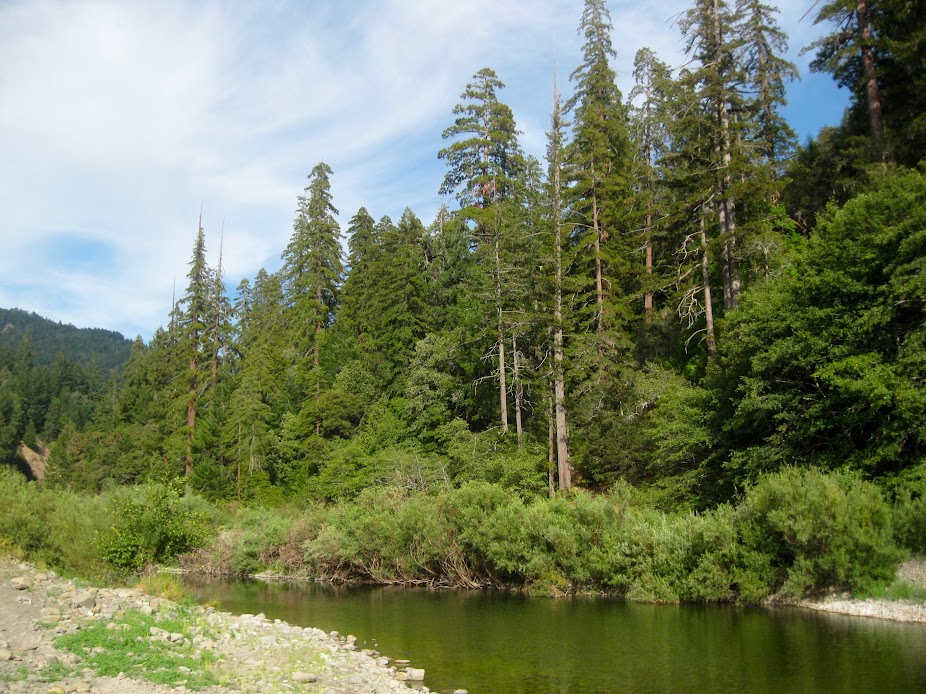


Yes, it's a car-camping site, and I know what you're picturing: loud families in big-ass trucks with ill-behaved kids buzzing around on dirt bikes and a radio subjecting the usual 70s classic rock hits to the adjacent campsites; horrifying restrooms and showering facilities that make you wish you'd come equipped with full hazmat gear; a baby whaling incessantly in the distance; a humorless Berkeley family in REI gear and a Subaru wagon trying desperately to impart a modicum of nature's beauty to their bored children, etc.

And, well, this campground inevitably has some of that, but it's actually nicer than most. For starters, if you go deeper into the park to the steep hills on the western side of the Eel River, the campsites are much more secluded by redwood trees and foliage, which, apart from just being plain pretty, offer a sense of privacy.
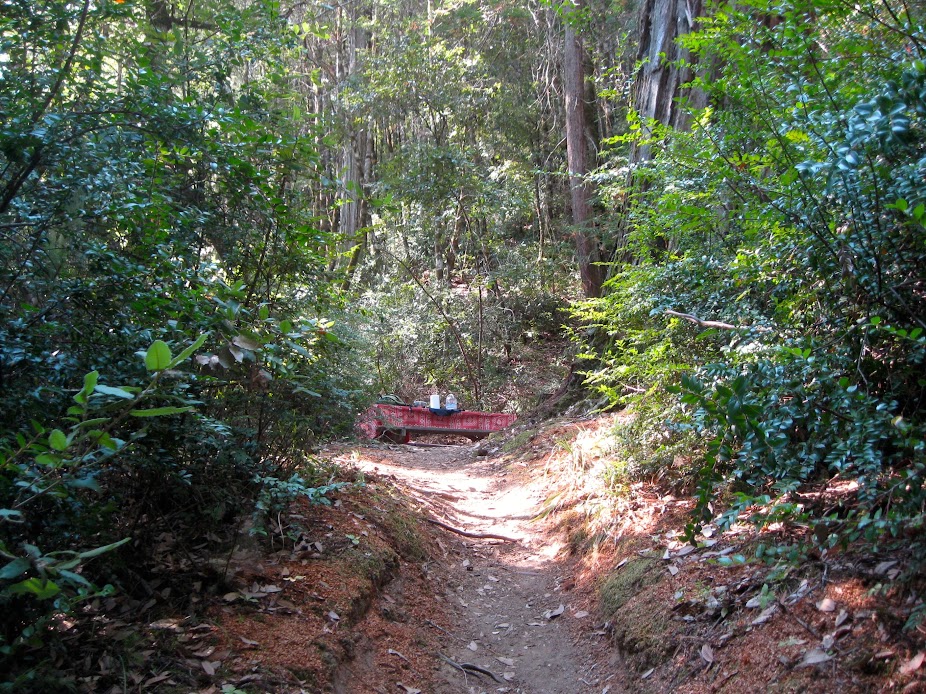
The campsite as seen at the foot of the little path from the car.

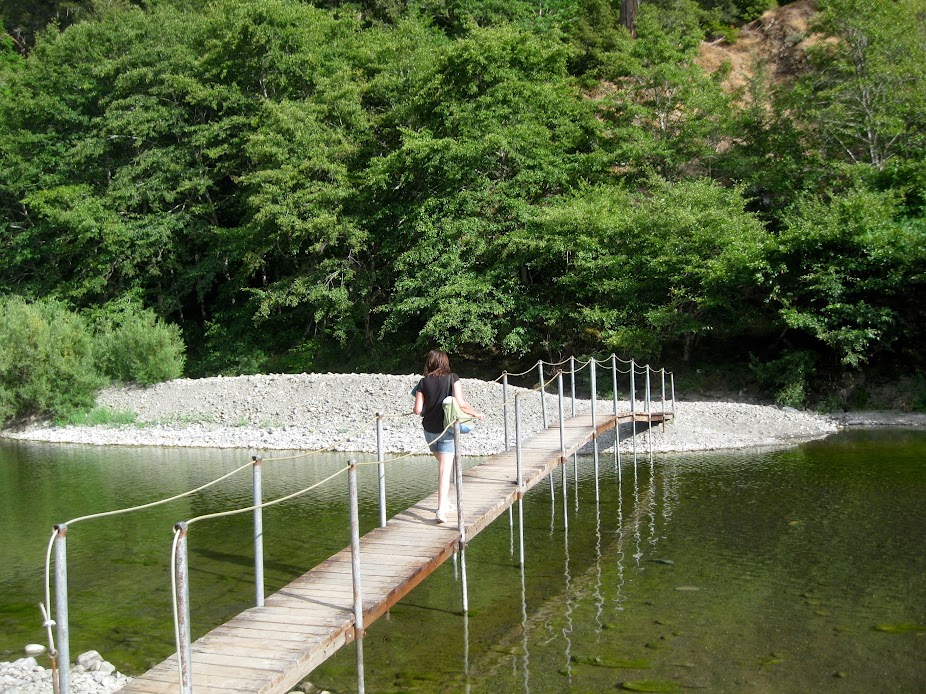
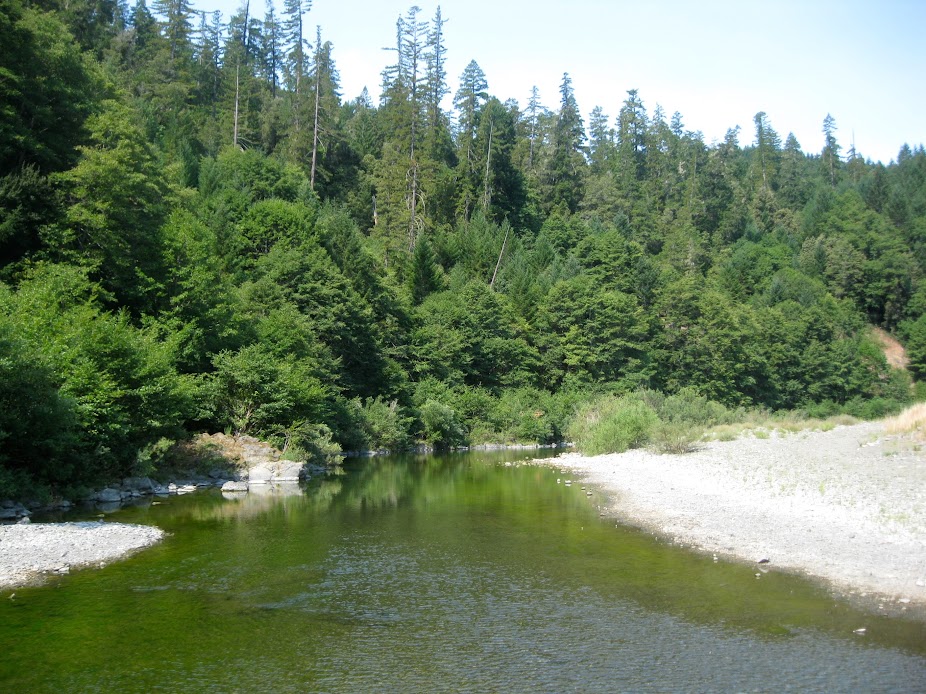
But what's always excited me about this park sever since I was 10 (when my family starting coming here) are a few swimmable sections of the Eel River that are as much as 25 feet deep and lined by rocky beaches and tall, picturesque stone walls. The water itself is generally quite clean. Bitingly cold in the morning, by later afternoon the river actually warms up and it can become exceedingly difficult to extract oneself from it, if swimming in natural bodies of water is your kind of thing.

This part of the river is about a half mile away from the campsites. The first beach you come to is quite nice, set against the backdrop of a craggy, tall, rock wall, complete with attractive, jagged rock layers and scraggly trees along the top. The rocks are perfect for diving into the super deep river.
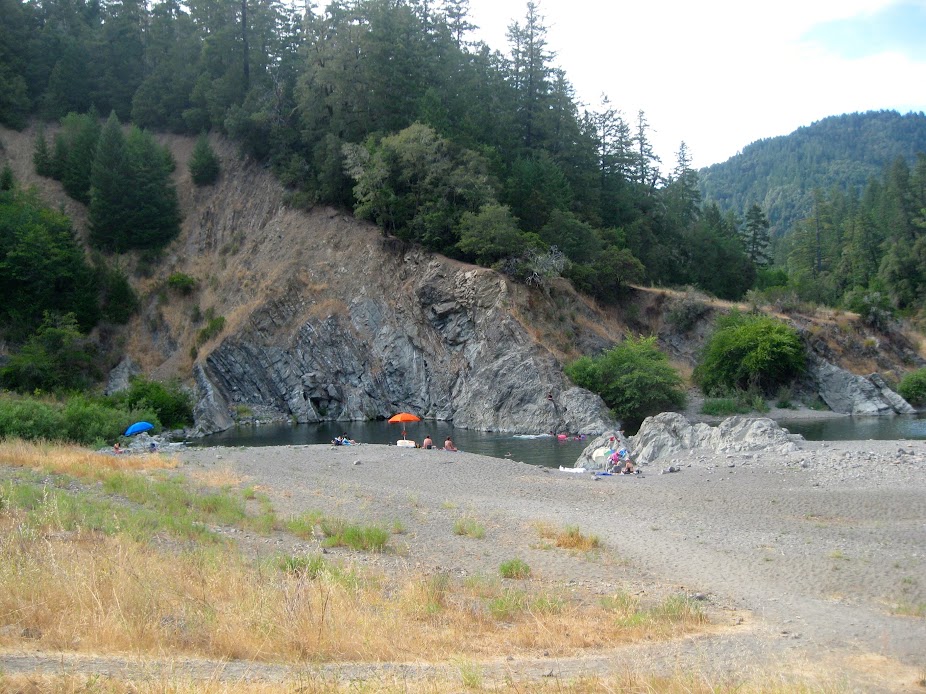


But unfortunately, this beach is where most of the loud families with obnoxious kids park themselves - and I can't blame them: it's a super inviting stretch of the river and the swimming area is fairly large. This beach also faces an infamous 60-foot high cliff from which macho hicks, meth addicts, and jocks plunge into the river in an effort to make up for their apparently inadequately sized genitalia. Sometimes they egg each other on, and on a couple of occasions when I was a kid, a few of these types appeared to get potentially seriously injured and had to be carried out by their so-called friends.

But we always head downstream a little bit to another beach area where few people bother to go, in part because you have to traverse a flood plain covered in big, loose, ankle-spraining rocks (and which is crawling with lizards and cicadas whose loud chorus always seems to serve as the perfect soundtrack to hot summer weather) to get to it.
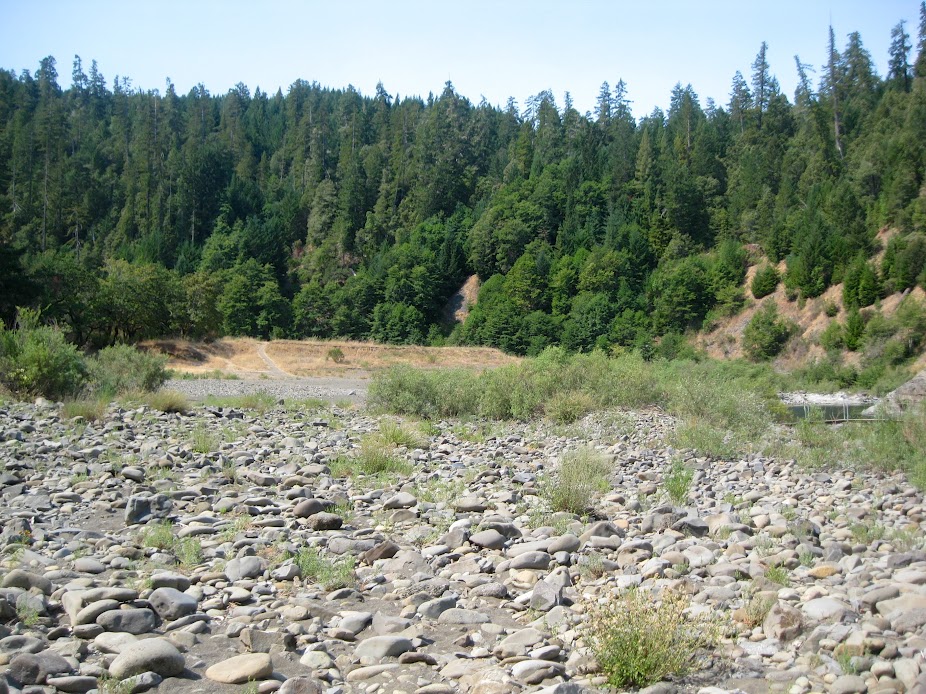
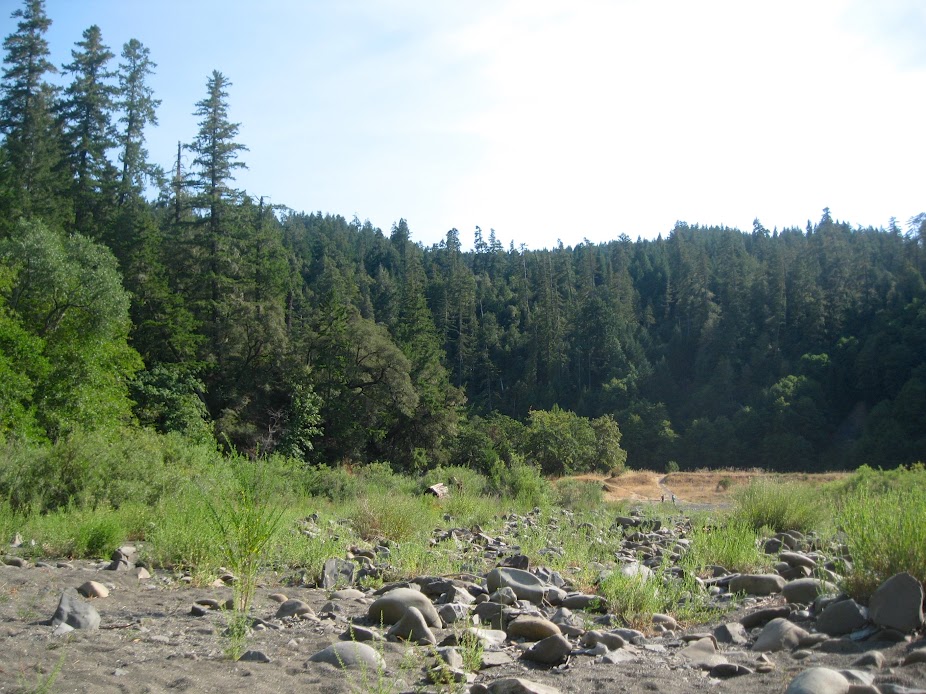

But once you're there, you've got another stretch of the river that's plenty deep and big enough not just for swimming, but for a little (more modest) rock diving as well. Though some of the commotion from the first beach echoes audibly downstream, on some days you may get this more tranquil part of the river all to yourself. And if you do get some visitors, they are usually (but not quite always) folks who are looking for a mellower alternative to the first beach too, so it's not a big deal.
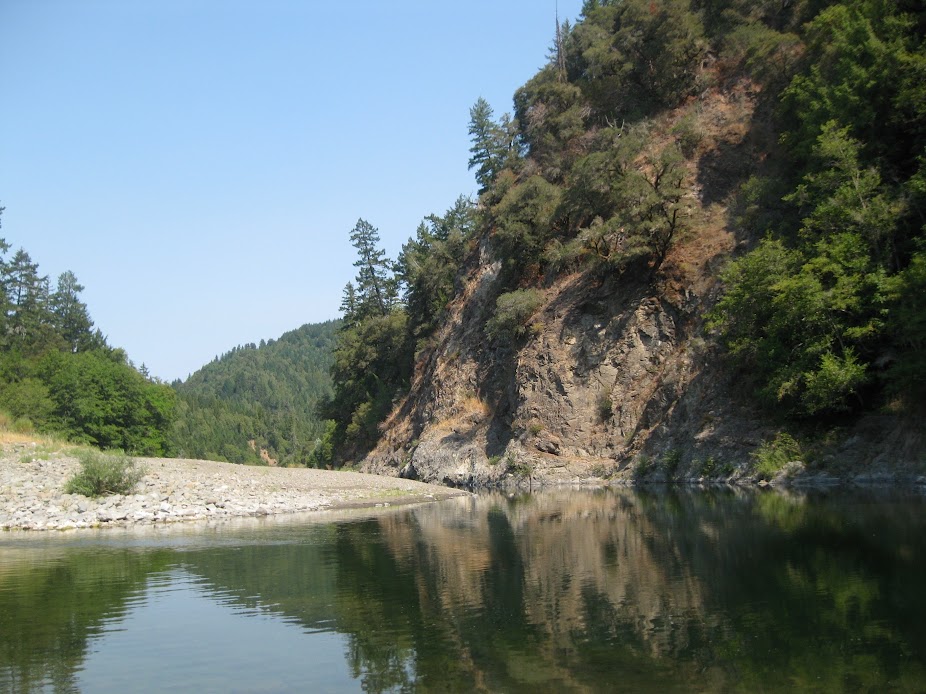
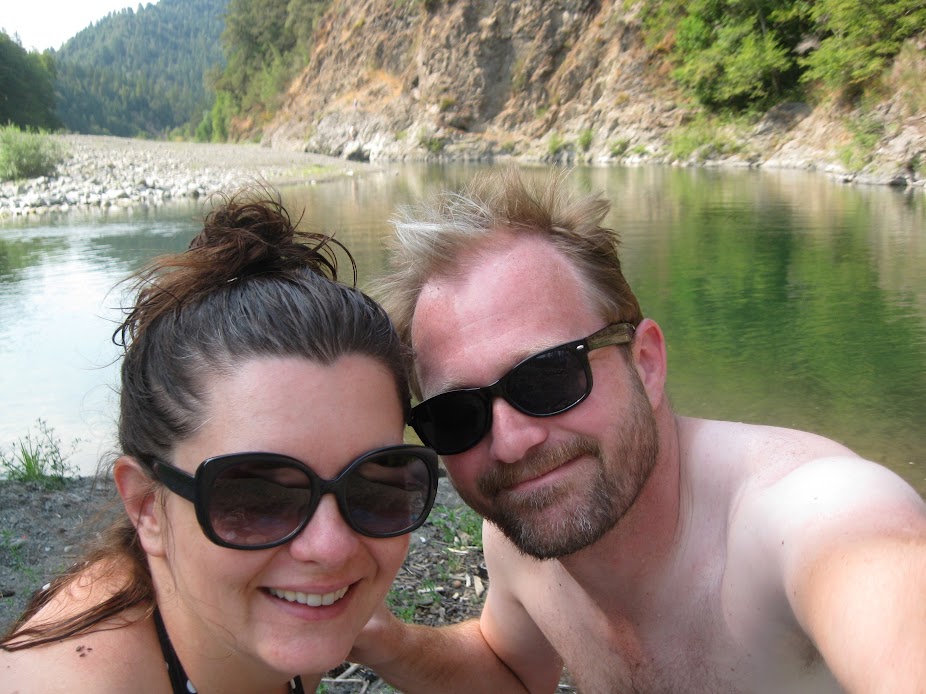
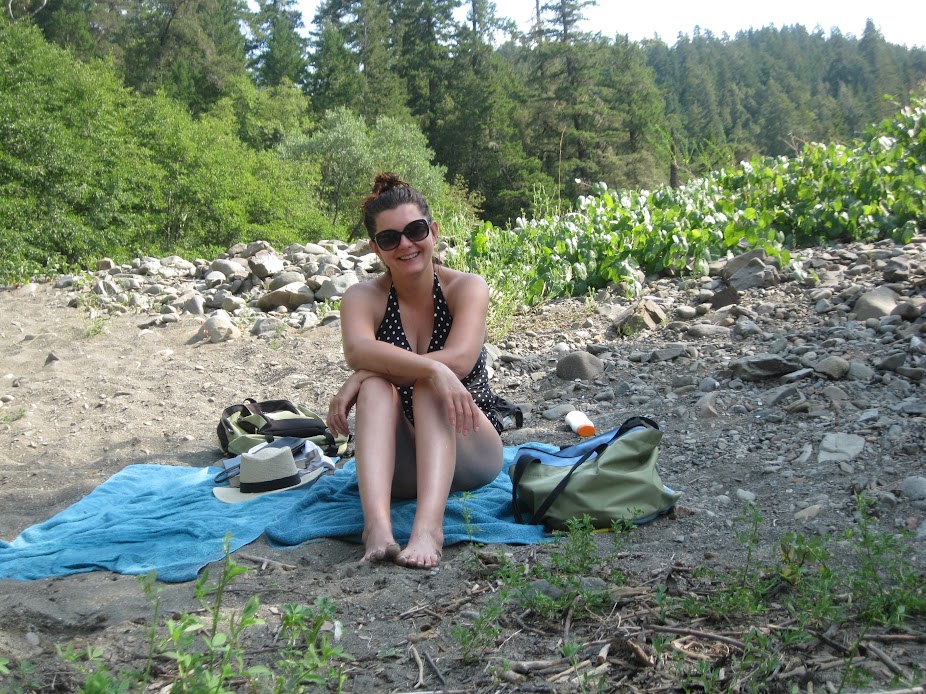
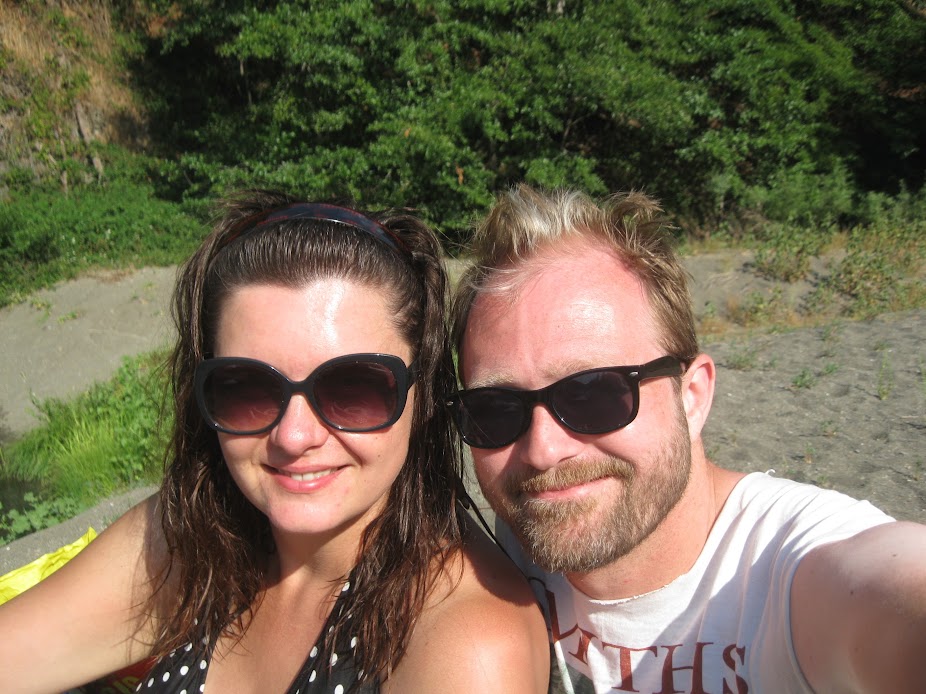
We both love baking on the sandy beach in the sun while reading a book, then going into the river to cool off and swim for a while, and basically just repeat that throughout the day until we get hungry for dinner and go back to the campsite. This more peaceful section of the river has a rock ledge that's fairly easy to climb to and is about, oh, maybe 15 feet high, so nothing too crazy, but high enough for me to get my rock diving thrill.

You can typically see steelhead and possibly rainbow trout in the river, and the younger fish love to check you out and nibble your feet when you first walk into the shallow part. You can also see the occasional small, harmless snake drifting by, as well as some water gliders and frogs.

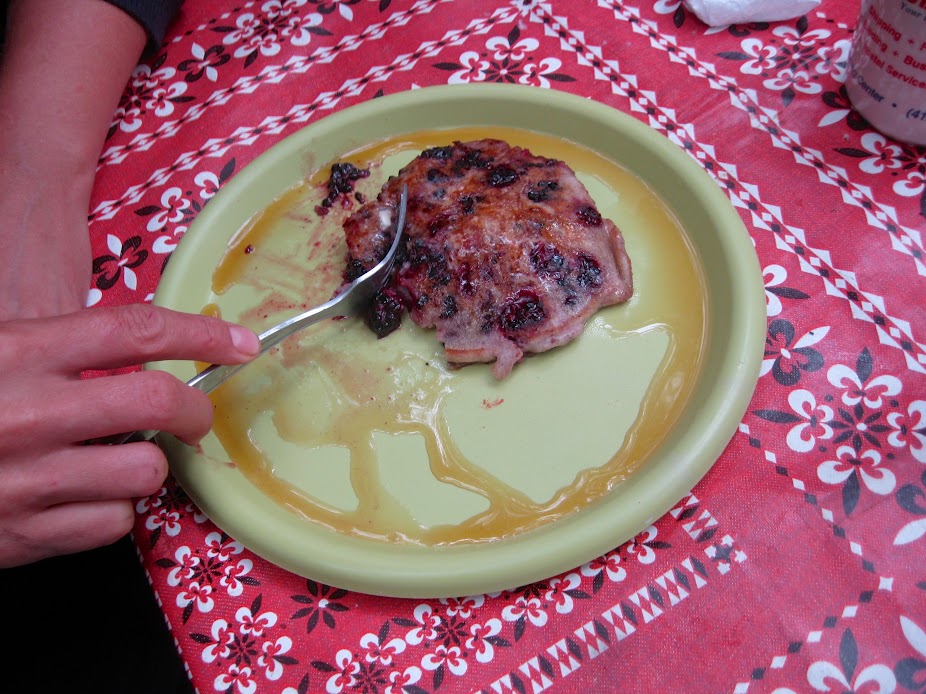
Another fun thing about the river: near our preferred beach is a big tangle of blackberry vines, and we love to pick the berries for making delicious blackberry pancakes for breakfast.


So, how is the Eel River looking amid California's epic, off-the-charts drought?

Overall, not too bad. You can see from the white markings along the rock walls that the water is about a foot and a half lower. Also, Terezia and I both swear that the current used to be stronger. It was never crazy strong, but it used to take a little more effort to swim against it.

Also, this time there seemed to be a little more algae, making the river a bit greener in color, which I suppose could also be a sign of lower water levels, slower current, and warmer temperatures.


At any rate, the trip got off to a rough start when we pulled up to our reserved campsite (the very site my family used to get when I was a kid) to find that the neighboring one was inhabited by six 20-something douchebag frat boy types (and one poor girl - clearly the new "item" of one of the boys, who misguidedly thought it'd be a swell idea to take her along). That first night they stayed up super late, droning on with inane anecdote after inane anecdote in their bellowing outdoor voices, while one of them kept making this annoyingly repetitive banging noise, which turned out to be the sound of someone splitting wood to keep the campfire going. Luckily, I remembered to bring earplugs for both of us, which were good enough to allow us to tune out all of the din and get some sleep.

And fortunately for us, they split the next day, and the park rangers, for reasons unknown, left the reserved sign on the campsite's little numbered post, and the campsite stayed vacant the next two nights!


On the second night, a group of three raspy voiced, fidgety, middle-aged meth addicts set up camp in a site sort of across the road from us, and we were initially concerned about their radio playing an endless barrage of Zeppelin, Deep Purple, Aerosmith, Bad Company, etc., but we weren't able to hear them from our site, so not a problem.

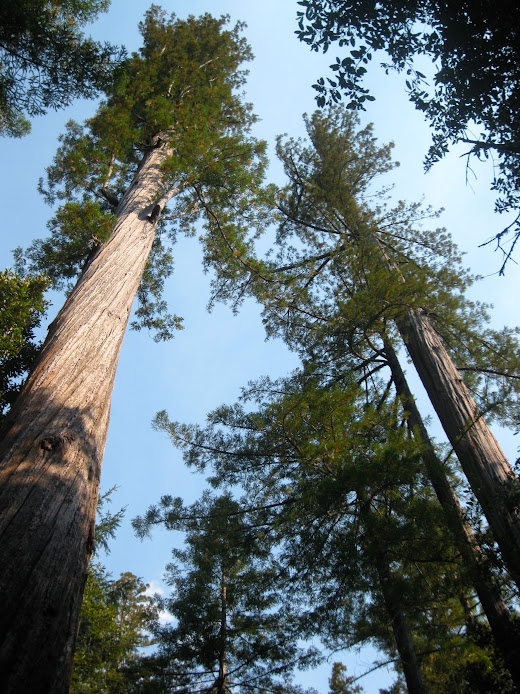
Visually, the park isn't exactly Yosemite Valley or anything, but it's still quite scenic and pretty, and the rocky, steeply sloped landscape is packed with gorgeous, soaring, old redwoods and jagged, picturesque rocks. I mean, with this area of northern California, the coastal redwoods of Mendocino and Humboldt Counties, you really can't go wrong.

Now, on to my rant about Slovak sausages:

When getting food for our trip, Terezia thought it would be fun to buy some good sausages for grilling, since that's kind of an easy, no-fuss thing to grill over a campsite fire pit.

But first, I need to back up a bit:

Terezia and I have come to suspect that Americans, or at least Californians or Bay Areans, don't understand what good sausage is. Most American sausage is flat, one-dimensional, bland, and kind of dry. With one exception (a stunning, locally made Merguez lamb sausage), every sausage we've ever had here absolutely pales compared to the best examples of good Slovak sausage.

I spent my life thinking sausage was a perfectly fine but generally not terribly exciting thing until on our honeymoon in Italy back in 2011, when in Perugia we stumbled on a big annual cultural street fair, at which there was a Slovak section with a woman (from just outside of Bratislava) in a food truck grilling up the most mind-blowing sausages I've ever tasted. (You can read the post about that here).

Amazing Slovak sausage in Perugia, Italy. Notice that beautiful red hue! *That* is a real sausage.

These sausages were a mesmerizing explosion of flavor. They had tremendous depth and richness, just the right amount of spiciness, and the smokiness from the grilling added another layer of deliciousness. Finding good grilled sausage quickly became a "thing" for us in Slovakia, and a butcher shop in Lucenec (the biggest town near Terezia's parents' village) had the only sausage that rivaled those that we had in Perugia. Other sausages in Slovakia ranged from good to great (there were some duds, of course), and nearly all of them put to shame that thing that Americans erroneously think of as sausage.

So, being health conscious (most of the time), Terezia and I don't eat sausage often, but we're nevertheless trying to understand why nearly all American sausage sucks so hard, and we're on a quest to find something here that's even half as good as good Slovak sausage.

At any rate, Terezia knew of a gourmet butcher shop on the peninsula called Dittmer's, and she figured if anyone had the real thing, it might be them. (Yes, we've tried Berkeley Bowl and all the obvious places where you'd expect to find such a thing in this area - and no dice.) She talked to the guy at the counter about what she was looking for, and he sold her several recommendations: some kind of German bratwurst, spicy Italian, and Cajun.
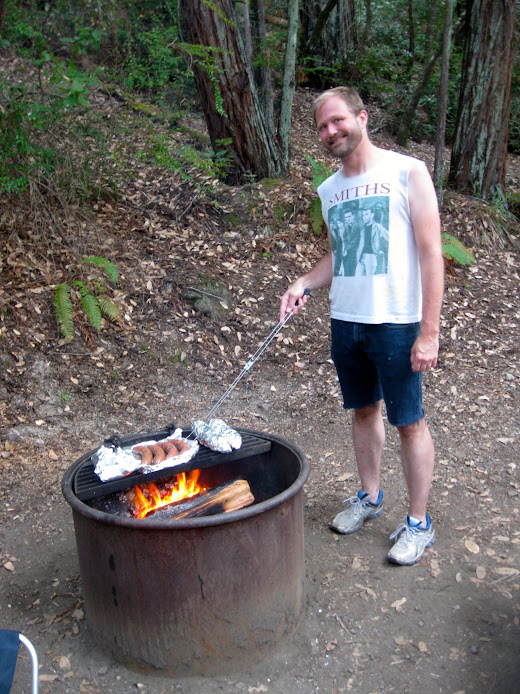

The verdict?

The German sausage was scarcely more interesting than a decent hot dog.

The spicy Italian was spicy, but still had that one-dimensional flavor that plagues sausage in America.

The Cajun was the only thing that sort of hinted at the greatness of Slovak sausage, but it was still very far off the mark. It was also spicier than the spicy Italian.

And this was the best that Dittmer's could come up with? Seriously?

Seems like further proof that people here have zero concept of what good sausage is.

Terezia thinks that most American sausages are lacking in fat. Good sausage has to have plenty of fat. It enriches the flavor, and when you're grilling a fatty Slovak sausage, that thing sizzles and crackles like mad. Most of these American sausages seem to stay on the dry side and barely ooze out much of anything when on the grill.

Most American sausages seem to be quite a bit leaner. Californians are generally more health conscious than Slovaks when it comes to food, but when you want truly good sausage, you're not going to find it if you're looking for something healthier. I mean, that's why we only eat good sausage a few times a year.

The Cajun sausage was fattier, and that's probably partly why it was a little better than the others.

And of course, importantly, Slovak sausages are made form pork; none of this lean, American, turkey, chicken, or beef junk.

Another crucial component to good Slovak sausage: the blend of spices, especially paprika. And Terezia says the ground up spices and herbs are better when they're fresh. If you use packets of spices ground in some food plant and purchased in the grocery store, the flavors won't pop as much.

Now, exactly what that blend of spices consists of beyond paprika, Terezia and I are kind of in the dark. When we went to her uncle's pig slaughtering back in 2011, we got to help make the sausages, but her uncle used only packaged spices that he bought from the grocery store, and I swear that possibly because of that, his sausages weren't quite as good as the best varieties we had. (But they were still tasty; and he made hurky, which is a sausage stuffed with a mixture of the pig's ground innards and rice. We'd love it if you could find hurky in the US.)


Terezia also believes that Americans are grinding their sausages too finely, and that could perhaps wring out some of the flavor, like they're being overworked or something.

We also noticed that the lining of most American sausages doesn't quite have the same thickness or snap to it that Slovak sausages have. Good Slovak sausages also tend to have a beautiful reddish hue, which we've not really seen in American sausages.

So, we're still trying to work out all the reasons why, but American sausages continue to seriously disappoint compared to the orgasmically tasty real deal in Slovakia.

At any rate, hopefully we'll be back at the Eel River again before too long.


Saturday, February 14, 2015

A brief update on life in the States

Since we've been back in the US for over three months now, it seemed like time for an update.

We moved back into our old Oakland apartment at the start of the year, and it was almost surreal to be back in the very same place, with more or less the same bed, furniture, stuff on the walls, etc. After spending the first night here, we woke up joking that the last three years in Slovakia must've been one wildly epic dream. But it's been wonderful to finally be back in our own home.

On the work front, Terezia found a job surprisingly fast. She's got a gig as a full-time private chef for a family on the peninsula that adheres to a very restricted diet due to illness in the family. It's based on the trendy Paleo diet, which revolves loosely around the way people ate back in Paleolithic times - lots of meat, some seafood, a specific list of veggies, but no dairy, gluten, or grains, etc. The family has been great to work with and the dietary restrictions have proven to be a fun challenge for Terezia, as she has to work within these boundaries and still prepare food that's delicious and gourmet. The only drag is the insanely long commute.

My job search is still ongoing, and I'm hoping to find something that involves editing and/or writing, in an attempt to build off my experience as an assistant editor at the Slovak Spectator. There's not a ton of stuff out there right now, but I've sent out several resumes and had some unsuccessful interviews. For the most part it feels like I'm just tossing resumes into a black hole. I've probably been a little too picky or discerning about which jobs I apply for, and if I'm still not getting results after another month or two of this, that will have to change. But it took both of us six months to find work when we moved to Slovakia, so I didn't anticipate that we'd both find work immediately here. I'm just glad one of us has got something.

But we've been super busy getting the apartment back into order. We spent most of January moving, unpacking, painting some of the rooms, unpacking, scrubbing down the kitchen and bathroom, unpacking, replacing furniture and appliances we had to get rid of when we moved out, unpacking, etc. And we've still got a water-damaged garage with black mold growing on the walls to deal with!


Oakland appears to have undergone a few noticeable changes while we were away. The downtown area is getting a jolt of gentrification, and now some stretches of it look almost unrecognizable, lined as they are with trendy new restaurants and bars and - shockingly - people. While previously your options for good restaurants/cafes/bars/etc were basically relegated to the very cool and vibrant Grand Lake/Lakeshore, Rockridge, and Piedmont Ave neighborhoods (not to mention the Temescal area), now downtown Oakland is transforming into yet another destination.

This strip of hip new restaurants/cafes popped up while we were away.

Okay, so I realize these spots aren't exactly crawling with people at 10AM on a Friday morning, but around lunchtime and evenings, these places seem to be fairly hopping, which is good for downtown Oakland.

I also noticed some of the old, pre-war facades have been restored or repainted, reclaiming pieces of Oakland's history. One hundred years ago, Broadway and the adjacent blocks in downtown Oakland were extremely picturesque and ornate, but an alarming number of those old buildings were mercilessly razed and replaced in the 1960s-70s with hideous 20th-century office high-rises and soulless brutalist parking garages. But it seems that efforts are now being made to hold onto what history the downtown has left.

Some photos of downtown Oakland's neo-gothic Cathedral Building, just because...


The first signs of gentrification were already apparent before we moved, particularly around the Fox Theater, a gorgeous Moorish-styled cinema that was built in the 1920s. Back in 2000 this building was literally rotting away and reportedly had mushrooms growing in it, and it narrowly avoided the wrecking ball after spending decades shuttered. But a couple years before we left for Slovakia, it had been completely restored and reopened as a live concert venue (we saw OMD there in 2011), while the surrounding block was rejuvenated with hip new restaurants and hangouts. This now seems to be spreading to some of the neighboring blocks, and it appears to be injecting the downtown area with a little more life.

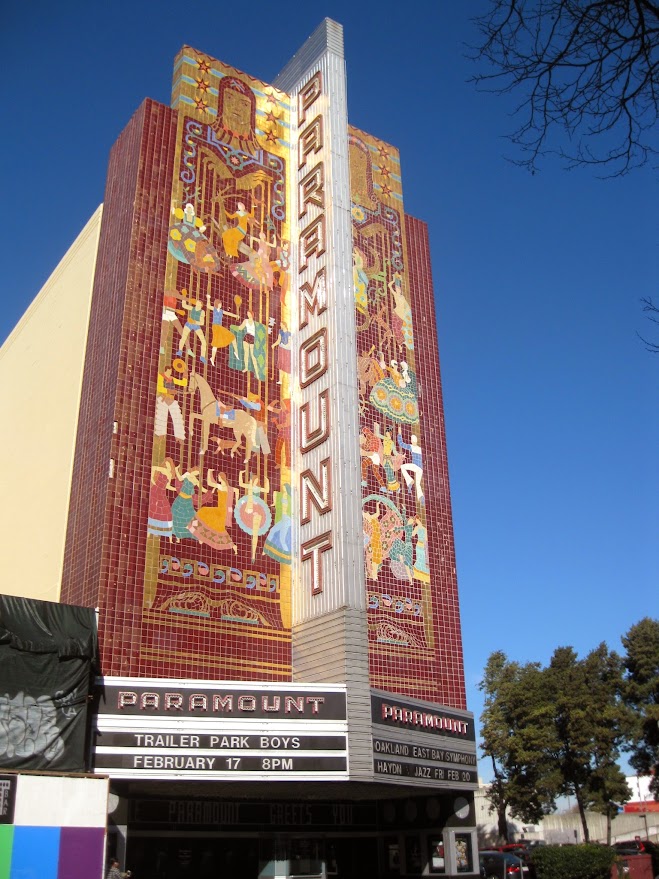
The Paramount Theater, an Art Deco cinema just a few blocks away from the Fox. While the narrow facade is nice, the interior is arguably one of the most beautiful of any cinema or theater in the world. Go ahead, do a Google Image search for Paramount, Oakland, and you'll see. 

Another exciting addition: while we were away, downtown Oakland got an Umami Burger, a small but growing west coast chain that makes a damn tasty burger, which comes in a truffle glaze, with fries slathered in truffle cheese. We only eat burgers a few times a year, because I tend to feel like I got punched in the gut after having one, but this place would be one of our first choices.

Umami Burger: obviously *not* housed in a hip older building, but rather, on the ground floor of this cold, bleak, corporate monolith. Still, the burgers are worth it. 

Sadly, but not surprisingly, I have to report that pubic transportation here is still abysmal. And since Terezia and I have decided to get by with only one car (which she uses for her Odyssean commute), I've been at the mercy of the Bay Area's dysfunctional public transit. Bratislava, for all its issues, at least had pretty reliable public transit. But here, standing around at dull, shadeless bus stops waiting 25 minutes for a late bus is still a common occurrence. And in some smaller towns, like Castro Valley (where we stayed at my mom's before moving back to Oakland), public transit is almost nonexistent, making it impossible to get around without a car or bike.

Fortunately, moving back to the US after living abroad for a while requires infinitely fewer bureaucratic hurdles than moving back to Slovakia. You just kind of pick up where you left off - no having to reestablish permanent residency or any of that pointless red tape that's been laid out just for the hell of it. But one possibly nice thing about US bureaucracy is that these days you can deal with some of it over the telephone from the comfort of your home. For example, we've spent hours on the phone sorting out various issues and ambiguities involved with trying to sign up for health insurance via the Affordable Health Care Act, which, while definitely annoying, could at least be done, for the most part, while plopped cozily on the bed. I'll take sitting at home on hold for painfully long stretches of time over standing around in person in some epic line at some depressing office. We've also spent a few hours on the horn with evil Comcast, the internet provider and possibly the most despised company in American today.

At any rate, it's been absolutely wonderful to reconnect with friends and family, and to feast on the amazing and diverse offer of food here, some of which is walking distance from where we live. Plus, I'm overjoyed that I can get my weekly record store fix with visits to Amoeba Music in Berkeley and SF (not to mention, it's been awesome to be reunited with my LPs!). We both really missed the life here in the Bay, and in Bratislava I think we really only felt "alive" when we were out of town traveling or exploring new places.

Terezia at Oliveto in Oakland

The LPs

In Slovak news, I'm happy to report that Slovaks essentially rejected a recent referendum to ban gay marriage. But it wasn't that people turned out in droves to vote against it; rather, not enough people voted in the referendum for it to be considered valid. The vote required 50% participation, but only 21.41% voted. This probably had much more to do with extreme apathy than Slovaks suddenly supporting LGBT rights (in our three years there, we were alarmed by the blatant homophobia of many people we encountered), but we'll take this outcome over any discriminatory law. It's hard enough for the gay and transgender community in Slovakia as it is, so I hope activist groups use this opportunity to keep pushing for LGBT rights.

Slovakia has also been hit with some heavy snow over the past few weeks, which, I have to say, makes us a little nostalgic. The winter here in the Bay has been freakishly mild and summery this year. While it's nice to have week after week of sunny, clear, great bike riding weather, it's nevertheless a very real concern that these mild winters are going to be the new normal here. And, in a perverse way, we kind of miss those days of trudging cautiously through Bratislava's treachorously slippery, snow-and-ice covered streets, bemused by how inept and erratic the city was at keeping them clear.

I realize the blog has been collecting cobwebs over the last three months, but I will pop back in from time to time with the occasional update or development, so don't forget about this place completely!

Wednesday, November 19, 2014

Back in the US!

We've been back in California for just over a week at the time of writing this, and even though we're still a bit bleary eyed and fuzzy from jet lag, and still waking up at odd hours of the night and crashing involuntarily at 8:00 in the evening, transitioning back to our old life in the Bay has so far been reasonably smooth.

Even the epic trans-Atlantic flight back home wasn't all that bad. The more of these 10+ hour flights we endure, the less grueling they seem to become.

And we're already readjusting to elements of Bay Area life that are both refreshingly pleasant (engaging in friendly chit-chat with grocery store cashiers who smile and ask how you're doing; hitting up some of our old favorite restaurants [Bratislava was sorely lacking in the restaurant department]; going to parties and not being expected to pound shot after shot after shot of slivovice or some other brain cell destroying hard liquor) and somewhat bemusing/annoying (ridiculously pricey cell phone plans; slow drivers in big cars; women [and some men] everywhere doing errands while wearing exercise/workout/yoga clothes [something that's just not done in Europe]). Either way, we're happy to be back.

A trip to Banana Blossom - one of our favorite East Bay Thai joints - on our first week back was absolutely necessary.

Saying goodbye to Terezia's family was of course very emotional, but we were nevertheless 100% ready to leave Slovakia and dive into the next phase of our life together, wherever that winds up taking us, and her family totally understands that. We'll obviously miss Terezia's family deeply, but at least they'll provide a reason to go back and visit Slovakia whenever we're able to.

But we didn't feel even a twinge of sadness as we drove past downtown Bratislava for the last time on the way to the airport. After three years we really had our fill of the place, and we're totally ready to move on. (In case you missed it, read this post for more on why we chose to leave Slovakia.)


And I don't really envision us ever really longing for Bratislava, though I'm sure we'll have moments when we'll miss certain aspects of the place. But Bratislava is a small, culturally homogenous city that offers very little of the diversity, richness, and stunning visual scenery of cities like Paris, Vienna, or San Francisco, and even though we met some wonderful people, we really felt it was the right time to leave.

But we will miss the snail-paced life in Terezia's parents' village, where we often helped out in their garden, took Terezia's dad to either of the village's dingy, smoke-stained pubs to have shots of twitch-inducing slivovice or borovička chased with refreshing pints of Slovak beer, or just walked around and gawked at the old tumble-down barns and narrow-fronted homes and fences overrun by twisted blankets of vines. Quiet, rural Podrečany was a nice retreat from grey, concrete Bratislava, and Terezia's parents were always happy to have us in their modest home, and they always plied us with copious amounts of food (and Terezia's dad's homemade moonshine).


The last two weeks in Slovakia couldn't have gone by fast enough, since, as I detailed in the previous two posts, we spent much of them in the isolated (if you don't have a car) suburban purgatory of Bernolákovo (where Terezia's brother Tony lives) taking care of paperwork and wrapping everything up.


Fortunately, moving back to the US requires less red tape than moving to Slovakia, i.e. there's no permanent residency to re-establish; you just come back and pick up where you left off, more or less.

The only major thing to deal with is that since we're currently unemployed and we have no idea how long we'll be jobless, we are required to get health insurance as part of the Affordable Health Care Act, which so far does not seem to be too big of a deal. A representative we spoke to claimed that we qualify for Medi-Cal, a state subsidized program that, while far from ideal, will at least keep us covered until either of us find a job that offers a real benefits package. So, at least there's that.

And of course, we've started the job search, and we're both hoping that the experience we've now got under our belts from what we did in Bratislava will open up some new doors and hopefully enable us to find work that's not soul-crushing or tedious.

So, while we're obviously glad that we're back, there is an element of uncertainty to the whole thing, as we have no clue how long it will take us to find jobs.

Plus, the Bay Area has changed in some fairly surprising ways in the three years we were away. Mainly, the recent tech bubble in San Francisco and Silicon Valley has driven rents up to the stratosphere, and there has been some inevitable spill-over into our territory in the East Bay, Oakland and Berkeley, two very cool towns to live in, which, until recently, were generally a more affordable alternative to the real estate insanity across the Bay in SF.

These days a one-bedroom apartment in a desirable Oakland neighborhood can run you as much as $2,000 a month - the kind of pricing typical for San Francisco over a decade ago during the first tech bubble. And even if this current tech bubble bursts, the sky-high rents would likely only level off and stagnate, rather than decrease. Getting priced out of the Bay Area is a very real fear, so I'm sure there will be some anxiety over whether or not we can make this work.

As for the blog, readers can breathe a sigh of relief as the activity here will inevitably slow down. The main purpose of this blog was to write about our experiences in Slovakia and our perspectives of the place, as well as our travels around Europe while living there. And with that big three-year adventure behind us, I'll be putting the blog on semi-hiatus. But do check back from time to time, as I'll likely come back occasionally to blather about any interesting developments in our lives or future trips to Slovakia or elsewhere in Europe (or the world), or to report on any amusing, bewildering, or depressing noteworthy political developments in Slovakia. But for now, we'll be focused on getting back into the groove of Bay Area life, and while we're genuinely excited about that, I don't think that will necessarily make good fodder for the blog.

At any rate, I really want to thank all the folks who actually took the time to read my often rambling posts and even left comments, as well as all the Russian spam bots that really helped boost the blog's page hits and overall traffic. Even though Terezia and I have complicated, ambivalent feelings about Slovakia, if anything I've written has stirred even a modicum of interest in the country, that's a good thing!


Wednesday, November 5, 2014

Can Terezia and Jeff avoid a trip to the Slovak Foreign Police? Read this post to find out!

We rolled out of bed early to catch the 7:15 bus to Senec to go back to the administrative office where the bureaucratic overlord for Senec county presides. As I mentioned in the previous post, this was the woman we needed to talk to about whether or not I need to go to the Foreign Police to cancel my permanent residency in Slovakia.

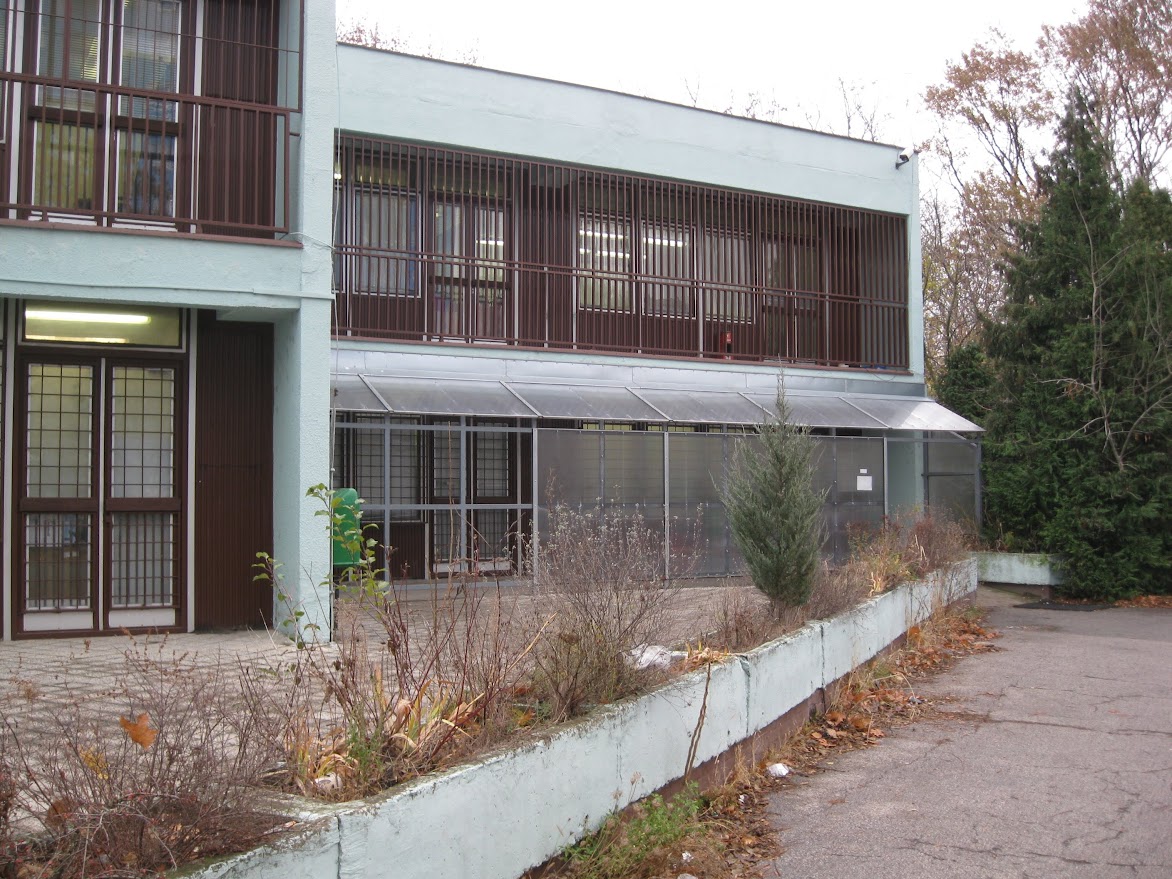
The office from where the bureaucratic overlord for Senec county presides

As it turned out, we'd crossed paths with this woman before. In fact, I wrote about her in a blog post back in 2011 when she refused to give Terezia her permanent residency ID card because of some complicated Kafka-esque BS. On that occasion, she kept shouting "Nedam! Nedam!" (a very brusque way of saying "I'm not going to give it to you!") while pounding her fist on the desk for added emphasis.

This time she was much more pleasant, and after Terezia jogged her memory a bit, she even remembered us. But as soon as she recalled that I'm a foreigner, a cudzinec, she immediately and unequivocally stated that she would have nothing to do with my case, that it was completely out of her hands and under the jurisdiction of the Foreign Police. She also confirmed that we had to go to the Foreign Police office in Dunajská Streda and not the dreaded Bratislava location.

But as I mentioned in the previous post, getting to Dunajská Streda from Bernolákovo or Senec without a car is no easy feat. You have to take a bus from either town to Bratislava and then transfer to another bus to Dunajská Streda, or take a bus to Galanta and transfer to another line there. Both take about two hours in one direction, even though Dunajská Streda is only about 30 kilometers if driving directly from Senec.

As it was still early in the morning and we didn't have anything else lined up that day, we thought, "screw it, let's just go to the Foreign Police in Dunajská Streda and see what happens!"


Trying to rely on public transportation in Senec county

But before I get into that, let me pause for a minute to explain what a massive pain in the rectum it is to get around (and get to and from) Senec and Bernolákovo without a car.

The bus schedule for the lines that run between the two towns is wildly erratic, and the printed schedules that are posted at the bus stops can be very difficult to decipher. If you see someone else waiting around at the bus stop, it's sometimes easier to just ask that person about the next bus rather than trying to decode the cryptic schedule.


To give you an example of how wonky the bus schedule is, we made it to Senec Monday morning by 7:45 AM, we'd taken care of business by 8:20, and we were back at the main bus depot by 8:30. But the next bus to Bernolákovo wasn't running until just after 9:00, and that bus would only drop us off clear across town from Tony's house, requiring about a mile and a half of walking. The bus that drops us off closer to Tony's house wasn't leaving again for another two hours! Normally, walking a mile and a half wouldn't phase us in the least, but Bernolákovo is so mind-numbingly dull and lacking in stimulating visual scenery that walking through the town can feel like an eternity.

You can also take the train from Senec to Bernolákovo, but again, the train station is kind of across town from Tony's house, requiring a mile and a half walk. There are buses that you can catch about a block away from the train station, but they also run infrequently, and they don't always take you to the stop by Tony's house, so it's often faster just to walk the rest of the way back to Tony's.

Basically, if you don't have a car (or a bike), and can't manage to time your errands around the perplexing and uncompromising bus schedule, you're screwed.


A trip to Dunajská Streda

So, we took the bus to downtown Bratislava's main bus station (usually a 30-45 minute ride from Bernolákovo and buses to Bratislava only come once an hour), transferred onto a Dunajská Streda-bound bus, and settled in for the hour-long ride.


Dunajská Streda is a small town about 50-ish kilometers southeast of Bratislava with absolutely nothing of any interest to anyone who doesn't actually live there. But in the 1990s it became infamous as a hotbed of mafia activity. Things got so bad that the regular inhabitants started fearing for their lives, as innocent bystanders were getting caught in the crossfire of shootouts between rival mafiosos, and businesses were being burned to the ground for failing to make their monthly "protection" payments to the local mafia thugs. Things eventually simmered down (essentially once enough of the rival mafia gangs shot each other off, according to a book Terezia read on the subject) and today it's just another example of a blah nowhere Slovak town whose former Habsburg-era visual charm was ruthlessly obliterated by the communists. (It also has a substantial Hungarian population, as do many towns along Slovakia's southern border, so it's interesting to hear a lot of Hungarian spoken on the streets and to see signs with both languages.)

Fortunately for us, both the train station and the bus depot are situated a mere few blocks away from the Foreign Police, which is hidden away on an unassuming residential side street. The office is located in a building that looks like it used to be a big house, and the well-worn interior was clearly converted into a government office space long before the Velvet Revolution.


As soon as we walked in, we noticed that there wasn't a really a waiting room - just a narrow, dingy, dimly-lit hallway. Just past the entrance, you make a hard left into a small room with a counter staffed by two Foreign Police officers. One very young female officer was in the midst of a tense sounding discussion with a Slovak woman who was apparently trying to bring her foreign fiancee into the country. A middle-aged woman to her right noticed us from behind the counter and called us over with a "Nech sa páči".

And that was it. No taking a number from a ticket machine! No 5-6 hour wait! In fact, no wait to speak of. Wow!!!

What happened next, though, was an amusing example of how even though the bureaucracy in this country is very real and fairly painful, the people who devised the system didn't think things through all the way, and for cases that are more unique, they almost seem to be making up the process as they go along.

Terezia explained to the woman that we're moving and I'm canceling my permanent residency. The officer pulled out a blank piece of paper and a pen, and dictated a paragraph from memory in Slovak for Terezia to write down by hand, which basically said that I was voluntarily relinquishing my permanent residency in Slovakia after three years on such and such date, and blah, blah, blah...

Let's just contemplate for a second how beautifully absurd it is that they really don't have a standard official form for this exact purpose already typed, printed out and ready to sign. I mean, you go to all this trouble to create such a needlessly complicated bureaucracy for those wanting to move to the country, in which you have to fill out a new pile of paperwork at every turn, and yet when someone wants to leave the country, you don't even have a single form?

When the officer was done dictating the letter, I signed and dated it, she photocopied it, stamped and signed the photocopy to make it look official, took my permanent residency ID card (which is fine, as my picture - taken after standing in line for several hours since 6:00 AM - was hilariously awful), and that was it! There was nothing more to do, according to this woman. No retrieving my file, no having to explain my reasons for leaving, no fees to be paid in kolky (stamps issued specifically to pay various state fees), etc. Nothing. We were in and out in 10 minutes.

Sure, we did spend four fucking hours just getting to and from Dunajská Streda via public transportation, plus an additional 45 minutes or so piddling around Dunajská Streda waiting for the next bus back to Bratislava, which is about how much time you can expect to spend waiting around on a typical day at the Foreign Police in Bratislava. But the bus ride, as dull as it is, is still totally preferable to standing around in the soul-crushing, Dante-esque nightmare that is the waiting room at Bratislava's Foreign Police office.


But there was still the small matter of how the administrative offices in Senec and Bernolákovo would know that I'm no longer living there. Terezia asked the woman if we have to bring them any official documentation, but she said 'no', explaining that they send the information to the state statistics agency, which in turn informs the relevant authorities in Senec and Bernolákovo the next time there's an election, since there would be one less resident at a particular address who would vote. That would then prompt the authorities to unregister me from that address. Complicated, but OK, if that's how it works...

Slight problem though: not being an EU citizen, I was never allowed to vote in any Slovak elections in the first place. And I wouldn't be eligible to vote anyway unless I became a Slovak citizen. So how exactly would this work, then?

Again, it seems like no one bothered to really think this process through. It's like it just never occurred to anyone that someone might actually want to leave this country, so they didn't come up with a proper procedure to follow.

At this point we began wondering if Tony might have to go to the Matrika in Bernolákovo or Senec and unregister me from his home himself. And he would actually have a good reason to do this: since Terezia and I have permanent residency at Tony's address, that means he pays more for his garbage bill. This is no joke - they don't bill you based on how much you actually throw away, but on how many people are living in your home. This extra amount he's paying on his garbage bill is actually fairly trivial, but still, it's the principle of it!

But ultimately what matters here is that the Foreign Police lady insisted that we have done everything we need to do, so from this point on it's really out of our hands!

At any rate, as we sat on the crowded, hour-long bus ride back to Bratislava (and the other crowded bus to Bernolákovo) we felt a sense of relief that we could finally put the Foreign Police behind us for good (unless of course, god forbid, we decide to move back someday!). This was something we'd been dreading for months, and it turned out to be surprisingly - almost suspiciously - painless.


Back to Senec

Wednesday morning we went back to Senec. We took our copy of the handwritten note from the Foreign Police over to the bureaucratic overlord, who said this document was good enough for her. Terezia mentioned to her what the woman at the Foreign Police told us about how the statistics agency would inform them of my departure when the next election rolls around, but she interrupted Terezia to say "We don't get anything from the Foreign Police". Then she looked me up in the system, and somehow I'd already been unregistered from Tony's house, but she couldn't explain why or how. She only said, "Well, he's here, but he's not here," which is, like, really cosmic, man. But what in the hell was the lady from the Foreign Police going on about then???

I suppose this is yet another example of how no one really seems to know quite how anything in this overly complicated bureaucracy works, yet somehow the system still manages to trundle along. Yay Slovakia!?

This is the old, abandoned Jewish synagogue in Senec. I've written about this subject on the blog before, but after many Slovak Jews were killed in the Holocaust, and after a good number of those who survived fled when the communists came to power, most synagogues were abandoned. Some still survive today, albeit in a dilapidated state, because no one seems to know what to do with them or has any money to restore them. A handful are still in use, several were demolished, a few have been converted into galleries or cultural centers, and many have just been left to the elements.

She then looked at a form that Terezia had filled out in order to cancel her permanent residency, on which Terezia had to list the address that she's moving to. The woman asked whether California was a country, and Terezia had to explain to her that it is one of America's 50 states. There's something almost kind of endearing about a person so oblivious to the world outside her little central European country that she's never even heard of California, the eighth largest economy in the world!

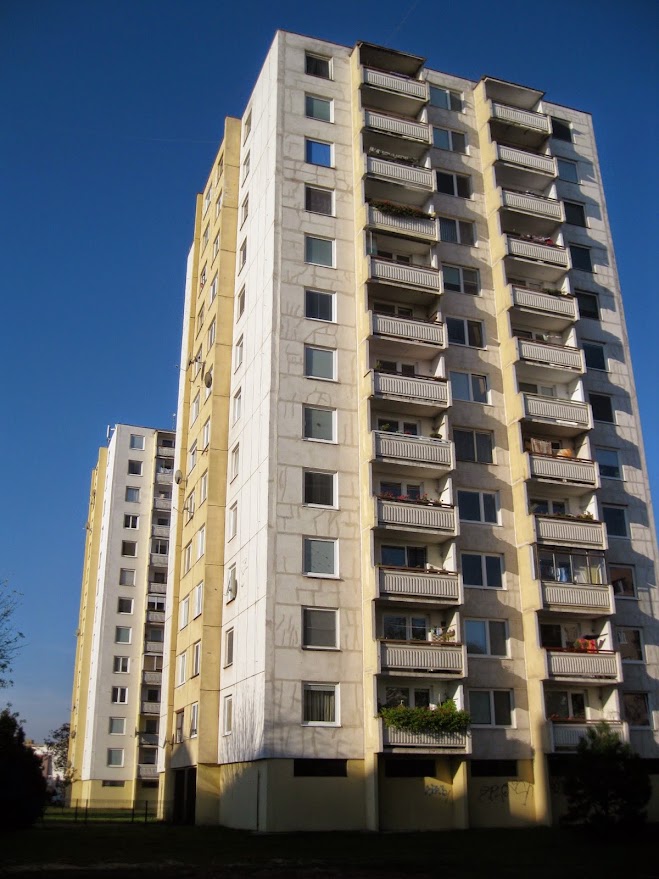
Panelaks in Senec

Now Terezia has to finish canceling her permanent residency, we have to go back to Dôvera to cancel our health insurance (both of which will require one last trip to Senec), and we have a few other smaller matters to deal with, and then we'll finally be set to leave this country.

Sunday, November 2, 2014

A little fun with Slovak bureaucracy before heading back home

Terezia (on the phone with the Matrika [town registry] in Bernolákovo): Hello, could you please tell me what your hours are today?

Person at Matrika (in a testy, patronizing tone of voice): It's on the internet. Go to the website.

Terezia: I'm sorry, but I'm not at home right now and I don't have access to the internet, so could you please just tell me how late you're open today?


And with that pleasant phone call we officially began our foray into the bureaucratic obstacle course that we must navigate in order to leave Slovakia legally.

We moved out of our apartment in downtown Bratislava shortly before leaving for France, and we'll be staying at Terezia's brother Tony's house in Bernolákovo (a small suburban town outside Bratislava) until we fly back home in mid-November. We gave ourselves a couple of weeks to wrap things up in Slovakia before leaving.

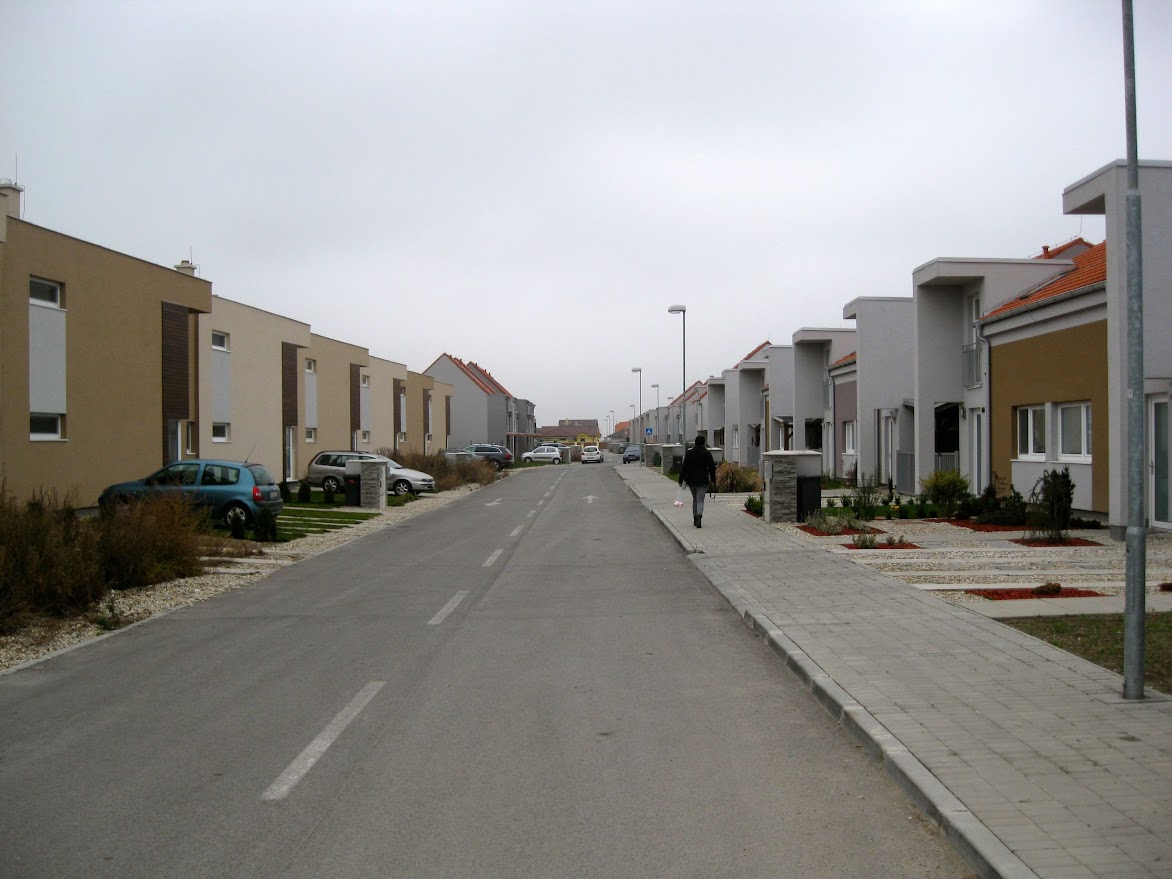
Bernolákovo

Having fun with the cable company

First, we had what should have been the quick and simple matter of closing our internet/cable account with UPC and returning the cable box, a process that wound up being eerily similar to a typical experience with any state office.

We arrived to find their Bratislava customer service center was not mobbed like it was on previous visits, and got our number from the ticket machine and waited just a few minutes - exactly the time it took for the girl who helped us to finish her giggly conversation with her co-worker.

Since we signed a two-year internet/cable contract with UPC at the end of December 2012, our contact won't end until the end of December 2014, but we have to keep paying €30 a month until then. If we end the contract right now, even with less than two months to go, we will owe UPC €500 - their penalty for ending a contract early. There's a reason why Slovaks refer to cable companies as mafia.

Things were moving along swimmingly until our encounter with the young woman to whom we were supposed to return the cable box. As she opened the package and rooted around, she said in a slightly haughty tone of voice, "OK, so, I don't see the cables. This obviously came with two cables. Do you know where they are?"

We said, "Well, we're not sure. Could you describe what they look like?"

"Ah, so it seems you don't have the cables," she said, as if we'd committed some unthinkably grave error and we were now in serious trouble.

She fished around in a box behind her desk and produced the two cables. I quickly realized that one cable, which connects the cable box with the TV, had been mistakenly packed with the TV in a box, and the cable that connects the cable box to the cable line connector in the wall was left at the old apartment.

We explained that we had just moved and that we honestly couldn't remember every little thing that came with the cable box. Surely we weren't the first people in the history of modern Slovakia to forget to return these cables.

"Well, you'll need to find the cables and bring them back," she asserted.

Terezia and I both gave her a death stare that said, "You can't be serious."

"Or, you can pay a fine," she added.

"OK, how much is the fine?"

She looked through a dense spreadsheet for the fine: "For both cables, you will have to pay a total of €3. So, what do you want to do?"

Terezia and I gave her a look that any perceptive person would read as, "You're copping this much attitude over three god damn euros?"

"Um, yeah... we'll just pay the €3 fine, thank you."

"Fine, suit yourself!" the woman responded, shocked by our willingness to subject ourselves to such a harsh punishment.

She printed out a form that we had to sign, then went to a back room to make a photocopy of it for us, after which we had to take another number from the ticket machine and wait in a different line to pay the fine. This time we waited about 15 minutes until we were finally summoned to counter #15, where a young guy sat and stared at the photocopy of the form for about five long, agonizing minutes, before finally asking, "I can't make out what this says; are you a company?"

We noticed that the form was barely readable as it had been copied on a machine that was in desperate need of a new toner cartridge. Terezia took the form and read the information off to him. "Whiteaker..."


Bernolákovo's Matrika

Next up was the Matrika back in Bernolákovo. We dealt with this fairly unpleasant woman back in 2011 when trying to register our marriage in Slovakia and establish our residency at Tony's house. We managed to make it to her office by 11:40 - just in time to catch her before she took off for lunch.


As Terezia began explaining our situation to her, we were quickly reminded of this woman's annoying habit of interrupting you mid-sentence to tell you that whatever it is you need from her does not fall under her jurisdiction. Then you get a few more words in, and she interrupts again, and this pattern repeats for a while until she gradually comes around to realizing that she is, in fact, supposed to do something.

It sounded like canceling Terezia's permanent residency would be relatively straightforward, but she said that I would have to go to the Foreign Police, that she had no role in registering me at Tony's house, and that she'd have nothing to do with unregistering me. This last bit seemed a bit odd to us, as she did have some small role in registering me at Tony's house after I was approved by the Foreign Police to live in this country. But who knows? Maybe the process has changed.


Taking care of business in Senec

The next morning we headed out to the nearby town of Senec at a quarter past 7:00, where we needed to visit several offices. Senec is like the administrative seat for the county - if you could call it that - where Bernolákovo is situated, and is where most administrative matters in the county are handled. For example, if you have permanent residency in Bernolákovo, Senec is where you have to go to set up a business license, deal with the tax authorities, register with the social insurer, get a driver's license, and so on.

We got to Senec via the bus around 7:40, and first walked over to the administrative office where we opened my business license so that we could close it. I need to close the business license so that I can, A. go to the social insurer to let them know that I am unemployed and will no longer be making contributions, and B. let the tax office know so that I can stop paying taxes (even if you have a business license for something you do on the side, but you're making zero income from it, you still may have to pay taxes and make contributions to the social insurer unless you close it).

This turned out to be a breeze. In fact, opening the business license was pretty easy too, and closing it was a snap. A few forms were stamped and signed, and that was apparently it.

Next, we walked several blocks to the social insurer. The social insurance building in Senec is kind of fun because there's absolutely no privacy, or diskrétna zóna, for the clients. Every word uttered in this uncarpeted, echoey room reverberates for everyone else to hear. On a previous visit, the entire room got to hear one of the ladies working there verbally ream an elderly man over some error he made in trying to collect his retirement payments.

This time there was no line. We produced the necessary forms to a young woman whose extremely short, tight, revealing dress looked far more suited to going out clubbing than helping people with social insurance issues. She showed us the balance that I still owe (€120), some forms were stamped and signed, and we were soon on our way.

After that we walked over to the tax office, where I had to return a card I was issued that essentially served as my tax ID, and filled out a form to show that I would no longer be a tax-paying resident after this year. Again, it all seemed fairly straight forward.

Next we went to the office for Dôvera, the health insurance company, to find out everything we need to do to cancel my health insurance.

Everyone in Slovakia is required by law to have health insurance, and if you are self-employed like I was, you cover the monthly €60-ish fee yourself. In order to cancel it and stop paying each month, you have to prove one of two things: that you no longer live in Slovakia, or that you are a legal resident of another country and have health insurance or coverage there. Since we obviously won't have health insurance in the US before we leave, we'll have to do the former, which requires us to cancel our permanent residency in Slovakia as proof that we no longer live here.

Canceling our permanent residency could be a hassle if we ever decide to move back to Slovakia, but for now it's all we can do. When we first moved here, establishing permanent residency wasn't just a pain in the ass for me as a foreigner, but it also proved to be a hassle for Terezia - a native of the country. But if I don't do this, I will be legally obligated to keep paying for health insurance every month, and I'll get into all kinds of trouble if I simply stop paying.

Fortunately, my permanent residency ID card expires on November 25. It was supposed to last five years, and I'm legally entitled to live here for five years, but because my US passport expires in March 2015, the Foreign Police decided to have my card expire after three years, and I'd have to renew my US passport in order to renew the permanent residency card.

At any rate, the impending expiration of my residency ID turns out to be incredibly helpful for providing Dôvera with proof that we're leaving the country. The woman there said all we really need to show her is my soon-to-expire ID and a printout of our plane ticket back to the states.


The Foreign Police?

So, there is a small chance that we may not have to go to the Foreign Police after all - at least not for Dôvera. If that is the case, it would be a profound relief. Readers may recall our torturous experiences with the Foreign Police back in 2011 when I was trying to become a legal resident. Their office in Bratislava's Petrzalka district is truly a Boschian vision of hell, and something no one should be forced to endure.

Even worse, in late September the Slovak Spectator ran a short piece about how the lines at the Bratislava Foreign Police have gotten so bad that people are now camping in tents out front over night, getting in line up to 15 hours before the office opens at 8:00 AM. (Since then, the situation has apparently improved a bit, and the office has even extended its vexingly uncompromising hours: it used to be open only on Mondays, Wednesdays, and Friday mornings, and was closed Tuesdays and Thursdays; now, after the situation got some attention from the media as well as the Slovak ombudswoman, it's open on Tuesdays and has extended its Wednesday and Friday hours.)

Bratislava's super inviting Foreign Police office

But, some big changes have been made since my last visit, and because I have permanent residency in Bernolákovo, a town just outside Bratislava, I would now have to go to the Foreign Police department in Dunajská Streda instead, a town that's about an hour's drive southeast from Bratislava. This could really save our asses if we do end up having to go, as I imagine the lines and the endurance-defying wait-times at a Foreign Police department in a smaller town like Dunajská Streda would be far shorter.

Of course there still is one caveat: we do not have a car, and there are no direct bus or train lines from Bernolákovo or Senec to Dunajská Streda. To get there, we would have to either take a bus from Bernolákovo to Bratislava, and then transfer to a bus to Dunajská Streda, or take a bus to the town of Galanta (which is basically 30 minutes by car in the opposite direction from Bratislava) and then transfer to a Dunajska Streda-bound bus there. Both options take about two hours one-way, including the time spent waiting around for the connecting bus. (Driving directly from Bernolákovo or Senec to Dunajská Streda supposedly takes about 30-40 minutes.)

I need to pause here for a moment and state how bizarre it is to me that there are zero direct bus lines from Bernolákovo or Senec to Dunajská Streda. Tony and his wife Silvia had a more typically Slovak attitude towards this dilemma, saying that nobody ever goes from Bernolákovo to Dunajská Streda anyway, while still conceding that maybe it's a tiny bit weird that there are at least no lines from Senec.

I also have to point out that it does seem a bit strange that someone in Bernolákovo would have to go to the Foreign Police in Dunajská Streda. Bernolákovo is much closer to Bratislava than Dunajská Streda, and Dunajská Streda is in a totally different region (there are eight self-administrative regions in Slovakia; Bernolákovo is in the Bratislava region, and Dunajská Streda is in the neighboring Trnava region).

But, not having to subject oneself to the special plane of hell that is Bratislava's Foreign Police office is a blessing and I shouldn't complain too much!

We called the phone number for the Dunajská Streda Foreign Police department listed on their website about 15 times over the course of a few days during their working hours, but no one picked up once. Not even a recording. The phone just rang and rang and rang. Needless to say, this did not instill us with much confidence.

There is one more person we still need to talk to in Senec (at the same office where we canceled my business license) who is apparently the bureaucratic overlord for the entire county. Unfortunately, she was out of the office on the morning we visited, but the woman we spoke to there said that this overlord is the one we need to talk to about all matters pertaining to canceling our permanent residency, and that she should be able to help us if the woman at the Matrika in Bernolákovo is being difficult or unhelpful. She will ultimately be the one who will tell us whether or not our immediate future will involve a visit to the dreaded Foreign Police.