Monday, August 4, 2014

Mini Slovak road trip, Part 1: Bardejov

As someone who is basically a California/Bay Area native, I cannot get used to this whole rain in the summer thing that has been the norm in Slovakia since we moved here. And this summer has been especially rain-soaked, making it tricky to plan anything that involves being outdoors.

Terezia and I had this whole trip planned out for the last week in July, for which we'd borrow her parents' car and take off from their village (Podrečany) in the south-central part of the country for some distant corners of Slovakia that we badly wanted to see, but hadn't for one reason or another. The trip was to start with a couple of days hiking in Slovenský Raj (Slovak Paradise), this vast, very popular state forest/park by the Spiš region consisting of a web of winding, highly scenic trails that take you up a series of rocky outcroppings via rickety ladders alongside waterfalls and over creeks via iron planks wedged into the sides of steep cliffs. From there we'd take the car to some other remote, northern corners of the country on our list, while keeping plans as vague and spontaneous as possible.

Alas, the trip to Slovenský Raj was sadly derailed by rain, as well as my having a relapse of a nasty cold that I thought I'd successfully fought off the week before. This meant that we didn't make it to Terezia's parents' place until a couple days after we'd planned, and it wasn't until Thursday that the weather and my health allowed us to go on what at this point was a seriously condensed version of the road trip. But it was an awesome trip nonetheless, and it was fun to just hop in the car, hit the road and follow the sun with no concrete plans.


The first leg of the trip

We took off Thursday morning with the vague objective of reaching Bardejov, a historical town in a fairly out-of-the-way corner of the Prešov region in the north east of Slovakia that neither of us had been to. We opted for the main road, which took us east all the way to Košice, then north through Prešov, from which Bardejov lies about a half hour northeast.
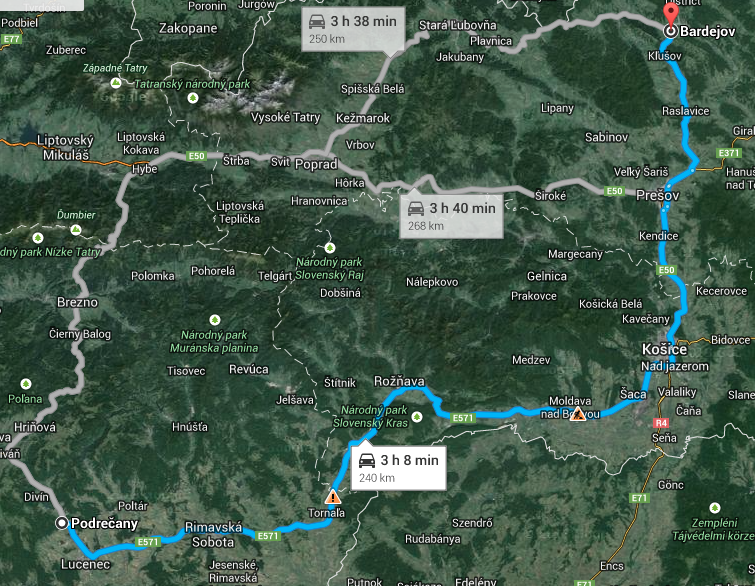
The route to Bardejov, highlighted in blue

This route goes through a few corners of the country that I had yet to see. On past trips to Košice, we took the northern train from Bratislava, but with the southern route, from where Terezia's parents live, I've been through the bleak bastion of unemployment that is Rimavská Sobota, and even as far as the small town of Rožňava and the famous Krásna Hôrka Castle nearby, but between there and Košice the landscape was totally new to me.
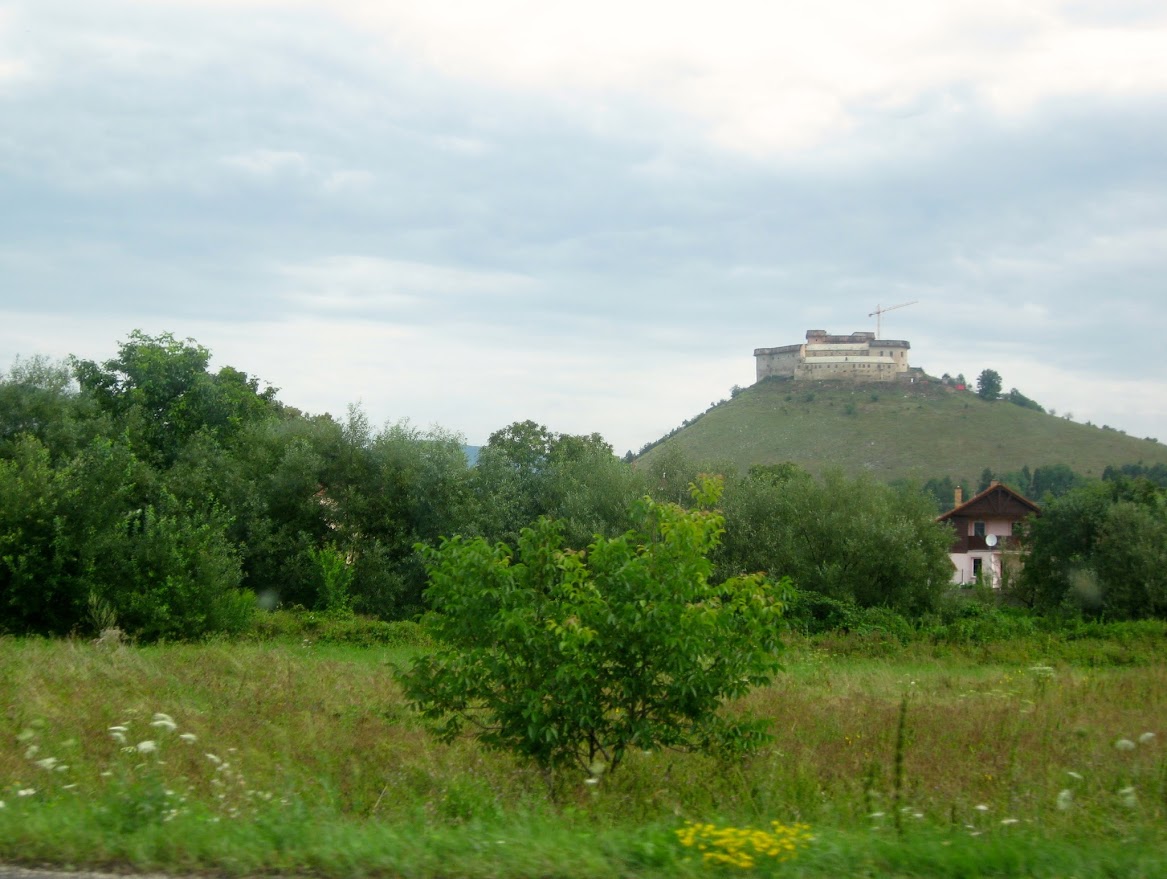
Krásna Hôrka castle

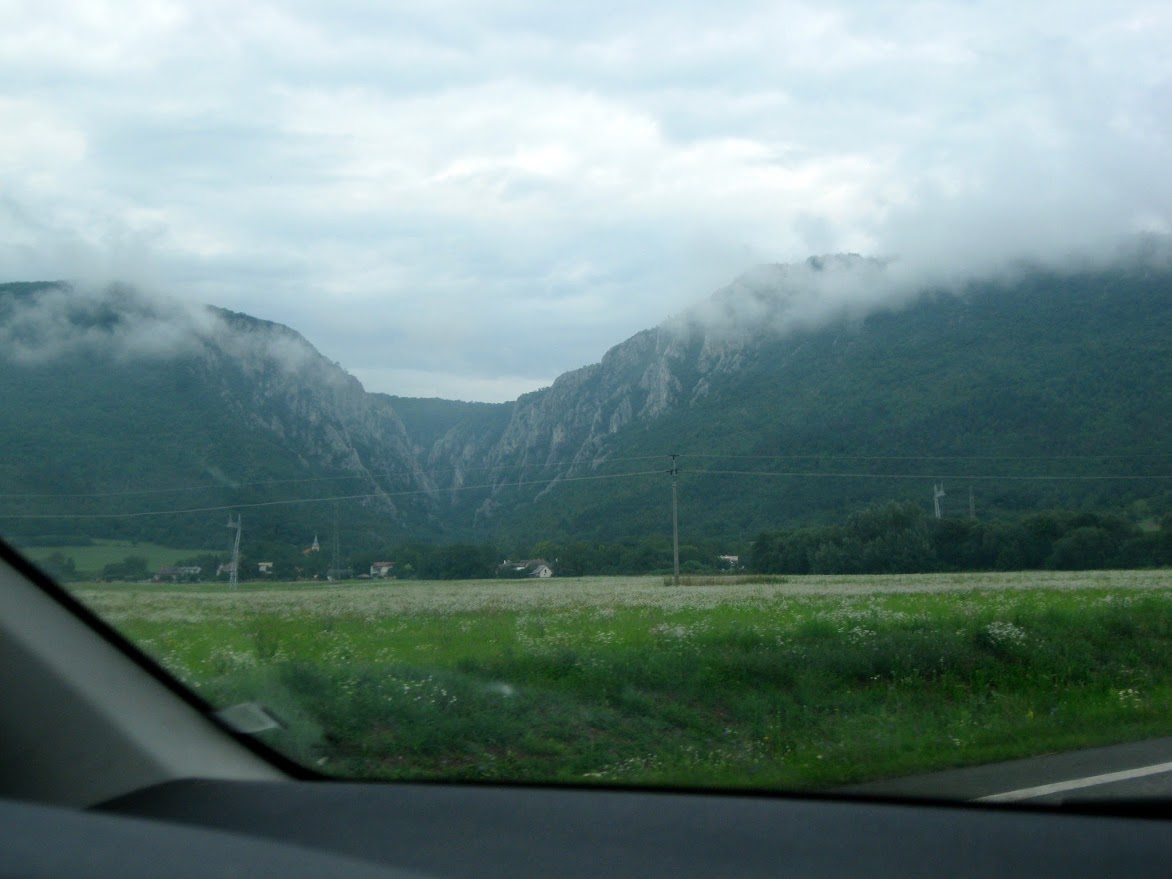
The road took us through a valley lined on either side by a range of very steep, tall, forested hills dotted now and then with cool rock formations. It felt like we were traveling through a well-protected natural corridor. The usual, old, dilapidated, weather-beaten rustic villages were also strewn about here and there.
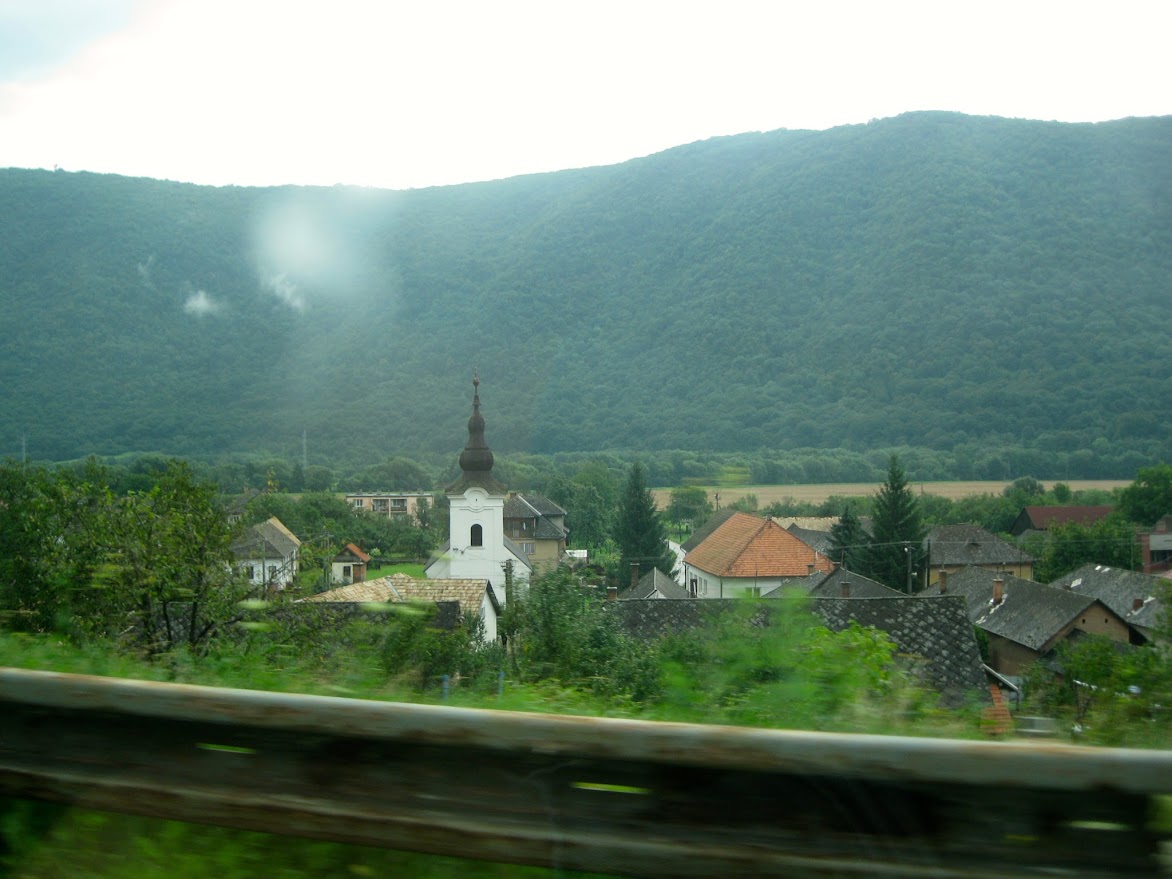
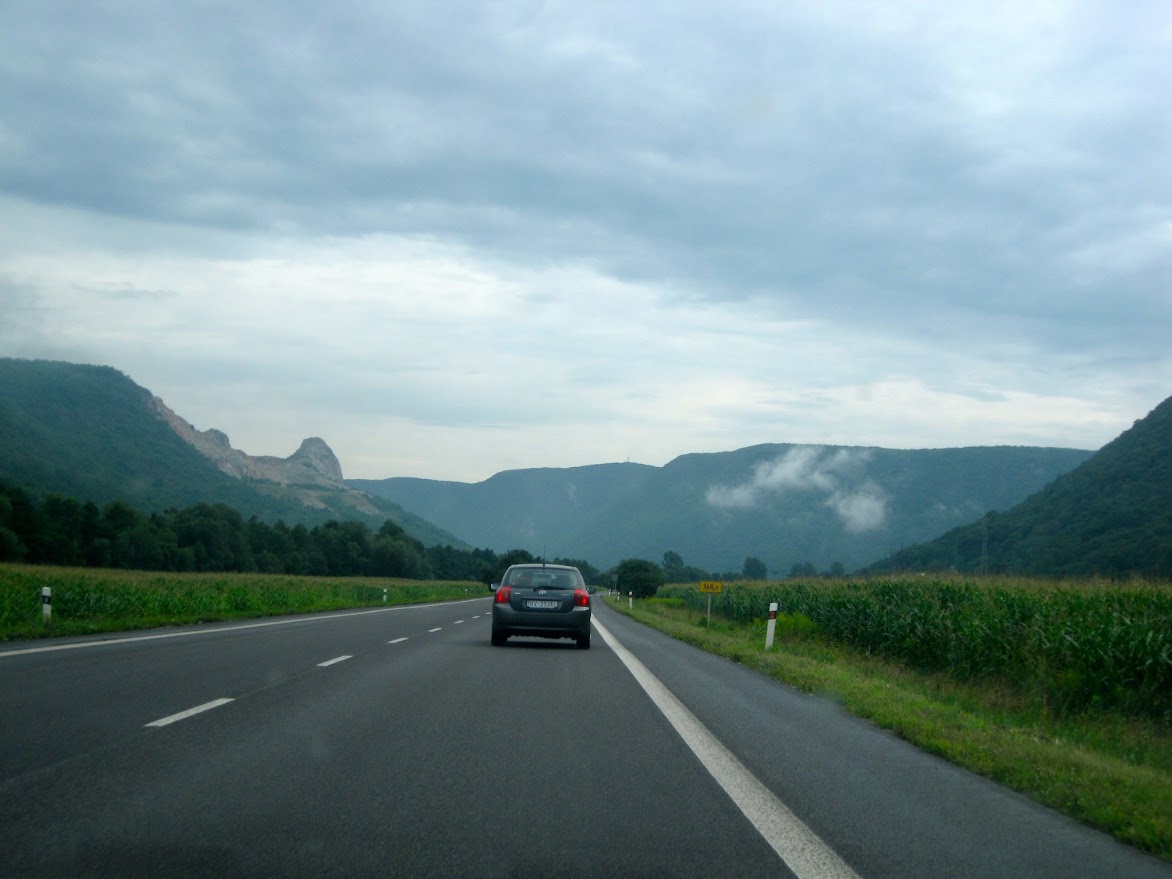
Zadielska gorge

Once you leave this area, called Slovenský Kras (Slovak Karst, named for its vast network of caves, some of which are open to the public), you descend into a level plain where the massive U.S. Steel Košice factory eventually comes into view on your right. I sadly wasn't able to get any photos, but this thing is incomprehensibly huge - a sprawling, dark, belching Mordor, and one of the biggest employers in the region.

Once you hit Košice city, the highway kind of dissipates and you have to take your best stab at following what appears to be the main road, with its frustrating dearth of signs to Prešov, through the city's intermittently confusing labyrinth of streets and haphazardly designed intersections. But once out of Košice, it's a smooth quick ride up the D1 freeway to Prešov. (We've since learned that you can actually stay on a freeway that goes around Košice and takes you to Prešov; you just have to ignore all the road signs, all of which initially tell you you're going to Humenné or some such place that's nowhere near Prešov or Bardejov.)

The turnoff for Bardejov in Prešov is not clearly signposted at all. In fact, this was an all too common theme on our trip. Signage for many destinations in Slovakia is notoriously lacking. Usually the only sign for the turnoff you're looking for is right at the point where you need to turn, and you typically don't spot it until you're already passing it and it's too late to slow down and make the turn. These signs are seemingly never posted a block or so in advance, as they would be in California. It's also extremely common for these signs not to list what you'd think would be the most obvious towns or destinations along the given route, so you've really got to stay on your toes when navigating without a GPS, as we were doing.

At any rate, once out of Prešov, you're back on a scenic, winding country road. We arrived at the center of Bardejov in a little over three hours, and pulled into a small parking lot where we were greeted by a friendly parking attendant (Slovakia's streets have no parking meters; in any urban areas with paid parking, you have to find what is typically a middle-aged person milling about in a fluorescent yellow vest and serious bed-head, who you pay for parking. One would think Slovakia's cities and towns would do the math and see how over time an investment in parking meters would pay for itself and therefore bring more revenue over the long term, but I suspect the current system is part of some state or local employment program...) who even gave us a free map of the town.


Bardejov

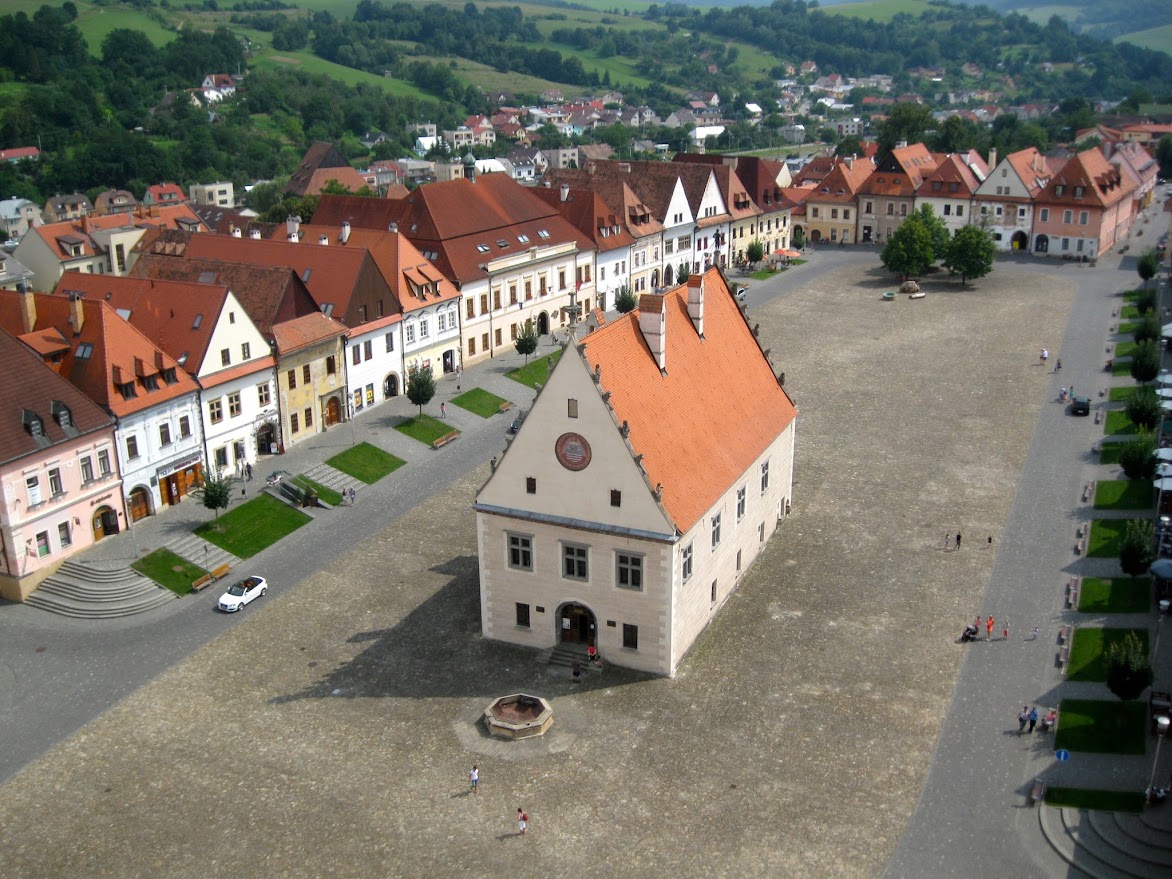
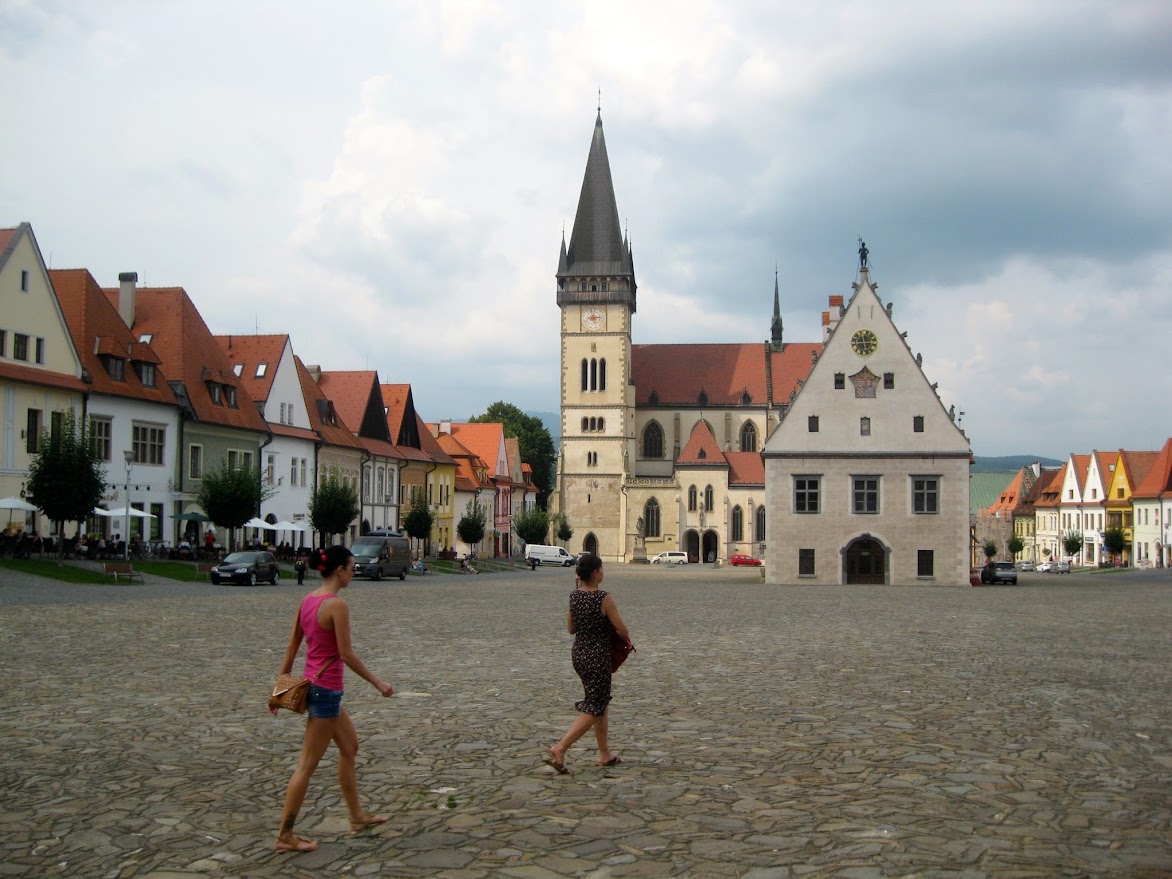
Bardejov's visually striking medieval main square - one of the best-preserved in central Europe - has been included on the UNESCO World Heritage list, so it's fairly well known. We've obviously seen photos of it, but none of them do justice to what it feels like to actually step into the square in person and take it all in. It really is a beautiful urban space, made all the more pleasing by the way it slopes gently down northward, toward the cool medieval-renaissance old town hall, and culminates with the dramatic backdrop of the St Egidius cathedral just behind it. The three other sides of the rectangular square are lined by colorful rows of ornate Saxon Burgher houses, all capped with pointed roofs, with many featuring wooden gables, not unlike some seen in another picturesque medieval town initially inhabited largely by Germans settlers - Levoča.
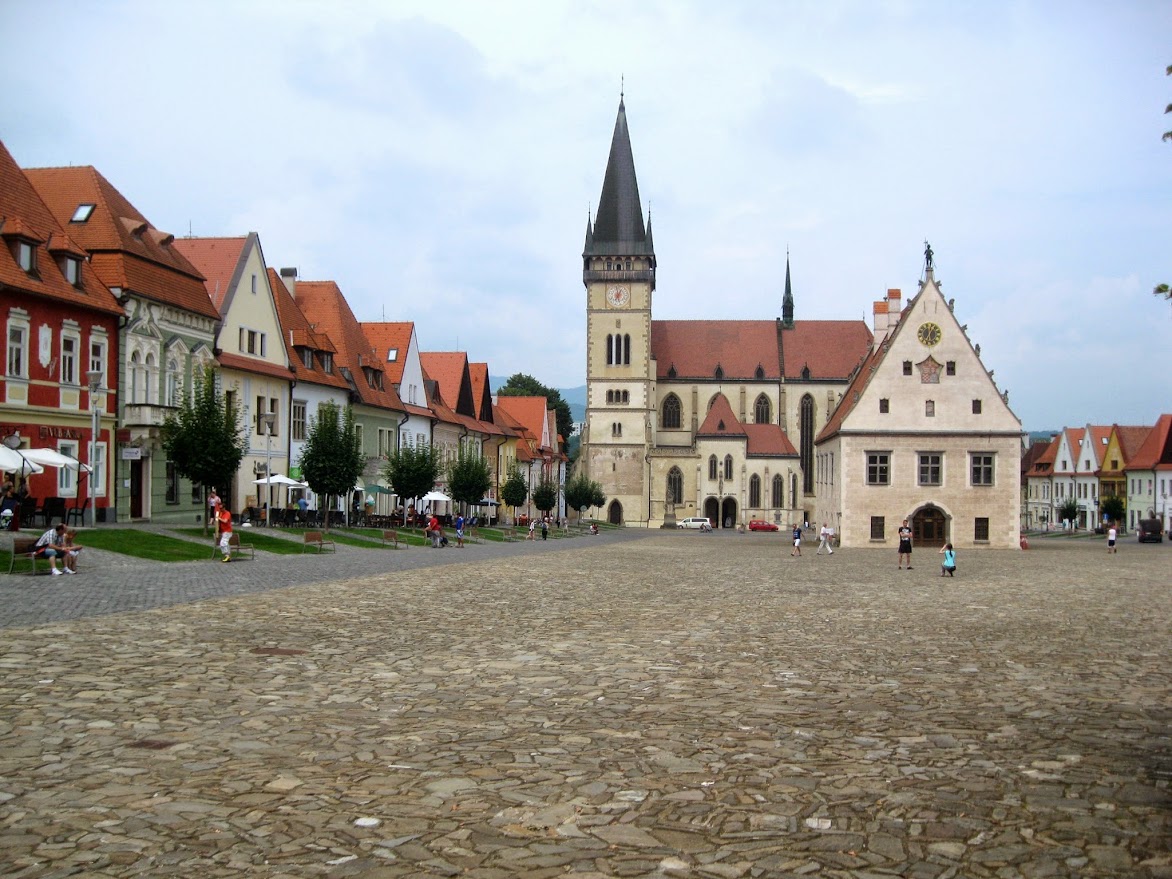
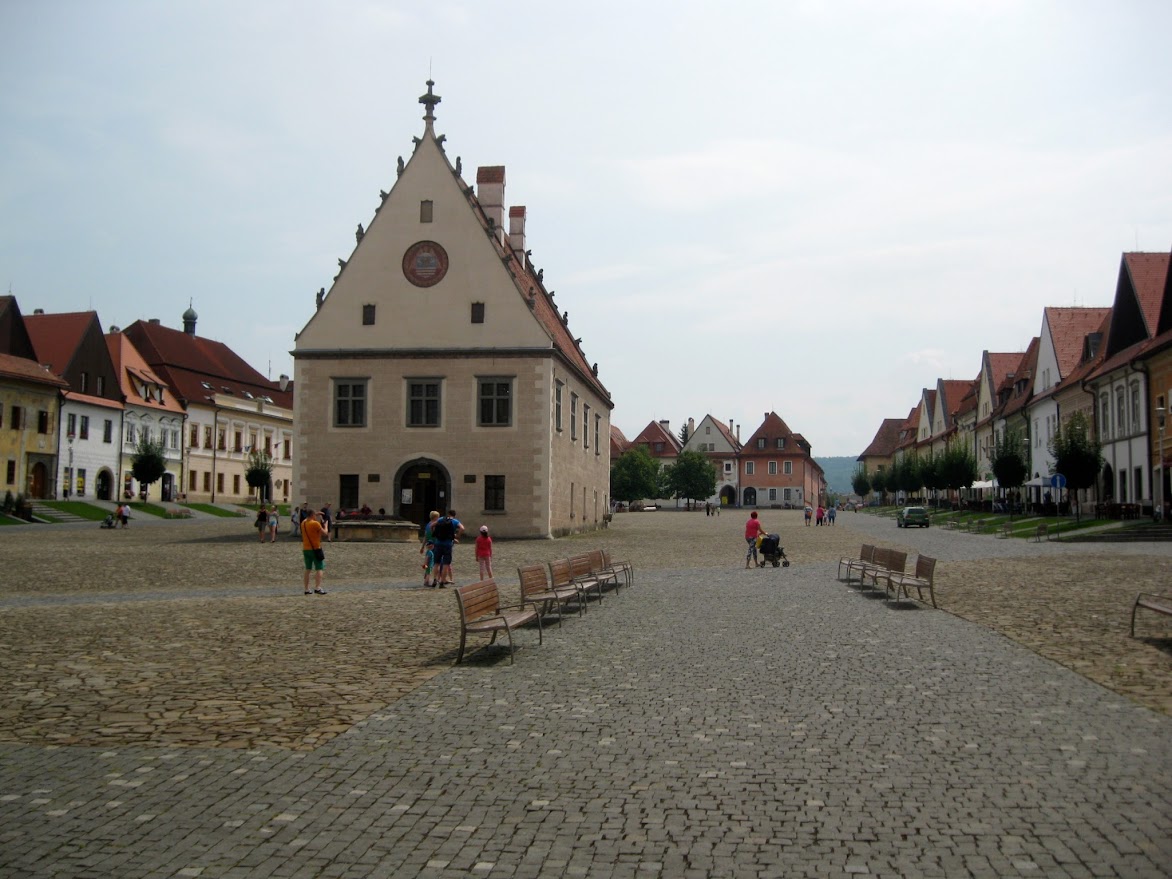
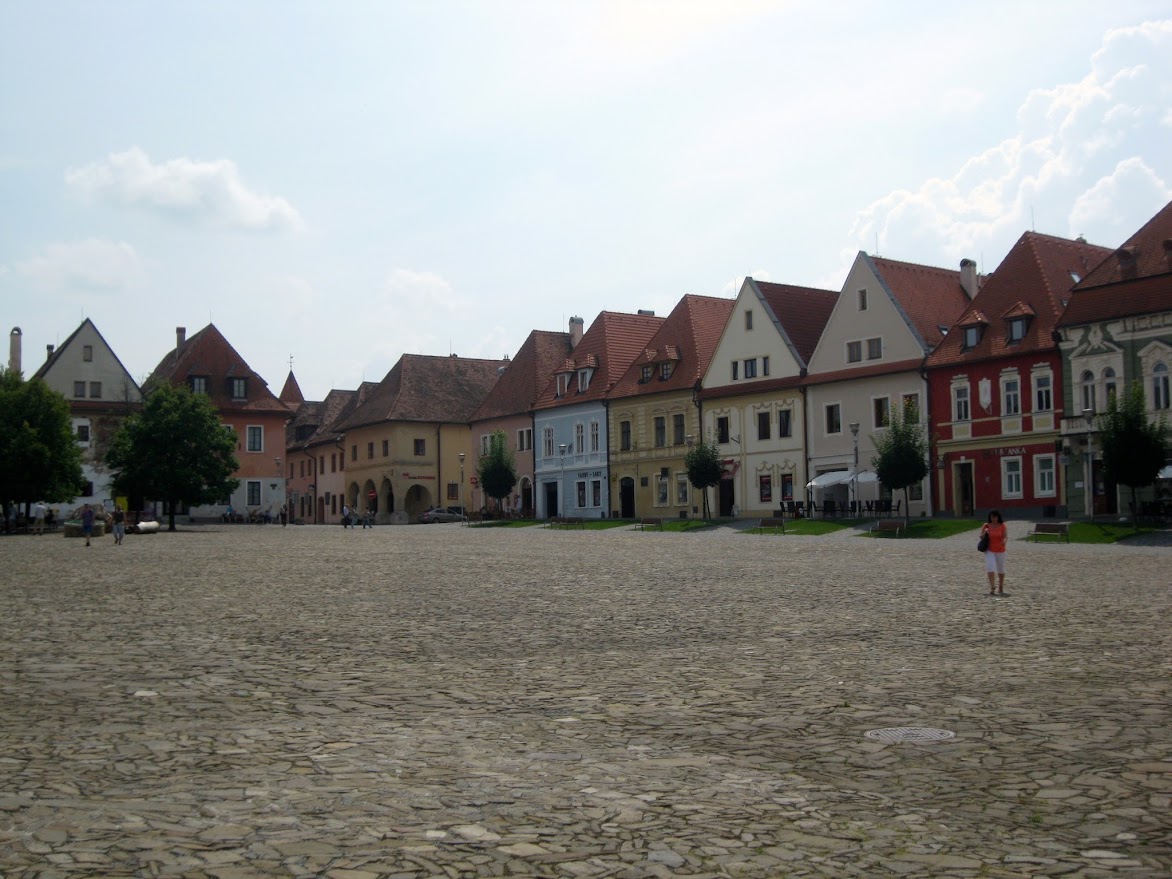
Bardejov boomed in the middle ages with its position on a major trading route from Poland and became a major place in the textile trade. The large size of its main square was intended to accommodate a bustling market. The 16th-century old town hall commands attention with its medieval/renaissance detailing and simple but pleasing shape. The statuettes along the edge of the gable and the clock on the facade are especially cool. The building now houses a museum of the town's history. This is where typically harsh punishments were meted out by local authorities back in the day, who, by all accounts, had a fetish for capital punishment on par with that of Texas. (Perhaps that explains the old town's relatively small size?)
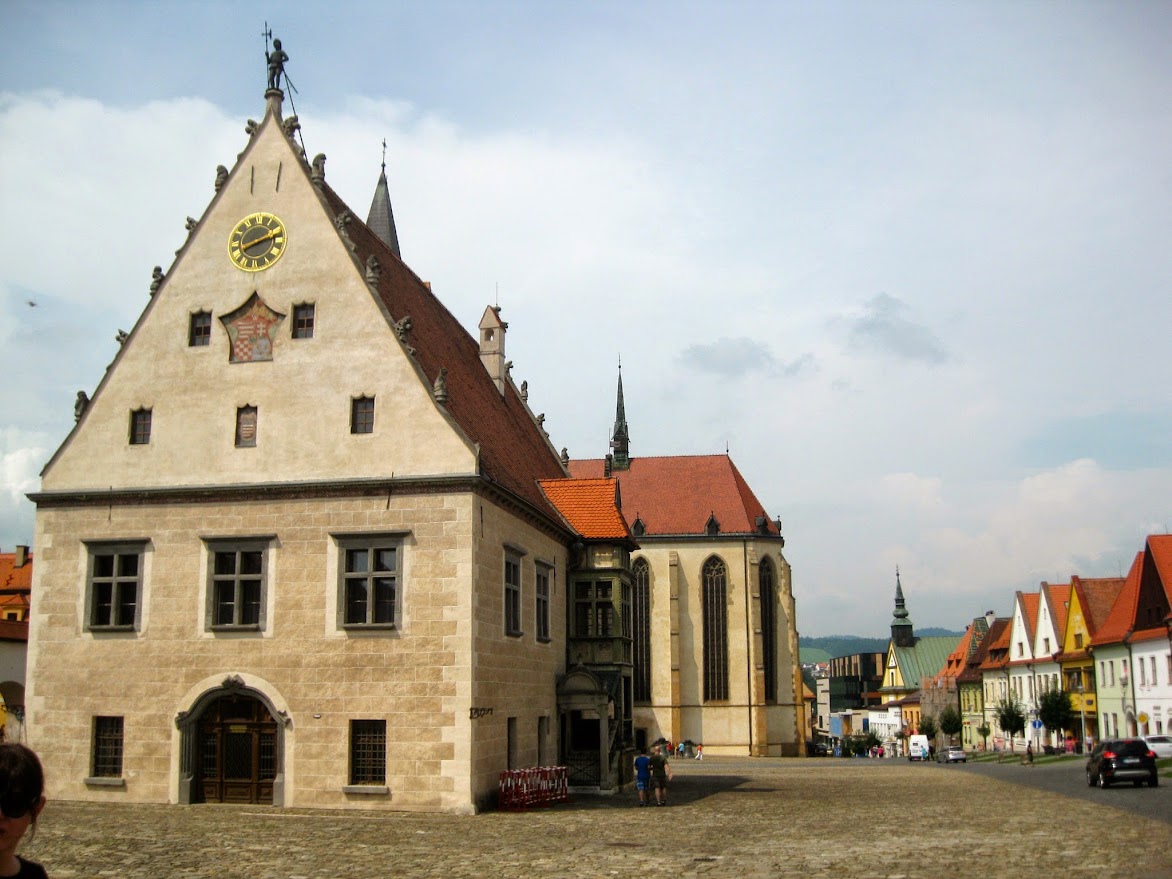
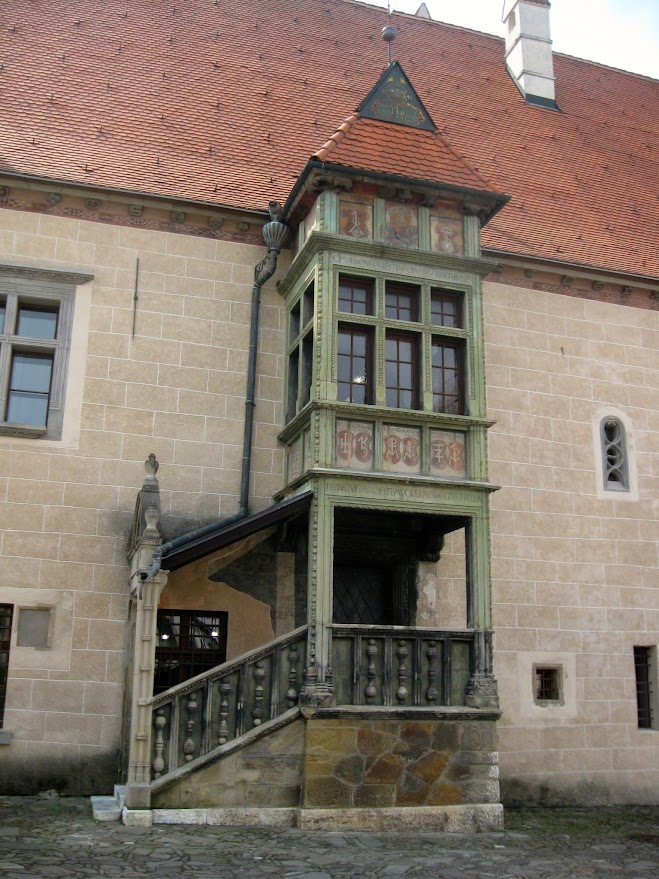
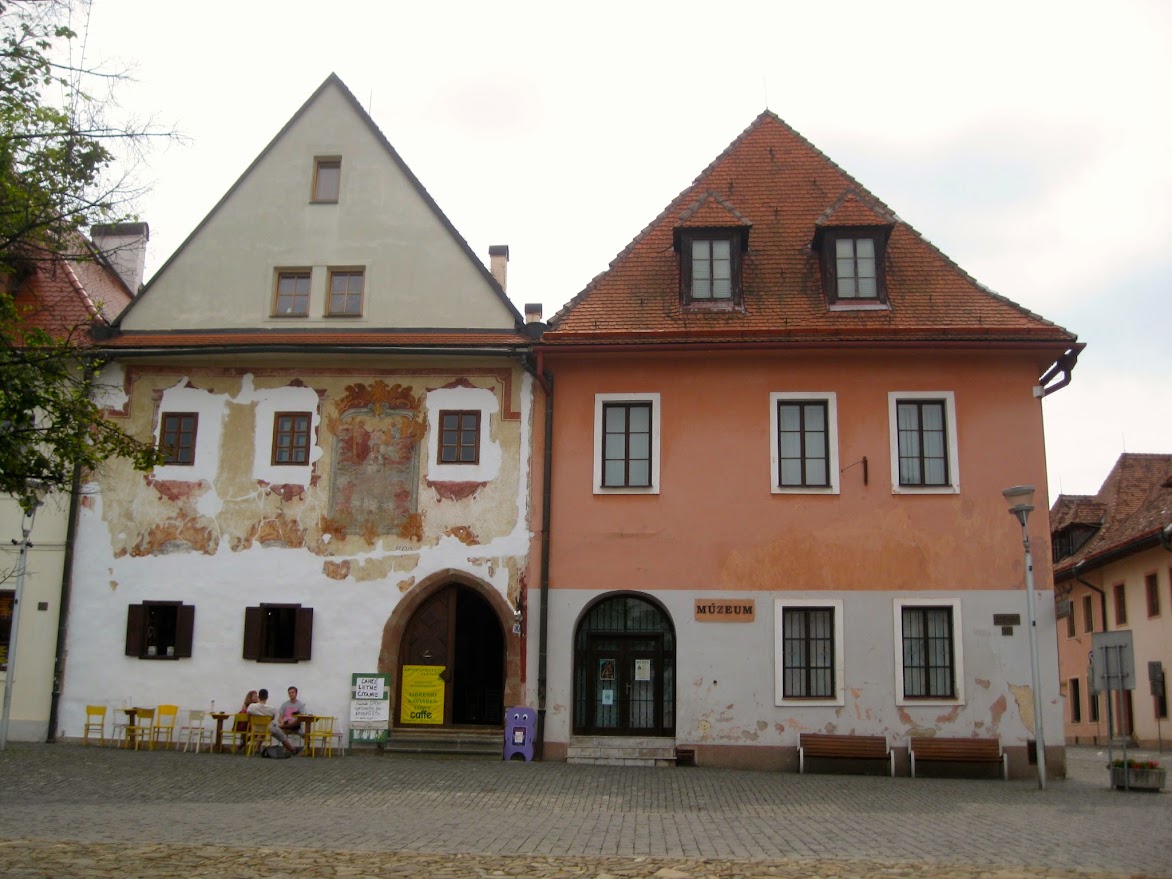
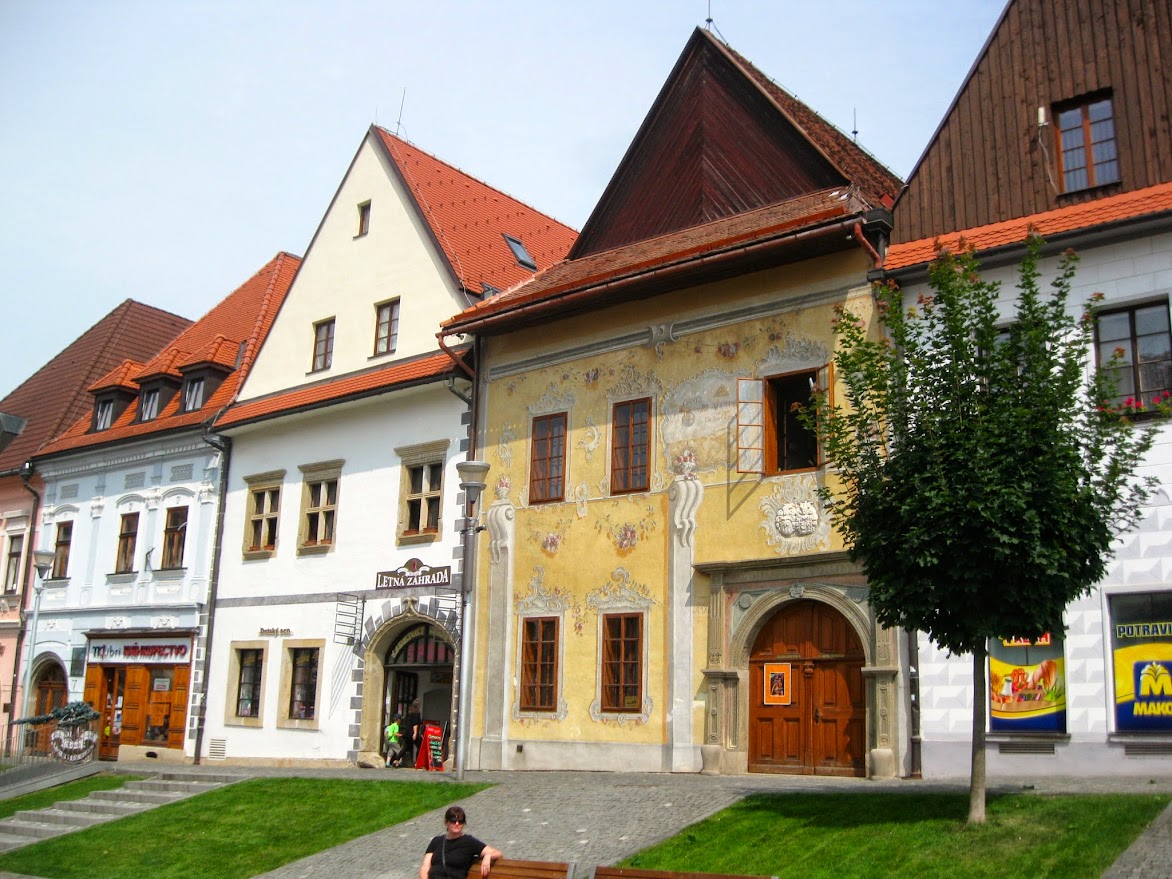
The town's fortunes eventually waned, with other nearby towns gradually infringing on its trade monopoly, and by the early 20th century it was a forgotten backwater.

We saw a smattering of tourists gawking at the sights on the square, while locals could also be seen ambling around, sipping coffee or licking ice cream on benches and/or pushing strollers, with spastic kids darting to and fro. While I wouldn't say the place was exactly teaming with energy, there was still some semblance of a local pulse, unlike Prešov, whose streets were totally deserted and devoid of life when we visited it in 2013.
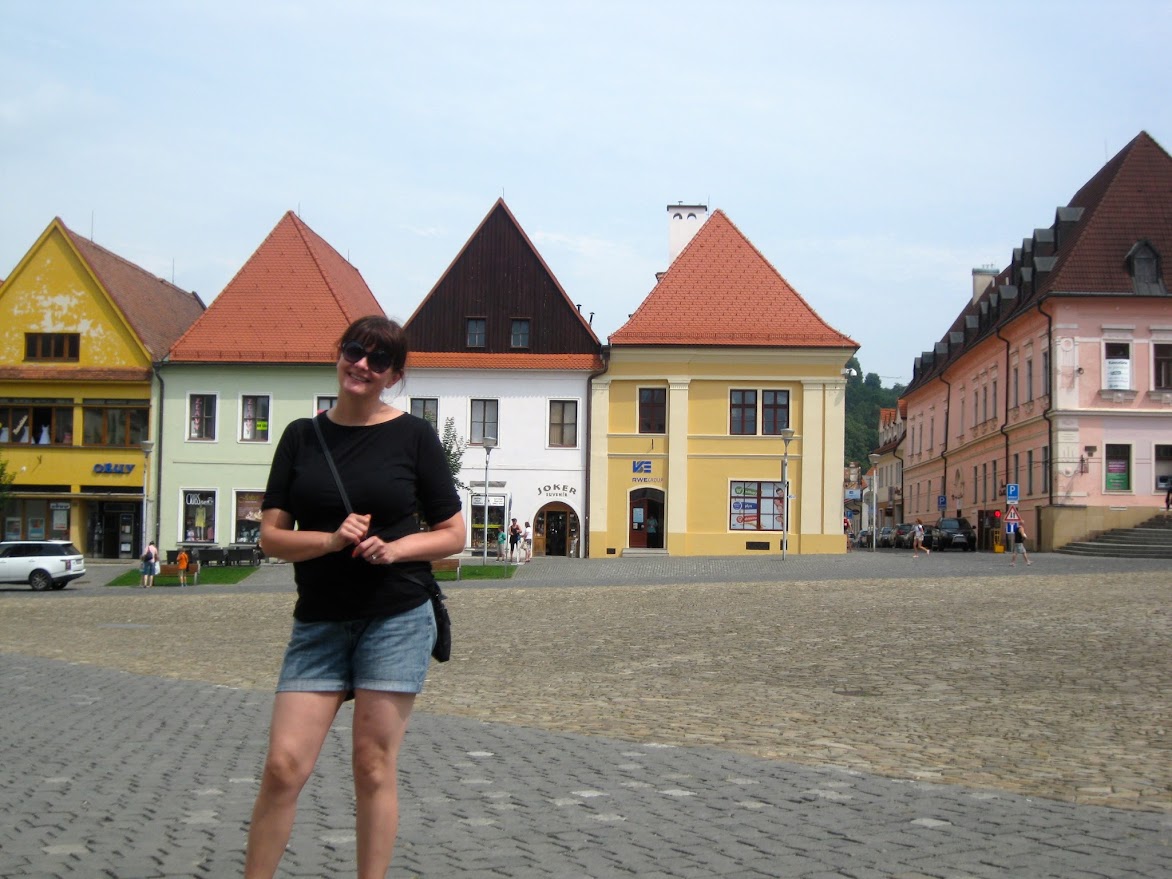
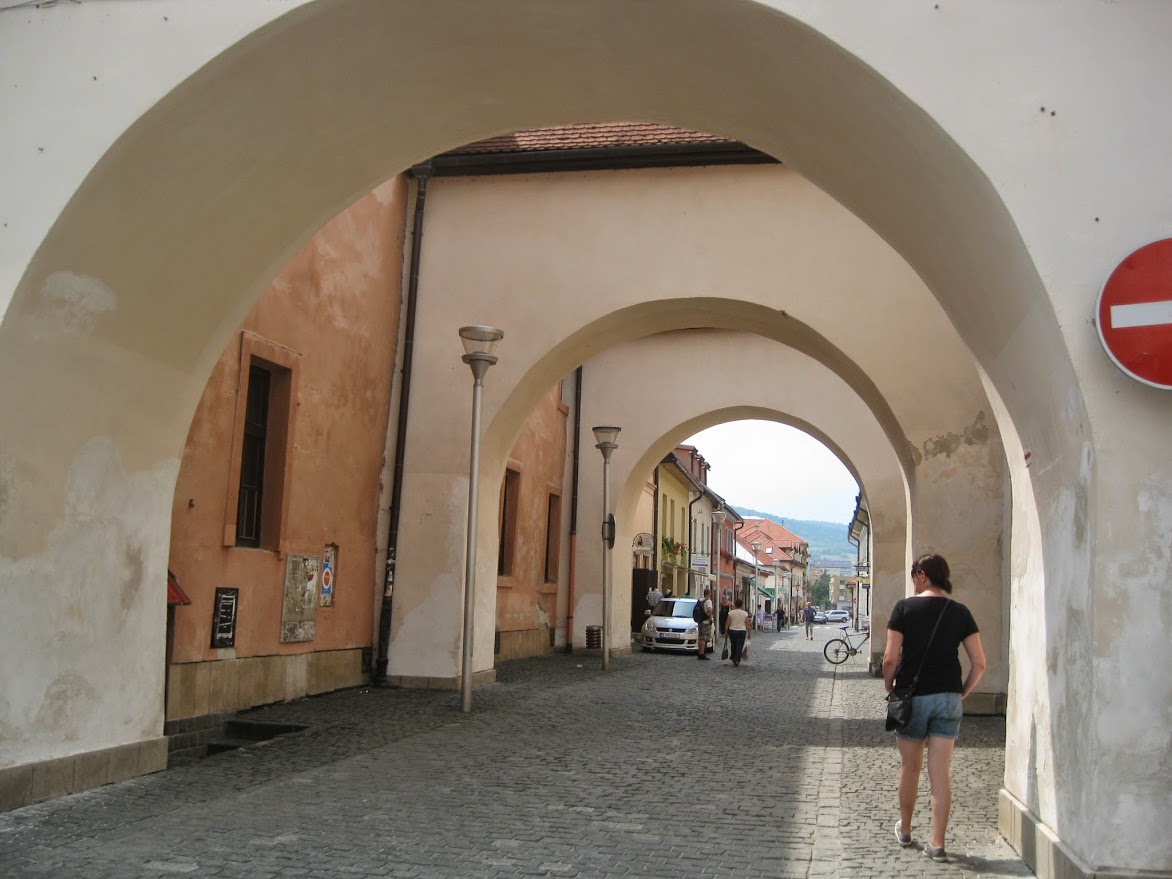

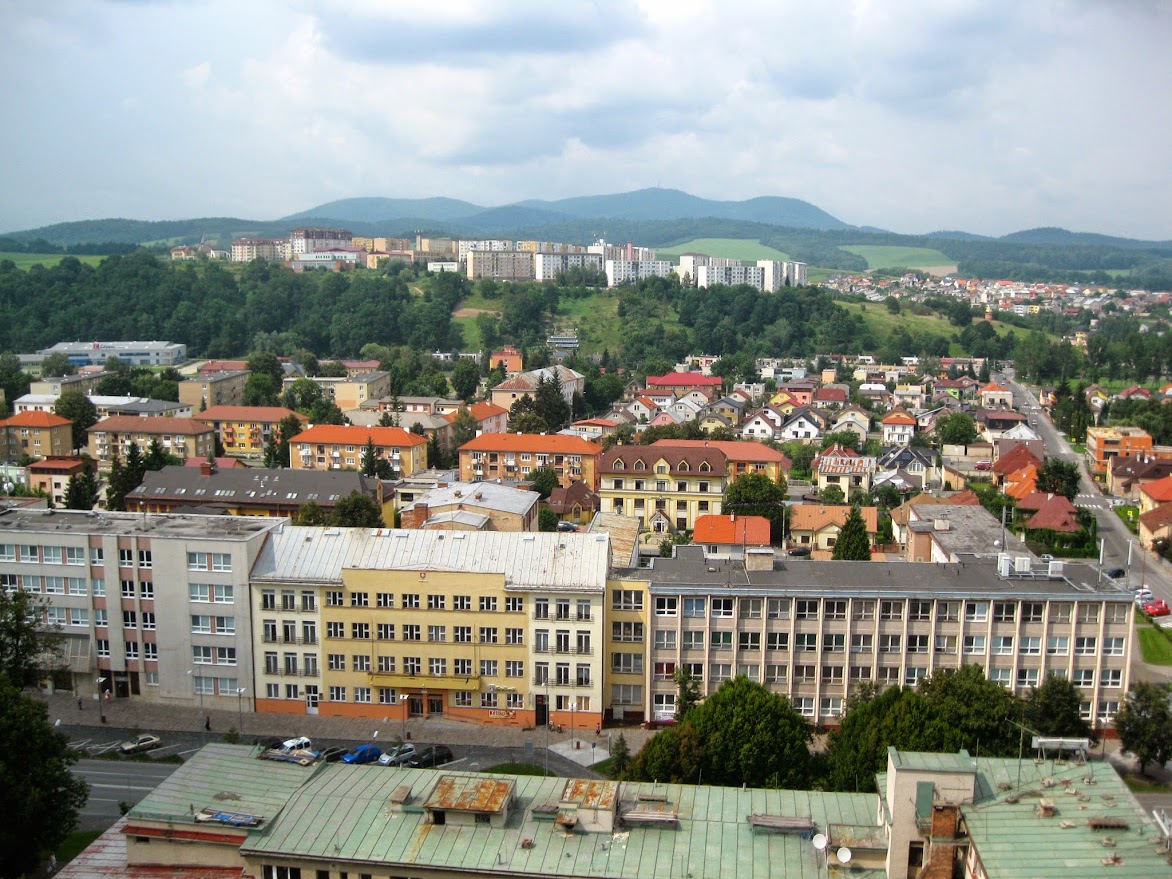
At any rate, with pretty much all of Slovakia's smaller historical towns, the historical center fizzles quickly once you get a block or so off the main square, and then comes the obligatory barrage of bleak, commie-era panelaks and brutalist shopping complexes. Bardejov is no exception, although the block or so of historical buildings that forms a buffer around the perimeter of much of the main square offers a slightly more eclectic assortment of old buildings from various historical eras, and is a bit more pleasingly gritty than the main square. There's a big Gothic monastery, a recently reconstructed synagogue, and numerous medieval bastions from the old defensive wall, a good portion of which is still intact. One end of the park by the monastery even has a corner dedicated to the Beatles, strangely enough.
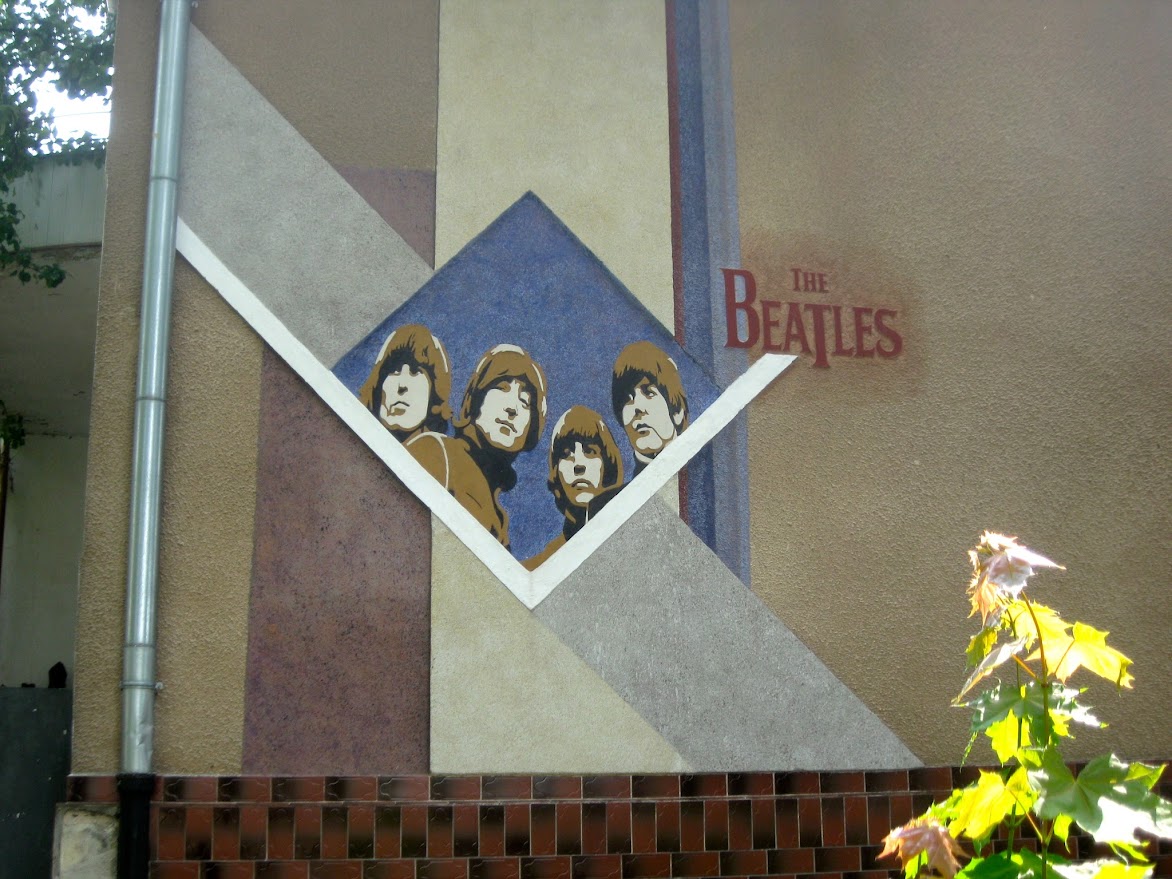
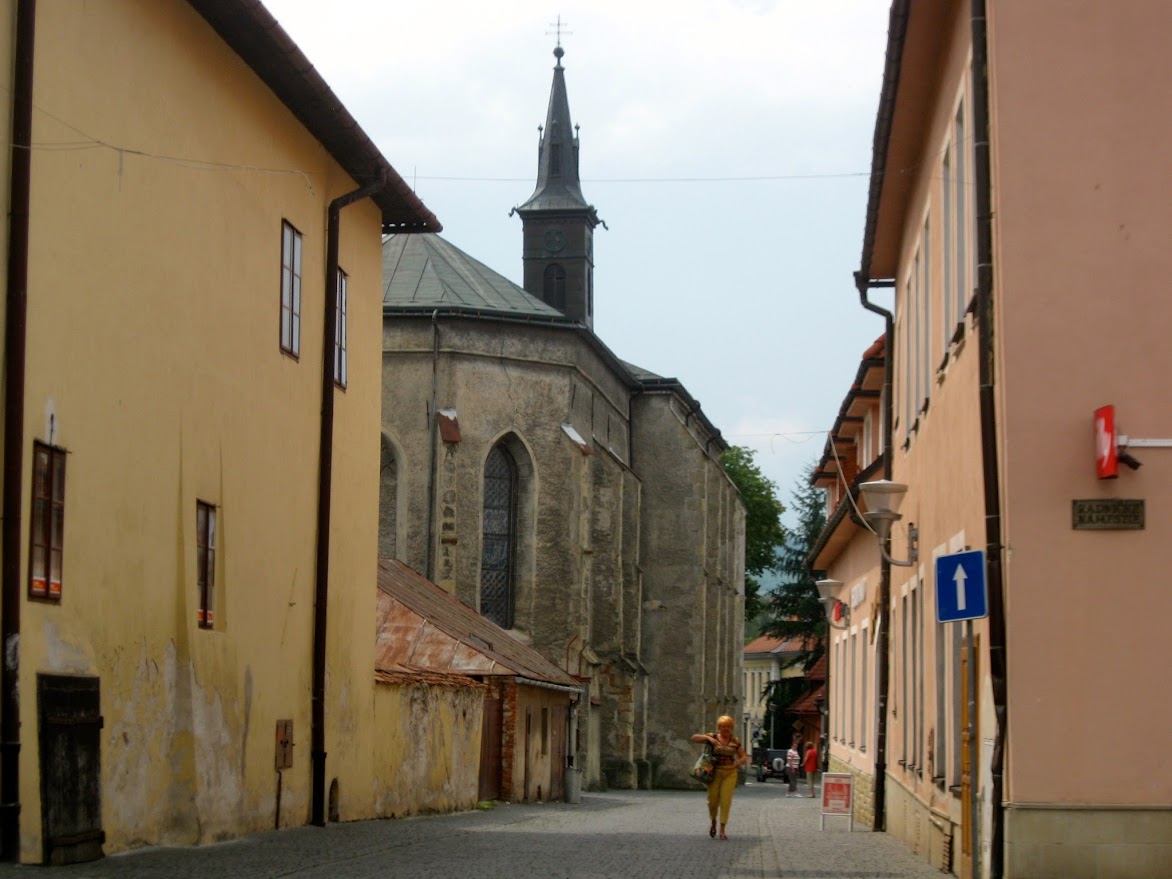
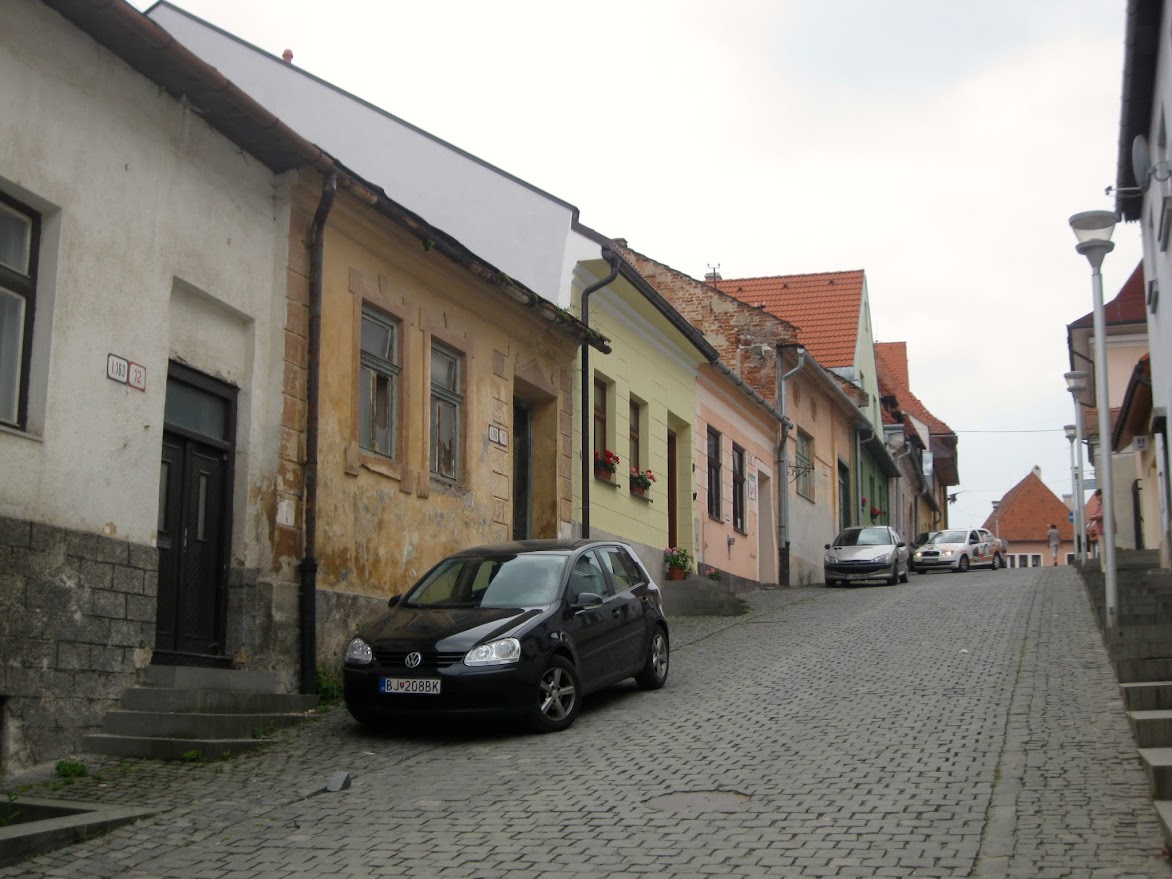
For lunch we wanted something easy and quick so that we could get on with the sightseeing. We skipped the usual heavy Slovak meat, dumplings, and potatoes lunch slop and opted for sandwiches at a bageteria on the main square. When we walked in, four glum looking locals were slumped over plates of traditional Slovak gloop from the daily lunch menu. What I got was easily contender for the most vile sandwich I've ever eaten in my 39 years of existence. Firstly, the aloof girl at the counter informed us that they had no mustard (what the hell kind of a sandwich place has no mustard!?), and she - quite bizarrely - used a giant spoon, rather than a knife, to scoop these massive, quivering globs of mayonnaise onto the bread. The heaping pile of mayo was then topped with a few thin slices of ham, a handful of desiccated shredded lettuce, and a couple of soggy tomato slices. We went out to a bench on the square to eat our sandwiches, and every time I took a bite, a blob of mayo squished out the other end, which I had to catch with my to-go bag. How a place like this is allowed to exist on the main square is a mystery to us. Fortunately, the strong refreshing iced coffee we got from a cafe across the square made up for it and we were sufficiently fueled to move on.

The St Egidius cathedral offered a cool refuge from the day's suffocatingly humid heat. Inside we saw these guys operating this gigantic manual crane in the center aisle, which had a camera affixed to one end. One guy was moving the crane up and down and side to side, getting close ups of the Gothic details of the main altar and choir. We ascended the claustrophobic spiral staircase to the top of the clock tower to see the lay of the land. By Slovak standards, Bardejov is a actually decent-sized town. The cathedral is about 800 years old, but over the centuries it endured the seemingly inevitable rounds of fires, earthquakes, and various reconstructions that all these churches seem to face. The tower itself is a bit more striking than most Slovak church towers, with its nifty looking clock and a dramatically pointy spire.
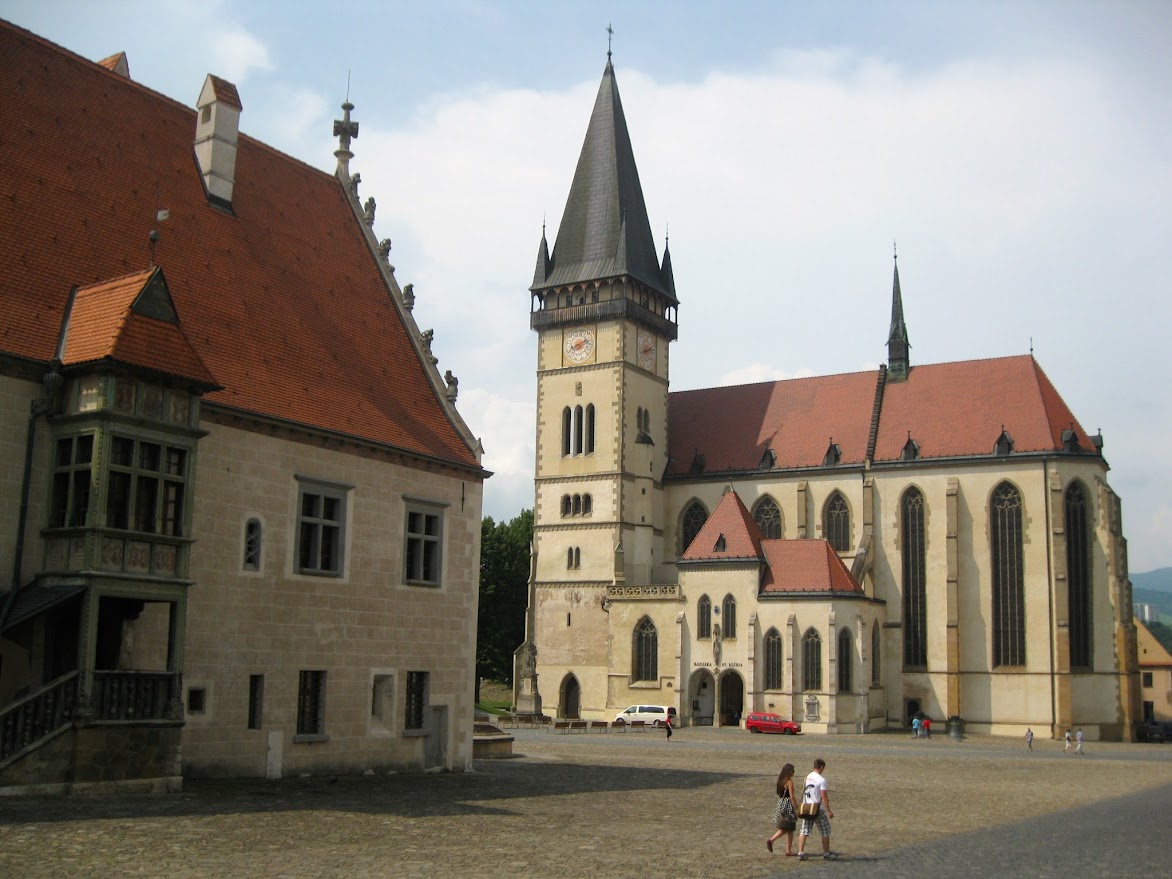
After walking through a park that was thoughtfully constructed around the northern part of the defensive wall, we slowly wandered back through the square for a final gander, before moving on to our next destination: Kežmarok.

Bardejov is definitely worth a day or afternoon trip, especially if you're already in the area, but there's simply not enough there to sustain one's interest for longer than that, so I can't see why anyone would want to spend the night there, unless you arrive later in the day and are weary from a day's traveling. And while it may seem a bit sleepy during the day, I've heard the place is comatose at night. I know at least one person who spent the night there and struggled to find a single place open where he could get a beer and some dinner.

One problem, of course, is that to get to Bardejov and enjoy this UNESCO heritage site in the first place, you've got to be fairly determined and committed to exploring this corner of the country, as it's a bit off the beaten tourist path. No, it's not as out there as, say, Svidník or Čierna nad Tisou, but it's still in a fairly remote backwater (which, in a way, is part of its appeal). As a result, you also really need a car to get there, as the town is not well served by public transportation. If going by train, from Prešov you're forced to take a small, tedious slow-poke train that stops at every single podunk village before reaching Bardejov. And of course Bardejov's commie-era train station is reportedly dimly-lit and depressing, although I kind of wish we'd gotten the chance to see it, as I get a perverse kick out of Slovakia's sad, dingy, worn down train stations.

At any rate, to be continued...

Tuesday, July 22, 2014

Finding ingredients in Bratislava to cook asian dishes

Okay, so you're living in Bratislava and you have a rabid obsession with asian food, especially Thai. Sadly, Bratislava's two Thai restaurants basically suck, and the nearest good Thai food (the amazing Sri Thai Imbiss) requires an hour-long train ride to Vienna. Restaurants featuring other asian cuisines are either in short supply or just not very good. What to do?

Fortunately, Tesco, one of the most prevalent big grocery store chains in Slovakia, has a fairly decent selection of asian food products, like different curries, coconut milk, fish sauce, jasmine rice, and more. In fact, we can make a good red or green curry chicken with stuff bought only at Tesco.

But they don't have everything. Let's say you want to make some wonderfully aromatic tom kha gai soup. Bratislava's Tesco will not have a few very crucial ingredients, like lemon grass, kaffir lime leaves, and galanga root, and they are frequently out of cilantro. Or maybe you've got a hankering for some pad thai? Tesco is unlikely to have the right kind of rice noodles, and may not have bean sprouts or decent shrimp. But damn, does this mean you have to go all the way to Vienna (again) to get all these ingredients at Naschmarkt?

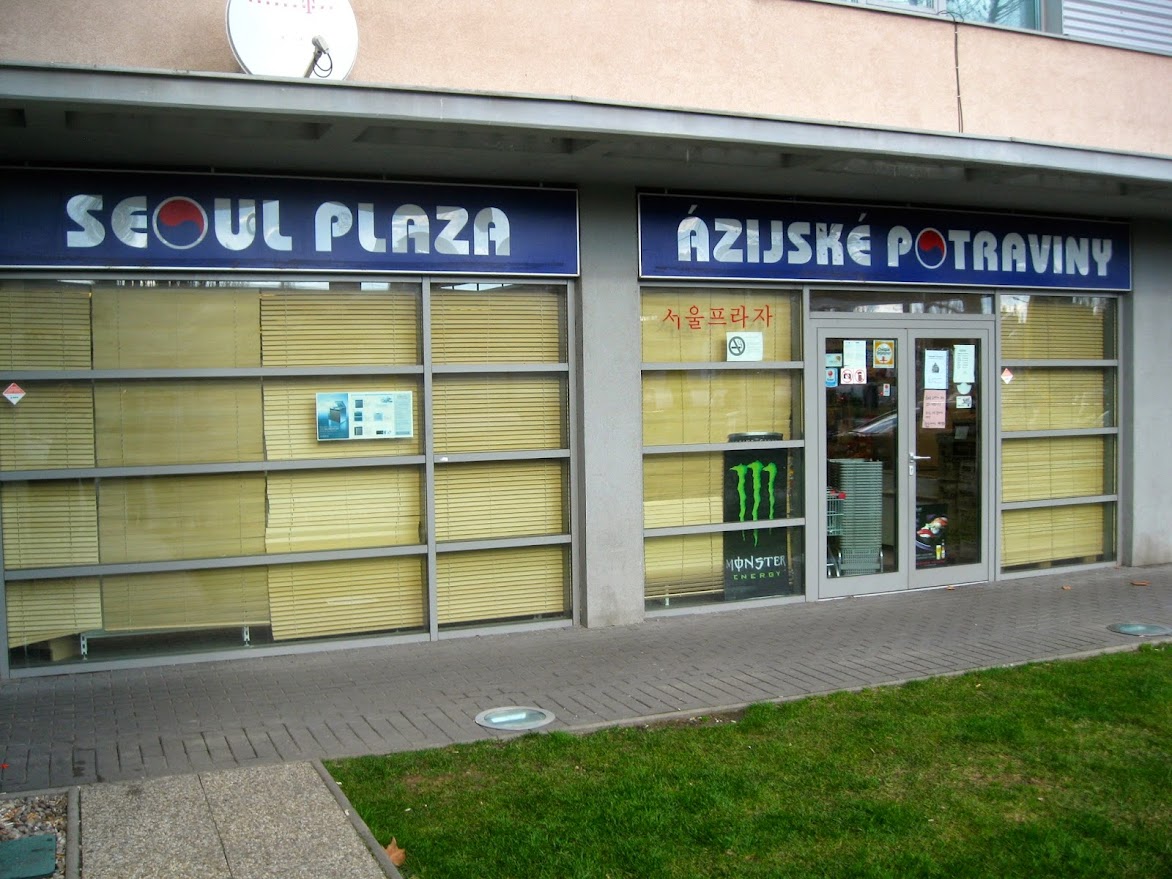
Thankfully, no. Bratislava actually has three (that we know of) independently owned shops that specialize in asian ingredients. While there is a small place called Naam that's walking distance from where we live, in the center of town, we typically make the trek out to an unrelentingly drab neighborhood in the Nové Mesto (on Bajkalská, near the 'three towers' apartment complex) to Seoul Plaza, a Korean-run market that specializes in those hard-to-find asian ingredients. Whether you're going Japanese, Korean, Thai, Vietnamese, etc., Seoul Plaza has enough of a variety to cover all of the bases.


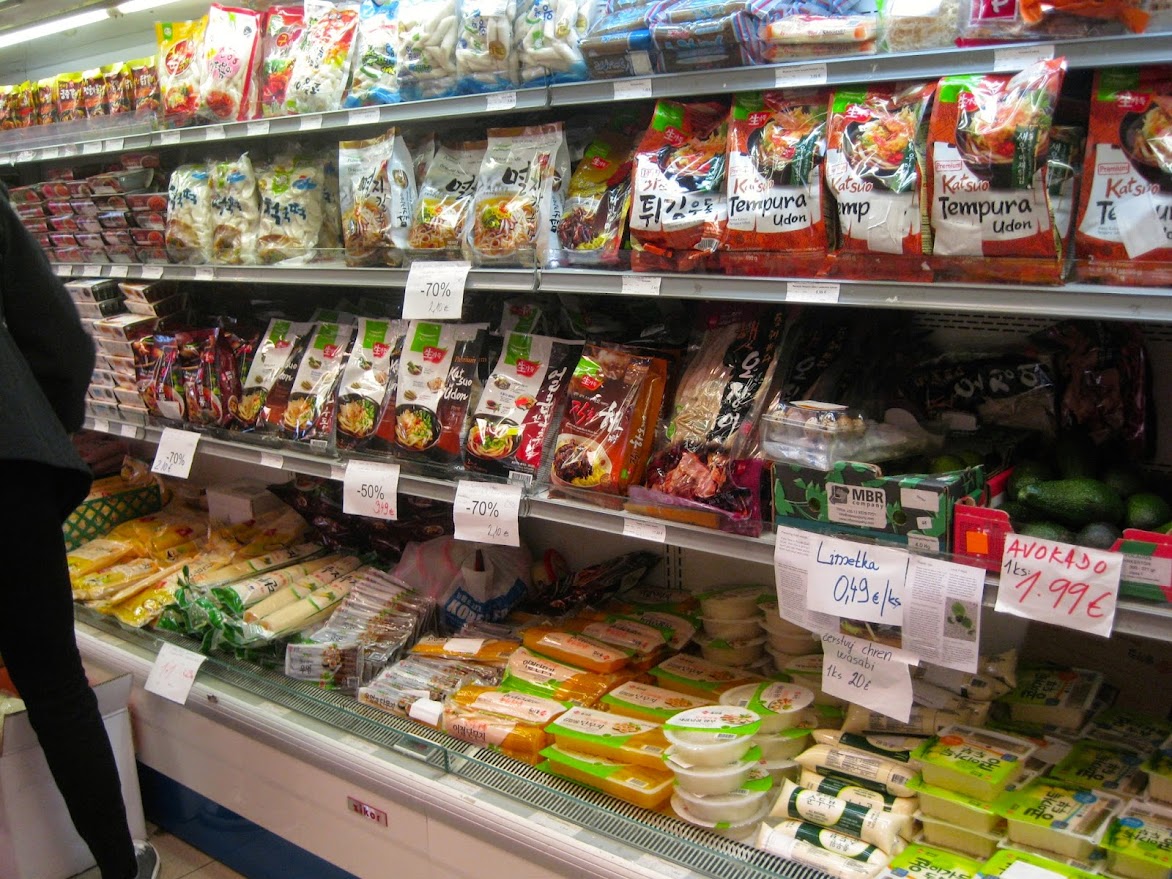
But there's something else that makes Seoul Plaza especially worth the trek: they have an amusingly random assortment of the kinds of junk food from America that expats yearn for, like Reece's Peanut Butter Cups, Aunt Jemima syrup and pancake mix (?!), cream soda and root beer, Skippy peanut butter, and most significantly, they have a small freezer with pints of Ben & Jerry's ice cream!

Discovering the Ben & Jerry's was a huge deal. Good ice cream is soul-crushingly elusive in Bratislava, and almost all of the store-bought varieties are total crap. One of the most prevalent and popular brands here is Carte d'Or, which has a couple of passable flavors, but mostly tastes very strange and chemically, and has an excessively light texture, like too much air has been pumped into it. There have been times here when we desperately pined for a pint of Ben & Jerry's, so discovering this little freezer was like striking gold. It seems Seoul Plaza is deliberately tapping into the niche market of the city's expats, and not just serving the local Korean or asian community. (They also have a wide assortment of asian candy, like Pocky and lots of other stuff with crazy, loud packaging).

At any rate, Seoul Plaza also has a very wide variety of noodles and curries, bags of frozen prawns that seem to be of better quality than what you can find at Tesco, as well as important herbs, like cilantro. Naam is considerably smaller, but it does have a decent selection of the basics, although their galanga root and lemon grass are frozen. It would do in a pinch, but Seoul Plaza's selection of asian specialties is more expansive.

Terezia's pad Thai

Seoul Plaza also has one up on Naam because - and this is huge, so cue drum roll - it's open Saturday afternoons and Sundays! Yes, in a country were all independently-run shops close unapologetically around noon on Saturday and stay shuttered for the rest of the weekend until Monday, Seoul Plaza seems bent on offering the kind of shopping hours that expats like us are accustomed to. And this offers further proof that they're trying to cater to the larger expat community.

The third place, Namasté India Exotické Potraviny, is run by an Indian family and specializes in ingredients for, you guessed it, Indian cuisine, though they have stuff to make east asian dishes too. We have yet to buy anything there, but it seems like the place to go if you were to make some tikka masala or chick pea curry. They have a big selection of Indian curries, naan, chick peas, herbs, tea, and much more. But I should note that this shop is a bit difficult to find if you've never been there. It's located in the sprawling, commie-era Istropolis complex at Trnavské mýto, but it's in a separate indoor shopping center all the way in the back, on Škultétyho Street, just past the Lidl on the corner. You'll see some glass doors beneath a barrage of ugly signage. You enter there and walk immediately down the drab stairway to the basement, turn into a hallway that looks like something from a mental institution, and make your first right into the shop.

Bratislava, like all of Slovakia, can seem culturally and ethnically homogenous to a stifling degree, but there are pockets of asian communities that call this place home. The Vietnamese community emerged during communism when people from that country would come here to study under exchange programs. Some of them liked it here and stayed, and the number of Vietnamese expats has been increasing since. A growing Korean community emerged with the presence of major Korean companies in Slovakia, like Kia Motors and Samsung Electronics. Of course, these communities are significantly smaller than what you would see in a typical metropolitan area in California, but they are here, hence the need for shops like these.

At any rate, if you're sick to death of halušky, the mere sight of another plate of schnitzel will make you vomit, and the relative dearth of good asian restaurants in Bratislava has got you down, these shops should have what you need to make some of your favorite dishes yourself.

Saturday, July 19, 2014

Three-year anniversary at Liviano

Sorry I've been a bit scarce lately, but this is just a brief post to note that Terezia and I celebrated our three-year anniversary at Liviano (again), our favorite chi-chi special occasion place in Bratislava, where we had yet another drool-enducing meal. Not only have we been married for three years, but in just a few months from now, on October 4, we will have been living in Slovakia for three years. It's a bit surreal to think that we've already been living here that long. That means we've spent more of our relationship so far - since we first started dating in late 2009 - in Slovakia than the US.

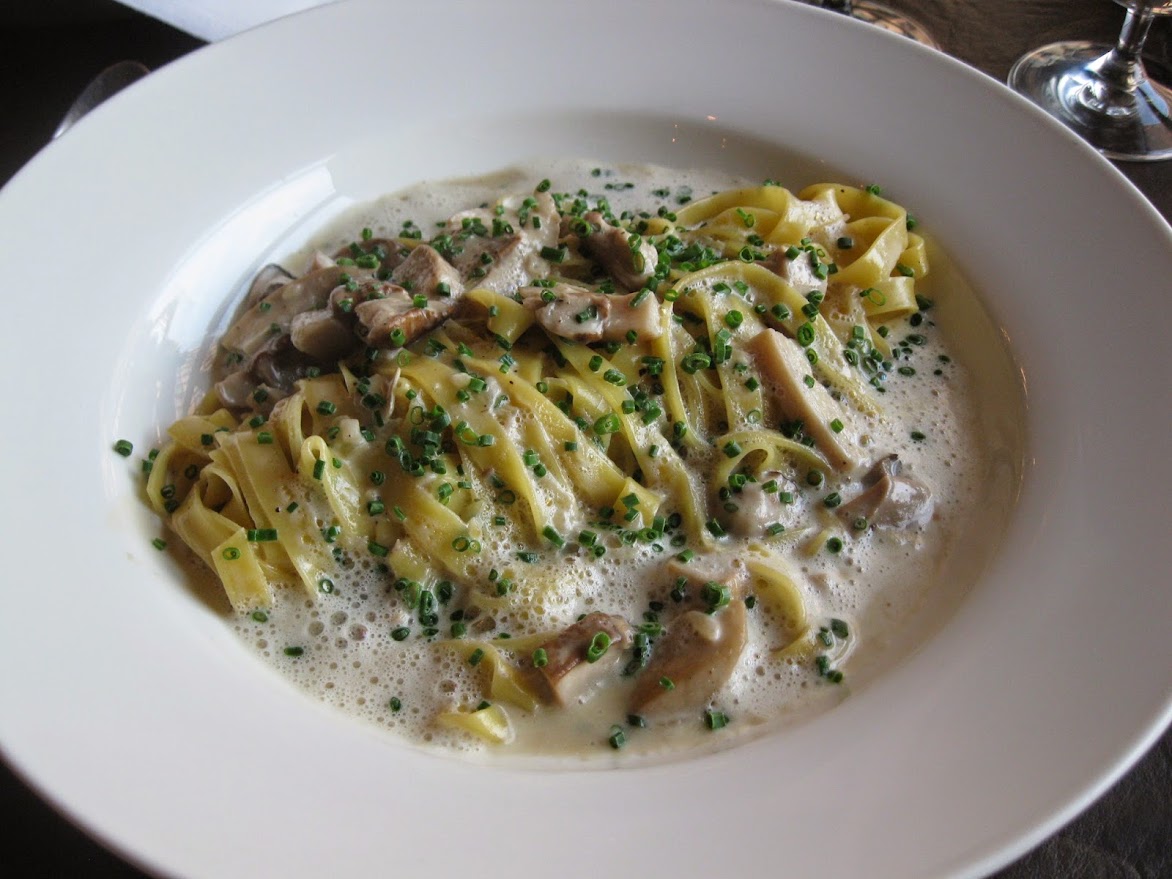
We weren't initially certain that we'd go to Liviano again, but seeing that they had their thoroughly stunning tagliatelle with porcini dish back on the menu (which I raved about last summer) sealed the deal.

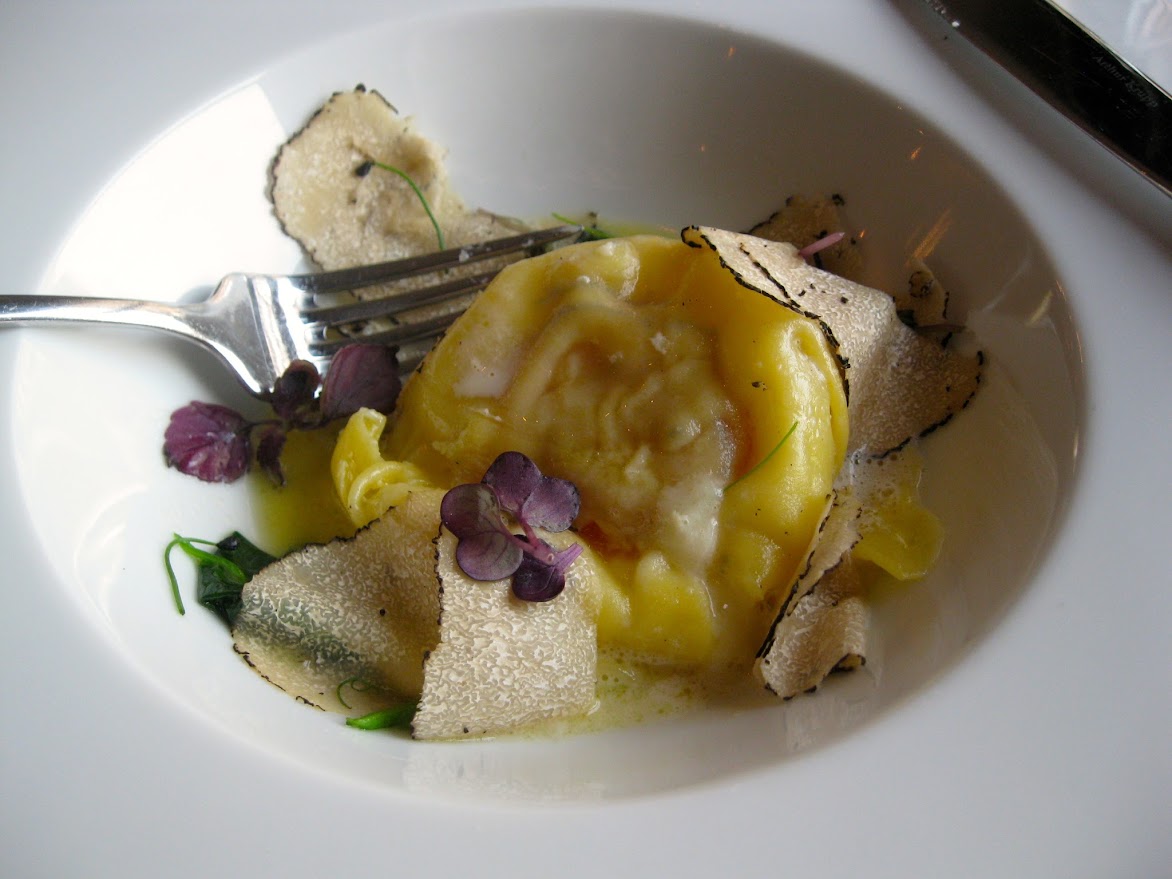
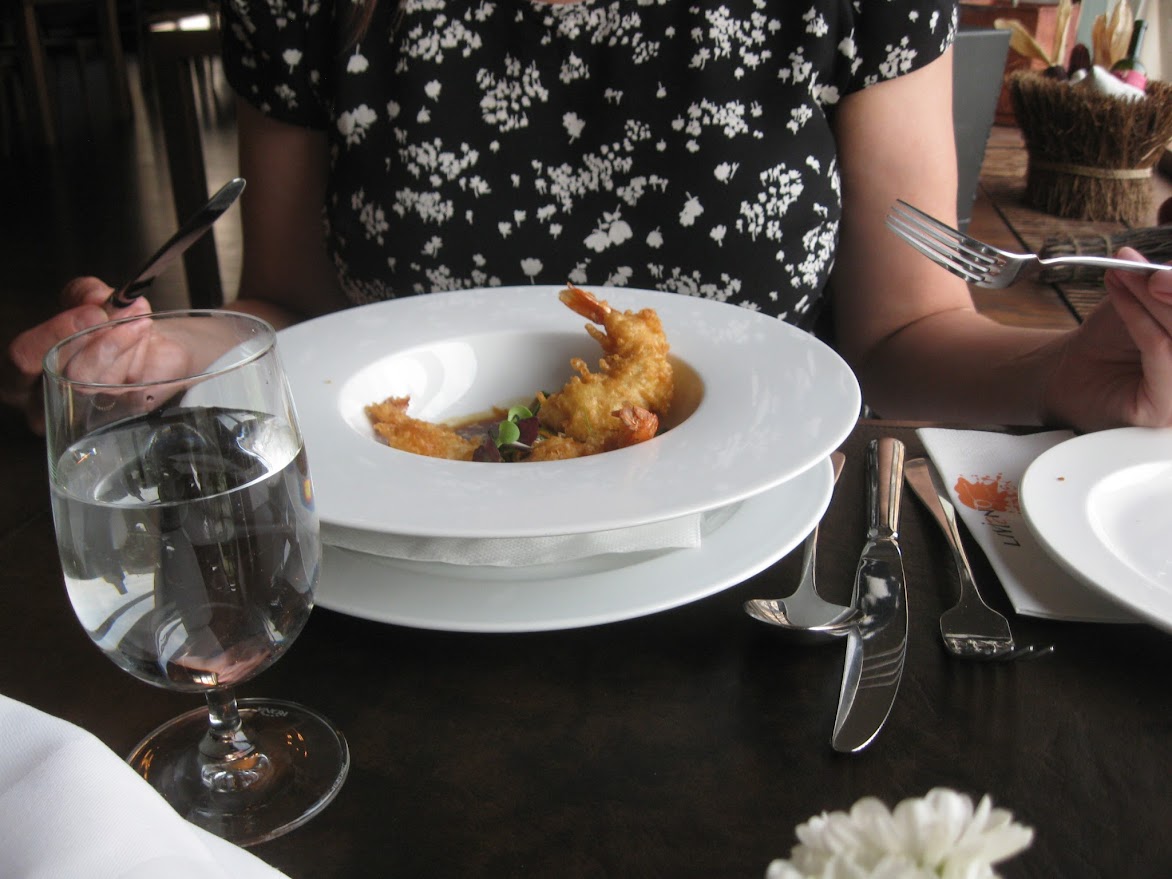
For the starters, I had what was this one big raviolo filled with quark, awesomely runny egg, and spinach with summer truffle shavings on top, which was quite tasty, and Terezia had the tempura shrimp, a pretty yummy asian-inspired dish.

The raviolo with summer truffles

The tempura shrimp

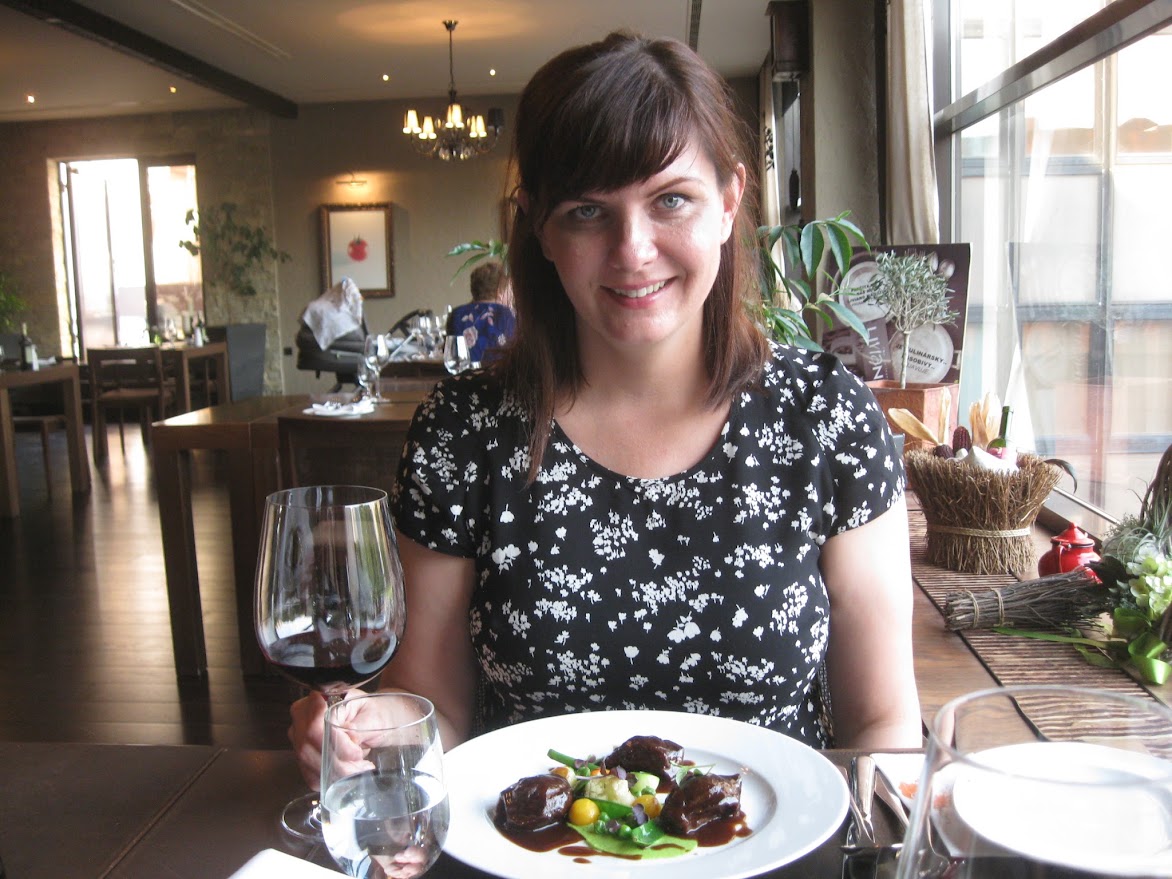
Of course I devoured my rich, flavor-packed plate of porcini pasta, and Terezia ordered the braised pork cheeks with pea puree, which, despite needing a bit of salt, were sublimely tender and flavorful.


The potent porcini pasta

We had this Bulgarian cabernet that was absolutely one of the best reds I've had in this country. For dessert we split a piece of carrot cake. Since we're both huge fans of good carrot cake, we thought we'd give it a shot. It was tasty, moist, and presented a bit unconventionally, in the shape of a big flat rectangle, with a generous dollop of whipped cream-cheese frosting on top and some berries sitting in a little puddle of some kind of raspberry jam next to it on the plate.


I still trip out on how Liviano is uncompromisingly situated deep in the bowels of Petržalka, far away from the tourist grind - or just about anything, really.

Views of panelaks in Petrzalka from from Liviano's window

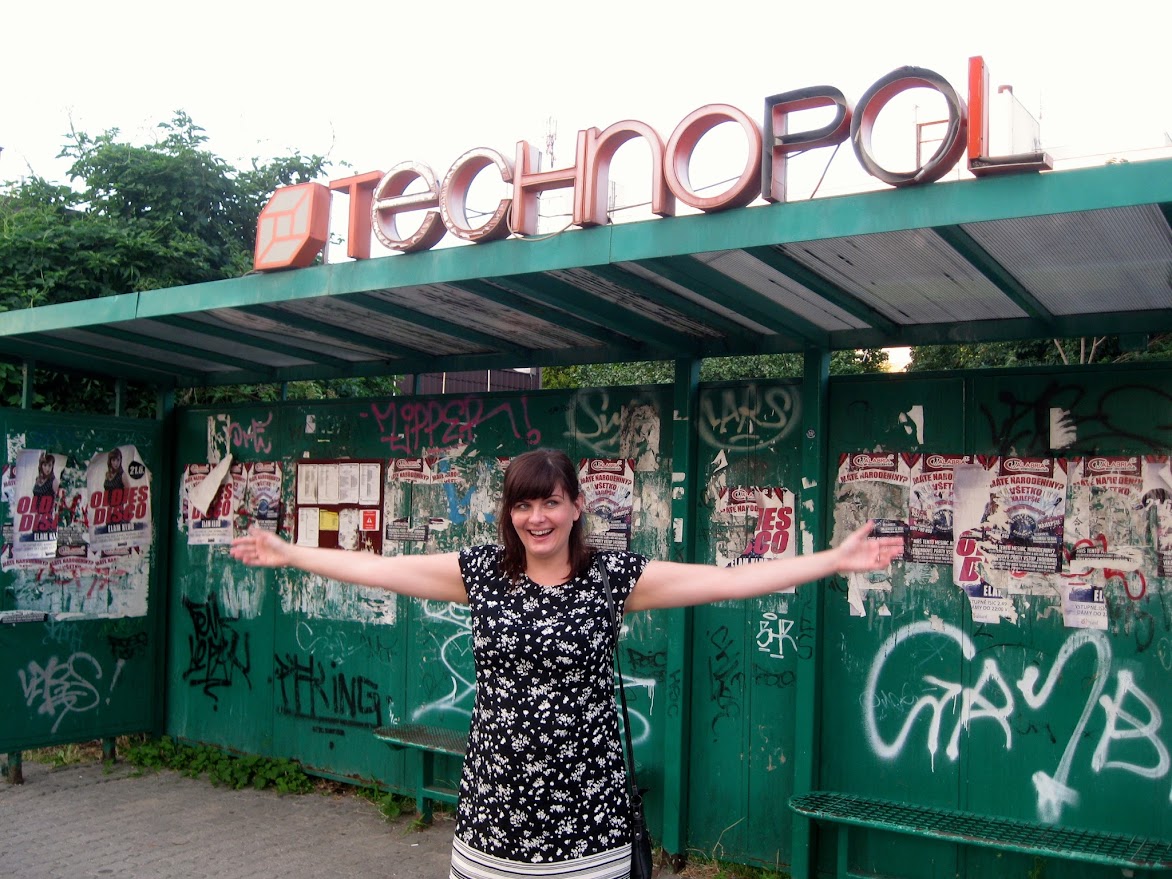
The lovely Technopol bus stop just outside Liviano

Our only complaint was that it's been insanely hot and humid here this week, and they didn't seem to have the air conditioning on. We were a bit sticky when we left the place. (Slovaks have this intense and somewhat irrational fear of A/C - they are convinced that the cooler temperature will make you horribly ill, and they would rather suffer from heat stroke than cool down with A/C. For example: even though they have A/C in the office building where I work, they all complain about it being too cold and they either turn it way down or off, and some people on our floor even open the windows to let all the heat inside. Result: yours truly is an over-heated, disgusting, sweat-drenched mess at work on sweltering summer days. I've never been overly reliant on A/C myself - I rarely ever used it in my car back in California - but I definitely took for granted having it at work. There are valid environmental concerns about using A/C, and recirculated air can potentially circulate germs if the filters are not regularly maintained, but here the fear of A/C seems to be rooted more in a kind of superstition, much like the ever-prevalent and completely absurd and unfounded fear among many Europeans of cool, breezy drafts. Once when we were in an open-car train on a punishingly hot, humid summer evening, it was starting to cool off ever so slightly, so I opened the window to let the refreshing breeze into the un-air-conditioned, suffocatingly stuffy, sauna-like train. Within minutes, the conductor told me to shut the window because it was creating a draft which would apparently make the baby sitting a few seats over deathly ill. So you want us all to die of heat stroke because of your silly belief that this slightly cooler breeze is going to give the baby pneumonia? [And I fully realize that these are totally first world/white people problems, to quote both Louis C.K. and 'Weird' Al Yankovic, but they do offer an interesting sliver of insight into the culture here.])


At any rate, here's to another fun-filled year of marriage, and I'm excited to see where this year will take us.

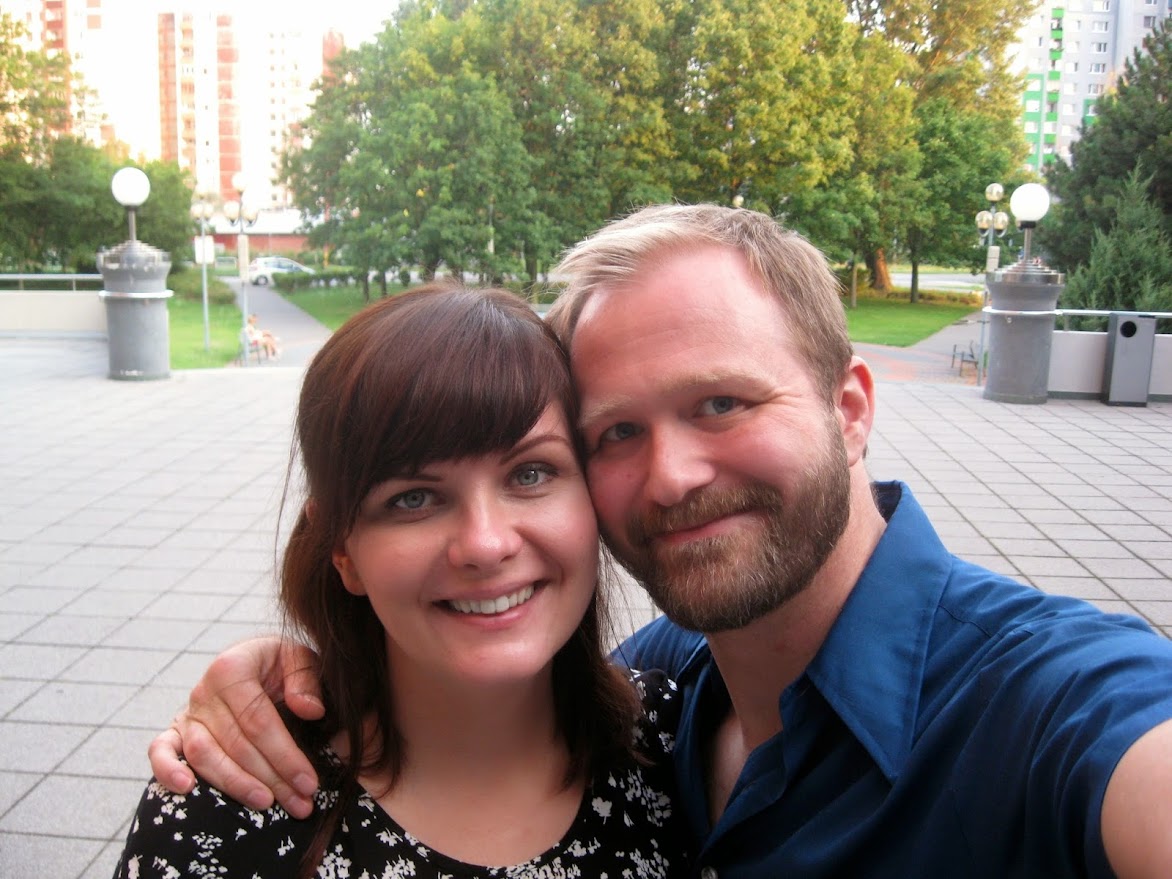
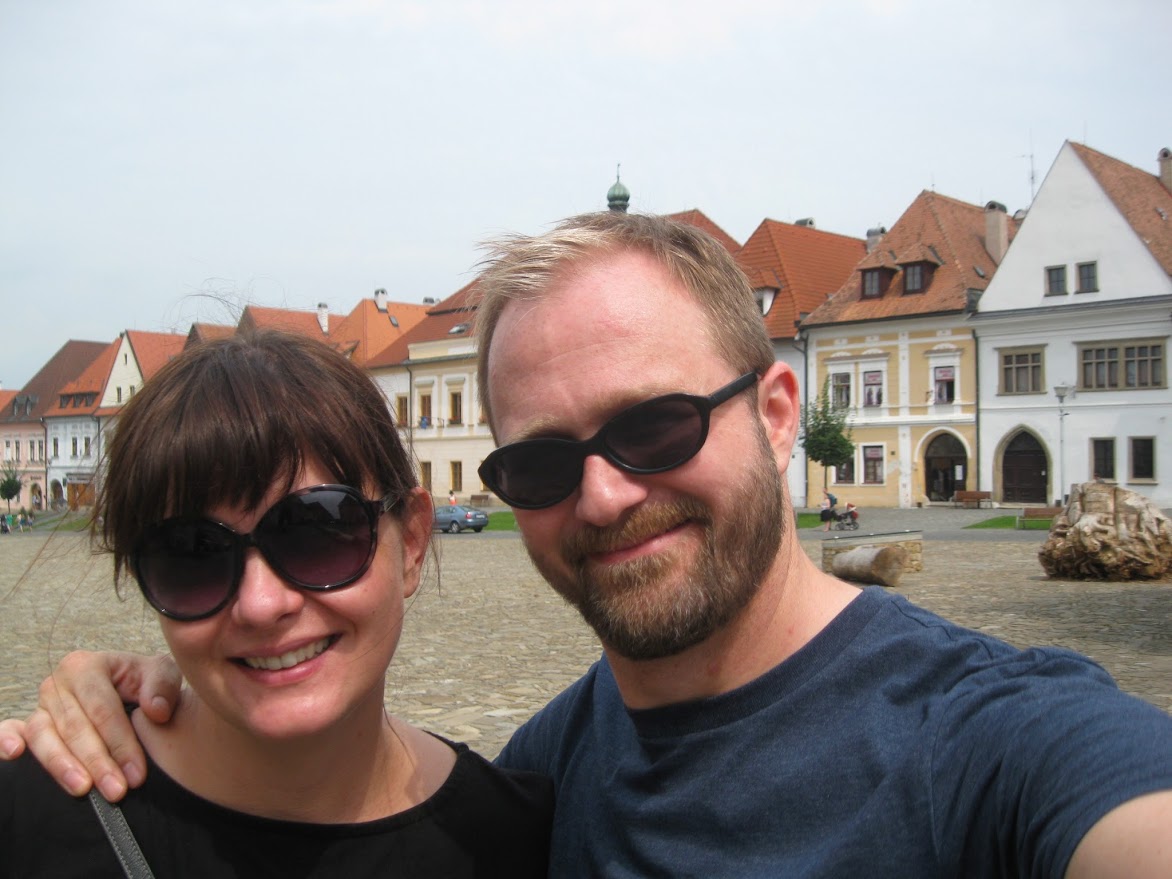
Look at the happy couple - don't you want to punch them in the face?

Tuesday, June 24, 2014

Slovakia opts to stay on the wrong side of history with same-sex marriage ban

How much energy must one expend to live in crippling fear of those two women making out on a bench in the square, or those two guys holding hands on the street? How must the world look to those fearful, quivering, small-minded people who cling tightly to outdated, narrow, hate-fueled notions of love, marriage and family? How frighteningly insecure in one's manhood does one have to be to completely write off his own son or daughter for being gay? How much bile has to ooze from one's glands to believe with total conviction that letting Petra and Katka marry and raise a family together fosters a culture of death that will invoke the wrath of God?

If you know, please tell me, because I sure as hell don't. But it seems a lot of folks in this sadly homophobic country do, and this is a maddening thing to contemplate.


I know, I know - homophobia exists everywhere, and there's no shortage of it in my own native US. But at least I'm from the liberal-hippie-vegetable-eating-diversity-embracing progressive bubble that is the San Francisco Bay Area, where in most places a sense of tolerance prevails. Still, it's deeply frustrating to see Slovakia, the country which I currently call home, where my wife is from, and where her family resides, opt to stay on the wrong side of history, to remain stuck in an increasingly bygone era when it was deemed OK to look the other way when dad clobbered his son with a tire iron for coming out. 


Tilting towards Russia

Slovakia, like most other countries of central and eastern Europe which spent much of the 20th century under the iron grip of Soviet rule, has since proven to be pretty lunkheaded when it comes to human rights and minorities. What makes Slovakia especially interesting, though, is how it straddles the line between east and west, with one very tentative foot in western Europe, with those countries' relatively progressive, forward-thinking, pot-tolerating, bicycle-lane-painting directives (though Slovakia is a ways off from any of these things), and the other foot stuck in the Soviet past, marked by a backwards and blatant disregard for civil rights, democracy, the rule of law, etc.


While most EU and western European states have adopted or are working toward policies that are inclusive towards LGBT communities, uber conservative Russia has been running feverishly in the other direction, and in 2013 it adopted controversial and highly discriminatory laws targeting its LGBT population. While LGBT rights do still face strong opposition in parts of western Europe, in Russia homophobia is so rampant and steeped in such fierce religious ignorance that it's gotta feel like stepping back into the middle ages.

Slovakia could go either way, and unfortunately it recently made a rightward lurch towards Russian-style intolerance. 

In early June the Slovak Parliament essentially outlawed same-sex marriage when it voted to insert a provision in the constitution that defines marriage specifically as a unique bond between a man and a woman. Same-sex couples were already not allowed to marry and aren't eligible for domestic partnerships (nor can they adopt children), but this provision further cements a discriminatory same-sex marriage ban into the law of the land.


So how bad is the homophobia in Slovakia? Kind of bad. While things are infinitely more dire in, say, Uganda, where being gay can land you in prison or worse, the prevailing attitudes towards LGBT folks in Slovakia are still fairly medieval. A recent poll shows that 50.8% percent of the population absolutely supports the constitutional provision banning same-sex marriage, while 30% somewhat agrees with it. Only 9% somewhat disagree with it, and a mere 4.4 percent strongly oppose it.

Contrast that with the Netherlands, where same-sex marriage has 82% support, or Denmark, where 69% of the population supports it. Same-sex marriage even has 52% support among the population of Slovakia's former roommate, the Czech Republic. 


And check out this page, with a map showing which European countries allow same-sex marriage and/or registered same-sex domestic partnerships, and which don't. Notice how, with the exception of Italy, the west looks pretty darn progressive on this issue, while the further east you go, the worse it gets.


Local yocals

Even more discouraging are the sickening views one encounters when talking to average people here about homosexuality. Sadly, the collective mentality seems to be stuck in the 1950s, and conversations about homosexuality regularly and quickly devolve into the sort of vulgar, juvenile rants that you'd expect from horribly ill-informed 11-year-olds, which throws LGBT rights supporters like us into an eye-rolling fit of exasperation and despair.


Terezia and I know a few gay people here whose fathers have completely disowned them. This is actually a common problem, especially for gay men. We have also spoken to guys who admitted openly that they'd do a range of unspeakable things if they discovered their son was gay. Most say they would cut their son out of their lives completely, while one went so far as to say he'd take his son outside and shoot him. A woman we spoke to about the gay pride parade said, incredulously, "Why do they need a parade? If they're going to be that way, why can't they just keep it to themselves?"


A few gay people we know here in Bratislava say they are reluctant to hold hands in public or engage in any PDA out of concern for their safety. If fear of ostracism and abuse is that prevalent in the nation's capital, by far Slovakia's biggest city, I can only imagine how awful it must be out in the sticks.


You hear stuff like this all the time. Part of the problem is that many older people will tell you that during communism homosexuality didn't exist (sounding a bit like leaders of Iran and other bastions of religious conservatism), and some seem to think it's a symptom of decadent, western values introduced after 1989. Now statistically, that clearly wasn't the case, but being gay was apparently so stigmatized under communism, and the government was so repressive, that gay communities had to be super cautious and discreet. 


What's fueling the hate?


Slovakia is intensely catholic, almost as much as Poland. And it's the catholics/christians (and other weirdos on the far right) who have been waging an all-out, well-funded war against the LGBT community here. In September 2013, several catholic groups organized a big pro-life rally in Košice,  Slovakia's second biggest city, which also had a strong anti-gay marriage theme. It was estimated that some 60,000 people attended, while the 2013 gay pride march in Bratislava that same weekend drew less than 1,000. It should be noted that the groups behind the pro-life/anti-gay marriage rally poured obscene amounts of money and energy into it, even organizing buses to cart people in from all over Slovakia, as well as from neighboring countries. The church's influence is massive in Slovakia, and a directive went out to catholic priests all across the country to encourage their congregations to attend the rally.

And this provision doesn't even go far enough for the religious right. One organization is trying to get a country-wide referendum on the ballot to ban gay marriage, because they believe the provision isn't hateful enough. 

Politicians on both the left and the right are acutely aware of how religious this country is, and nearly all of them play into it to win votes. In fact, this provision was part of a strange alliance between a conservative christian party, the KDH, and the ruling Smer party, which claims to be left wing/socialist.

I always bristle when I hear Robert Fico's Smer party described as left wing. As I've said in previous posts, Smer is left wing in only a very narrow, outdated, Soviet-style economic sense. It remains pretty much oblivious or indifferent to all other areas that have come to define left-wing liberalism today, and is staunchly conservative on social issues. Whereas in the west, being left wing means championing progressive values, like standing up for civil and human rights, defending persecuted or marginalized minorities, etc., it seems central and eastern European countries still haven't grasped this concept, and their left wing parties are clinging to this antiquated Soviet-style notion of what it means to be left wing.


Smer has a fairly appalling human rights record and a history of making inappropriate and downright hostile public remarks towards Slovakia's few minority populations, mainly the Roma and Hungarians. There is nothing liberal or progressive about Smer, and the fact that they signed on to this traditional marriage provision in lockstep without any debate within the party is no surprise.


This kind of pus-brained indifference to diversity has its roots in communism. Firstly, Soviet-style communism had no regard for things like human rights, diversity, etc. But also, the borders to these countries under Soviet influence were tightly sealed, and each state became closed off and sheltered, and stiflingly homogenous, 
ethnically and culturally, as a result. This meant you had no serious influx of immigrants, of other cultures or lifestyles. Slovakia remains relatively sheltered to this day, primarily because it fails to attract any meaningful number of immigrants from other countries, since opportunities here are few and far between. This means Slovakia is still overwhelmingly white and Slovak (which is very disconcerting to this Bay Area native), which in turn means that many Slovaks just aren't accustomed or open to lifestyles or views that differ significantly from their own.

But while Smer-styled socialism remains rooted in the past, some of the socialists in the rest of Europe have kept up with modern day progressive causes, and Hannes Swoboda, the president of the Socialists and Democratic Group in the European Parliament, was quoted earlier this spring as saying, “We are greatly concerned by recent developments in several EU member countries, including Slovakia, where the rights of LGBTI people are under attack. Locking the definition of marriage in the constitution as a union between a man and a woman – under pressure from far-right and religious groups – would significantly reduce the possibilities for future governments to join the many other European countries where marriages between men or women are perfectly legal and enjoy equal rights. We, the Socialists and Democrats in the European Parliament, reiterate our unwavering commitment to inclusion and equal rights for everyone.”


Definitely a rebuke to Smer - but not that Fico and Smer would really give a shit, as they've often been tone deaf when it comes to EU-wide issues which they don't think directly affect Slovakia.


It seems the most vocal opponents of the same-sex marriage ban in Slovakia are various NGOs and civil rights activists. They are usually quoted in the media on stories like this, arguing that people are being discriminated against, that all people should be allowed the same rights, etc., but I don't get the impression that the general public pays much attention to them. A group of protesters that turned out in Bratislava on the day that parliament discussed the law was quite small, described in the media as numbering in the dozens.


Bad education?

At any rate, I suspect some of this may also have to do with the lousy quality of education in some central and eastern European countries. I'm not talking about math, science, language, etc. for which people here seem to have a solid foundation with the basics. I'm talking about how, by all accounts, Slovak schools seem not to teach their students how to think critically, how to look at issues from several viewpoints and not just stubbornly stick to one's own knee-jerk opinions. I'm also talking about how a solid humanities or liberal arts education can expand one's views. When I was in school I had to analyze countless novels and films whose messages or themes were often, in one way or another, about embracing diversity. Of course, I was brought up in an environment where liberal-hippie-tofu-fueled views prevailed, but even if my parents had been intolerant hicks, at least I'd have still been exposed to books that detail the struggles of various minorities, the impoverished, the disadvantaged, etc. I don't get the sense that this is really valued in education here.


Any reason for optimism?


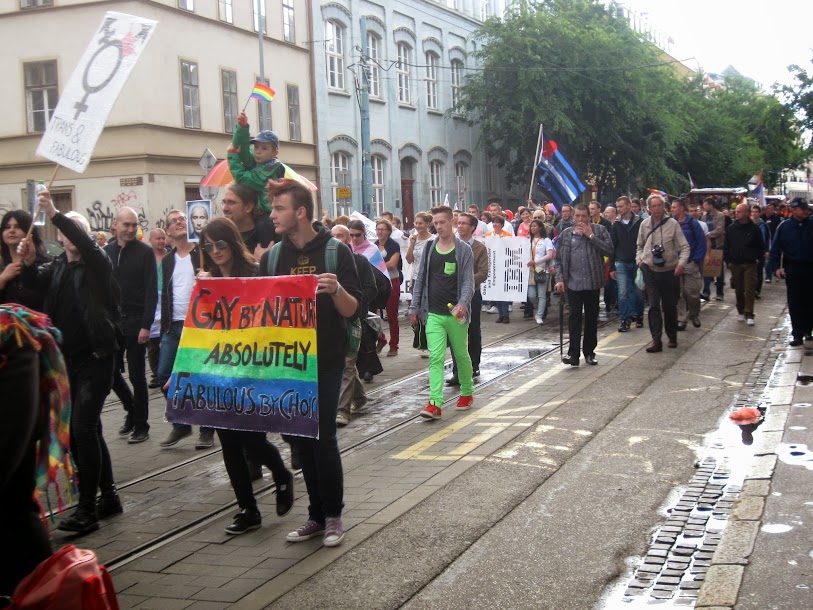
Bratislava's 2013 Gay Pride march

So, this is indeed a deeply frustrating setback, and Slovakia now runs the risk of being left behind like a colony of bigoted, provincial, socially leperitic dimwits by its more progressive-minded neighbors to the west. 

Of course, you could say that it's unreasonable to expect Slovakia and other central/eastern European countries to come around on this issue right now - they got a late start, after all. But at the same time, the far right, in their desperation, could do a fair amount of damage before any major shift in society's views occurs. 
Either way, it's going to take time and effort to get Slovakia up to speed. 

But on an optimistic note, one of my favorite columnists, Mark Morford, would probably say that we can view this constitutional provision as an act of sheer panic and desperation, the last putrid gasp of a dying culture of hate that can see the rainbow colored writing on the wall; that it's only a matter of time before Jano can come out of the closet without fear of getting beat up by dad, or when Janka can bring her new girlfriend home to meet the parents sans any kitchen table awkwardness, or Petra and Katka can marry and raise a family without being lumped in with Satan. This is happening in the EU, it's happening in the US, and it scares the bejesus out of the homophobes and the religious right, who will inflict whatever damage they can while flailing helplessly and inevitably into irrelevance.

When an anti same-sex marriage law was approved in a popular vote in California several years ago, I was obviously pretty disillusioned. But even in the US the tide has been turning - and fast - with a majority of millennials hitting voting age who have no beef with LGBT rights, seeing it as a non-issue, and the country's more enlightened states are legalizing same-sex marriage one by one. While I admit that America still has a long way to go (I'm looking at you Texas), a shocking amount of progress has been made in a mere decade. I can only hope that a similar growing acceptance of LGBT folks takes hold here in Slovakia.


Given that Slovakia already has one foot in the EU, I'd like to think that the more enlightened view will eventually win out and pull the country fully into more progressive pastures. Hopefully this is just a hiccup, and eventually members of some future parliament will struggle to see what the big deal was and strike the provision from the constitution. But until then, the LGBT community and rights activists here definitely have their work cut out for them.